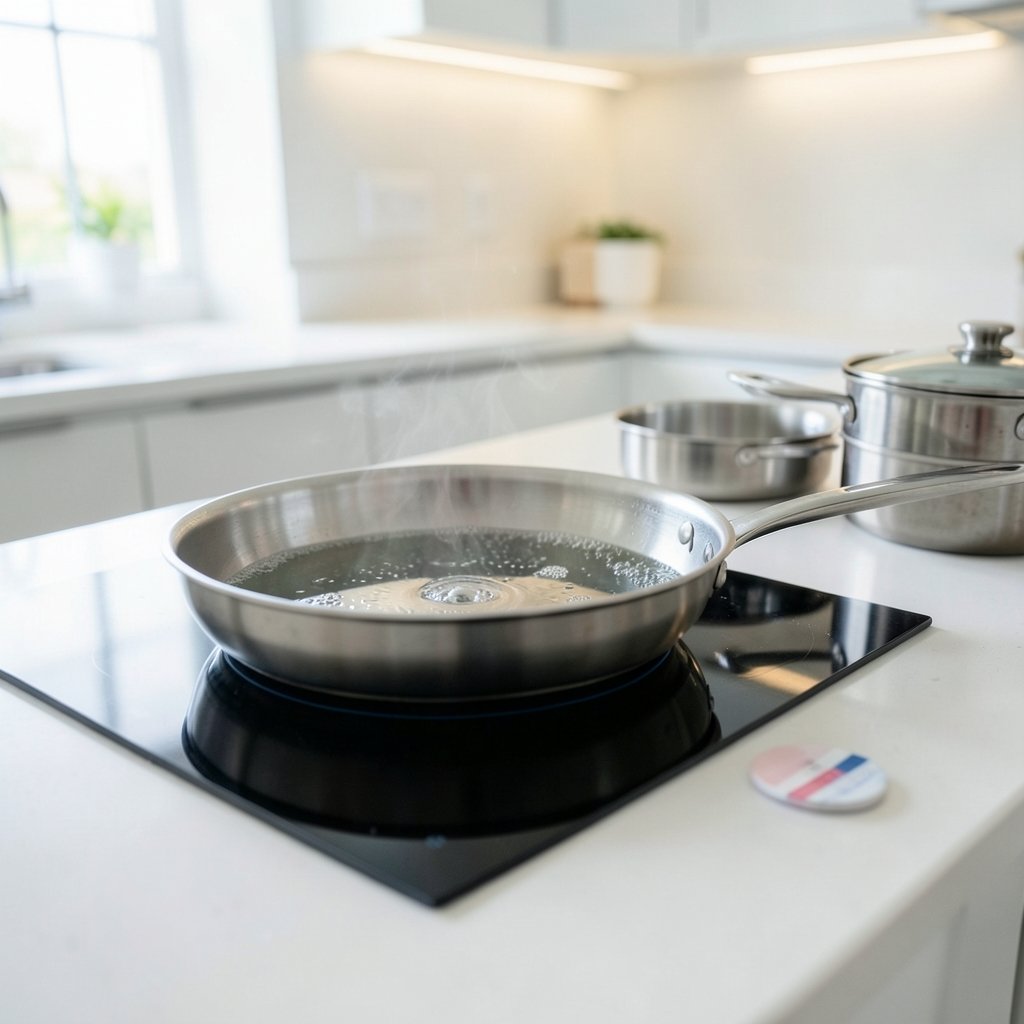
What happens when you put a beautiful, expensive pan on an induction hob and nothing happens? No hum, no heat, no bubbles in the water. Just a stubbornly flat surface and a blinking error light. It is one of the most common and most frustrating surprises in a modern kitchen, and it happens because induction does not heat cookware the way gas or electric coils do. It heats the pan itself, and only if the pan’s base responds to a magnetic field.
That single fact reshapes everything about choosing cookware. The best induction cookware is not simply the most expensive set or the one with the shiniest coating. It is the cookware whose base is ferromagnetic, flat, thick enough to spread heat evenly, and sized to match the burner zone. Get those four things right and induction cooking becomes fast, precise, and genuinely pleasant. Get them wrong and you will spend evenings watching a pan refuse to cooperate.
How Induction Actually Changes the Cookware Conversation
Under the glass surface of an induction hob sits a coil. When the hob is switched on, that coil creates an alternating magnetic field. If a pan with a magnetic base sits on top, the field induces swirling electrical currents, called eddy currents, inside the metal. Those currents meet resistance, and resistance produces heat. The pan gets hot. The glass stays comparatively cool because it was never the heat source.
This is why the classic shopping test is a magnet. If a fridge magnet clings firmly to the base of a pan, that pan will almost certainly work on induction. If the magnet slides off, the pan is probably invisible to the hob. It is a crude test, but it is remarkably reliable, and it takes two seconds.
The other consequence is that induction is unforgiving about contact. On a gas flame, a slightly warped pan still gets licked by fire. On induction, a base that does not sit flat against the glass has poor magnetic coupling. Many hobs will either refuse to detect the pan or shut down their heating zone as a safety measure. So the best induction cookware tends to share a profile: a flat, substantial, magnetic base.
The Materials That Work and the Ones That Do Not
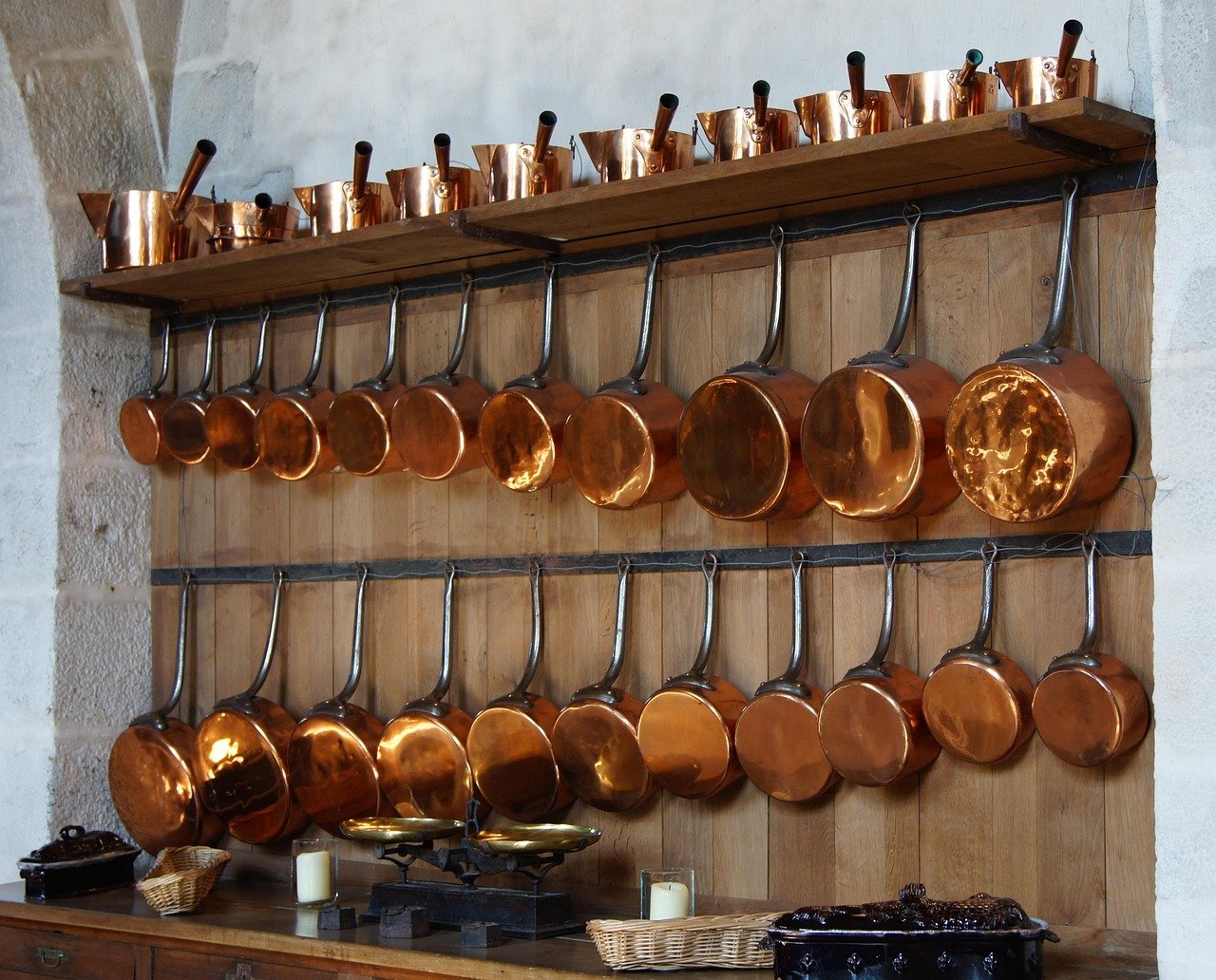
Material choice is the first fork in the road. Some metals are naturally magnetic, some are not, and some are magnetic only in certain alloys.
| Material | Works on induction? | Notes |
|---|---|---|
| Cast iron | Yes | Naturally magnetic, excellent heat retention, heavy |
| Enameled cast iron | Yes | Same magnetic core, easier to clean, can scratch glass if slid |
| Carbon steel | Yes | Magnetic, light for its strength, needs seasoning |
| Clad stainless steel with magnetic exterior | Yes | Even heating from an aluminum or copper core, the all-round pick |
| Cheap thin stainless steel | Often no | Many stainless alloys are not magnetic |
| Aluminum | No, unless it has a base plate | Light and cheap but invisible to induction on its own |
| Copper | No, unless it has a base plate | Superb conductor, but not magnetic |
| Glass and ceramic | No | Not metal, so no eddy currents |
The practical takeaway is that clad stainless steel is usually the safest recommendation for most cooks. A pan built with a magnetic steel outer layer and an aluminum or copper core inside heats evenly, resists warping, and works on every hob type. It is the closest thing to a universal answer.
Cast iron deserves its own mention. It works beautifully on induction and holds heat like nothing else, which makes it ideal for searing. The trade-offs are weight and surface care. A heavy skillet dropped onto glass is a genuine risk, and dragging one across the surface can leave marks, so lift rather than slide. (Soft shell crab makes shell edible cook it)
Why Flat, Thick Bases Matter More Than Brand Names
If there is one mistake home cooks make most often with induction, it is underestimating how much base quality matters. A thin base heats in a tight ring right above the coil and leaves the outer edge of the pan cooler. Food in the middle scorches while the edges barely sizzle. A thick base spreads that energy across the whole cooking surface.
There is a second, sneakier problem: warping. A pan that has been through too many hot-and-cold cycles can bow slightly in the middle or at the rim. On gas, nobody notices. On induction, the hob may lose contact and cut out mid-sauce. This is why cheap pans that perform acceptably on other cooktops often disappoint on induction. The technology punishes flex.
A good habit is to check a new pan’s base with a straight edge, or simply press the center gently and watch for rocking. If it rocks on a flat counter, it will rock on the glass too.
Matching Pan Size to the Burner Zone
Induction hobs come with marked circles for a reason. Each zone has a minimum pan diameter below which the hob will not detect the pan at all. Some models also fail to heat the outer ring of a large zone if the pan is small, which wastes energy and creates uneven cooking.
The fix is simple: measure your pans and compare them to the zone markings in the hob’s manual. A small milk pan belongs on a small zone, not floating in the middle of a large one. If you regularly cook for one or two people, a hob with a mix of small and large zones will serve you better than one with four identical big rings. This is one of those details that never appears in glossy marketing but determines daily satisfaction.
Nonstick, Ceramic Coatings, and the Durability Question
Induction compatibility and coating durability are separate questions, and mixing them up leads to bad purchases. A pan can be perfectly induction-ready and still have a nonstick layer that wears out in a year.
Induction heats fast and can heat unevenly if the base is thin. That combination is hard on thin nonstick coatings, which dislike hot spots. If nonstick matters to you, look for a thicker base and treat the pan gently: medium heat rather than maximum, no metal utensils, no sudden cold water on a hot surface.
Ceramic nonstick coatings have become popular as a PFAS-free alternative, and many are induction-compatible when built on a magnetic base. They tend to be more heat-tolerant than traditional nonstick but lose their release properties over time. Neither coating type is a lifetime purchase. Budget accordingly and think of coated pans as consumables, while your stainless and cast iron pieces are the long-term backbone of the kitchen.
For anyone weighing up coating claims and marketing language, it helps to read independent analysis rather than label copy. A good example of how evidence is separated from hype is this breakdown of what collagen induction therapy reviews and evidence actually show; the same skeptical habit of checking claims against evidence pays off when a cookware box promises “professional grade” performance.
Practical Tips That Save Frustration
A few habits make induction ownership much smoother, and most of them cost nothing.
- Test every pan before you buy or keep it. Carry a small magnet shopping, or test at home. Anything the magnet ignores goes to the donation pile or the camping box.
- Preheat on medium, not maximum. Induction responds almost instantly, so blasting the heat is rarely necessary and is a common cause of scorched food and warped pans.
- Lift, do not slide. Especially with cast iron. It protects the glass and the pan’s base.
- Keep bases clean and dry. A film of burnt sugar or grit between pan and glass reduces contact and can cause uneven heating.
- Check the manual for minimum pan sizes. Two minutes of reading prevents years of “why won’t this pan work” moments.
- Do not buy a whole matching set blind. Sets often include one or two pieces you will never use. Buying individual pieces that fit your actual cooking is usually smarter and often cheaper.
The same principle of matching the tool to the job shows up everywhere in cooking. A recipe built around a specific ingredient or technique works best when the equipment suits it, whether that is a pan that conducts properly or a dish that needs the right heat. The pleasure of a well-stocked kitchen comes from tools that do their job without drama.
Building a Small, Capable Collection
Nobody needs fifteen pans. A focused induction kitchen can run on five or six pieces that cover almost everything.
Start with a clad stainless skillet around 28 centimeters for everyday searing, sauteing, and pan sauces. Add a small nonstick or ceramic pan for eggs and delicate fish, accepting that it will need replacing eventually. A cast iron skillet handles high-heat searing and oven-to-table dishes. A medium saucepan with a thick base covers grains, soups, and reheating. A large pot or Dutch oven takes care of pasta, braises, and stocks. If you bake, a magnetic-base roasting pan rounds things out.
That is a working kitchen. It is also a collection where every piece earns its place, which is a far better outcome than a cabinet full of pans that half-work.
Where Induction Cookware Advice Goes Wrong
Plenty of confident-sounding claims about induction cookware do not survive contact with a real kitchen. A few to treat with caution:
“Induction-compatible” is not a regulated certification. Unlike electrical safety marks, there is no universal standard label that certifies a pan for induction. Manufacturers state compatibility themselves. That does not make them dishonest, but it does mean the claim deserves a magnet test rather than blind trust.
Efficiency numbers get repeated without context. Induction is widely described as more efficient than gas or radiant electric, and that is broadly true, but the exact percentages depend heavily on test conditions and how the comparison is set up. Treat a single dramatic figure with suspicion.
Expensive does not automatically mean better on induction. Price often reflects brand, finish, and marketing as much as base quality. A mid-priced clad stainless pan with a thick, flat, magnetic base will outperform a fashionable thin one costing three times as much.
Coating claims and compatibility claims get tangled. A pan advertised as induction-ready tells you nothing about how long its coating will last. Judge those separately.
Cooks who enjoy digging into the detail behind kitchen claims often find the same pattern across food topics: the practical answer is usually simpler and more evidence-based than the marketing suggests. Whether the subject is a spice’s heat level, a technique’s real mechanism, or a pan’s base, the useful question is always “what does this actually do in practice?” That curiosity is well rewarded, and it is the same instinct that makes someone a better cook over time. (Adeena sussman recipes cook from her israeli kitchen)
Conclusion
The best induction cookware is not a single brand or a matching set. It is any collection of pans with magnetic, flat, thick bases that fit the burner zones you actually use. Clad stainless steel does the heavy lifting for most cooks, cast iron brings raw searing power, and a small coated pan covers the delicate jobs. Everything else is preference.
The good news is that induction rewards good choices immediately. A pan that couples properly with the hob heats in seconds, responds to the dial like a light switch, and cleans up easily because the glass stays cooler. A pan that does not couple properly announces itself with a blinking light and a cold surface, which is at least an honest failure.
So buy a magnet, measure your burners, and choose pieces one at a time. Do that, and the cooktop stops being a source of mystery and becomes what it was sold as: fast, controllable, and quietly excellent.
Frequently Asked Questions
How can I tell if my existing pans will work on induction?
Hold a magnet against the base. If it sticks firmly, the pan is almost certainly induction-ready. If it slides off or clings only weakly, the pan probably will not work. It is worth testing every pan you own before buying a new hob, because the results often surprise people.
Is cast iron safe to use on an induction cooktop?
Yes, cast iron works very well on induction because it is naturally magnetic and holds heat superbly. The main cautions are weight and surface care. Lower heavy pans gently rather than dropping them, and lift rather than slide them across the glass to avoid scratches.
Why does my induction hob keep switching off while I am cooking?
The most common causes are a pan that is too small for the zone, a warped or thin base that loses contact with the glass, or a pan that is not magnetic at all. Check the pan’s base for flatness and confirm its size against the minimum diameter in your hob’s manual.
Do I need special induction cookware, or can I use any pan labeled induction-compatible?
You need cookware with a magnetic base, but there is no official certification for induction compatibility, so the label is the manufacturer’s own claim. A quick magnet test is more reliable than packaging. Many pans sold as induction-compatible pass easily, but a few do not.
Is nonstick cookware a good choice for induction?
It can be, provided the pan has a thick, flat, magnetic base. Induction’s fast heating can be hard on thin nonstick layers, so use medium heat, avoid metal utensils, and expect the coating to wear out over time. Treat coated pans as replaceable rather than lifelong purchases.
What is the single best material for induction cookware?
Clad stainless steel with a magnetic exterior and an aluminum or copper core is the best all-round choice for most cooks. It heats evenly, resists warping, works on every hob type, and does not depend on a coating that wears out. Cast iron is an excellent complement for high-heat searing.