

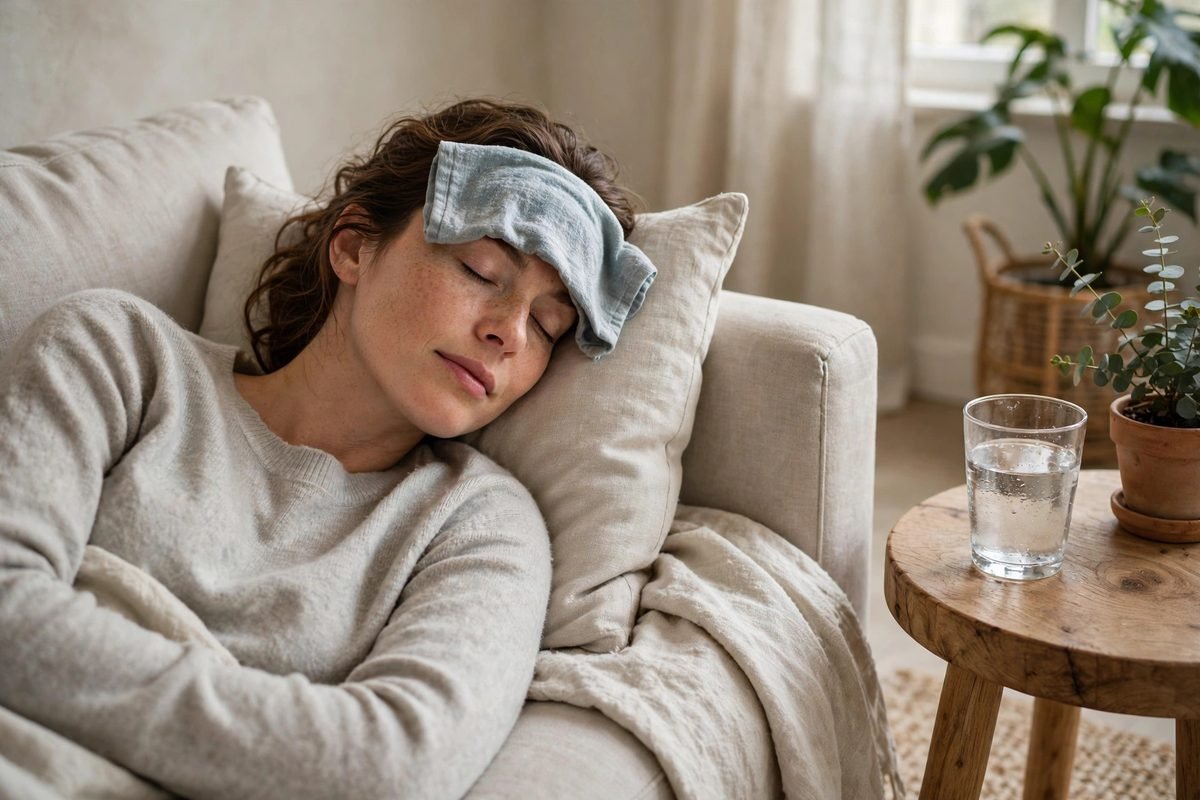
A headache can turn an ordinary afternoon into a long one. The pressure builds behind your eyes, your neck tightens, and learning how to get rid of a headache becomes the only thing on your mind. The answer starts with the simplest steps: drink water, rest in a quiet, dim room, and ease the tension in your neck and shoulders.
Most headaches are not serious, and most ease within a few hours with rest and simple care. The trick is to act early and work through the common causes one by one. This guide covers what causes most headaches, what helps right now, when a painkiller makes sense, and how to stop them coming back so often.
It also covers the warning signs that mean a headache needs medical attention rather than a glass of water and a lie-down. Those signs are rare, but knowing them matters.
Key takeaways:
- Act early: water, rest in a quiet dim room, and gentle neck and shoulder movement help most everyday headaches.
- Tension, dehydration, poor sleep and long hours at a screen are the most common triggers.
- Painkillers can help, but follow the packet instructions and avoid taking them too often.
- Seek urgent medical help for a sudden severe headache, one after a head injury, or one with fever, a stiff neck or vision changes.
What causes most headaches?
Tension headaches are the most common type, and they usually feel like a dull ache or pressure around the head, with tightness in the neck and shoulders. They build slowly through the day and are often linked to stress, tiredness or poor posture. Many people describe the feeling as a tight band around the head.
Dehydration is another frequent cause. Even mild dehydration can bring on a headache, especially on warm days, after exercise, or when you have had more coffee than water. Skipping meals can have a similar effect, because hunger and low blood sugar can both trigger head pain. Other common triggers include poor sleep, eye strain, caffeine withdrawal and alcohol. Migraine is different: it often brings throbbing pain on one side of the head, sensitivity to light and sound, and sometimes nausea. If your headaches keep coming back in a pattern, keep a short diary of when they happen.
What helps a headache right now?
Start with water. Drink a large glass slowly, then another over the next hour, and avoid alcohol while the headache lasts. If you have not eaten for hours, have a light snack, such as fruit, toast or yoghurt. Hunger and dehydration are two of the easiest causes to fix.
Next, rest your eyes and your head. Lie down in a quiet, dim room for twenty to thirty minutes, away from screens and bright light. A cool, damp cloth on your forehead can feel soothing, and some people find a warm cloth on tense neck muscles works better. Close your eyes, breathe slowly, and let your shoulders drop. Gentle movement can help too: roll your shoulders slowly and turn your head gently from side to side.
Can water really help a headache?
Yes, and it is often the fastest thing you can do. Your brain is sensitive to fluid levels, and even mild dehydration can make a headache worse. Water will not cure every headache, but if you have had little to drink, it is the most likely fix. Drink a glass as soon as the headache starts, then keep sipping.
Build regular drinking into your day, rather than waiting until you feel thirsty. Keep a glass on your desk where you can see it, and refill it each time it empties. The NHS suggests around six to eight glasses of fluid a day, including water, lower-fat milk and sugar-free drinks. Caffeine is worth thinking about, too: a small amount can help some headaches, but too much, or a sudden drop in your usual intake, can trigger one. If you enjoy a morning coffee, our guide to the best Starbucks drinks is a good place to find a favourite, but keep your intake steady.
How do sleep and posture affect headaches?
Sleep and headaches are closely linked. Too little sleep can trigger a headache the next day, and a headache can make it hard to sleep that night. Most adults need around seven to nine hours, and a regular pattern matters as much as the total. Going to bed and waking at roughly the same time each day helps your body settle into a rhythm.
Posture matters just as much, especially if your headache starts at your desk. Hours spent looking down at a laptop or phone can strain the muscles at the base of the skull, and that tension often spreads into a headache by the afternoon. Raise your screen to eye level, sit back with your lower back supported, and take a short break every thirty to sixty minutes. Our guide to how to improve your posture has simple desk checks and gentle stretches. Eye strain is a related cause: look away from your screen every twenty minutes, at something distant, for twenty seconds.
Should you take a painkiller?
Over-the-counter painkillers such as paracetamol or ibuprofen can help many everyday headaches, especially taken early, when the pain is still mild. Always follow the instructions on the packet, and check that they are safe for you, particularly if you take other medicines or are pregnant. If you are unsure, ask a pharmacist.
Do not take painkillers more often than the packet advises, or every day for weeks on end. Taking them too often can itself cause headaches, known as medication-overuse headaches, which ease briefly with a tablet and then return. If you reach for painkillers most days, speak to your GP or pharmacist rather than increasing the dose. A warm drink, fresh air and rest work well enough on their own for some people, and that is fine too.
| Type | Typical signs | Common triggers | What often helps |
|---|---|---|---|
| Tension headache | Dull ache or pressure, tight neck and shoulders | Stress, tiredness, poor posture, long screen time | Rest, water, gentle stretching, painkillers if needed |
| Migraine | Throbbing pain, often one-sided, sensitivity to light and sound, sometimes nausea | Stress, lack of sleep, certain foods, hormonal changes | Dark quiet room, rest, water, medicines advised by a doctor |
| Dehydration headache | Dull ache, worse when moving, dry mouth, tiredness | Too little fluid, heat, exercise, alcohol | Water, rest, a light snack, avoiding alcohol |
| Sinus headache | Pressure around the cheeks, forehead and nose | Colds, allergies, blocked sinuses | Warm cloth on the face, steam, rest, treating the cold or allergy |
| Caffeine headache | Dull ache, often in the morning | Skipping your usual coffee, or drinking much more than usual | Steady caffeine intake, water, rest |
How can you prevent headaches?
Prevention is mostly about the basics, done consistently: water through the day, regular meals, regular sleep, and movement if you sit for work. These sound too simple to matter, but they are what most often goes wrong on headache days. A short diary can help you spot your own pattern: note the time, what you ate and drank, how you slept, and what you were doing.
Stress is a common trigger, and it is worth managing directly rather than only treating the headache it causes. Short breaks, a walk outside, a few minutes of slow breathing, or time with a friend can all lower the tension that builds into a headache. Regular exercise helps too: a brisk daily walk, swimming, cycling or dancing all count. Our guide to how to lose belly fat has simple ways to build more activity into an ordinary day. If you grind your teeth at night, which can cause morning headaches, mention it to your dentist.
When should you see a doctor?
Most headaches are not dangerous, but some need medical attention. Seek urgent help, by calling 111 or going to urgent care, if you have a sudden severe headache unlike any you have had before, a headache after a blow to the head, or a headache with a fever and a stiff neck, a rash, weakness, slurred speech, confusion, or changes in your vision. These symptoms are uncommon, but they need checking promptly.
Book a routine GP appointment if your headaches keep coming back, are getting worse, regularly stop you working, or do not improve with rest, water and painkillers. Take your headache diary with you, as it will help the doctor see the pattern.
Your headache relief checklist
When a headache starts, work through this list in order.
- Drink water: a large glass now, then keep sipping.
- Eat something light: fruit, toast or yoghurt if you have not eaten for hours.
- Rest your eyes: lie down in a quiet, dim room for twenty to thirty minutes.
- Stretch gently: slow shoulder rolls and gentle neck turns.
- Consider a painkiller: paracetamol or ibuprofen, taken early and exactly as the packet directs.
- Know the red flags: sudden severe pain, head injury, fever with a stiff neck, or vision changes mean seeking help promptly.
Frequently asked questions
How long does a headache usually last?
Most tension headaches ease within a few hours, especially with rest, water and a painkiller taken early. A migraine can last longer, sometimes a day or more. If a headache lasts more than a few days or keeps returning, see your GP.
Is it safe to sleep with a headache?
Yes. For most everyday headaches, a short rest or nap in a quiet, dim room is one of the best things you can do, and many headaches ease after resting. The exception is a headache with the warning signs above, such as sudden severe pain or a head injury, which needs medical attention first.
Can a headache be caused by not eating?
Yes. Skipping meals can lower your blood sugar and trigger a headache, especially if you have also had little to drink. Eating regular meals, and keeping a light snack with you, can help prevent it.
Should I exercise with a headache?
A slow walk in fresh air can help a mild headache, especially one caused by tension or sitting too long. If the pain is strong, throbbing, or you feel nauseous, rest instead, and avoid vigorous exercise until it has eased.
When is a headache an emergency?
Call for urgent help if the headache is sudden and severe, unlike any you have had before, follows a head injury, or comes with a fever and stiff neck, weakness, slurred speech, confusion or vision changes. These are uncommon, but they need checking straight away.
Sources
For further reading, see the NHS pages on headaches and on migraine at nhs.uk and nhs.uk, which cover symptoms and causes.
The bottom line
Most headaches are your body asking for something simple: water, food, rest, or a break from the screen. Act early, work through the simple causes one by one, and note the pattern if headaches keep returning. The small habits that prevent headaches are the same habits that make most days feel better.
Start a simple headache diary today. Note the time of your next headache, how you slept, what you ate and drank, and what you were doing. Within a few weeks you will know your own triggers, and that is the best way to stop the next headache before it starts.
This article is general information only and is not medical advice. If you have severe, sudden or persistent headaches, or headaches with other symptoms such as fever, vision changes or weakness, seek medical help promptly. Talk to your GP or pharmacist before starting any new medicine.














