

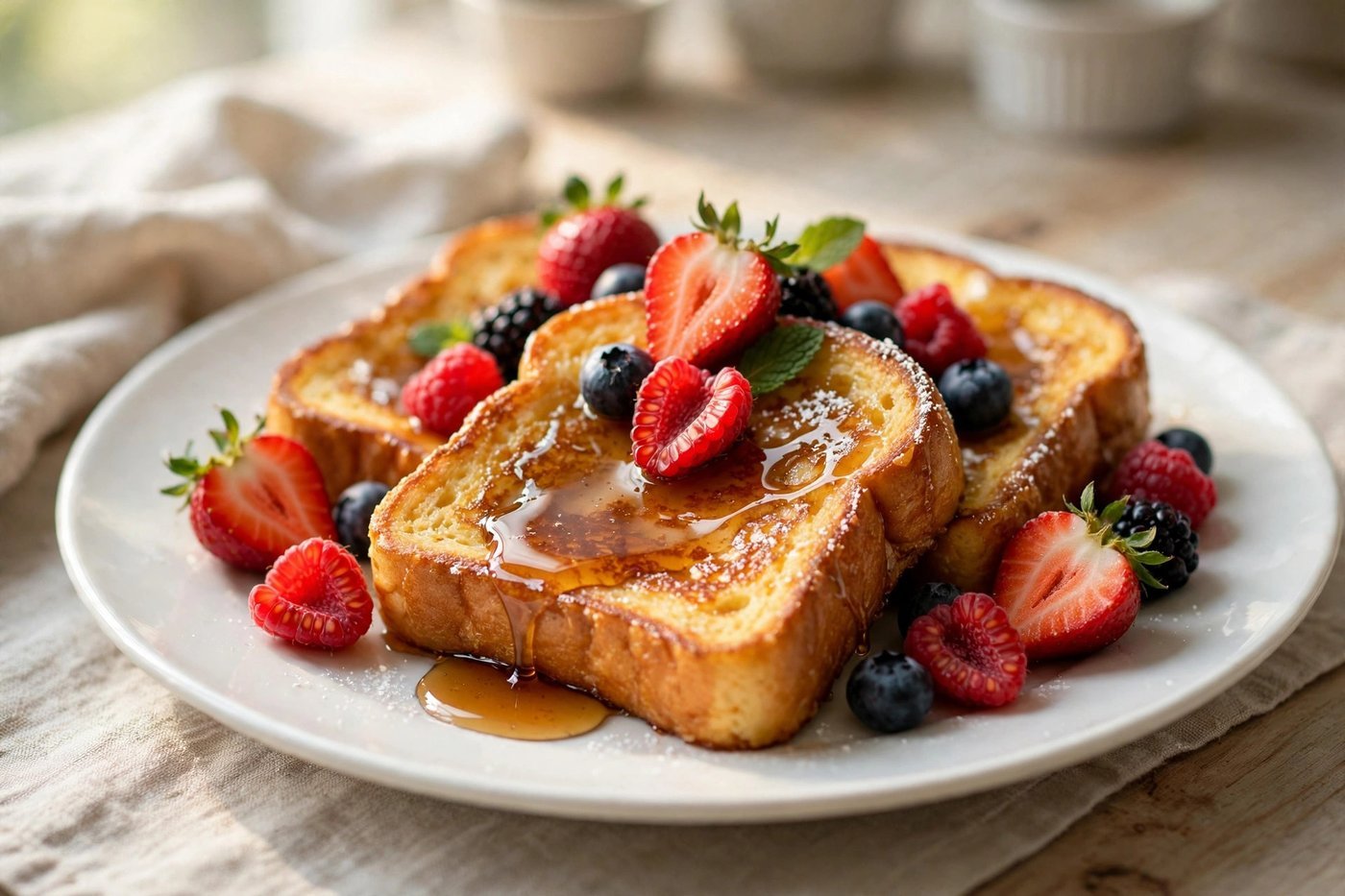

Saturday morning, a hungry table, and a loaf that looks promising until it hits the pan. The best bread for French toast in 2027 is brioche: rich, buttery and sturdy enough to soak up the custard without falling apart, and it fries to a golden, custardy centre that no ordinary sandwich bread can match.
The problem is that most bread fails in one of two ways. Thin sandwich bread turns soggy and tears, while a dense, heavy loaf stays dry in the middle.
This guide compares the ten best breads for French toast, from bakery brioche to the humble white loaf: what each one does well, where it falls short, and the bread to reach for on any given morning.
Key takeaways:
- Brioche is the best bread for French toast overall: rich, eggy and sturdy enough to soak without falling apart.
- Challah is the closest rival, with a similar richness and a slightly lighter crumb.
- Day-old bread works better than fresh bread, because it is drier and absorbs the custard more slowly.
- Cut slices at least 2 centimetres thick, soak briefly, and fry in butter over a medium heat for a crisp outside and a soft centre.
What makes a bread good for French toast?

Three qualities decide whether a bread makes good French toast. First, structure: the crumb must survive a dip in egg and milk without tearing, and stay thick enough to hold a soft centre after frying.
Second, absorbency: the bread should drink up the custard without becoming waterlogged. Day-old bread does this better than fresh, because its drier crumb takes up liquid more slowly and evenly, while a very fresh loaf soaks too fast and turns to mush.
Third, flavour: an enriched bread, made with eggs, butter or milk, brings its own richness. Plain white bread works, but it leans entirely on the custard and toppings, while brioche and challah taste like something even before they reach the pan.
Thickness matters as much as the loaf itself. Slices cut at 2 to 2.5 centimetres thick give the best result: thin enough to cook through, thick enough to stay custardy inside. If your loaf is pre-sliced, choose the thickest slices and let them dry out uncovered for an hour before cooking.
The 10 best breads for French toast in 2027
Every bread below was judged on the same three tests: how it soaks, how it holds together in the pan, and how it tastes once fried.
1. Brioche
Brioche is the best bread for French toast, and it is not close. This enriched French loaf is made with eggs, butter and milk, so it is rich before it ever meets the custard, and its soft yet sturdy crumb soaks evenly without tearing, frying to a deep golden crust with a soft, almost creamy centre.
Buy a proper bakery brioche loaf rather than pre-sliced burger buns, and cut it thick.
Best for: the best French toast you can make at home, for a special breakfast.
2. Challah
Challah is brioche’s closest rival and the traditional choice in many Jewish bakeries. This braided, egg-enriched loaf has a similar richness and a slightly lighter crumb, soaks well, holds its shape in the pan, and tastes wonderful with nothing more than butter and syrup.
It is often easier to find than a good brioche loaf, and a day-old challah is ideal.
Best for: a rich, classic French toast that is almost as good as brioche.
3. Texas toast
Texas toast is thick-cut white bread, usually sliced at around 2 centimetres, and it was practically made for French toast: the thickness gives it the structure ordinary sandwich bread lacks, and the plain flavour lets the custard and toppings do the talking.
It is cheap, widely available and forgiving for beginners: soak it a little longer than brioche and fry it in butter for a crisp edge.
Best for: an easy, affordable French toast with a thick, sturdy slice.
4. Sourdough
Sourdough brings something no other bread here does: a gentle tang that balances the sweetness of the custard and syrup. A good sourdough has a firm crumb and a chewy crust, so it holds up beautifully in the pan.
Choose a mild white sourdough rather than a strongly flavoured wholegrain one, and cut it thick.
Best for: a less sweet French toast with a little tang and chew.
5. White sandwich bread
Ordinary white sandwich bread is the bread most people start with, and it can work well if you treat it right: use the thickest slices you can find, let them dry out first, and soak them briefly, no more than a few seconds each side.
It will never be as rich as brioche, but with a good custard and proper toppings it makes a perfectly enjoyable breakfast, and it is the cheapest option here.
Best for: a quick weekday French toast with bread you already have.
6. French bread
A French baguette or bâtard, sliced on the diagonal, makes a French toast with real character: the crust crisps beautifully in the pan, the crumb is airy but firm, and the slices look elegant on the plate.
Day-old French bread is better than fresh, and cutting the slices at an angle gives a larger surface and a slightly chewier result than brioche.
Best for: a crisp, elegant French toast with a golden crust.
7. Croissant
A croissant makes the most indulgent French toast on this list, and the most delicate: its buttery, flaky layers soak up custard quickly, so dip it very briefly and fry it gently over a lower heat than you would use for bread.
The result is rich, soft and almost pudding-like, best with berries and a dusting of icing sugar — not an everyday choice, but hard to beat for a celebration breakfast.
Best for: a luxurious, flaky French toast for a special occasion.
8. Cinnamon raisin bread
Cinnamon raisin bread brings its own flavour to the pan: warm spice and sweet raisins in every slice. It needs less sugar in the custard, and it pairs beautifully with apples, cream cheese or a drizzle of honey.
Watch the heat: the sugar in the bread browns faster than plain bread, so use a medium heat and a careful eye.
Best for: a spiced, sweet French toast that needs little added sugar.
9. Whole wheat bread
Whole wheat bread makes a heartier, nuttier French toast, and it holds together well in the pan thanks to its denser crumb. It is the best choice if you want something more filling, and it works well with savoury toppings such as bacon and eggs.
Choose a soft sandwich-style whole wheat loaf rather than a very dense artisan one, soak it a little longer, and balance its earthier flavour with fruit or maple syrup.
Best for: a filling, nutty French toast, including savoury versions.
10. Gluten-free bread
Gluten-free bread has improved enormously, and a good loaf makes perfectly enjoyable French toast. Look for a thick-sliced, sturdy loaf, and let the slices dry out before cooking, since gluten-free bread can be softer and more fragile than wheat bread.
Soak it briefly and handle it gently in the pan. Our guide to gluten free dessert recipes covers more gluten-free baking.
Best for: anyone who needs gluten-free bread but still wants proper French toast.
| Bread | Richness | Sturdiness | Best for |
|---|---|---|---|
| Brioche | Very rich | Excellent | Best overall |
| Challah | Very rich | Excellent | Classic richness |
| Texas toast | Plain | Very good | Thick, affordable slices |
| Sourdough | Mild tang | Very good | A less sweet result |
| White sandwich bread | Plain | Fair | Quick weekday breakfast |
| French bread | Plain | Good | Crisp, elegant slices |
| Croissant | Very rich | Delicate | Special occasions |
| Cinnamon raisin | Sweet, spiced | Good | A spiced, sweet version |
| Whole wheat | Nutty | Good | Hearty and savoury |
| Gluten-free | Varies | Fair | Gluten-free breakfasts |
How do you make French toast?
The method is simple and works with every bread on this list. Whisk two eggs with half a cup of milk or cream, a pinch of salt, half a teaspoon of vanilla and a little cinnamon if you like, then pour the mixture into a shallow dish wide enough for a slice of bread.
Dip each slice for a few seconds on each side. Rich, sturdy breads such as brioche and challah can soak a little longer; thin or delicate breads need only a quick dip. Let the excess drip off before the slice goes in the pan.
Melt butter in a large pan over a medium heat until it foams, then fry the slices for two to three minutes on each side until deep golden, keeping them warm in a low oven while you fry the rest. Serve straight away. For the rest of the breakfast table, our guide to the best bagel and coffee pairings covers a slower weekend favourite.
Your French toast checklist
Work through this list before you start cooking, and the breakfast will take care of itself.
- Choose a sturdy loaf: brioche or challah first, Texas toast or sourdough as a reliable backup.
- Cut thick slices: at least 2 centimetres, so the centre stays soft and custardy.
- Use day-old bread: drier bread soaks more slowly and evenly than fresh bread.
- Soak briefly: a few seconds each side, longer only for dense or thick slices.
- Fry in butter: over a medium heat, two to three minutes a side, until deep golden.
- Keep them warm: hold finished slices in a low oven while you fry the rest.
- Serve straight away: French toast is at its best hot from the pan.
Frequently asked questions
What is the best bread for French toast?
Brioche, thanks to its richness and sturdy crumb. Challah is a close second, and Texas toast is the best affordable option.
Should French toast bread be fresh or stale?
Slightly stale, or day-old, bread is better. Drier bread absorbs the custard more slowly and evenly, and it holds together better in the pan. Fresh, soft bread soaks too fast and can fall apart.
How thick should French toast slices be?
At least 2 centimetres thick: thinner slices cook through too fast and lose the soft, custardy centre.
Can you make French toast with white sandwich bread?
Yes, if you use the thickest slices you can find, let them dry out first, and soak them only briefly. It will not be as rich as brioche, but with a good custard and toppings it makes a perfectly enjoyable breakfast.
Why does my French toast fall apart?
Usually because the bread was too fresh, too thin, or soaked too long. Use day-old bread cut thick, dip briefly, and fry over a medium heat.
Can you make French toast ahead of time?
Keep cooked slices warm in a low oven for up to 20 minutes, and reheat leftovers in a toaster or hot oven. The custard mixture can be made the night before and kept in the fridge.
Sources
Guidance here reflects standard cooking practice for French toast, from established cookery writers and bakery guides. Our guide to the best bread for diabetics covers lower-GI loaves for readers watching their blood sugar.
The bottom line
The best bread for French toast soaks without falling apart and fries to a golden crust with a soft centre. For most mornings that is brioche, with challah a close second. Everything else here works too, once you match the bread to the morning: Texas toast for an easy breakfast, sourdough for something less sweet, and plain white bread when that is what you have.
Your next step is simple: buy a loaf of brioche, cut it thick, leave it out overnight, and fry it in butter on Saturday morning. Once you have tasted it, the sandwich bread will stay in the cupboard.














