

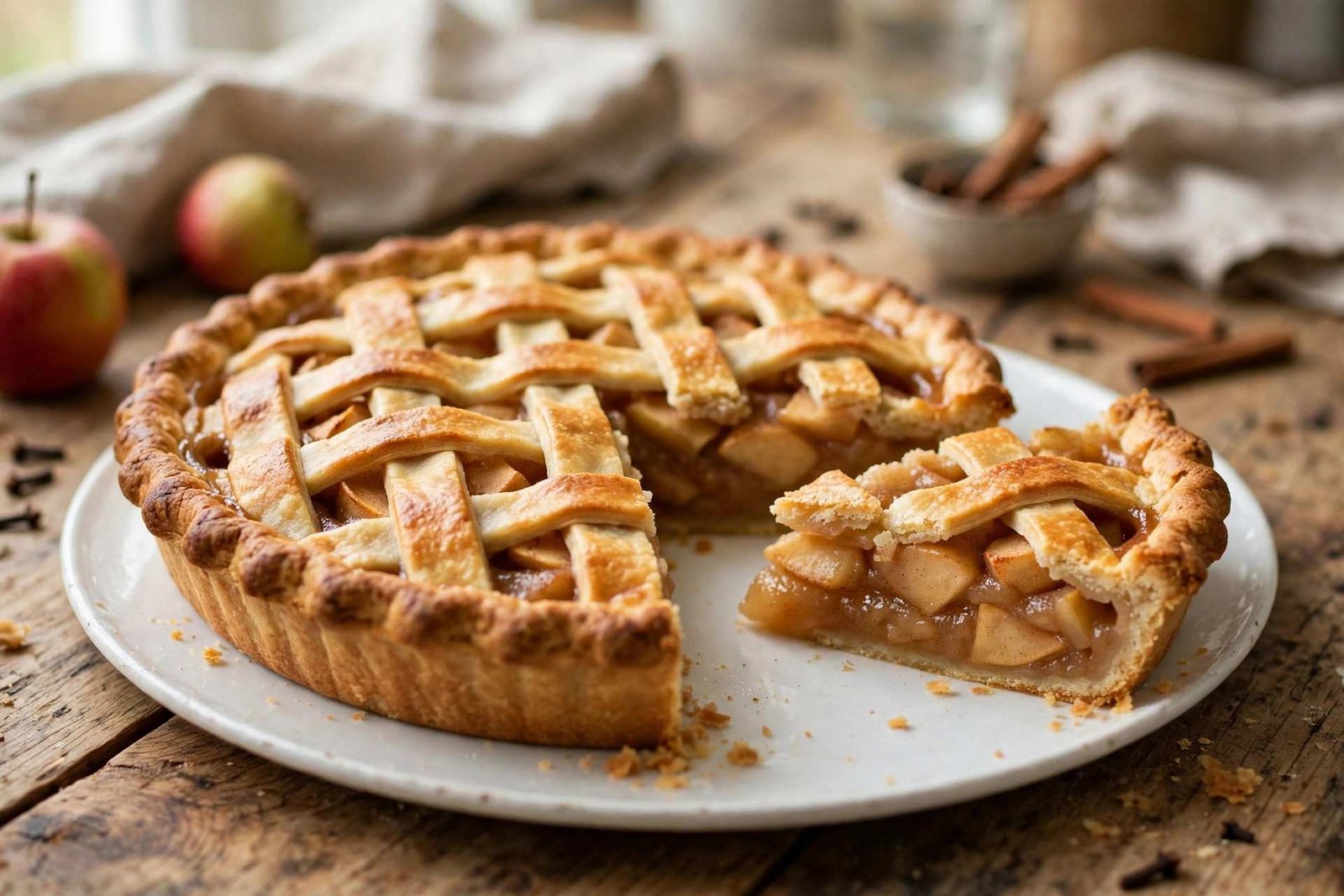

Learning how to make apple pie is one of the most rewarding things a home baker can do. A good apple pie has crisp, buttery pastry, a filling that holds its shape without turning to mush, and apples that stay tart enough to balance the sweetness. It is the kind of baking that fills the kitchen with a smell people remember.
So how do you make apple pie from scratch? You make a shortcrust pastry and chill it, fill it with sliced cooking apples tossed in sugar, cinnamon and a little flour, cover it with a lid or lattice, and bake it until the filling is bubbling and the crust is golden. This guide walks through every step, from pastry to serving.
Key takeaways:
- Use cooking apples, or a mix of cooking and eating apples, so the filling stays tart and holds its shape.
- Keep the pastry cold at every stage: cold butter, cold water and a chilled, rested dough.
- Toss the apples in sugar, cinnamon and a little flour so the filling thickens instead of turning watery.
- Bake until the filling is bubbling through the vents and the crust is deep golden, not just pale gold.
- Let the pie cool for at least an hour before slicing, so the filling sets and the slices hold together.
The pastry: shortcrust, done properly
Apple pie pastry should be short, buttery and crisp, not tough or soggy. The classic shortcrust is simple: plain flour, cold butter, a pinch of salt and just enough cold water to bring it together. The ratio matters less than the handling, because pastry turns tough when it is overworked.
Start with the butter as cold as you can get it, straight from the fridge and cut into small cubes. Rub it into the flour with your fingertips until the mixture looks like fine breadcrumbs, with a few pea-sized pieces of butter still visible. Those pieces are a good thing: they melt in the oven and create the flaky layers that make shortcrust so good.
Add the water a spoonful at a time, stirring with a knife until the dough just comes together. Too much water makes a hard pastry, and too little makes one that cracks when you roll it. Gather the dough into a ball, flatten it into a disc, wrap it and chill it in the fridge for at least half an hour. Chilling lets the flour relax and the butter firm up again.
When you roll it out, work on a lightly floured surface and roll from the centre outward, turning the pastry a quarter turn every few rolls so it stays even. Aim for a thickness of about three millimetres, which is roughly the thickness of a coin. Lift the pastry into the dish over the rolling pin so it does not stretch, and let it settle into the corners rather than pulling it tight.
A good pie dish matters more than people think. A metal dish gives a crisper base, because it conducts heat well, while a ceramic dish holds the heat and looks beautiful on the table. Either works, and our guide to the best baking sheets covers the trays that catch drips and keep the oven clean.
Choosing and preparing the apples

The apples make the pie, so choose them with care. Cooking apples such as Bramley are the classic choice in Britain, because they are sharply tart and break down into a soft, fluffy filling. Eating apples hold their shape better but are sweeter and milder, so many bakers use a mix: half cooking apples for flavour and softness, half eating apples for texture.
Peel the apples, quarter them, cut out the core and slice them evenly, about half a centimetre thick. Even slices matter, because thick slices stay hard while thin ones turn to puree. Six or seven medium apples fill a standard pie dish, and it is better to have a generous mound of filling than a flat one, because the apples shrink as they cook.
Toss the sliced apples in a bowl with sugar, cinnamon and a tablespoon or two of plain flour. The sugar draws out the juices, the cinnamon gives the familiar warmth, and the flour thickens those juices into a syrup rather than a puddle. A squeeze of lemon juice brightens the flavour and keeps the apples from browning while you work. Some bakers add a pinch of nutmeg or a knob of butter dotted over the filling.
Do not let the tossed apples sit for long before they go into the pie. The sugar starts drawing out juice within minutes, and a filling that has sat in its own liquid makes a soggy base.
Assembling and baking the pie
Line the dish with the base pastry, letting it overhang the rim slightly, then pile in the apple filling, mounding it a little higher in the centre. Dot a few small pieces of butter over the top if you like, then lay the lid over it. A full lid is the simplest finish, while a lattice, made from strips of pastry woven over the filling, looks beautiful and lets steam escape.
Seal the edges by pressing the lid and base together, then trim the excess and crimp the rim with your fingers or a fork. Cut a few slits in a full lid so steam can escape, or the filling will burst through the sides. Brush the top with a little beaten egg or milk for a golden shine, and sprinkle over a little sugar for crunch.
Most published recipes bake apple pie in a hot oven, around 190 to 200 degrees Celsius (375 to 400 degrees Fahrenheit), for 45 minutes to an hour. Start the pie on the lowest shelf, where the base gets the most heat, and put a baking tray underneath to catch any drips.
The pie is done when the filling is bubbling through the vents and the crust is a deep, even gold. Look for thick bubbles of filling syrup, not just steam, and check that the base is cooked by lifting the pie and looking underneath if you can. A pale crust and quiet filling mean the pie needs more time.
Serving and storing apple pie
Let the pie cool for at least an hour before you slice it. This is the hardest part of making apple pie, and the most important. A hot filling is still liquid, and a pie cut too soon will collapse into a puddle on the plate. As it cools, the filling thickens and sets, so the slices hold their shape.
Serve apple pie warm, not hot, with a scoop of vanilla ice cream, a spoonful of clotted cream or a slice of sharp Cheddar, which is the traditional partner in parts of Britain and America. A pot of tea alongside makes it a proper afternoon treat, and our guide on how to make tea covers the brew. Leftover pie keeps well covered at room temperature for a day, or in the fridge for three or four days.
To reheat a slice, warm it in a moderate oven for ten minutes or so, which brings the pastry back to crispness in a way a microwave never does. A whole pie can be frozen, baked or unbaked, wrapped tightly in cling film and foil. Bake a frozen unbaked pie from frozen, allowing extra time, and thaw a baked one in the fridge before reheating.
Apple pie also lends itself to variations. A cast-iron skillet pie, baked in a heavy pan, gives a wonderfully crisp base, and our guide to the best cast iron skillets covers the pan.
How do apple pie choices compare?
| Choice | Flavour | Texture | Best for |
|---|---|---|---|
| Bramley apples | Sharp and tart | Soft and fluffy | A classic British pie |
| Mixed cooking and eating apples | Balanced sweet and tart | Soft with firm pieces | The best all-round filling |
| Eating apples only | Sweet and mild | Firm slices | A pie that holds its shape |
| Shortcrust pastry | Buttery | Crisp and short | The traditional pie |
| Lattice top | Buttery | Crisp strips | A showpiece pie |
| Full lid | Buttery | Even golden crust | The simplest finish |
| Metal pie dish | Neutral | Crisp base | A base that cooks through |
| Ceramic pie dish | Neutral | Even bake | Serving at the table |
Your apple pie checklist
Work through this list before you bake, and the pie will rarely disappoint.
- Keep everything cold: cold butter, cold water, a chilled dough and a cold filling.
- Choose the right apples: cooking apples for tartness, or a mix for flavour and texture.
- Slice evenly: even slices cook evenly, so none stay hard and none turn to mush.
- Thicken the filling: a little flour turns the juices into syrup, not a puddle.
- Vent the lid: slits or a lattice let steam out, so the pastry stays crisp.
- Bake until bubbling: the filling should bubble and the crust should be deep gold.
- Cool before slicing: at least an hour, so the filling sets and the slices hold.
Frequently asked questions
What are the best apples for apple pie?
Cooking apples such as Bramley are the classic choice, because they are tart and soften into a fluffy filling. A mix of cooking and eating apples is often better, because the eating apples hold their shape and give the filling texture.
Why is my apple pie soggy on the bottom?
The usual causes are a filling that sat too long and released its juice, or a pie baked too high in the oven. Fill the pie and bake it straight away, start it on the lowest shelf, and use a metal dish for a crisper base.
How do I stop the pastry from shrinking?
Chill the lined dish for half an hour before filling it, and do not stretch the pastry when you lay it in. Pastry shrinks when it is overworked or warm, so cold dough and a gentle hand are the fix.
Can I make apple pie ahead of time?
Yes. You can make the pastry a day ahead and keep it wrapped in the fridge, or freeze the whole unbaked pie and bake it from frozen, allowing extra time. A baked pie keeps in the fridge for three or four days.
Do I have to peel the apples?
Peeling is worth it. Apple peel turns tough and papery in the filling, and it stops the slices from softening evenly. Peel, core and slice the apples, and the filling will be smooth and tender.
How do I know when the pie is done?
Look for the filling bubbling through the vents and a crust that is deep gold all over. Thick, syrupy bubbles mean the filling is cooked and thickened. If the crust is pale or the filling is quiet, give the pie more time.
Sources
This guide reflects widely published baking guidance on pastry and apple pie technique. For more on baking at home, our guides to the best baking sheets, the how to make tea guide and the best cast iron skillets cover the equipment and the table.
The bottom line
Making apple pie comes down to three things: cold pastry, the right apples and patience. Keep the butter cold, use cooking apples or a good mix, and bake until the filling bubbles and the crust is golden, then let the pie cool before you slice it.
Your next step is simple: pick your apples, make the pastry, and bake the pie this weekend. Ovens vary, so check the pie, not just the clock, and trust the bubbles and the colour.














