

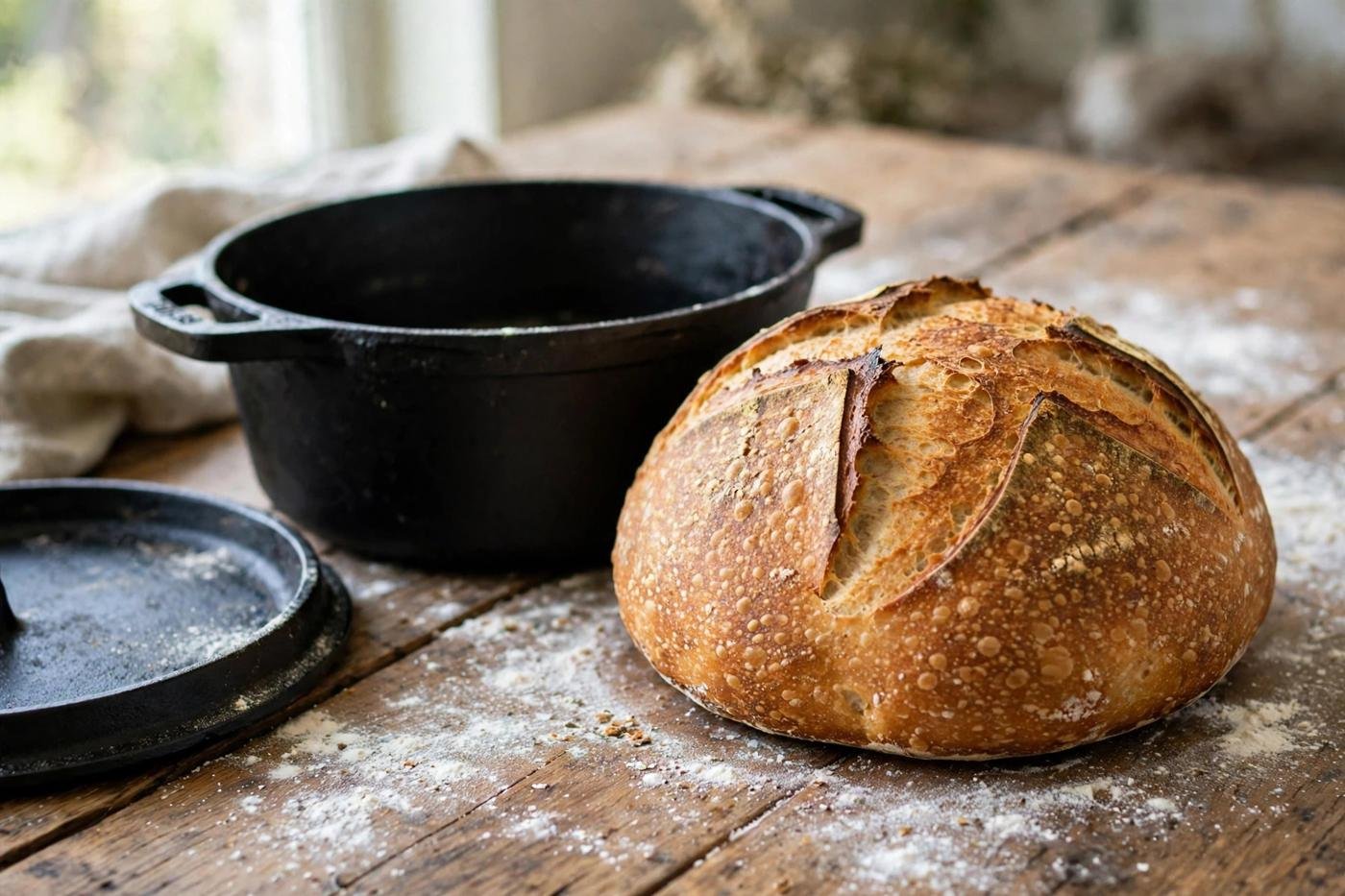
The best Dutch oven for baking bread is not always the best Dutch oven for stew. A bread pot needs a lid that traps steam, walls that hold fierce heat, and a shape that lets a loaf rise freely without touching the sides. So which pot gives a home baker the best crust and crumb in 2027?
This guide ranks ten bread-baking picks by lid fit and steam, heat retention, how safely you can lower dough in and lift bread out, and whether the pot survives repeated trips to a very hot oven. Every pick is judged as a bread oven first and a stew pot second.
Key takeaways
- Steam trapped under a tight lid is what gives Dutch oven bread its crisp crust.
- A four-to-five-litre round pot suits most sourdough loaves made from about 500 grams of flour.
- Shallow pots and lids used as bases make loading dough and lifting bread far safer.
- Enamelled pots are easiest to clean after baking; raw iron holds heat superbly.
- Always check the lid knob and handle heat limits before preheating to bread temperatures.
Why a Dutch oven bakes such good bread
A loaf baked in a Dutch oven rises in its own steam. The tight lid holds the moisture that escapes from the dough in the first minutes of baking, and that steam keeps the crust soft long enough for the loaf to spring upwards. Once the lid comes off, the dry heat finishes the crust, turning it crisp and deeply coloured.
Cast iron helps because it stores heat. A well-preheated pot gives the dough a burst of heat from below and all around, which encourages a good rise, known as oven spring. A thin or light pot cannot store the same heat, so the loaf rises less and the crust stays paler. That is why the heavy pot that feels like a burden for stew is a gift for bread.
What to look for in a bread Dutch oven
Start with the lid. It should sit flat, seal well, and stay put when the pot is hot. A lid with a little weight to it holds steam in better than a light one, and a knob that can take high oven heat is essential, since bread baking often uses temperatures that test cheaper fittings. Some bakers prefer a flat lid, which can double as a base.
Handling is the part many guides skip, and it matters most when the pot is at full heat. Lowering soft dough into a hot pot is the riskiest moment in bread baking. A shallow pot, a lid used as a base, or a sling made from baking parchment all make that moment safer. Choose handles you can grip firmly with thick oven gloves, and a pot you can lift with confidence when it holds a hot loaf.
The 10 best Dutch ovens for baking bread in 2027
1. The classic round enamelled pot
Best for: a first bread pot for round sourdough boules.
A round enamelled pot of about five litres is the safest first choice for bread. It holds steam well, the light interior lets you see how dark the base is getting, and the enamel wipes clean after a bake. It suits a loaf made from about 500 grams of flour, with room for a good rise and no sticking to the walls.
2. The smaller round pot for everyday loaves
Best for: smaller loaves and households that bake little and often.
A pot of about three and a half to four litres suits a smaller loaf, made from around 350 to 400 grams of flour. The tighter space traps steam close to the loaf, which helps the crust, and the pot is lighter to handle when it is hot. It also heats faster, so preheating takes less time.
3. The raw cast iron pot
Best for: the darkest crust and the strongest oven spring.
Raw cast iron stores heat better than almost anything else in a home kitchen, and that heat gives a loaf a powerful rise. A well-seasoned raw pot also releases a baked loaf cleanly, and it can take the highest oven temperatures without any worry about a lid knob or an enamel coating.
4. The shallow pot with a flat lid
Best for: safe loading and easy lifting of hot bread.
This is the cleverest shape for bread. The pot is shallower than a classic Dutch oven, and its flat lid can be used as the base, with the deep part acting as a cover. You place the dough on the lid, lower the cover over it, and never have to reach into a deep, hot pot.
5. The oval pot for long loaves
Best for: oval and batard-shaped loaves.
Round pots force every loaf into a round shape, but many bakers prefer a longer loaf that slices neatly for sandwiches. An oval pot gives that shape room to rise, with the same steam and heat benefits as a round pot. It also fits a longer loaf without the ends touching the walls.
6. The large pot for big weekend loaves
Best for: large loaves and baking for a household or a gathering.
A pot of six litres or more suits a loaf made from 700 grams of flour or above, the kind of large loaf that feeds a family for days. The extra space lets a big dough rise fully, and the thick walls hold heat through a long bake. It also works for two smaller loaves baked side by side, though they may touch as they rise.
7. The lightweight enamelled pot
Best for: bakers who want Dutch oven bread without a heavy lift.
Enamelled steel pots are far lighter than cast iron, which makes them attractive if lifting a hot, heavy pot worries you. They preheat quickly, trap steam well enough for a good crust, and clean easily after baking. The crust will be a little paler and the rise a little gentler than in cast iron, because the walls store less heat.
8. The pot with a self-basting lid
Best for: a moist crumb in long, slow bakes.
Some premium lids carry small studs or rings underneath that catch steam and drip it back over the food. In bread baking, that extra moisture helps keep the crust supple during the covered part of the bake, which supports a fuller rise before the crust sets. The effect is gentle rather than dramatic, but regular bakers notice it.
9. The budget enamelled pot
Best for: trying Dutch oven bread without a large outlay.
You do not need a premium pot to bake excellent bread. A budget enamelled pot from a long-established maker such as Lodge will trap steam, hold heat and produce a crisp crust, as long as the lid fits well and the knob can take bread-baking temperatures. Check those two details before you buy, since a loose lid or a low-rated knob will spoil the bake.
10. The tall pot for high-rising loaves
Best for: tall, high-hydration loaves that rise dramatically.
Some doughs, especially wetter ones, rise high and fast in the oven. A taller pot gives that rise room without the top of the loaf touching the lid, which would flatten the crown and tear the crust. The extra height also keeps steam close to the loaf for longer.
| Pick | Size | Best for |
|---|---|---|
| Classic round enamelled | About 5 litres | First bread pot, round boules |
| Smaller round | About 4 litres | Smaller everyday loaves |
| Raw cast iron | About 5 litres | Darkest crust, strong rise |
| Shallow, flat lid | About 4 litres | Safe loading and lifting |
| Oval pot | About 5 litres | Long oval loaves |
| Large pot | 6 litres or more | Big weekend loaves |
| Lightweight enamelled | About 4 litres | Easy lifting |
| Self-basting lid | About 5 litres | Moist crumb |
| Budget enamelled | About 5 litres | First try at bread baking |
| Tall pot | About 5 litres | High-rising loaves |
How to bake bread in a Dutch oven
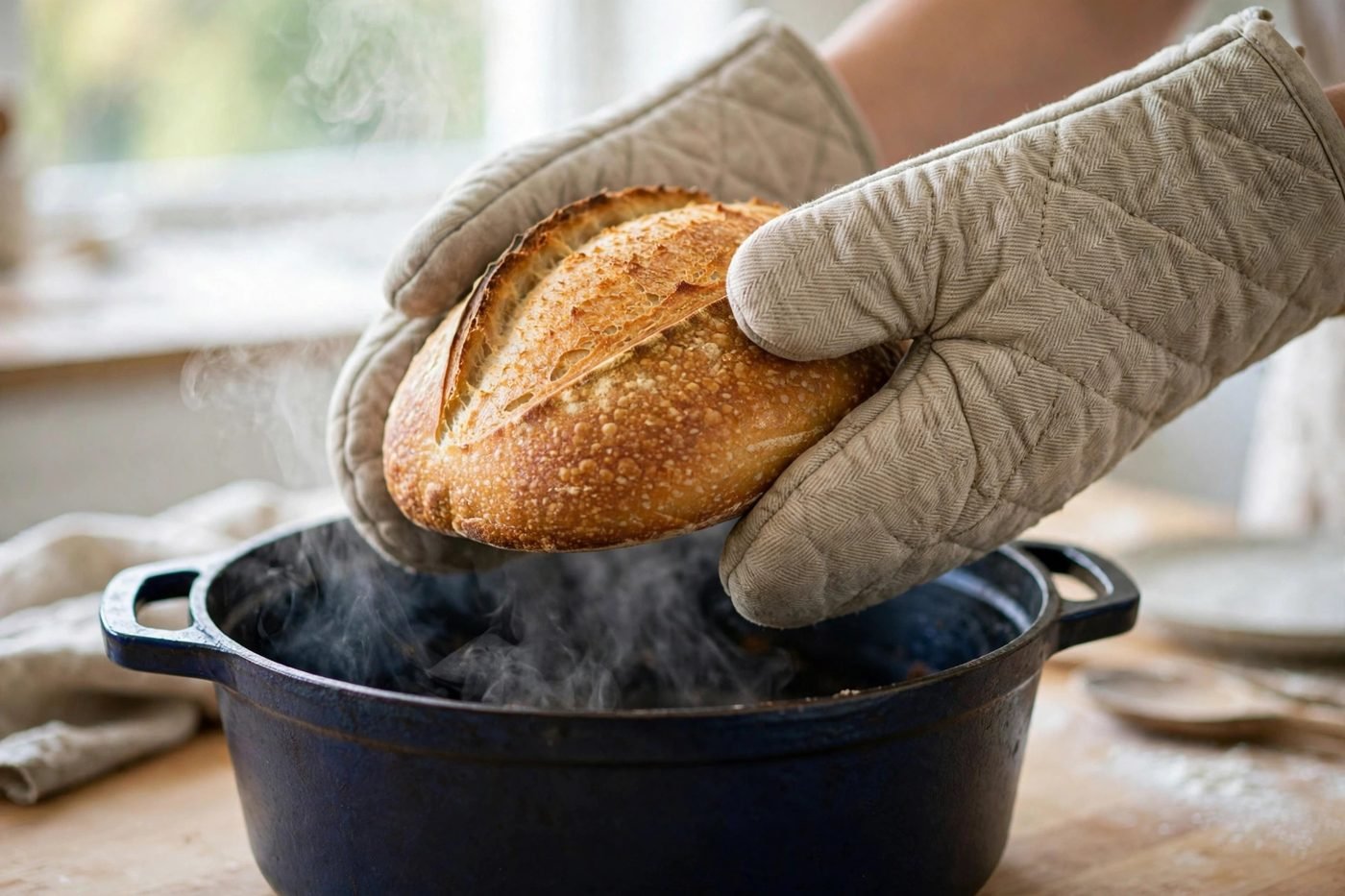
Preheat the pot empty in the oven, with the lid on, so the walls are thoroughly hot before the dough goes in. Shape the dough, place it on a sheet of baking parchment, and score the top with a sharp blade. The score controls where the loaf opens as it rises, so make it confident and not too shallow.
Lower the dough into the hot pot using the parchment as a sling, put the lid on at once, and return the pot to the oven. Bake covered for the first part of the bake, then remove the lid so the crust can colour and crisp. The loaf is ready when the crust is deeply coloured and the base sounds hollow when tapped.
Let the bread cool on a wire rack before slicing, even though the smell makes that hard. A hot loaf is still baking inside, and cutting it too soon gives a gummy crumb. Our guide to the best bread machine is useful if you want to compare machine baking with the Dutch oven method.
Bread-baking checklist
- Preheat the pot empty, with the lid on, until it is thoroughly hot.
- Check the lid knob and handles can take your baking temperature.
- Use baking parchment as a sling to lower dough in safely.
- Score the dough just before it goes into the pot.
- Bake with the lid on first, then uncovered to colour the crust.
- Use thick oven gloves and clear a landing space before lifting the pot.
- Cool the loaf on a wire rack before slicing.
Frequently asked questions
What size Dutch oven is best for sourdough?
A round pot of about four to five litres suits most sourdough loaves made from about 500 grams of flour. It traps steam close to the loaf, gives room for a good rise, and is still light enough to handle safely when hot.
Should I preheat my Dutch oven before baking bread?
Yes. Preheating the pot empty gives the dough a burst of heat that encourages oven spring and a crisp base. Lower the dough in on parchment, put the lid on quickly, and return the pot to the oven without delay.
Can I bake bread in an enamelled Dutch oven?
Yes, enamelled pots bake excellent bread and are easy to clean afterwards. Check that the lid knob can take your baking temperature, and avoid sudden temperature changes that could chip the enamel over time.
Why is my Dutch oven bread pale?
A pale crust usually means the lid stayed on too long, the oven was not hot enough, or the pot was not preheated. Bake uncovered for the final part of the bake, check your oven temperature, and give the pot time to heat fully before the dough goes in.
Sources
For more on bread, see our guides to the best bread for French toast and the best bread for grilled cheese, and our guide to how to make apple pie for another oven-baked favourite. If you want to compare baking methods, the best bread machine guide is a useful companion.
The bottom line
For most home bakers, a round enamelled pot of about five litres is the best Dutch oven for baking bread. It traps steam, holds heat, cleans easily, and suits the standard sourdough loaf that most of us bake. If loading dough safely worries you, choose a shallow pot with a flat lid instead.
Your next step is to match the pot to your usual loaf, check the lid knob temperature limit, and bake one loaf with the lid on and the lid off in turn. Once you hear the crust crackle as it cools, you will know the pot has earned its place.














