

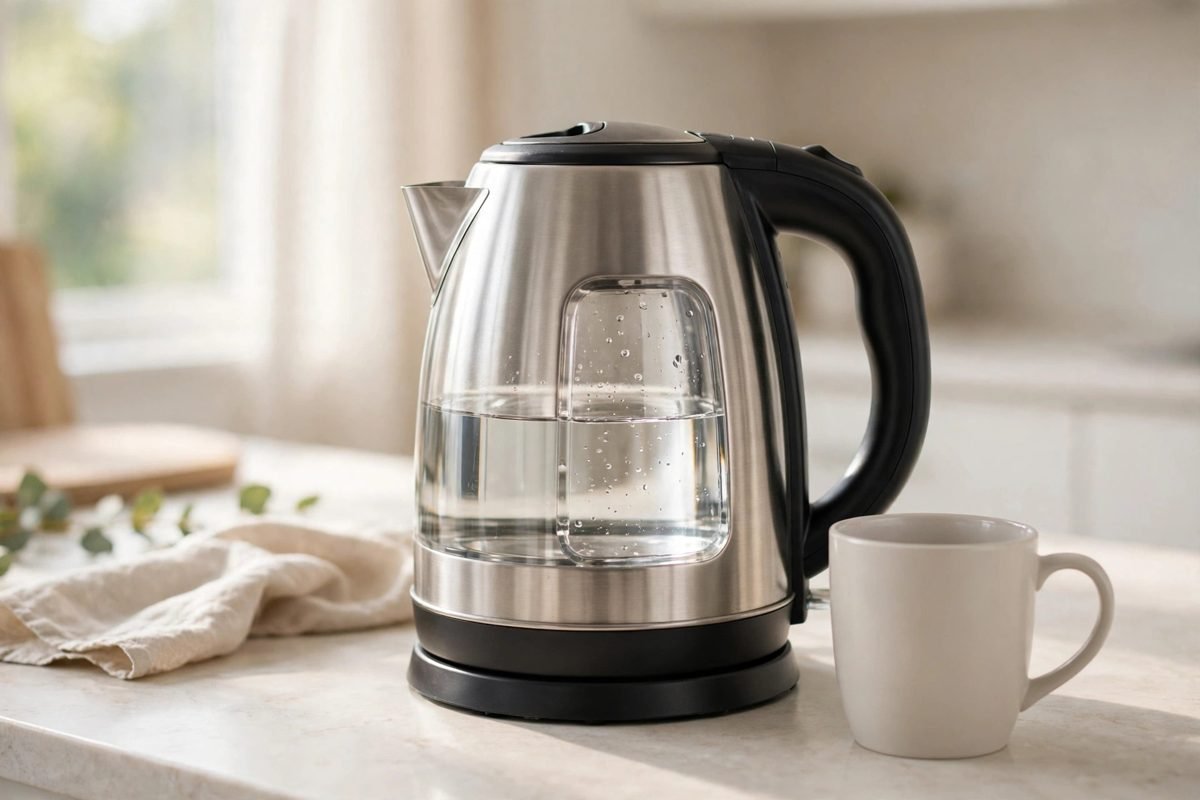

The best electric kettle in 2027 is the one that matches how you actually make hot drinks at home. Some households boil water once in the morning for a single mug of tea, while others run the kettle half a dozen times a day for coffee, cooking and a full round of cups for the family.
That difference matters more than any single feature. The right choice comes down to capacity, temperature control, pouring precision and how easy the kettle is to live with day after day.
Key takeaways
- Match capacity to your household: a smaller kettle suits one or two people, while a larger one suits families and frequent hosts.
- Variable temperature control is worth having if you brew green tea, white tea or pour-over coffee.
- A gooseneck spout gives the slow, steady pour that pour-over coffee needs.
- Glass and stainless steel both have strengths; choose glass to watch the water and steel for durability.
- Look for a wide opening, a clear water window and a base that feels stable on your worktop.
How to choose an electric kettle
Start with capacity. Kettles commonly hold between one and one and three-quarter litres. A one-litre kettle boils quickly and suits a single person or a couple, while a larger kettle means fewer refills when you are making several drinks at once.
Next, think about temperature. A basic kettle boils water and switches itself off, which is all many people need. A variable-temperature kettle lets you choose a lower heat for delicate teas or a precise heat for coffee, and that control makes a real difference to flavour.
Pouring matters more than most buyers expect. A standard spout pours quickly and works well for filling mugs and teapots, while a gooseneck spout pours slowly and steadily for pour-over brewing. A wide opening makes the kettle easy to fill and clean.
The 10 best electric kettles
1. Best variable-temperature kettle
Best for: tea and coffee lovers who want precise heat for every brew.
A variable-temperature kettle is the most versatile pick on this list. It lets you select a temperature below boiling for green tea or a precise heat for pour-over coffee, and many models hold that temperature for a set time while you prepare your drink. That flexibility makes it the natural first choice for anyone who takes brewing seriously, though the extra settings take a little learning and these kettles tend to cost more than basic models.
2. Best gooseneck kettle
Best for: pour-over coffee brewers who need a slow, controlled pour.
A gooseneck kettle has a long, narrow spout that turns a fast boil into a gentle, even stream. That control lets you wet coffee grounds evenly and keep the water flowing at a steady pace, which is exactly what pour-over brewing asks for. Many gooseneck models also offer variable temperature, pairing precision pouring with precision heat, though the narrow spout is slower to fill a large teapot.
3. Best glass kettle
Best for: anyone who likes to see the water level and the boil.
A glass kettle turns a routine job into something pleasant to watch. You can see exactly how much water is inside, watch it come to the boil and spot limescale building up before it becomes a problem. Many glass kettles pair the transparent body with steel fittings and a soft light while the water heats, though glass needs a little more care than steel and can feel heavier.
4. Best stainless steel kettle
Best for: busy households that want a tough, long-lasting kettle.
Stainless steel is the workhorse of the kettle world. It resists stains, handles daily knocks and keeps its looks for years, and a steel body hides water marks far better than glass. Most steel kettles boil quickly and feel solid in the hand. The main drawback is that you cannot see the water level unless the kettle has a window, so choose a model with a clear gauge and a comfortable grip.
5. Best large-capacity kettle
Best for: families and anyone who regularly makes several drinks at once.
A large-capacity kettle holds enough water for a full round of tea or coffee without a second boil. That saves time in the morning rush and makes hosting far easier, since you can fill a teapot and still have water left for another mug. The cost is size and weight: a full large kettle is heavy to lift and pour, so fill it only to the level you need.
6. Best compact kettle
Best for: small kitchens, single people and anyone short on worktop space.
A compact kettle is a small, light answer to a crowded kitchen. It boils a litre or less quickly, tucks into a corner and is easy to lift and pour with one hand. It suits a single person, a student kitchen or a second kettle for a home office. Capacity is the limit: two large mugs may need a second boil, and filling a teapot for guests is not its strength.
7. Best kettle with temperature hold
Best for: slow mornings and second cups without reboiling.
A kettle with a keep-warm function holds water at your chosen temperature for a while after it first heats. That means a second cup of tea or a second pour of coffee needs no fresh boil and no waiting. It is a quiet luxury that suits unhurried mornings and long breakfasts, though it uses energy while it holds the heat, so switch it off when you are done.
8. Best kettle for tea lovers
Best for: households where tea is the main event, morning and evening.
A tea-focused kettle combines a generous capacity with temperature settings that suit different teas. Black tea wants a full boil, green tea wants cooler water and herbal infusions sit somewhere in between, and a kettle that handles all three takes the guesswork out of brewing. A wide spout fills a teapot cleanly, and a stable base makes repeated pouring easy.
9. Best quiet kettle
Best for: open-plan homes, early risers and light sleepers.
A quiet kettle is designed to boil with less noise, using insulation and a concealed element to soften the rumble as water heats. The difference is most welcome in an open-plan kitchen, a flat with thin walls or a household where someone rises before everyone else. Quiet models are not silent, and the insulation can make the kettle slightly bulkier.
10. Best simple kettle
Best for: anyone who wants a reliable kettle with no fuss.
A simple kettle does one job and does it well: it boils water quickly and switches itself off. There are no settings to learn, no display to read and nothing to go wrong. It is the easiest kettle to use and often the easiest to keep clean. You give up temperature control and any keep-warm function, but for many households that is no loss at all.
Electric kettles for tea
Tea is where an electric kettle earns its keep, and the best electric kettles for tea respect the fact that different teas want different water. Black tea and herbal infusions thrive on a full, rolling boil, which draws out their full flavour. Green tea and white tea taste best with cooler water.
A variable-temperature kettle takes the guesswork out of this. You choose the setting that matches your tea, and the kettle does the rest. If your kettle only boils, you can still brew green tea well by letting the water cool for a few minutes after the boil before you pour. Learning how to make tea properly will improve every cup you brew.

Capacity matters for tea as well. A teapot for two needs less water than a pot for a family gathering, and a kettle that matches your teapot avoids waste. A clean, wide spout pours into a teapot without spilling. For iced drinks in summer, the same kettle can start a brew you later chill, as explained in our guide to how to make iced tea.
Comparison table
| Pick | Type | Capacity | Best for |
|---|---|---|---|
| 1. Variable temperature | Variable temperature | Medium to large | Tea and coffee lovers |
| 2. Gooseneck | Gooseneck | Small to medium | Pour-over coffee |
| 3. Glass | Glass body | Medium to large | Watching the water level |
| 4. Stainless steel | Steel body | Medium to large | Busy family kitchens |
| 5. Large capacity | Large | Large | Families and hosts |
| 6. Compact | Compact | Small | Small kitchens |
| 7. Temperature hold | Keep warm | Medium to large | Slow mornings |
| 8. Tea lovers | Tea focused | Medium to large | Daily tea drinkers |
| 9. Quiet | Quiet boil | Medium | Open-plan homes |
| 10. Simple | Basic boil | Medium to large | No-fuss boiling |
Electric kettle checklist
Run through this list before you buy, and you will avoid the most common regrets.
- Check the capacity against your household: enough for your usual round of drinks, without being heavy to lift when full.
- Decide whether you need variable temperature for green tea, white tea or pour-over coffee.
- Choose a gooseneck spout for pour-over coffee and a standard spout for filling mugs and teapots.
- Look for a wide opening so the kettle is easy to fill, clean and descale.
- Make sure the water level is easy to read.
- Test the handle if you can, so it feels balanced when full.
- Check that the base sits flat and stable on your worktop and that the kettle lifts off smoothly.
- Confirm the cord length suits your kitchen.
Frequently asked questions
What is the best electric kettle for everyday use?
For most households, a medium stainless steel or glass kettle with a clear water window is the best everyday choice. Add variable temperature if you brew green tea or pour-over coffee regularly.
Are variable-temperature kettles worth it?
Yes, if you drink green tea, white tea or pour-over coffee. Cooler water protects delicate teas from bitterness, and precise heat improves coffee extraction.
What size electric kettle should I buy?
A one-litre kettle suits one or two people, while a larger kettle suits families and frequent hosts. Think about your biggest usual round of drinks rather than your smallest.
Is a glass kettle better than a stainless steel kettle?
Neither is better in every way. Glass lets you see the water level and the boil, while stainless steel is tougher and hides water marks. Choose glass for the view and steel for durability.
How do I descale an electric kettle?
Descale regularly with a mixture of water and white vinegar or citric acid, following the instructions that come with your kettle. Boil the mixture, leave it to sit, then rinse well.
Can I use an electric kettle for pour-over coffee?
Yes, and a gooseneck kettle is the best tool for it. Its narrow spout gives a slow, steady pour that wets the coffee grounds evenly. A variable-temperature model adds precise heat control as well.
Sources
For more on brewing at home, read our guide to how to make tea and our guide to how to make iced tea. If you also brew coffee at home, our guide to the best coffee machine covers the machines that pair well with a good kettle.
The bottom line
The best electric kettle is the one that fits your routine, not the one with the longest list of features. A tea lover needs temperature control and a generous capacity, a pour-over brewer needs a gooseneck spout, and a busy family needs a tough kettle that boils plenty of water fast.
Start with the variable-temperature pick if you brew both tea and coffee, or the stainless steel pick if you want a dependable everyday kettle. Either way, measure your usual round of drinks, check your worktop space and choose the kettle that makes your morning simpler.














