Layering in winter is not about wearing more clothes. It is about wearing the right clothes in the right order, so you stay warm outside, comfortable inside, and still look like you meant to dress that way. The problem is not a lack of warm pieces. It is the bulky, shapeless result that comes from piling a thick jumper over a thick shirt under a thick coat, and then spending the whole day too hot indoors and too cold outdoors.
Good layering works because each layer has a job: a thin base layer manages moisture, a middle layer adds insulation and shape, and an outer layer protects against wind and rain. When each is thin and fitted, the outfit stays slim, moves easily, and adapts as the day changes.
Below are nine layering ideas that work in 2027, from the base layer up to the coat, with practical notes on what each layer should do, what to avoid, and how long each one takes to put together. Each one is described plainly, so you can build an outfit that works in a cold morning, a warm office, and a windy evening, without carrying a spare wardrobe in your bag.
Key takeaways
- Three thin layers keep you warmer than one thick one, because trapped air between layers is what insulates.
- Start with a fitted thermal base layer, add a fine knit or blazer in the middle, and finish with a coat that fits over everything.
- Keep the bulkiest piece on the outside and the thinnest closest to your skin, so the silhouette stays slim.
- Mix textures, such as smooth silk with soft wool and structured tailoring, so layers read as intentional rather than accidental.
- No layering system works in every weather, and a coat that is too tight to close over your layers is the wrong coat, not the wrong layers.
What layering actually means in winter
Layering means building an outfit from pieces that can be added or removed as the temperature changes. In winter, that matters more than in any other season, because the gap between outside and inside is so large. A cold street, a heated office, a draughty train and a warm restaurant can all happen in the same hour, and a single heavy jumper cannot adapt to all four.
The science is simple: warmth comes from air trapped between layers, not from the thickness of any one garment. Three thin layers hold more warm air than one thick layer, and they let you adjust. Take off the coat indoors and you are still dressed; take off the blazer at your desk and you are still warm enough. That flexibility is the whole point.
How layers look together matters too. A good layered outfit has a clear shape: a defined waist, a visible collar, a hem that ends where it should. Each layer should be slightly looser than the one beneath it, so nothing pulls, bunches, or fights for space.
How we chose these layering ideas and what to look for
Look first at the base layer. It should be thin, fitted, and made from a fabric that manages moisture, such as merino wool, a silk blend, or a good thermal synthetic. Cotton is a poor base layer in winter because it holds sweat and feels cold once it is damp. A base layer that is too loose will bunch under everything else, and a base layer that is too thick will make every layer above it fit badly.
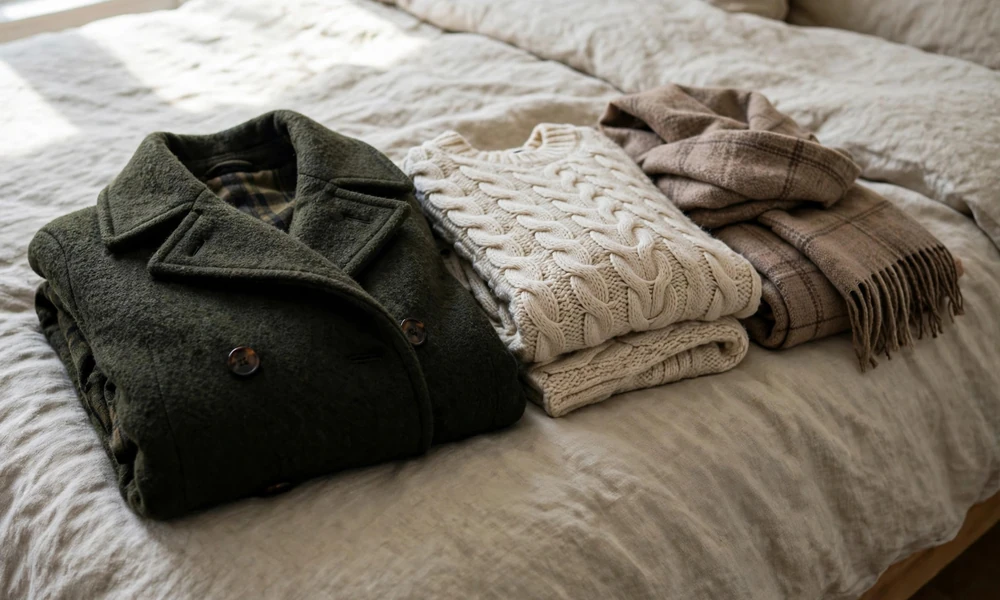
Look next at the middle layer, which is where most of the warmth and most of the style comes from. A fine-knit jumper, a fitted blazer, or a thin quilted gilet can all work, but only one at a time should be bulky. If your middle layer is a chunky knit, your outer layer needs to be roomy. If your middle layer is a tailored blazer, your coat can be slimmer. A leather jacket can work as a middle layer under a longer coat on dry days, and our guide to wearing a leather jacket in winter explains how to make that pairing work without looking bulky.
Finally, look at the outer layer and accessories together. A coat too tight to close over your layers is the wrong coat, however good it looks alone. A scarf should be a layer, not an afterthought, long enough to tuck into the coat. Gloves, a hat and warm socks are part of the system, not extras; they decide whether the outfit actually keeps you warm.
The 9 layering ideas that work in winter 2027
Start with a thin thermal base layer
What we like: A fitted merino or silk-blend thermal sits close to the skin, traps warmth, and disappears under everything else. What to consider: Cheap thermals can feel scratchy and lose their shape after a few washes, so buy one good one rather than three thin ones. Best for: Cold mornings, long commutes, and anyone who feels the cold. Cost: Low to mid-range. Time needed: Two minutes to put on.
The foundation of every good winter outfit: without it, every layer above works harder and the result is bulk; with it, a fine knit and a coat are often enough.
Add a fine knit as your middle layer
What we like: A fine-gauge cashmere or merino jumper adds real warmth without bulk, layers cleanly under a coat, and looks polished on its own indoors. What to consider: A chunky knit over a thermal is too much under a fitted coat, so keep the knit fine if the coat is slim. Best for: Office days and smart-casual outfits. Cost: Mid-range to premium. Time needed: One minute to pull on.
The most versatile middle layer: it works under a blazer, under a coat, and on its own at your desk. One good knit in a neutral colour carries half your winter wardrobe.
Let a blazer do the structured work
What we like: A tailored blazer over a fine knit gives a layered outfit its shape, keeps the waist defined, and makes the whole look read as deliberate rather than bundled up. What to consider: The blazer must fit over the knit without pulling, so try the two together before you buy. Best for: Work days, meetings, and smart outfits. Cost: Mid-range to premium. Time needed: One minute to put on.
The layer that turns warmth into an outfit: without it, a knit and a coat can look shapeless; with it, the same pieces look finished, and it comes off indoors without ruining the look.
Choose a coat that fits over everything
What we like: A coat with room in the shoulders and body, long enough to cover your layers, keeps you warm and lets you move without feeling squeezed. What to consider: A coat bought to fit over a T-shirt will not close over a knit and a blazer, so always try a coat on with your winter layers underneath. Best for: Everyone, every winter day. Cost: Mid-range to premium. Time needed: Ten minutes to try on properly in a shop.
The most common layering mistake, and the easiest to avoid: if your coat will not close over your layers, the layers are not the problem. The coat is. Our roundup of the best winter coats for petite women is a useful guide to proportions.
Use a scarf as a layer, not an afterthought
What we like: A long wool or cashmere scarf adds real warmth around the neck and chest, fills the gap between coat and chin, and can be removed indoors in seconds. What to consider: A very bulky scarf under a coat collar can push the collar up and look messy, so choose a scarf that drapes rather than puffs. Best for: Cold, windy days and long walks. Cost: Low to mid-range. Time needed: Thirty seconds to wrap.
The cheapest warmth you can buy, and the easiest layer to adjust: wear it outside, take it off inside, and you have changed your outfit without changing your clothes.
Layer skirts and dresses over tights
What we like: Thermal or fleece-lined tights under a skirt or dress keep your legs warm without adding bulk, and they let you wear your favourite pieces all winter. What to consider: Thin tights are not enough on very cold days, and light colours show every mark, so choose opaque tights in a dark neutral. Best for: Dress and skirt wearers who do not want to give them up in winter. Cost: Low. Time needed: Two minutes to put on.
Tights are a layer too, and often the forgotten one: a good pair of thermal tights is the difference between wearing a dress in January and leaving it until April.
Mix textures so layers read as intentional
What we like: Combining smooth silk, soft wool, structured tailoring and a little leather makes layers look chosen rather than accidental, and it adds visual interest without colour. What to consider: Too many textures at once can look busy, so keep it to three at most, and let one texture lead. Best for: Anyone whose layered outfits look flat or shapeless. Cost: No extra cost, it is a styling choice. Time needed: Five minutes to plan an outfit.
Texture stops a layered outfit looking like a pile of clothes: a smooth blouse under a soft knit under a structured coat reads as an outfit, while three fleecy layers in one colour read as a blanket.
Keep proportions in check
What we like: A defined waist, a visible collar, and hems that end at different lengths keep a layered outfit looking slim, even with three or four layers on. What to consider: Layers that all end at the same length create a blocky silhouette, so vary the lengths and tuck in the innermost layer. Best for: Petite frames and anyone who feels swamped by layers. Cost: No extra cost, it is a styling choice. Time needed: Five minutes in front of a mirror.
Proportion is the difference between layered and bulky: a belt over a knit, a tucked-in base layer, or a coat longer than everything beneath it can fix a shapeless outfit in seconds.
Finish with accessories that add warmth
What we like: A warm hat, leather gloves and thick socks close the gaps where heat escapes, and they finish an outfit without adding any bulk to the torso. What to consider: Accessories that do not match the outfit can look like an afterthought, so keep them in the same colour family as the coat. Best for: Very cold days, long walks, and anyone who is always cold. Cost: Low to mid-range. Time needed: One minute to put on.
Most heat is lost from the head, hands and feet, not the torso. A hat and gloves do more for your warmth than an extra jumper, without changing the shape of your outfit.
Which layers are right for your winter
Start with your day, not the forecast. A day mostly indoors needs fewer, lighter layers, because you will be warm inside. A day mostly outside needs more layers and a warmer coat, because you cannot adjust as easily once you are out.
Then think about your body. If you run cold, a thermal base layer is not optional, and a fine cashmere knit will do more than a thick acrylic one. If you run hot, skip the base layer and let the coat do the work. A cashmere sweater is a good middle layer for both types, because it is warm without being heavy, and our guide to styling a cashmere sweater shows how one piece can work across a whole week of different outfits.
Finally, think about your coat. Every layer has to fit under it, and it has to close. If it does not, either the coat is too small or the layers are too thick. Try the whole outfit on together before you leave; five minutes in front of a mirror saves an hour of discomfort.
The caveats that matter
Layering is not a licence to wear everything you own at once. Too many layers restrict movement, make you sweat indoors, and look bulky. Three layers is enough for most winter days; four is the maximum, only on the coldest days, and only if each layer is thin.
| Detail | What is known |
|---|---|
| How many layers | Three thin layers for most days; four at most, only on the coldest days |
| Best base layer | Fitted merino wool or silk blend; cotton holds sweat and feels cold |
| Best middle layer | Fine-gauge cashmere or merino knit, or a tailored blazer for shape |
| Outer layer rule | The coat must close over all layers; try it on with them underneath |
| What adds most warmth | Trapped air between thin layers, not the thickness of any one garment |
| Biggest mistake | Too many bulky layers at once, which restricts movement and looks shapeless |
| What to avoid indoors | Staying in all your layers, which causes sweating and then chills |
| What layering does not do | It does not replace a proper coat, and it does not keep you warm if the coat is too thin |
If you are sweating indoors, you are wearing too much. Sweating in winter is worse than being slightly cold, because damp clothes chill you quickly once you go back outside. Take a layer off when you come inside, and put it back on before you go out.
Checklist: layering in winter honestly
Use these checks before you leave the house, and again when you come inside.
- Check the base layer: thin, fitted, merino or silk blend, not cotton, and no bunching under the next layer.
- Check the middle layer: one bulky piece at most, and it should fit under your coat without pulling.
- Check the coat: it should close over all your layers, with room to move your arms.
- Check the proportions: a defined waist, a visible collar, and hems that end at different lengths.
- Check the gaps: scarf, hat, gloves and warm socks, because heat escapes from the edges.
- Check indoors: take the coat and scarf off when you come inside, so you do not sweat and then chill.
Frequently asked questions
How many layers should I wear in winter?
Three thin layers are enough for most winter days: a fitted base layer, a fine knit or blazer, and a coat. Add a fourth only on the coldest days, and only if each layer is thin.
What is the best base layer for winter?
A fitted merino wool or silk-blend thermal is the best choice for most people. It sits close to the skin, manages moisture, and disappears under everything else. Avoid cotton as a base layer, because it holds sweat and feels cold once it is damp.
Can I layer a blazer under a coat?
Yes, and it is one of the best ways to add shape to a winter outfit. The blazer must fit over your knit without pulling, and the coat must fit over the blazer. Try all three together before you buy.
How do I layer without looking bulky?
Keep each layer thinner than the one outside it, vary the hem lengths, and define your waist with a tuck or a belt. Mix textures so the layers read as intentional, and avoid two bulky pieces at once.
Should I wear a scarf inside or outside my coat?
Outside is usually better, wrapped over the coat collar, because it adds warmth where the coat opens and it is easy to remove indoors. A thin scarf can be tucked inside a coat, but a bulky one will push the collar up and look messy.
What should I wear on my legs in winter?
Thermal or fleece-lined tights under skirts and dresses, or a thin thermal layer under trousers on very cold days. Thick socks and warm, waterproof boots matter as much as anything on your torso, because cold feet make the whole body feel cold.
The bottom line
The best winter layering in 2027 is not the most layers. It is three thin layers, each with a job, under a coat that fits over all of them. A fitted base layer, a fine knit or a blazer, and a coat that closes, plus a scarf and gloves for the gaps, will keep you warmer and looking better than a pile of thick jumpers ever will.
Build the outfit from the skin outwards, try it on with the coat before you leave, and take layers off when you come inside. That is the whole system, and once you have it, winter dressing stops being a daily struggle and starts being a habit.