

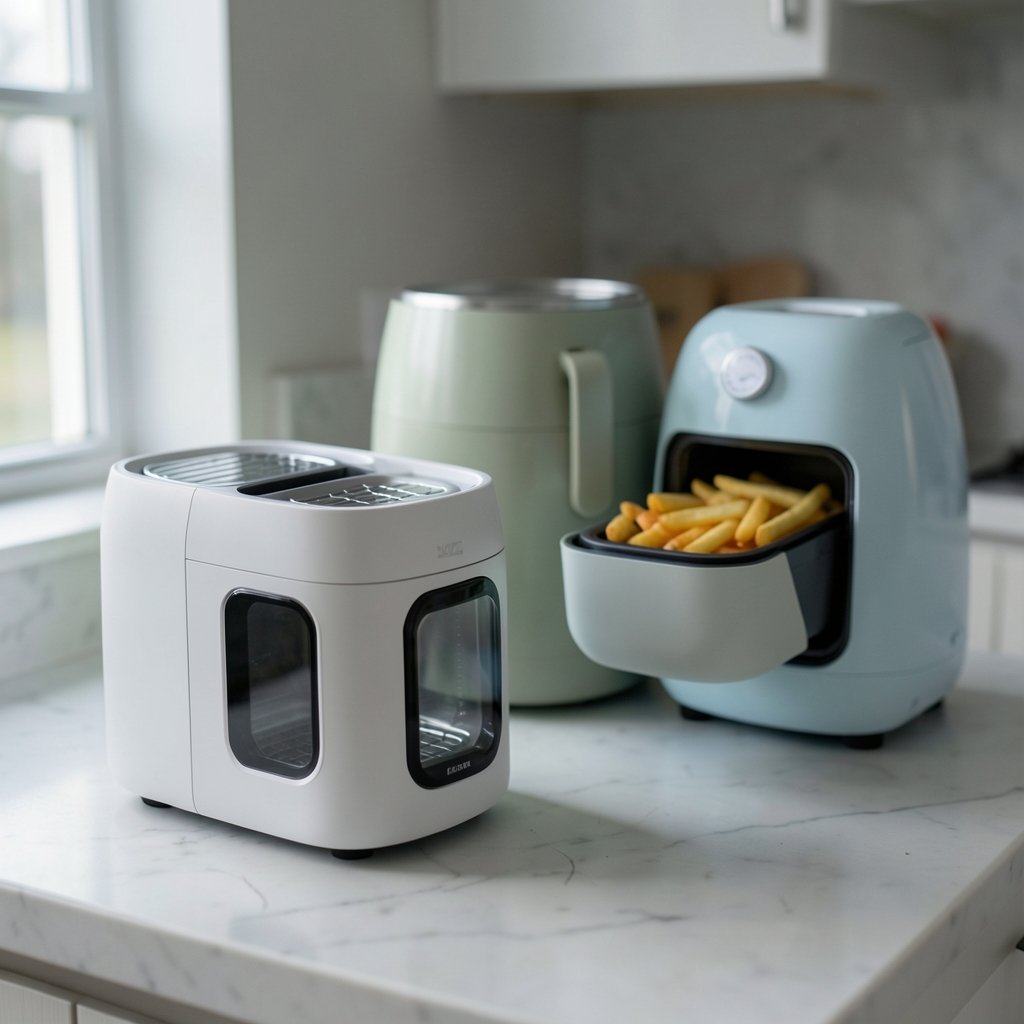
What if the best kitchen upgrade for 2027 isn’t a bigger oven, but a smaller one that sits quietly in the corner and turns frozen fries crispy in twelve minutes? That’s the promise of the modern air fryer, and the category has grown up fast. Dual baskets, stacked towers, glass viewing windows, PFAS-free ceramic coatings: the machines on shelves now look nothing like the single-bucket fryers of a few years ago.
The trouble is choice. A price-versus-quality analysis of 300 air fryers sold on Bol.com found that the cheapest quarter (under €35) averaged 8.3/10 in review scores, while the priciest quarter (above €119) averaged just 8.9/10. That’s a 0.6-point gap for a price difference that can reach €330. In other words, spending more doesn’t automatically buy a better dinner. What it buys is capacity, features, and build quality that matter only if you actually need them.
So this roundup skips the theory and names six specific machines, each matched to a real type of cook. Below you’ll find a comparison table, honest limitations, and a short buying guide at the end for the details the specs sheets hide.
The Shortlist at a Glance
| Model | Best for | Capacity | Standout feature | Price (where stated) |
|---|---|---|---|---|
| Ninja Foodi Pro | Best overall | 8 qt | Dual-fan, 12 presets, under 60 dB | Not stated |
| Ninja Double Stack XL | Tight countertops | 9.5 L (2 drawers) | Only 28 cm wide, stacked drawers | €229.99 |
| COSORI Turbo Tower Pro | Small kitchens, big batches | 10.8 L | Vertical tower, PFAS-free ceramic | Not stated |
| Ninja Dual Zone | Families cooking two foods | 2 × 3.8 L | Independent zones, Sync and Match | Not stated |
| Cuisinart glass air fryer | Watching food cook | Not stated | Glass basket with light, 5 settings | Not stated |
| Philips XXL | Simple large-family cooking | 7 L | Straightforward large basket | Not stated |
Ninja Foodi Pro: The All-Rounder
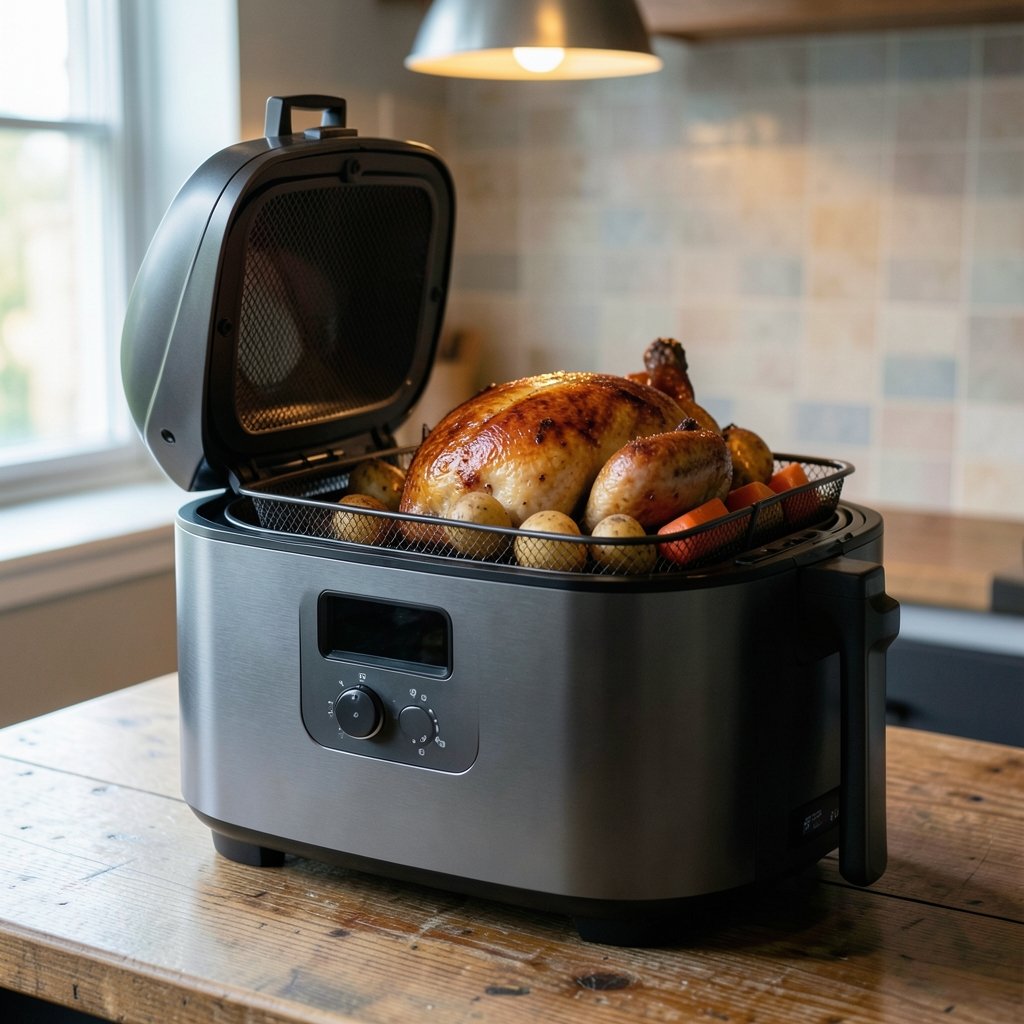
If one machine has to do everything, the Ninja Foodi Pro is the safest bet. In a six-month test of 52 models, it delivered the most evenly cooked results across every food category, helped by dual-fan technology and precise temperature control. It fits a whole chicken in its 8-quart basket, runs quietly at under 60 dB, and carries a two-year warranty.
Who it suits: households that cook a mix of proteins, vegetables, and frozen convenience food and want one appliance to handle all of it. The 12 preset programs mean you rarely have to guess at times and temperatures.
The limitation: it’s a single-basket machine. If you regularly want fries and wings finishing at the same moment, you’ll be running two batches or compromising on timing. Dual-zone models solve that problem better.
Ninja Double Stack XL: For Kitchens With No Spare Width
Counter space is the quiet crisis of the air fryer boom, and the Double Stack XL answers it directly. Its two drawers hold 9.5 L between them but the unit is only 28 cm wide, because the baskets stack vertically instead of sitting side by side. The supplied racks create four levels, and Sync and Match functions let you finish two different foods together or copy one drawer’s settings to the other.
Who it suits: anyone whose counter is already crowded, or who cooks for five or more in a narrow kitchen. It’s priced at €229.99 in the source material.
The limitation: it is heavy (10.3 kg), tall, and deep, so measure your clearance before buying. It’s also loud when both drawers run in Max Crisp, and the two levels within a single drawer share one setting, which limits flexibility.
COSORI Turbo Tower Pro: Vertical Thinking, Family Portions
COSORI’s answer to the stacked-drawer trend goes bigger. The Turbo Tower Pro offers 10.8 L across its tower format, keeping the footprint of a single air fryer while feeding a large household. COSORI is also one of the brands specifying PFAS-free ceramic nonstick coating, which matters to cooks who want to avoid conventional nonstick chemistry.
Who it suits: families of four to six who want volume without surrendering an entire countertop, and buyers who prioritize coating materials.
The limitation: high-capacity towers take longer to preheat and can crowd food if you overfill the levels. The brand’s own positioning puts it head-to-head with Ninja’s stacked model, which is narrower and stronger on maximum crisping.
Ninja Dual Zone: Two Foods, One Finish Time
The dual-basket idea is simple and genuinely useful: two independent 3.8 L drawers, each with its own temperature and time, so potatoes and chicken cook simultaneously without either going cold. Ninja’s Smart Finish ends both at the same moment; Match Cook copies settings across. Rival brands sell the same concept under names like Sync Finish, SyncCook, or Sync and Match.
Who it suits: families of four or more. A 5–6 L machine is the practical minimum for that size, and two 3.8 L zones comfortably clear that bar while keeping foods separate.
The limitation: two drawers mean two things to wash, and the total footprint is wider than a single basket. If you mostly cook one thing at a time, you’re paying for a feature you won’t use.
Cuisinart Glass Air Fryer: You Can Actually See the Food
Most air fryers are opaque boxes. Cuisinart’s glass model puts the cooking process on display, complete with an interior light, and offers five settings with a straightforward program dial. The slide-out basket has cool-touch handles, and a lid lets it double as leftover storage.
Who it suits: nervous first-time air fryer owners and anyone who likes to check browning without pulling the basket. In testing it produced crispy wings and tender, evenly browned fries from frozen, and testers responded strongly, with one saying it “genuinely improved my cooking experience.”
The limitation: glass is heavier than metal mesh and needs careful handling. Capacity isn’t specified in the available material, so check the basket volume before assuming it fits a family.
Philips XXL: The Straightforward Big Basket
Not everyone wants smart sync features. The Philips XXL is a 7 L single-basket machine in the classic mold: load it, set it, shake it halfway. Philips earns a place in brand rankings alongside COSORI, praised for double baskets, viewing windows, and steam functions across its range.
Who it suits: cooks who want one generous basket and minimal menu navigation. Seven liters is a sensible size for a household of four.
The limitation: it’s a large single zone, so the two-food problem returns. And as with any 6–7 L machine, check the wattage: large baskets need roughly 1500–2400 W to heat quickly, and weaker 1000–1200 W units in this size class can brown unevenly and take longer.
How to Choose Without Overpaying
Once you’ve shortlisted, four checks separate a good purchase from a regretted one.
- Match capacity to household size. Three to four liters suits two people. For four or more, start at 5–6 L. Anything smaller means multiple rounds, which erases the time savings that made you buy the thing.
- Check the wattage against the basket size. A 6 L basket paired with 1000–1200 W is underpowered. Look for 1500–2400 W in large models.
- Decide whether you need two zones. Dual baskets cost more and take more space, but they’re the single feature owners of large families mention most. If you cook one dish at a time, skip them.
- Look at the coating and the cleaning. Dishwasher-safe baskets and plates matter more than preset counts in daily use. Ceramic PFAS-free coatings are increasingly common at mid-range prices.
One more practical tip: ignore preset inflation. A machine with seven well-chosen programs beats one with fifteen you’ll never touch. And verify doneness with a thermometer rather than trusting the label. Chicken should reach 165°F and salmon 145°F, the standard minimums, and a viewing window saves heat loss but doesn’t replace a probe.
If you’re still weighing categories more broadly, our guide on how to choose the best air fryer for real kitchens and real budgets walks through the trade-offs, while a closer look at the best air fryer 2026 models that actually earn their counter space shows how quickly the feature set has shifted year over year. (Best air purifier allergies actually clears air)
What the Testing Data Actually Says
Two independent signals are worth keeping in mind. First, the Good Housekeeping Kitchen Awards evaluated more than 350 products over six months, including home testing by 640 consumer cooks, and named countertop appliances among the year’s most innovative. The winners were judged on performance, ease of use, and value, not spec sheets. Second, the Bol.com price analysis found that only about 2% of air fryers are potential bad buys scoring under 5.5, with an average category price of €87. The middle of the market, in other words, is remarkably safe.
That combination points to a simple strategy: pick a mid-priced model from an established brand, size it correctly, and put the savings toward better ingredients. The air fryer category has matured to the point where the floor is high and the ceiling is mostly convenience.
Conclusion
The best air fryer for 2027 depends less on brand prestige than on the shape of your household. A single cook or couple will be delighted by a compact 3–4 L basket. A family of five needs either a 7 L workhorse like the Philips XXL or a dual-zone machine like the Ninja Dual Zone, and anyone short on counter width should look hard at the Double Stack XL’s 28 cm profile. If watching your food brown brings you joy, the Cuisinart glass model earns its place; if you want the most consistent results across every food type, the Ninja Foodi Pro remains the benchmark.
Buy for the way you actually cook, check the wattage before you check the preset count, and don’t assume the priciest model fries a better chip. The data says it usually doesn’t.
Frequently Asked Questions
What size air fryer do I need for a family of four?
Aim for at least 5–6 L. Smaller 3–4 L models work for two people but force multiple rounds for a family, which cancels out the time savings. Dual-basket designs with two 3.8 L zones are a practical alternative because they cook two foods at once.
Is a dual-basket air fryer worth the extra money?
It is if you regularly cook two different foods that need different temperatures or times. Independent zones with sync functions let wings run hot while vegetables cook gentler, and both finish together. If you mostly reheat or cook single dishes, a large single basket is simpler and cheaper.
Do more expensive air fryers cook better?
Not dramatically. A comparison of 300 models found the cheapest quarter averaged 8.3/10 in review scores and the most expensive quarter averaged 8.9/10, a gap of just 0.6 points against a price difference that can reach €330. Higher prices buy capacity and features more than raw cooking quality.
What wattage should a large air fryer have?
Large models need roughly 1500–2400 W to reach temperature quickly. A 6 L basket powered by only 1000–1200 W tends to heat too slowly, producing uneven cooking and longer times. Check wattage alongside capacity before buying.
Are PFAS-free ceramic coatings better?
They’re a legitimate preference for cooks avoiding conventional nonstick chemistry, and brands including COSORI specify PFAS-free ceramic on some models. Performance-wise, both coating types work; ceramic may wear differently over time, so follow the cleaning instructions either way.
How do I know when food is actually done?
Use a thermometer rather than relying on presets or viewing windows. Chicken should reach 165°F and salmon 145°F. A glass window helps you watch browning and avoid opening the basket, but it doesn’t confirm internal temperature.






