A bridal bracelet is the smallest piece of jewellery a bride wears on her wedding day, and the one most likely to be chosen last, in a rush, the week before the ceremony. That is a mistake. The bracelet sits on the wrist that holds the bouquet, signs the register, and is photographed more than any other hand in the room. A bracelet for brides needs to do three things at once: look right next to the engagement ring, stay comfortable for twelve hours, and survive a day of hugging, dancing, and being photographed from every angle.
The best bracelets for brides in 2027 are not all diamonds and platinum. A simple gold bangle can be the right choice for a bride in a heavily beaded dress, and a pearl strand can be more flattering than a tennis bracelet against a high-necked gown. What matters is proportion, metal, and how the bracelet sits with everything else the bride is wearing.
Each bracelet below is described by what it is good at, what to watch for, and who it suits best, with prices given as ranges. Use the guide to narrow your choice, then try the bracelet on with your dress, your ring, and your shoes before you commit.
Key takeaways
- A bridal bracelet should complement the engagement ring, not compete with it, so match the metal and keep the sparkle in proportion.
- Tennis bracelets and pearl strands are the most versatile choices, while bangles and cuffs suit simpler dresses and stronger wrists.
- Comfort matters as much as looks: a bracelet that slides, pinches, or catches on lace will be removed by the speeches.
- Solid gold and platinum outlast gold vermeil and plated metal, which can wear through in one to three years of regular use.
- No bracelet suits every dress, every wrist, and every budget, and a bracelet bought without a trial with the dress is a gamble.
What a bracelet for brides actually is
A bracelet for brides is any bracelet chosen to be worn on the wedding day, usually on the left wrist opposite the engagement ring, or on the right wrist if the left is already full. It is a normal bracelet judged by a harder standard, because the wedding day is long, the dress is often delicate, and the photographs are permanent.
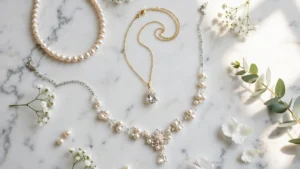
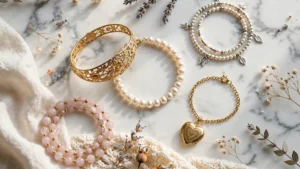
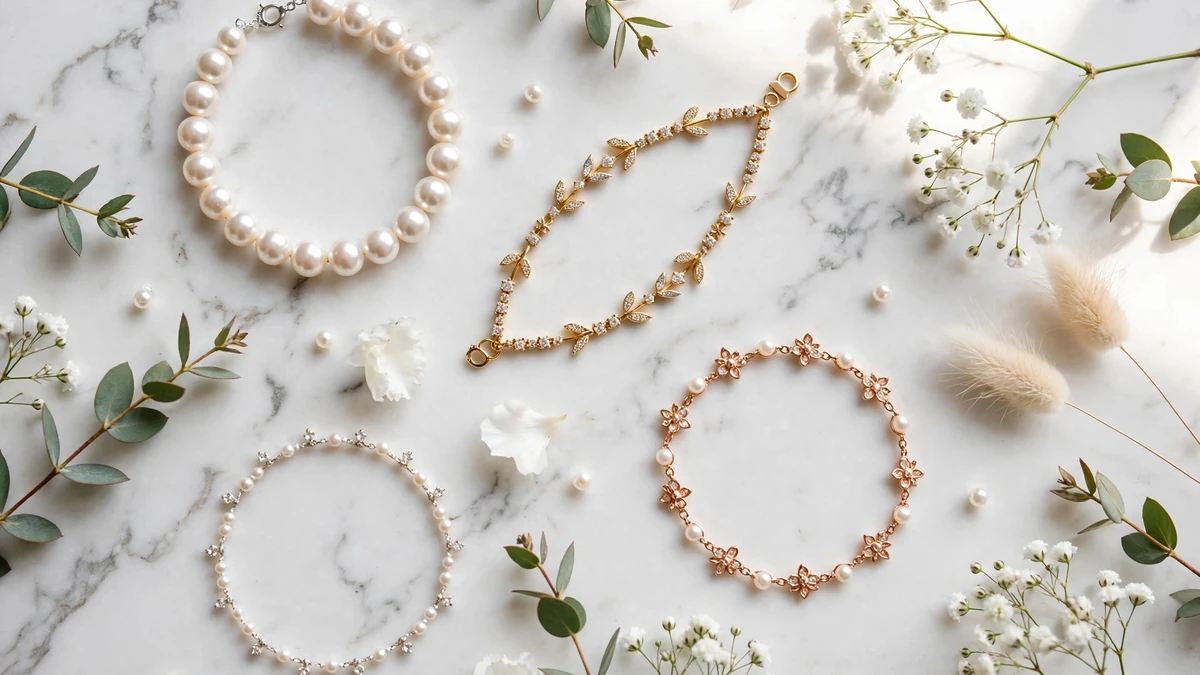
The most common choices are tennis bracelets, pearl strands, gold bangles, and slim cuffs. A tennis bracelet is a single line of matched stones, usually diamonds, set in a row, and it is the most formal option. A pearl strand is softer and warmer, and it suits vintage, romantic, and high-necked dresses. A gold bangle is clean and modern, and it works well with minimalist dresses. A cuff is bolder and suits a bride who wants one statement piece.
What makes a bracelet bridal is the fit, the finish, and the way it behaves over a long day. A bracelet that is too loose will slide over the hand and catch on the bouquet. A bracelet with a weak clasp is a risk, because a lost bracelet on a wedding day is not a small problem. The best bridal bracelets are the ones that are secure, comfortable, and quiet enough to let the dress and the ring do the talking.
How we chose these bracelets and what to look for
Look first at the metal. Match it to the engagement ring and the wedding band. Yellow gold with yellow gold, white gold or platinum with white gold or platinum, and rose gold with rose gold. Mixing metals can work, but it needs to be deliberate, and a wedding day is not the time to test the idea.
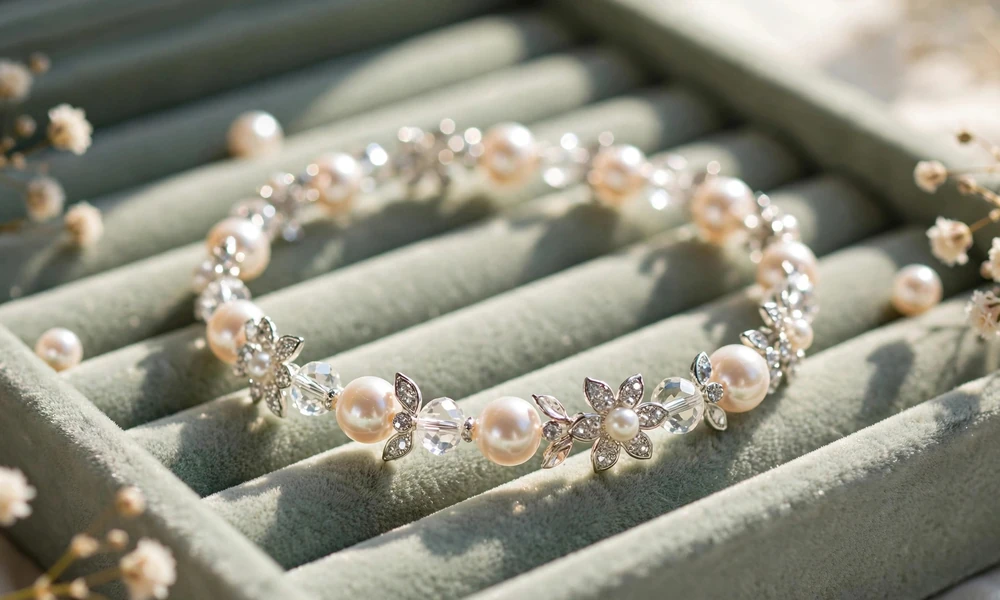
Look next at the clasp and the fit. A box clasp with a safety latch is the most secure choice for a tennis bracelet, and a pearl strand should have a knot between each pearl, so that if the thread breaks, the pearls do not scatter. The bracelet should sit comfortably on the wrist with about a finger’s width of space, and it should not slide over the hand when the arm is raised. Our guide to the best wedding shoes for brides makes the same point about fit, because a wedding day punishes anything that pinches, slips, or rubs.
Finally, look at the stones and the setting. Diamonds should be matched in size and colour along the line. Pearls should be round, lustrous, and free of obvious blemishes. Gold should be solid, not plated, if it is meant to last beyond the wedding day. A bracelet that is beautiful in the box but uncomfortable on the wrist is the wrong bracelet, however good it looks in photographs.
The 9 best bracelets for brides of 2027
Tiffany & Co. Diamond Tennis Bracelet in Platinum
What we like: A classic line of matched round brilliant diamonds in platinum, with a secure box clasp and safety latch, and a finish that sits flat against the wrist. What to consider: Premium price, and platinum is heavier than gold, so try it on for an hour before deciding. Stone: Diamonds, matched round brilliants. Setting: Four-prong, platinum. Best for: A formal wedding with a plain or lightly detailed dress. Price range: £8,000 to £25,000, depending on total carat weight.
For a bride who wants one flawless line of diamonds that will still look right in twenty years, it remains a strong first choice.
Cartier Love Bracelet in 18k Yellow Gold
What we like: A solid gold oval bangle with the signature screw motif, a clean modern line, and a design that needs no stones to make an impression. What to consider: It is screwed on with a screwdriver, so it cannot be slipped off during the day, and it is a fixed size, so the fit must be right. Metal: 18k yellow gold. Setting: Screw-motif bangle, no stones. Best for: A modern bride with a minimalist dress who wants a bracelet she can wear every day afterwards. Price range: £5,000 to £7,000.
It does not come off easily, which is exactly the point for a wedding day, and it still looks good with jeans a year later.
Van Cleef & Arpels Vintage Alhambra Bracelet in 18k Gold
What we like: Five clover motifs in polished gold, a light and comfortable fit, and a design that reads as jewellery rather than as a statement. What to consider: The motifs are delicate, so it needs care around lace and beading, and the price is high for its weight in gold. Metal: 18k yellow gold. Setting: Five clover motifs on a gold chain. Best for: A romantic or garden wedding with a soft, feminine dress. Price range: £3,500 to £5,500.
It is light enough to forget, which is the highest praise a wedding-day bracelet can earn.
Mikimoto Akoya Pearl Strand Bracelet
What we like: Perfectly matched Akoya pearls with a deep lustre, knotted on silk, with a secure ball clasp in 18k gold. What to consider: Pearls are softer than diamonds and need care, and they should not be sprayed with perfume or hairspray. Stone: Akoya pearls, matched round. Setting: Knotted silk strand, 18k gold ball clasp. Best for: A classic, vintage, or high-necked dress, and a bride who wants warmth rather than sparkle. Price range: £800 to £3,000, depending on pearl size and quality.
It suits almost every skin tone, photographs beautifully, and never looks like it is trying too hard.
Mejuri Diamond Tennis Bracelet in 14k Gold
What we like: A slim line of lab-grown diamonds in 14k gold, a secure clasp, and a price that makes a tennis bracelet realistic for many brides. What to consider: The stones are smaller than a high-end tennis bracelet, so the sparkle is subtler, and 14k gold is lighter in colour than 18k. Stone: Lab-grown diamonds, matched round. Setting: Four-prong, 14k gold. Best for: A bride who wants a real tennis bracelet without a five-figure price. Price range: £900 to £2,500, depending on total carat weight.
It is a genuine tennis bracelet, comfortable all day, and it does not demand a budget that would buy the honeymoon.
Monica Vinader Diamond Pavé Tennis Bracelet in 18k Gold Vermeil
What we like: A delicate pavé line of diamonds on 18k gold vermeil over sterling silver, light on the wrist and easy to pair with a vermeil engagement ring. What to consider: Vermeil wears through in one to three years of regular use, so treat it as a wedding-day and occasional bracelet, not an everyday one. Stone: Diamonds, pavé set. Setting: Pavé, 18k gold vermeil over sterling silver. Best for: A bride on a smaller budget who wants sparkle for the day. Price range: £350 to £700.
Buy it knowing what it is, wear it for the wedding, and do not expect it to look new in five years.
David Yurman Cable Bracelet with Diamonds in Sterling Silver
What we like: The signature twisted cable in sterling silver with diamond pavé end caps, a secure fit, and a design that is recognisable without being loud. What to consider: Sterling silver tarnishes and needs polishing, and the cable can catch on fine lace if the fit is loose. Stone: Diamonds, pavé end caps. Setting: Twisted cable, sterling silver. Best for: A bride who wants a designer bracelet with character rather than a plain tennis line. Price range: £700 to £1,500.
It suits a bride who already wears silver, and it pairs well with a simple dress that lets the cable do the work.
Missoma Gold Vermeil Pearl Bracelet
What we like: Freshwater pearls on 18k gold vermeil, a soft and romantic look, and a price that leaves room in the budget for other jewellery. What to consider: Freshwater pearls are less round and less lustrous than Akoya pearls, and vermeil needs gentle care. Stone: Freshwater pearls. Setting: Strung pearls, 18k gold vermeil clasp. Best for: A relaxed or outdoor wedding, and a bride who wants pearls without the Akoya price. Price range: £150 to £350.
A gentle, affordable pearl bracelet that looks far more expensive than it is.
Kendra Scott Elisa Gold Bracelet
What we like: A simple gold chain with a single oval stone, available in several colours, and a comfortable, adjustable fit. What to consider: The stone is the focus, so choose a colour that matches the dress and the flowers, and gold-plated brass will wear with time. Stone: Oval faceted stone, several colours. Setting: Gold-plated brass chain, adjustable. Best for: A bride who wants a small pop of colour, or a matching set for the whole bridal party. Price range: £50 to £100.
A single coloured stone can tie the bracelet to the bouquet, the shoes, or the bridesmaids, and the adjustable fit means it will not slide or pinch.
Which bracelet is right for your dress
A plain dress can carry a tennis bracelet or a diamond cuff. A heavily beaded dress needs a simpler bracelet, a slim bangle or a pearl strand, because a busy bracelet will fight the dress and catch on the beading. A high-necked dress suits a pearl strand or a gold bangle, while a strapless dress can carry more sparkle.
Think about the sleeves too. Long lace sleeves and a loose bracelet are a bad combination, because the bracelet will catch and pull, so a slim bangle that sits close to the wrist is safer with lace. Choose the bracelet after the engagement ring is final, because the ring sets the metal and the tone, and the bracelet should follow it. Our guide to the best engagement rings is a useful starting point, because the ring is the piece the bracelet has to live next to for the rest of the day.
Finally, try the bracelet on with the dress, not just on a bare wrist. Raise your arm as if you are holding a bouquet, and look in a mirror. If the bracelet slides, catches, or looks wrong, it is the wrong bracelet, however beautiful it looked in the shop.
The caveats that matter
The most common mistakes are choosing a bracelet that is too loose, choosing a metal that does not match the ring, and buying a bracelet without trying it with the dress. All three are avoidable, and all three are worth checking before the wedding, not on the morning of it.
| Detail | What is known |
|---|---|
| Best all-round choice | A diamond tennis bracelet or a pearl strand, matched to the ring metal |
| Most secure clasp | A box clasp with a safety latch, or a screwed bangle that cannot slip off |
| Best fit | About a finger’s width of movement, and it should not slide over the hand |
| Metal to match | Match the engagement ring: yellow with yellow, white or platinum with white |
| What wears out fastest | Gold vermeil and plated metal, which can wear through in one to three years |
| What to avoid with lace | Loose bracelets and open settings that catch and pull delicate fabric |
| When to buy it | After the dress and the ring are final, and with a trial fitting together |
| What it does not do | No bracelet suits every dress, every wrist, and every budget at once |
If you have a metal allergy, choose solid gold, platinum, or sterling silver, and avoid plated metal and nickel alloys. If your skin is sensitive, test the bracelet for a full day before the wedding, not just for an hour in the shop.
Checklist: choosing a bracelet for brides honestly
Use these checks before you buy, and again at the final dress fitting.
- Check the metal: it should match the engagement ring and the wedding band.
- Check the fit: about a finger’s width of movement, and it should not slide over the hand.
- Check the clasp: a box clasp with a safety latch, or a bangle that cannot slip off.
- Check it with the dress: raise your arm as if holding a bouquet and look for catching or sliding.
- Check the stones: diamonds should be matched in size and colour, pearls round and lustrous.
- Check the care: know whether it is solid gold, vermeil, or plated, and what that means for its life.
Frequently asked questions
Should the bracelet match the engagement ring?
Yes, in metal at least. A yellow gold bracelet with a platinum ring will look like a mistake, while a matched metal looks deliberate.
Can a bride wear a bracelet on the same wrist as the engagement ring?
She can, but most brides wear the bracelet on the opposite wrist, so the ring and the bracelet do not compete. If the bracelet is slim and the ring is simple, the same wrist can work, but try it first.
Is a tennis bracelet the best choice for a bride?
It is the most versatile formal choice, and it suits a plain dress best. For a heavily beaded dress, a pearl strand or a slim bangle is often better.
Are pearls suitable for a wedding bracelet?
Yes. Pearls are a classic bridal choice, they suit almost every skin tone, and they photograph beautifully. Choose Akoya pearls for the best lustre, or freshwater pearls for a smaller budget.
How much should a bride spend on a bracelet?
There is no right amount. A tennis bracelet can cost a few hundred pounds or tens of thousands. Spend what the budget allows, and put the money into fit and quality rather than size.
What if the bracelet does not suit the dress?
Do not wear it. A bracelet that fights the dress, catches on lace, or slides off is worse than no bracelet at all. Our guide to the best wedding necklaces may help, because a necklace can carry the jewellery for the day instead.
The bottom line
The best bracelet for brides in 2027 is not the most expensive one. It is the one that matches the ring, fits the wrist, sits comfortably for twelve hours, and looks right with the dress. For a formal wedding with a plain dress, a diamond tennis bracelet is hard to beat. For a romantic or vintage wedding, a pearl strand is often the better choice. For a modern bride, a solid gold bangle can be the most elegant option of all.
Choose the bracelet after the dress and the ring are final, try it on with the dress, and judge it on how it feels after an hour, not how it looks in the first minute. That is the honest way to pick a bracelet you will love in the photographs and still want to wear in ten years.