

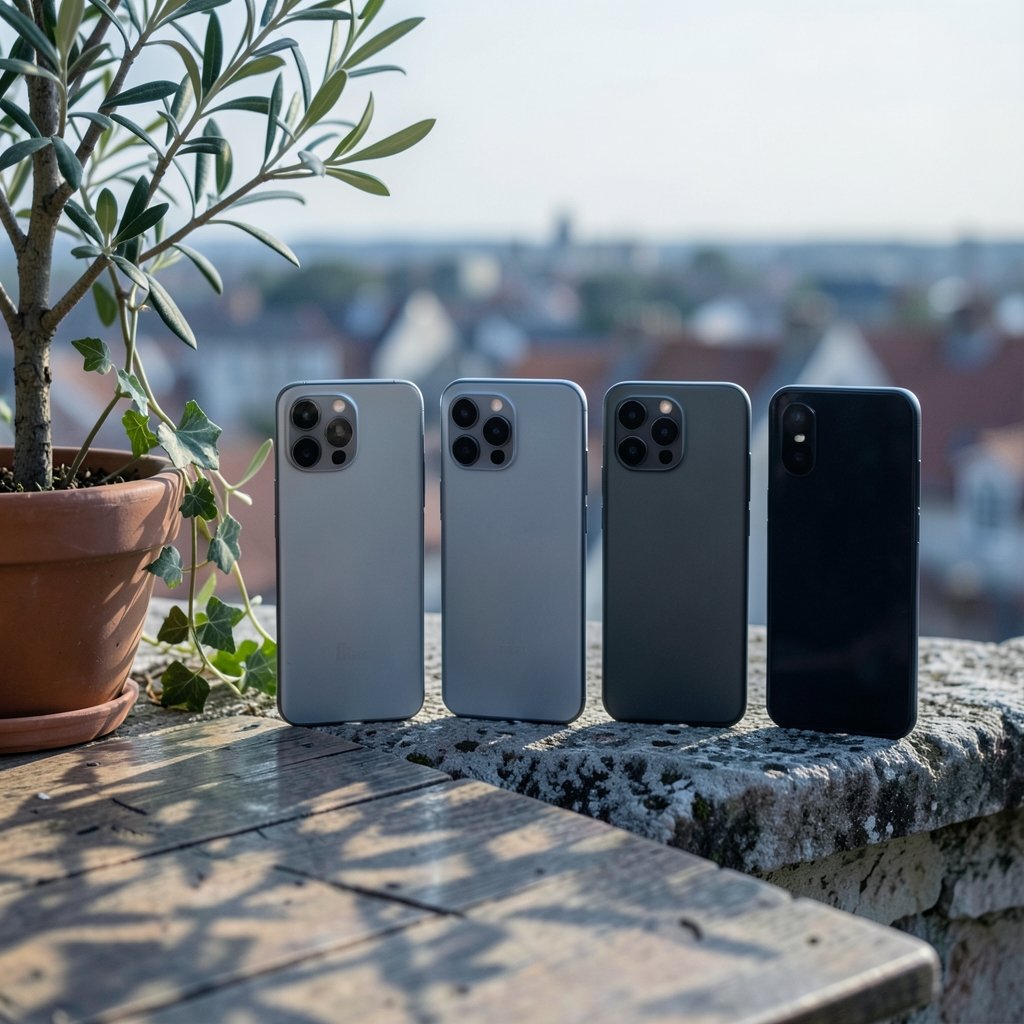
Quick Answer: What phone has the best camera?
There is no single winner, but the iPhone 18 Pro Max is the safest all-round pick for most people, while the Xiaomi 18 Pro Max pushes harder on hardware and selfie-friendly tricks. The Vivo X500 Pro Max and Oppo Find X10 Pro Max are the specialists to beat for zoom and colour, and Google’s Pixel 10a remains the value champion.
Buyers who want a compact, control-heavy camera should look at the Sony Xperia line, and anyone on a mid-range budget should weigh the Pixel 11 against the cheaper Pixel 10a. Before deciding, compare sensor size and megapixels, optical zoom range, low-light processing, video frame rates, screen quality for editing, and battery life under heavy shooting.
Is a 200-megapixel sensor automatically better than a 48-megapixel one? Not even close. That number on the box tells you almost nothing about how a photo will actually look. What matters is the sensor underneath, the lens in front of it, and the processing that stitches everything together. That is why two phones with nearly identical spec sheets can produce wildly different pictures.
The good news is that the current crop of camera phones is genuinely excellent. The harder question is which one fits how you actually shoot. Below is a shortlist of named options, each with who it suits, what it nails, and where it falls short.
The Shortlist at a Glance

| Phone | Best for | Standout camera feature | Main limitation |
|---|---|---|---|
| iPhone 18 Pro Max | Most people wanting a safe all-rounder | Triple 48MP setup with variable aperture | Zoom tops out well below rivals |
| Xiaomi 18 Pro Max | Selfies, vlogging, battery hogs | Leica dual 200MP system plus rear screen | Software quirks and sharpening |
| Vivo X500 Pro Max | Zoom and creative video | 200MP Zeiss periscope, 4K 240fps slow-mo | Big, heavy camera bump |
| Oppo Find X10 Pro Max | Colour-rich travel photography | Three 200MP Hasselblad cameras | Softer, less sharpened look |
| Google Pixel 10a | Budget buyers | 48MP main plus Google’s processing | Only two rear lenses |
| Google Pixel 11 | Affordable all-round shooting | 48MP main, 13MP ultrawide, 10.8MP telephoto | Beaten on pure image quality |
| Sony Xperia 1 VIII | Manual-control enthusiasts | Pro-style manual controls | Niche appeal, higher price tier |
iPhone 18 Pro Max: The Safe All-Rounder
For anyone who wants great photos without thinking about settings, the iPhone 18 Pro Max is the obvious starting point. It carries a trio of 48MP lenses: a main camera with variable aperture, an ultrawide, and a telephoto with 4x optical zoom. That zooming lens reaches up to 16x “optical quality” and a maximum magnification of 40x. (Install reversing camera step by step without cutting wrong)
The variable aperture is the quietly clever part. It lets the phone control how much light hits the sensor and how much background blur you get, without you touching a slider. In a head-to-head shootout against the Xiaomi 18 Pro Max, the iPhone held its own across eleven rounds of testing, which says a lot about how consistent Apple’s processing has become.
Who it suits: people who shoot a bit of everything and want predictable results.
The limitation: if long-range zoom is your thing, rivals with 200MP periscope lenses will out-resolve it. The iPhone is a jack of all trades, not a zoom monster.
Xiaomi 18 Pro Max: The Vlogger’s Choice
Xiaomi has leaned hard into content creation with the 18 Pro Max, and it shows. The phone pairs a Leica-branded dual 200MP imaging system with a genuinely useful rear screen. That second display is not decoration: it gives you a live preview for selfies and vlogs, works as a teleprompter, and even doubles as a soft fill light when you are shooting food in a dim restaurant.
The main sensor uses LOFIC technology, which keeps backgrounds from blowing out to pure white when you shoot portraits into the light. A telephoto macro lens makes short work of flowers and other small subjects. There is a 7,050mAh silicon-carbon battery inside, and after a five-hour simulated heavy-use test, nearly 60% of the charge remained. It also supports cross-platform file transfer, so files can move to an iPhone-using friend without fuss.
On the display side, the Pro Max has a 6.9-inch AMOLED panel with slim, symmetrical bezels and around 419ppi. One reviewer noted that Xiaomi pushes sharpness so hard that some text and apps look slightly over-crisped, like a TV with the sharpening turned up too high.
Who it suits: selfie shooters, vloggers, and anyone who hates charging.
The limitation: that aggressive sharpening is a matter of taste, and the phone is large.
Vivo X500 Pro Max: The Zoom and Video Specialist
If you want one phone that does things other phones simply cannot, the Vivo X500 Pro Max is the one to beat. It combines a 50MP LOFIC main sensor, a 200MP Zeiss periscope telephoto with 3.5x optical zoom, and a 50MP ultrawide. The main camera delivers superb detail and HDR handling, with stills reaching up to 12.5 EV of dynamic range.
The telephoto is the headline act. Its high-resolution crops let it effectively double to 7x before quality starts to slip. Video is equally ambitious, with 4K 240fps ultra-slow-motion recording on board.
The physical design is just as bold. The X500 Pro Max measures 8.12mm thick and weighs about 229g, comes in orange and grey, and wears a large raised circular camera module ringed in metal. A side shortcut key can be customised for the camera, recording, vibration or torch, and Vivo adds a double-press action for extra flexibility.
Who it suits: travellers, wildlife shooters, and video creators.
The limitation: that camera bump is enormous, and the phone is not light.
Oppo Find X10 Pro Max: Colour Without the Crunch
The Oppo Find X10 Pro Max answers a different question: what if a phone made photos that looked natural rather than aggressively sharpened? It is the world’s first phone with three 200MP rear cameras, covering main, ultrawide and telephoto, all developed with Hasselblad. A second-generation colour-restoration lens and a vertical “LUMO” chamber housing the Danxia colour lens and LED flash round out the module.
In practice, the Find X10 Pro Max produces softer colour tones that avoid the over-sharpened look some rivals favour. Video records at up to 8K 30fps, and an optional telephoto extender kit adds 3.28x optical magnification. The phone is 8.4mm thick and about 235g, finished in moonlight white or light titanium, with a flat-screen design and a matte glass back.
Who it suits: travel photographers who want rich, film-like colour straight out of camera.
The limitation: if you love crisp, punchy detail, the softer rendering may feel underwhelming.
Google Pixel 10a: The Value Champion
Not everyone needs a flagship. The Pixel 10a pairs a 48MP wide lens with a 13MP ultrawide, which is a respectable duo on its own. What separates it from the mid-range pack is Google’s computational processing, refined over several generations.
The result is fantastic photos with a wonderful sense of realism. Portrait shots are the standout, with skin tones rendered better than any other mid-ranger. It all works so seamlessly that it is very hard to take a bad picture. Google’s A-series phones have long set the bar for what mid-range buyers can expect, and the 10a continues that trend, even if it is a little too similar to its predecessor.
Who it suits: budget-conscious buyers who mostly shoot people and everyday scenes.
The limitation: two rear lenses means no dedicated telephoto, so zoom relies on cropping.
Google Pixel 11: The Affordable All-Rounder
The Pixel 11 steps things up with a triple array: a 48MP main camera, a 13MP ultrawide, and a 10.8MP telephoto. Google also enlarged the main sensor for higher-quality photos than the Pixel 10, and added features like Magic Capture, which pulls high-quality stills out of video recordings. The Tensor G6 chip and a larger battery round out the package.
It is an impressive system and a great, affordable phone for anyone who values mobile photography. But it is not the best out there, and several competitors beat it on pure image quality.
Who it suits: Pixel fans who want a telephoto lens without flagship pricing.
The limitation: rivals simply produce better photos, especially at long range.
Sony Xperia 1 VIII: For People Who Want Control
Some photographers do not want the phone to decide anything. For a camera that mixes easy shooting with manual controls and genuine pro touches, the Sony Xperia 1 VIII earns its place. It is the pick for anyone who treats a phone like a compact camera and wants to dial in settings themselves. (Pick best digital camera your actual needs)
Who it suits: experienced shooters who want manual control in their pocket.
The limitation: it is a niche tool. Casual snappers will get more from a Pixel or an iPhone with far less effort.
How to Choose Without Getting Lost in Specs
Start with the lens you will actually use. If most of your photos are of people at close range, the main sensor and processing matter far more than a 200MP telephoto you will rarely touch. If you shoot travel, sport or wildlife, optical zoom range is worth paying for.
Then think about weight and size. The Vivo and Oppo flagships are around 229g to 235g with substantial camera bumps. That is fine in a bag and less fine in a jeans pocket. If you shoot a lot in the car, a mount that actually holds a heavy phone matters as much as the camera itself, so it is worth reading up on which car phone mounts actually hold up in real driving.
Consider video if you create content. The Xiaomi’s rear screen and the Vivo’s 4K 240fps slow motion solve real problems that stills-focused phones ignore.
Finally, be honest about processing taste. Some people love crisp, contrasty images. Others prefer the softer, more natural rendering the Oppo delivers. Neither is wrong, but you will notice the difference every single day.
Common Mistakes Buyers Make
The biggest mistake is buying on megapixel count alone. A 200MP sensor binned down to a normal-sized file does not automatically beat a well-tuned 48MP camera.
The second is ignoring ergonomics. A phone that is awkward to hold steady will produce blurry photos no matter how good its sensor is.
The third is forgetting about storage and battery. High-resolution modes and long video clips eat space fast, and heavy camera use drains even large batteries. If you are weighing a trade-in to fund an upgrade, it pays to check what your old phone is really worth before you commit.
And if you are upgrading specifically to install a dash cam or reversing setup alongside your phone, the same lesson applies: plan before you cut. A careful approach to installing a reversing camera step by step will save you from expensive mistakes.
Conclusion
The best camera phone depends on what you point it at. The iPhone 18 Pro Max is the safest recommendation for most people, thanks to its flexible triple 48MP system and variable aperture. The Xiaomi 18 Pro Max wins for selfies, vlogging and battery life. The Vivo X500 Pro Max and Oppo Find X10 Pro Max are the specialists, one for zoom and slow motion, the other for natural colour. On a budget, the Pixel 10a and Pixel 11 deliver remarkable results for the money, and the Sony Xperia 1 VIII rewards anyone who wants manual control.
Pick the lens you will use most, handle the phone before you buy if you can, and ignore the megapixel marketing. Your photos will thank you.
Frequently Asked Questions
Do more megapixels mean a better camera phone?
No. Megapixels describe resolution, not image quality. Sensor size, lens quality and processing decide how a photo looks. A well-tuned 48MP camera can beat a 200MP one in real-world shots.
Is a dedicated telephoto lens worth paying for?
It depends on what you shoot. If you photograph distant subjects, wildlife or sports, a periscope telephoto with true optical zoom is a major upgrade. If you mostly shoot people up close, the main sensor matters more.
Which camera phone is best for video and vlogging?
The Xiaomi 18 Pro Max is built for it, with a rear screen for previews and teleprompting plus a soft-light function. The Vivo X500 Pro Max adds 4K 240fps slow motion for creative clips.
Are mid-range phones good enough for everyday photography?
Often, yes. The Pixel 10a is a strong example, pairing a 48MP main lens with Google’s processing to produce realistic photos and excellent skin tones. The trade-off is usually fewer lenses rather than worse image quality.
Does a bigger camera bump mean better photos?
Not necessarily. Large modules usually house bigger sensors or periscope lenses, which can help, but they also add weight and bulk. The Oppo and Vivo flagships are around 229g to 235g, so consider handling before committing.
Should I wait for the next generation before upgrading?
That depends on your current phone. If it already produces photos you are happy with, there is no rush. If low-light shots or zoom are letting you down, the current lineup offers clear, meaningful improvements worth acting on.






