

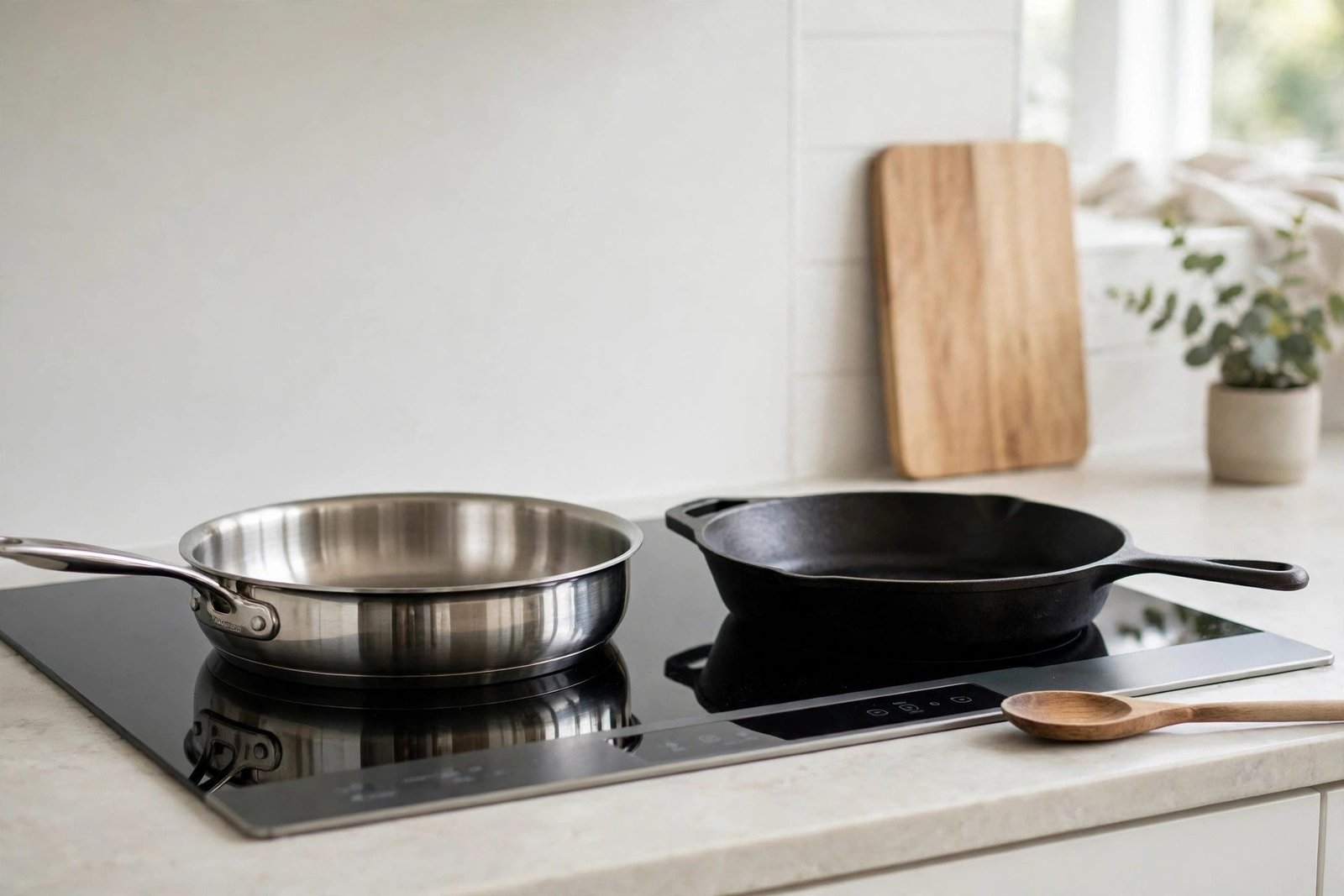

The best cookware skillet for most kitchens is a 12-inch cast iron skillet: it sears, bakes and fries, moves from hob to oven, and can last for decades. The right answer still depends on how you cook, how much weight you are happy to lift, and how much care you want to give a pan.
This guide compares the ten best cookware skillets in 2027 across every main material, naming real, widely sold pans.
Key takeaways:
- The best cookware skillet for most cooks is a 12-inch cast iron skillet: it sears well, goes from hob to oven, and lasts for decades.
- Material matters more than brand: iron and carbon steel sear best, steel is most versatile, and nonstick is easiest for eggs and fish.
- A 12-inch skillet suits most households; a 10-inch pan suits one or two people.
- Buy the pan that matches how you actually cook.
What is a skillet, and how is it different from a frying pan?
A skillet and a frying pan are the same thing in most kitchens. In American usage, “skillet” is the everyday word for a shallow, flat-bottomed pan with sloped sides and a long handle. British cooks say “frying pan” for the same piece of cookware.
The sloped sides let you slide a spatula under food, toss vegetables, and pour sauces cleanly. Skillets come in many materials, and that choice shapes how the pan cooks: iron holds heat, steel responds quickly, copper heats fast, and coated pans release food easily.
Skillet materials compared

Cast iron is the oldest skillet material and still the best at holding heat. Once hot it stays hot, giving steak a deep brown crust and cornbread a crisp edge. It needs seasoning — thin layers of oil baked onto the surface — and hand washing and drying, or it will rust. Our guide to the best cast iron skillet covers this material in depth.
Stainless steel is the workhorse. It heats quickly, responds fast when you turn the heat down, and shrugs off metal utensils, acidic sauces and the dishwasher. Food sticks more than on a coated pan, so preheat it and let food release on its own. A good stainless skillet has an aluminium or copper core between steel layers, which spreads the heat evenly.
Nonstick is the easiest skillet to cook with and to clean. Eggs, fish and pancakes release with barely any oil, and a quick wipe is often all the washing it needs. The trade-off is that coatings wear out within a few years, and most makers warn against very high heat and metal utensils.
Carbon steel is the professional kitchen’s answer to cast iron. Made from a single sheet of steel, it is lighter than cast iron, heats faster, and sears beautifully once seasoned. Like cast iron, it needs seasoning and hand washing, and it will rust if left wet.
Copper is the fastest and most even-heating skillet material of all. It responds to heat changes almost instantly, which is why it is prized for sauces and delicate fish. Pure copper is soft and reacts with acidic food, so copper skillets are lined, usually with stainless steel.
Ceramic usually means a metal pan with a ceramic nonstick coating, not a pan made entirely of ceramic. It releases food well without the coatings used on traditional nonstick pans. The coating wears faster than traditional nonstick, so expect a shorter working life and treat it gently.
How to choose the right skillet for your kitchen
Start with size. A 12-inch skillet is the standard: it fits four chicken thighs, a family frittata or fried potatoes without crowding. A 10-inch pan suits one or two people and is easier to lift and store. Go larger only if you regularly cook for a crowd.
Then be honest about maintenance. If you enjoy caring for a pan — seasoning it, drying it properly — cast iron and carbon steel will reward you for decades. If you want to wash a pan and put it away without thinking, stainless steel or nonstick will suit you better.
The 10 best cookware skillets in 2027
These ten picks cover every material and every kind of cook.
1. Lodge Classic Cast Iron Skillet
Made in the United States, the Lodge Classic is the cast iron skillet most cooks start with, and many never need another. It arrives pre-seasoned, sears, bakes and fries, and moves from hob to oven without complaint — though eggs stick for the first few weeks until the seasoning builds up.
Best for: most cooks buying their first skillet, and anyone who wants one pan that lasts for decades.
2. Le Creuset Signature Enamelled Cast Iron Skillet
Le Creuset’s Signature skillet is cast iron sealed under enamel, so it needs no seasoning and will never rust. The enamel interior browns well, and it carries a lifetime warranty. It costs far more than a bare iron pan and sears no better.
Best for: cooks who want cast iron with no seasoning and no rust.
3. All-Clad D3 Stainless Steel Fry Pan
All-Clad’s D3 is the classic American stainless skillet: three layers of metal, with an aluminium core between two layers of stainless steel. It heats evenly, responds quickly, and takes metal utensils, acidic sauces and the dishwasher in its stride. Food sticks until you learn the preheating knack.
Best for: cooks who want one versatile, nearly indestructible everyday skillet.
4. Made In Stainless Clad Frying Pan
Made In’s stainless clad frying pan is a newer rival to the established names, with five layers of metal and sold directly to cooks. It heats evenly, with a comfortable handle and a pouring rim, at a lower cost than the legacy brands — though it has a shorter track record.
Best for: cooks who want clad stainless steel without the legacy brand markup.
5. Tramontina Professional Nonstick Fry Pan
Tramontina’s Professional nonstick pan is the restaurant-kitchen favourite home cooks keep coming back to, with a heavy-gauge aluminium body and a reinforced nonstick coating. Eggs and fish release cleanly with very little oil. The coating will wear out after a few years of regular use.
Best for: everyday eggs, fish and pancakes with the least fuss.
6. T-fal Professional Nonstick Fry Pan
T-fal, sold as Tefal in Britain and Europe, has made nonstick pans for decades, and its Professional range is the budget-friendly workhorse of the category. The heat indicator turns solid red when the pan is ready, which helps beginners avoid adding food to a cold pan. It is light and easy to clean.
Best for: beginners and budget buyers who want a reliable nonstick pan.
7. De Buyer Mineral B Carbon Steel Fry Pan
De Buyer, a French maker, is the name most chefs reach for in carbon steel, and the Mineral B is its classic frying pan. Once seasoned it sears like cast iron at a fraction of the weight. The sloped sides make it easy to toss food.
Best for: cooks who want cast iron performance in a lighter pan.
8. Matfer Bourgeat Black Carbon Steel Fry Pan
Matfer Bourgeat is another French maker whose black carbon steel pans are a fixture in professional kitchens. The pan is a single sheet of steel with a welded handle and no rivets to trap food, and it seasons into a slick surface with use. The handle gets hot on the hob, so keep an oven glove nearby.
Best for: serious home cooks who want a professional-style pan at a modest cost.
9. Mauviel M’Heritage Copper Frying Pan
Mauviel has made copper cookware in France for generations, and the M’Heritage is its classic frying pan: a thick copper body lined with stainless steel, with a cast iron or bronze handle. Copper heats faster and more evenly than any other skillet material here.
Best for: cooks who love precise heat control and want the finest skillet they can buy.
10. GreenPan Valencia Pro Ceramic Nonstick Fry Pan
GreenPan’s Valencia Pro is a ceramic nonstick pan with a hard-anodised aluminium body and a diamond-infused ceramic coating. It releases food well without the coatings used on traditional nonstick pans, though the ceramic surface wears faster, so treat it gently.
Best for: cooks who want nonstick performance with a ceramic coating.
How do the best cookware skillets compare?
| Skillet | Material | Heat retention | Care needed | Best for |
|---|---|---|---|---|
| Lodge Classic | Cast iron | Excellent | Seasoning, hand wash | Best overall |
| Le Creuset Signature | Enamelled cast iron | Excellent | Low | No seasoning |
| All-Clad D3 | Stainless steel | Good | Low | Everyday versatility |
| Made In Stainless Clad | Stainless steel | Good | Low | Clad value |
| Tramontina Professional | Nonstick | Fair | Low | Eggs and fish |
| T-fal Professional | Nonstick | Fair | Low | Beginners |
| De Buyer Mineral B | Carbon steel | Very good | Seasoning, hand wash | Lighter searing |
| Matfer Bourgeat Black | Carbon steel | Very good | Seasoning, hand wash | Professional style |
| Mauviel M’Heritage | Copper | Good | Polishing | Precise heat control |
| GreenPan Valencia Pro | Ceramic nonstick | Fair | Low | Ceramic nonstick |
See also our guides to the best baking sheets and the best blenders.
Your cookware skillet checklist
Work through this list before you buy.
- Pick the right size: 12 inches for most households; 10 inches for one or two people.
- Choose the material first: iron or carbon steel for searing, steel for versatility, nonstick or ceramic for easy release.
- Check your hob: make sure the pan works on induction.
- Lift it full: a skillet full of food is heavy, so check you can carry it with an oven glove.
- Be honest about care: iron and carbon steel need seasoning; steel and nonstick do not.
- Look at the handle: a helper handle and pour spouts make a heavy pan easier to use.
Frequently asked questions
What is the best cookware skillet material?
There is no single best material, only the best for how you cook. Iron and carbon steel sear best and last longest. Stainless steel is the most versatile and easiest to look after. Nonstick and ceramic are easiest for eggs and fish but wear out sooner. Copper heats fastest and most evenly but costs the most.
What size skillet should I buy?
A 12-inch skillet suits most households: it fits four chicken thighs, a family frittata or a batch of fried potatoes without crowding. A 10-inch pan suits one or two people and is easier to lift and store.
Can I use a skillet on an induction hob?
Cast iron, carbon steel and most stainless steel work on induction, because they are magnetic or have a magnetic base. Pure copper and aluminium do not, unless the maker has added a magnetic base. All six materials work on gas and electric.
How long does a nonstick skillet last?
A nonstick skillet usually lasts a few years before the coating starts to wear and food begins to stick. Gentle use helps: moderate heat, soft utensils, and hand washing rather than the dishwasher. When food sticks regularly, replace the pan.
Is a cast iron skillet better than a stainless steel skillet?
Cast iron holds heat better, so it sears meat and bakes cornbread better. Stainless steel heats and cools faster, handles acidic sauces without worry, and needs almost no maintenance. Many cooks keep both.
The bottom line
The best cookware skillet is the one that matches how you cook, and for most kitchens that is a 12-inch cast iron skillet: it sears, bakes and fries, and can last for decades. If you want a lighter pan, carbon steel gives you much the same cooking at a fraction of the weight.
Your next step is simple: decide which material fits your cooking and your patience for care, pick a 12-inch pan you can lift comfortably, and cook with it often. A skillet only gets better with use.














