


What if the most expensive vacuum in the store isn’t the one that cleans your home best? That question shapes every Dyson shopping trip. The brand’s cordless lineup runs from a budget-friendly V8 to a near-$950 flagship, and each model promises more power, smarter sensors, or longer runtime than the last. The trick is figuring out which one matches your floors, your pets, and your patience for emptying a dust bin.
This roundup cuts through the lineup with specific picks. Each entry covers who a model suits, what it does well, one honest limitation, and the price where a published review states it. Testing data from lab reviews fills in the performance details, so the shortlist below reflects measured results rather than marketing copy.
The Shortlist at a Glance
| Model | Best for | Standout strength | Main trade-off | Listed price |
|---|---|---|---|---|
| V15 Detect | Overall pick for most homes | 60 minutes of tested runtime, laser dust detection | No self-empty dock, no mopping | $800 full price |
| Gen5Detect Absolute | Allergy-focused deep cleaning | 95% hard-floor pickup, sealed HEPA filtration | Weak on carpet, highest price | $950 full price |
| V11 Torque Drive | Large homes, long-term owners | Automatic suction adjustment, proven durability | Older platform, fewer new features | Not stated in sources |
| V8 | Tight budgets and small spaces | Light weight, simple operation, quiet | Only two power settings, small bin | $349.94 at Amazon |
| V12 Detect Slim+ | Detail cleaning and stairs | Dust sensor, many attachments, lighter body | Average carpet pickup | Not stated in sources |
Dyson V15 Detect: The Best All-Around Pick
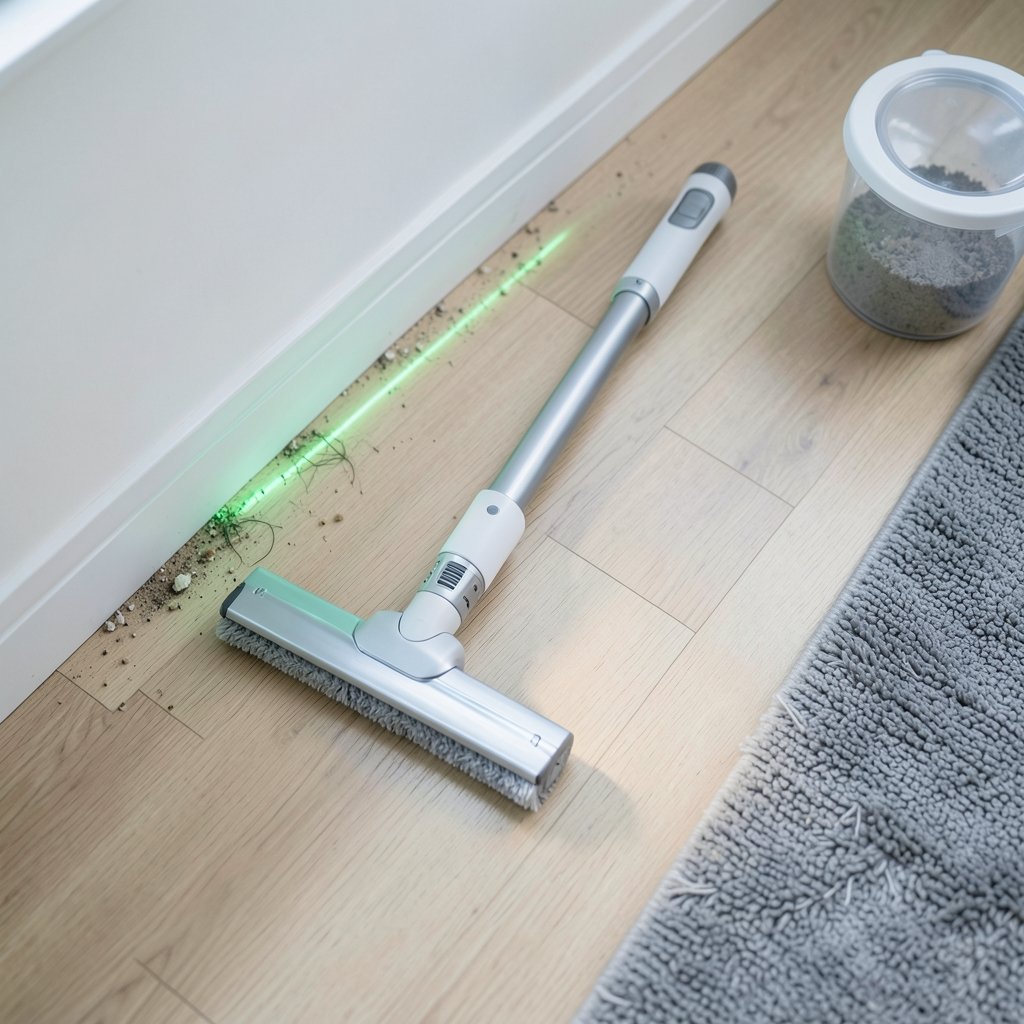
The V15 Detect earned the top spot in a CNET test of the brand’s lineup, and the numbers back up the hype. It posted the longest tested battery life of any Dyson cordless at 60 minutes, delivered 91.4% pickup on hard flooring, and managed 85% on low-pile carpet and 74% on mid-pile. That spread matters: most homes mix hard floors and rugs, and the V15 handles both without falling apart on either.
The laser head is the headline feature, and it earns its keep. A fluffy roller attachment shines a light across the floor to reveal fine dust that is otherwise invisible, and reviewers who tested it described being genuinely surprised at how much debris showed up in corners and along stair treads. The automatic suction adjustment responds to the amount of dust the sensor detects, which takes some of the guesswork out of switching between floor types.
The limitation is straightforward. At $800 full price, the V15 sits near the top of the range, and it has no self-emptying dock and no wet-mopping function. Buyers who want a vacuum that docks itself and handles spills need to look at other models or accept a second device. The two-year warranty is also shorter than some shoppers expect at this price.
Who it suits: households with a mix of flooring, pet owners who want strong dust pickup, and anyone willing to pay for the longest runtime in the lineup. If you are still weighing form factors, this guide on how to pick the best cordless vacuum for your home habits helps narrow the field before you commit.
Dyson Gen5Detect Absolute: Best for Allergies and Hard Floors
If dust sensitivity drives your purchase, the Gen5Detect Absolute makes a strong case. It scored 95% on hard-floor pickup, the highest in its test group, and it carries fully sealed whole-machine HEPA filtration, which keeps captured allergens from leaking back into the room. A dust particle sensor lets it adjust suction automatically as it works, and the package includes a generous set of attachments and cleaning tools.
The catch is carpet. The same testing found average performance on low-pile (65%) and mid-pile (67%) carpet, which is a real gap for homes with wall-to-wall rugs. It is also the most expensive Dyson in the comparison at $950 full price. Anyone with mostly hard floors and a genuine allergy concern will find the trade-off reasonable. Anyone with a carpeted house should think twice.
Practical tip: sealed filtration only helps if you maintain it. Wash the filter on schedule and let it dry completely before reinstalling. A damp filter cuts suction and can develop odors, a mistake plenty of first-time Dyson owners make.
Dyson V11 Torque Drive: The Proven Workhorse for Bigger Homes
The V11 Torque Drive keeps showing up in long-term owner reports for a reason. One reviewer who has used it for over four years described moving from a studio apartment to a two-bedroom to a full house, with the V11 keeping each space free of dust and debris throughout. That kind of durability story is rare in cordless vacuums, where batteries and motors often fade within a couple of years.
The Torque Drive cleaner head adjusts automatically to flooring types to optimize suction, and the machine includes detangling technology that makes it a solid option for pet hair. Runtime reaches up to 60 minutes, weight sits at 6.61 pounds, and the bin holds 0.2 gallons. It converts to a handheld, and the kit includes a hair screw tool, crevice tool, and combination tool.
The limitation is age. The V11 is an older platform, so it lacks the laser illumination and dust sensors of newer models. Buyers who want the latest features will notice the gap. Buyers who want a proven machine at a lower price than the flagships will not care. For a deeper look at how stick vacuums compare on weight and runtime, see this breakdown of what to check in a best cordless stick vacuum before you buy.
Dyson V8: Best Value and Best for Small Spaces
The V8 remains the value pick nearly a decade after launch, and lab testing still rates it highly. It is affordable at $349.94 at Amazon in one listing, easy to operate with a simple button, and light enough to carry around an apartment without fatigue. It runs quieter than other models, includes a hair screw and crevice tool, and the dust chamber is easy to clean with a washable filter.
The trade-offs are real but predictable. It offers only two settings, low and max, so there is no automatic adjustment or fine-tuning. The bin is small, which means frequent emptying in a busy home. For a studio, a one-bedroom, or a quick daily whip-around, those limits rarely bite. For a large house with shedding pets, they will.
Common mistake: running the V8 on max mode for an entire clean. Max drains the battery fast and is meant for spot duty on stubborn debris. Standard mode handles most everyday messes and preserves runtime.
Dyson V12 Detect Slim+: Best for Detail Work and Stairs
The V12 Detect Slim+ targets the cleaning most people avoid: stairs, upholstery, car interiors, and tight corners. It pairs a dust particle sensor with automatic suction adjustment, ships with a large assortment of attachments and cleaning tools, and keeps the body lighter than the full-size flagships. Reviewers consistently praise its maneuverability in tight spaces.
Carpet performance is the weak point. Testing found average results on low-pile and mid-pile carpet, so it works best as a companion machine or as a primary vacuum in homes with mostly hard floors and area rugs. It also lacks the raw runtime of the V15, which matters in larger homes.
Pet owners should note that Dyson’s tangle-resistant brush bars genuinely reduce hair wrap, but they do not eliminate it. Check the brush bar monthly and cut away wrapped hair with scissors. Skipping this step is the most common cause of reduced pickup on any stick vacuum, and it is the kind of habit that separates a machine that lasts from one that disappoints. If fur is your main battle, this guide to the best vacuum for pet hair on carpets covers the features that matter most.
How to Choose Among These Models
Start with your floor mix, not the spec sheet. The single biggest performance gap in testing showed up between hard floors and carpet, and the models diverge sharply there. A vacuum that scores above 90% on hard flooring can drop into the sixties on mid-pile carpet.
- Count your carpeted rooms. Mostly carpet means the Gen5Detect Absolute and V12 Detect Slim+ fall down the list, while the V15 and V11 move up.
- Measure your longest cleaning session. If a full pass takes more than 30 minutes, prioritize runtime. The V15 and V11 both reach 60 minutes in testing.
- List your attachments needs. Stairs, cars, and upholstery reward the lighter V12 and the tool-rich V15.
- Set a hard budget ceiling. The gap between the V8 at $349.94 and the Gen5Detect at $950 is large, and the cheaper machine cleans well in small homes.
- Decide on docking. None of the picks above self-empty, so factor in bin size and how often you are willing to empty it.
One more practical note: buy from a retailer with a clear return window. Weight and balance are personal, and a vacuum that feels fine in the store can feel heavy after ten minutes of real cleaning. Testing at home is the only reliable test. For a broader walkthrough of matching a machine to your routines, this guide on how to choose the best vacuum for your home, not the hype, is worth reading before checkout.
Conclusion
The best Dyson cordless vacuum is not the most expensive one. It is the one whose strengths line up with your floors. The V15 Detect wins for most households because it balances runtime, hard-floor pickup, and carpet performance better than anything else in the lineup. The Gen5Detect Absolute is the right call for allergy sufferers in hard-floor homes. The V11 Torque Drive rewards buyers who value proven durability over new features, and the V8 proves that a sub-$400 machine can still clean a small apartment well.
Pick your floor mix first, set a budget second, and treat the spec sheet as a tiebreaker rather than a decision-maker. That order of operations is what separates a satisfying purchase from an expensive regret.
FAQ
Is the Dyson V15 Detect worth the price?
For most homes, yes. It posted the longest tested battery life in the lineup at 60 minutes, 91.4% hard-floor pickup, and 85% on low-pile carpet. At $800 full price it is expensive, and it lacks a self-empty dock and mopping, so buyers who want those features should look elsewhere.
Which Dyson cordless is best for pet hair?
The V15 Detect and V11 Torque Drive are the strongest choices. Both include detangling technology and hair tools designed to resist wrap. The V15 adds a laser head that reveals fine dust and pet dander on hard floors, while the V11 offers a lower price and a long track record with long-term owners.
How long do Dyson cordless vacuums actually run?
Runtime varies by model and mode. The V15 Detect and V11 Torque Drive both reach up to 60 minutes in testing, while the V8 offers a shorter run and only two settings. Max mode drains any of them quickly, so reserve it for spot cleaning rather than whole-room passes.
Is the V8 still a good buy?
Yes, for the right home. At $349.94 in one listing, it is light, quiet, easy to operate, and simple to maintain. Its limits are a small bin, only two power settings, and no automatic adjustment, which makes it a better fit for apartments than for large carpeted houses.
Do any of these Dyson models empty themselves?
No. The V15 Detect, Gen5Detect Absolute, V11 Torque Drive, V8, and V12 Detect Slim+ all require manual bin emptying, and none includes a self-emptying dock. Buyers who want hands-free emptying need to consider a different category of vacuum entirely.
Which Dyson is best for allergy sufferers?
The Gen5Detect Absolute is the strongest pick because it carries fully sealed whole-machine HEPA filtration, which keeps captured allergens inside the machine. It also scored 95% on hard-floor pickup. Note that its carpet performance is average, so carpeted homes may prefer the V15 Detect instead.






