


What if the pair of earbuds you almost bought last month is the one you would have kept for three years? That is the odd thing about shopping for earphones in late 2026. The field is crowded, the discounts are loud, and the gap between a great pair and a forgettable one often comes down to one feature you never thought to check. Testing labs have run dozens of models through their benches this year, and the results point to a shortlist that looks different from the marketing posters.
Below are eight named options, grouped by who they suit, what they get right, and where each one stumbles. Prices appear only where a published test or roundup stated them.
The shortlist at a glance
| Model | Best for | Standout strength | Watch out for | Price noted in testing |
|---|---|---|---|---|
| Apple AirPods 5 | iPhone owners | Strong noise cancelling for the money | Weak value outside Apple’s device lineup | Not stated |
| Bose QuietComfort Ultra Earbuds (2nd Gen) | Frequent flyers | Adaptive noise reduction | Premium pricing tier | Not stated |
| Apple AirPods Pro 3 | All-round iPhone listening | Top marks for sound and ANC | Costs more than AirPods 5 | Not stated |
| Sony WF-1000XM6 | Detail-first listeners | Balanced, lifelike tone | Flagship price | Not stated |
| Sennheiser Momentum True Wireless 5 | Long-term owners | Replaceable batteries in buds and case | Higher upfront cost | Not stated |
| CMF Buds 2 Plus | Budget buyers | LDAC support, IP55 rating | Fewer premium extras | Under $100 |
| Nothing Ear (a) | Style-conscious commuters | Characterful design and tuning | Not the ANC leader | Not stated |
| Xiaomi Redmi Buds 8 Pro | Value hunters | Outscored some pricier rivals | Fit and features vary by region | HK$399 |
Apple AirPods 5: the easy pick if you carry an iPhone
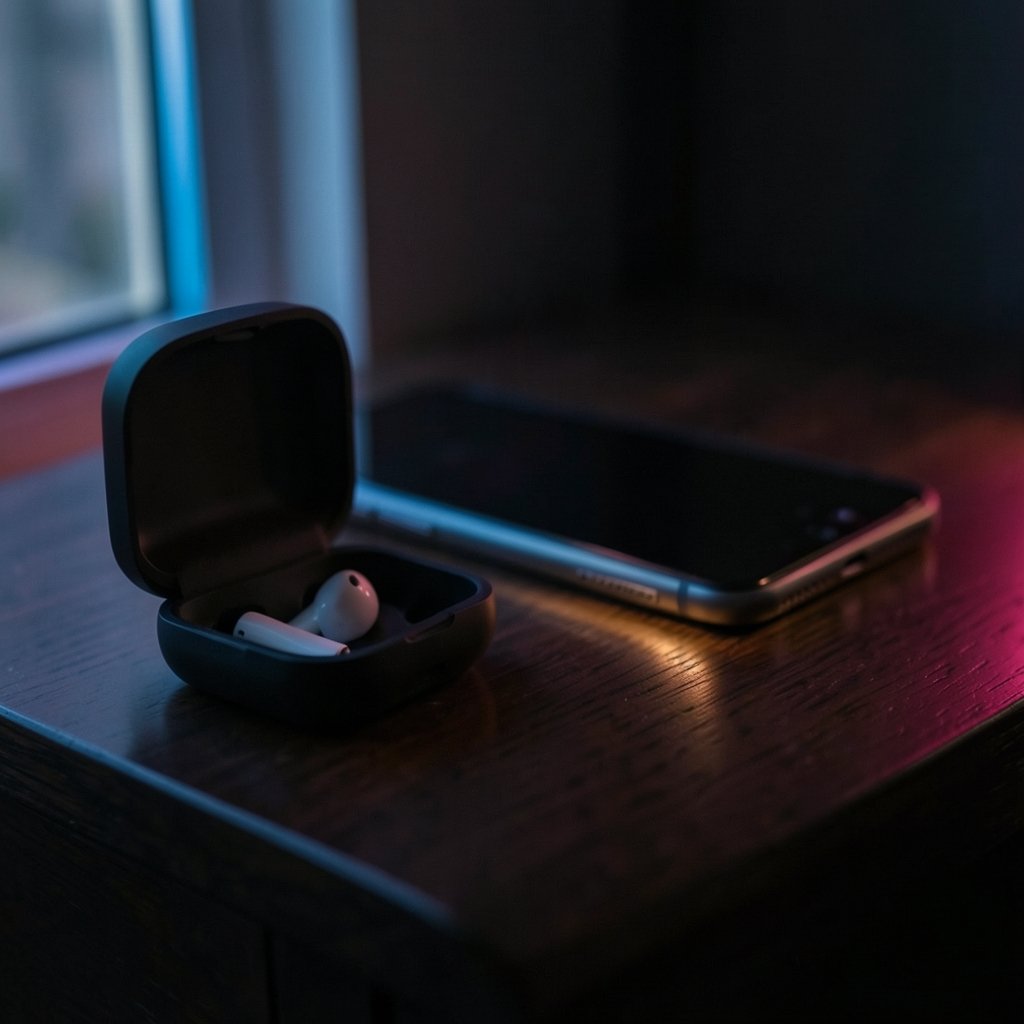
Apple’s mid-tier buds earned a firm recommendation from an audio editor who tested five best-selling models head to head for Black Friday shoppers. The verdict was blunt: on an iPhone, the noise cancelling here is only beaten by Apple’s own pricier AirPods Pro 3 and AirPods Max 2. That is a remarkable claim for a non-flagship pair.
The feature list is where AirPods 5 quietly wins. Head-tracked Personalized Spatial Audio, head gesture support, Conversation Awareness, and volume swipes on the stems all come along for the ride. If you own a newer iPhone with Apple Intelligence, Live Translation is included too.
The limitation is just as clear. Paired with an Android phone, these buds lose most of their advantages, and the same editor suggested looking elsewhere. Buy them for how they work with Apple devices, not despite that. If you are weighing wireless options more broadly, this guide to the best wireless earbuds under 100 gives a practical check on what the next tier down gives up.
Bose QuietComfort Ultra Earbuds (2nd Gen): the flight companion
Bose has spent years defending a simple reputation: quiet. The second-generation QuietComfort Ultra Earbuds carry an AI-powered adaptive noise-reduction system that adjusts to your surroundings, and independent testing backs the claim. In a Hong Kong Consumer Council roundup of 55 in-ear true wireless models, run with the International Consumer Research and Testing organization, the Bose pair shared top marks for active noise cancellation alongside the AirPods Pro 3 and Huawei’s FreeBuds Pro 5.
That matters in real use. Engine drone, open-plan chatter, and train rumble are exactly the noises adaptive systems are built to chase. The trade-off is money. These sit in the premium bracket, and the same test found no guaranteed link between price and performance. Pay for the quiet, not the badge.
If noise cancelling is your deciding factor, read up on how to choose noise cancelling earbuds around your daily routine before committing, because the best ANC on paper is useless if the fit is wrong for your ears.
Apple AirPods Pro 3: the all-rounder for Apple loyalists
Where the AirPods 5 are a value play, the AirPods Pro 3 are the no-compromise version. In the Consumer Council test, the Pro 3 earned a perfect score for sound quality, with balanced highs, mids, and lows and realistic vocals. It matched that perfect score in noise cancelling. Only Sony’s WF-1000XM6 joined it at the top of the audio table.
The catch is predictable. You pay a premium over the AirPods 5 for gains that mostly matter in loud places and critical listening. Casual listeners who mostly play podcasts on the bus will struggle to justify the jump. Buyers who fly monthly or work in noisy offices will not.
Sony WF-1000XM6: sound quality first
Sony’s flagship in-ears have long been the default recommendation for people who care about fidelity, and the newest generation held its ground in independent testing. The Consumer Council panel gave the WF-1000XM6 full marks for sound, praising a balanced, full-bodied presentation with lifelike vocals. Earlier coverage of the WF-1000XM5 highlighted custom 8.4mm dynamic drivers, class-leading cancellation, and support for advanced Bluetooth codecs.
The honest limitation is that Sony’s top buds sit at flagship pricing, and the same testing showed cheaper models can score within half a point. If you stream lossless audio and own a phone that supports high-resolution codecs such as LDAC, the gap is real. If you stream standard-quality audio over a mid-range phone, you are paying for headroom you may never hear.
Sennheiser Momentum True Wireless 5: built to be kept
Sennheiser did something unusual this cycle. The Momentum True Wireless 5 earned praise for superb sound quality, but the more interesting detail was sustainability: user-replaceable batteries in both the earbuds and the charging case. Anyone who has thrown away a perfectly good pair of buds because the cells wore out will recognize why that matters.
Battery life is the quiet killer of wireless earbuds. In the Consumer Council test, playtime on a full charge ranged from about 4 hours 25 minutes to 17 hours 21 minutes across 55 models. That spread is enormous, and it explains why replaceable cells are a genuine differentiator rather than a marketing footnote. The limitation is cost: this is a premium pair, and the design is aimed at buyers planning to keep them for years, not flip them next season.
CMF Buds 2 Plus: the sub-$100 surprise
Budget brands have quietly closed the gap. The CMF Buds 2 Plus landed on a year-end list of the earbuds readers bought most, with support for Sony’s hi-res LDAC codec and an IP55 dust- and water-resistance rating, all for under $100. That combination would have been unthinkable at this price a few cycles ago.
TechRadar’s own testing echoed the theme, flagging budget stunners that deliver stellar sound for under $40 or £30. The limitation with any cheap pair is the long tail: fewer software updates, less polished apps, and ANC that handles a bus but not a building site. Still, if you want a spare pair for the gym bag, the value math is hard to argue with. This breakdown of why the best budget earbuds actually matters when you spend less digs into where the savings show up and where they bite.
Nothing Ear (a): personality without the flagship tax
Nothing’s budget-leaning model made an audio editor’s Black Friday shortlist of five tested best-sellers, which says something about how far the design-forward brand has come. The transparent styling is polarizing, but the tuning is lively and the feature set covers the basics well.
The limitation is straightforward: this is not the noise-cancelling champion. If you commute through loud streets, the Bose and Apple options above will serve you better. If you want distinctive buds that sound good, look good, and cost less than the flagships, the Ear (a) earns its place on the list.
Xiaomi Redmi Buds 8 Pro: the price-to-performance winner
Here is the stat that should shape your shopping. In the Consumer Council test, the Redmi Buds 8 Pro, priced at HK$399, scored 4 out of 5 overall, beating several models that cost more than three times as much. Two pairs priced at HK$1,499 managed only 3.5. Five models earned the top 4.5 score, and the Redmi sat just half a point behind them.
The limitation is regional variation. Model names, firmware, and available features shift between markets, so check the exact version sold where you live before ordering. And a 4-out-of-5 score is not a 5, so do not expect flagship silence. But for buyers who want most of the experience for a fraction of the outlay, this is the value pick of the group.
How to choose without overthinking it
Start with your phone, not the spec sheet. Device-specific features are the single biggest divider on this list. Apple’s best tricks only work on iPhone, and high-resolution codecs only pay off on phones that support them. Then work through the practical filters.
- Decide what noise you need to beat. Adaptive ANC like Bose’s is worth the premium for travel and open offices. For a quiet bedroom, it is wasted money.
- Check real battery numbers, not marketing ones. Tested playtime ranged from roughly 4.5 to 17 hours, so ask about the figure for your exact model.
- Think about lifespan. Replaceable batteries, like those in the Momentum True Wireless 5, change the cost-per-year math completely.
- Try the fit. Comfort scores were broadly average across most models, which means fit is personal and worth testing in a store.
- Set a ceiling and hold it. The price-performance data is clear: expensive does not automatically mean better.
Wired still has a place too. If you want zero charging anxiety, this look at the best wired earbuds that actually last covers the corded side of the market. And if you listen in the car, pairing your phone with a mount that holds up to real driving matters as much as the buds themselves.
Conclusion
The best pair of earbuds in late 2026 is not the most expensive one. It is the one that matches your phone, your commute, and your tolerance for charging. Apple buyers have two clear tiers to pick between. Frequent flyers should look at Bose. Sound purists should audition Sony. Long-term planners should weigh Sennheiser’s replaceable batteries. Budget hunters have never had it better, with CMF and Xiaomi both punching far above their price tags. Pick the one feature you cannot live without, check the tested numbers behind it, and buy once.
Frequently asked questions
Are expensive earbuds always better than cheap ones?
No. Independent testing of 55 in-ear models found no guaranteed link between price and performance. A HK$399 pair scored 4 out of 5 overall, while two HK$1,499 pairs managed only 3.5. Price buys features and polish, not a guaranteed jump in sound or noise cancelling.
Which earbuds have the best noise cancelling?
In the Consumer Council and ICRT test, the Apple AirPods Pro 3, Bose QuietComfort Ultra Earbuds (2nd Gen), and Huawei FreeBuds Pro 5 shared top marks for active noise cancellation. An audio editor separately rated the AirPods 5’s ANC as excellent for the money on iPhone.
How long should earbud battery last?
Tested playtime varied from about 4 hours 25 minutes to 17 hours 21 minutes on a full charge across 55 models. Quick charging times ranged from 29 minutes to 3 hours 25 minutes. Check the figure for your specific model rather than the category average.
Do I need high-resolution codecs like LDAC?
Only if your phone supports them and you stream high-quality audio. The CMF Buds 2 Plus include LDAC for under $100, and Sony’s flagships support advanced codecs too. On a phone without support, you will not hear the benefit.
Are AirPods worth it on Android?
Generally not. The AirPods 5’s best features, including spatial audio, head gestures, and Live Translation, are tied to Apple devices, and reviewers recommend alternatives for Android users. Buy AirPods for an iPhone, not despite one.
What about wired earphones in 2026?
They remain a solid choice for anyone tired of charging. Wired sets skip battery degradation entirely and often cost less for comparable sound. They are worth considering as a backup pair or for desk work where a cable is not a nuisance.






