

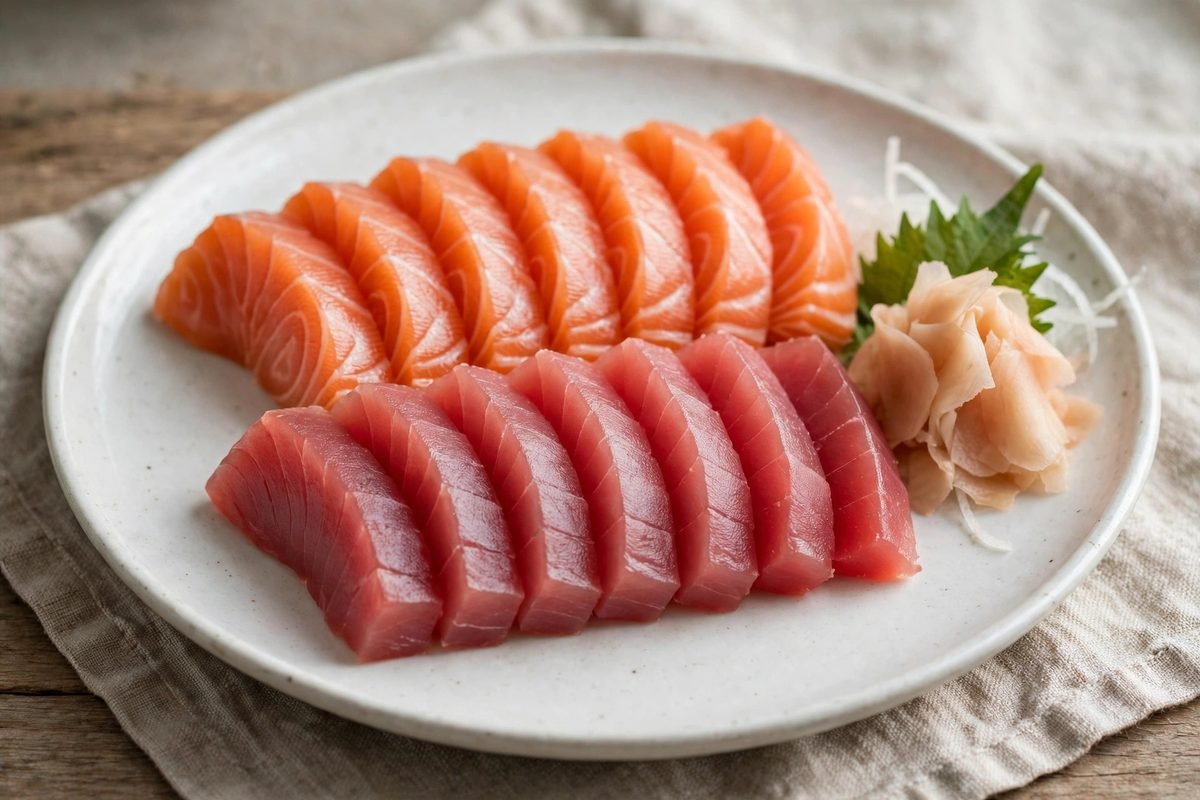
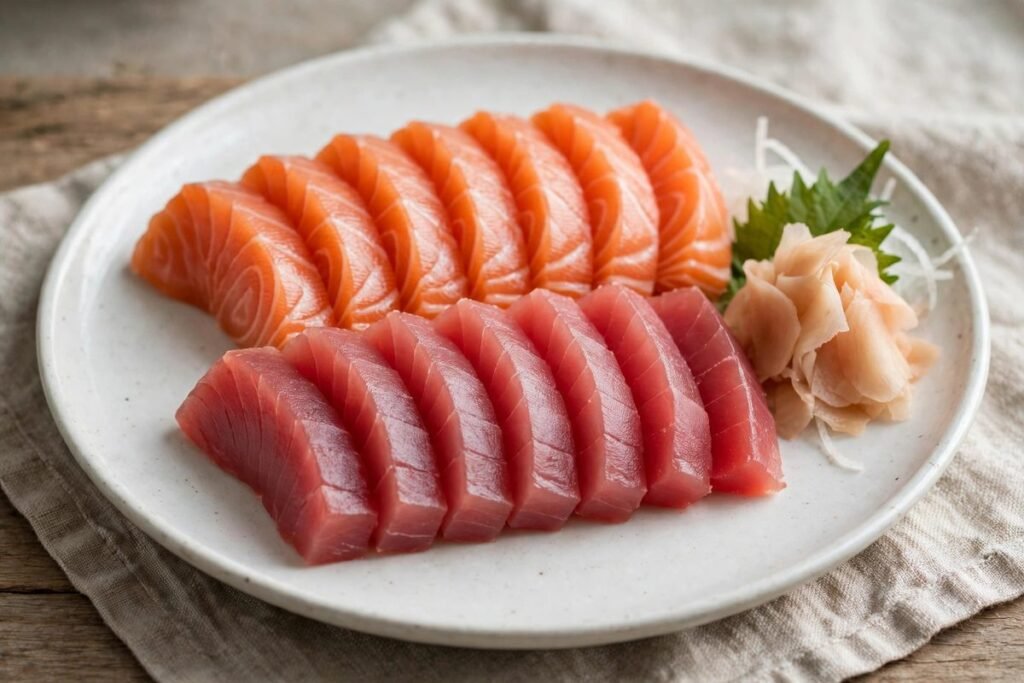
The best fish for sushi at home is fish that is fresh, well handled and sold for eating raw. Homemade sushi is one of the most rewarding things a home cook can make, and the fish is what makes or breaks it. This guide ranks the ten best fish for sushi at home in 2027.
So which fish should you buy first? Salmon is the best starting point: it is widely available, forgiving to slice and mild enough for almost everyone. Tuna and yellowtail follow close behind, while the rest covers richer and more adventurous options.
Key takeaways:
- Salmon is the best first fish: mild, widely available and easy to slice.
- Buy fish sold for raw eating from a reputable fishmonger, keep it cold, and use it the same day.
- Fatty fish suit nigiri, while leaner fish suit thin slices and rolls.
- Eel is served cooked and mackerel is usually cured, so both need a little extra care.
What makes a fish good for sushi?
A good sushi fish has clean flavour, a pleasant texture and a colour that looks fresh. Fatty fish taste rich and buttery, lean fish taste clean and delicate, and the best sushi menus use both. The fish should slice cleanly and hold its shape on rice.
Good fish for sushi smells of the sea, not of fish, and the flesh should look bright and glossy rather than dull or dry. The cut surface should be moist and even, with no browning at the edges. If anything about the fish seems off, do not buy it.
How to buy fish for sushi at home
Start at a reputable fishmonger and say plainly that the fish is for sushi. Ask for fish sold for raw eating, and ask when it arrived. A good fishmonger may suggest what is freshest that day, which is often better than the fish you had planned to buy.
Freezing is part of safe sushi practice, because freezing reduces the risk from parasites in raw fish. Much sushi fish has already been commercially frozen, so ask your fishmonger what has been done. Keep the fish cold on the way home, refrigerate it at once, and use it the same day.
How to slice fish for sushi
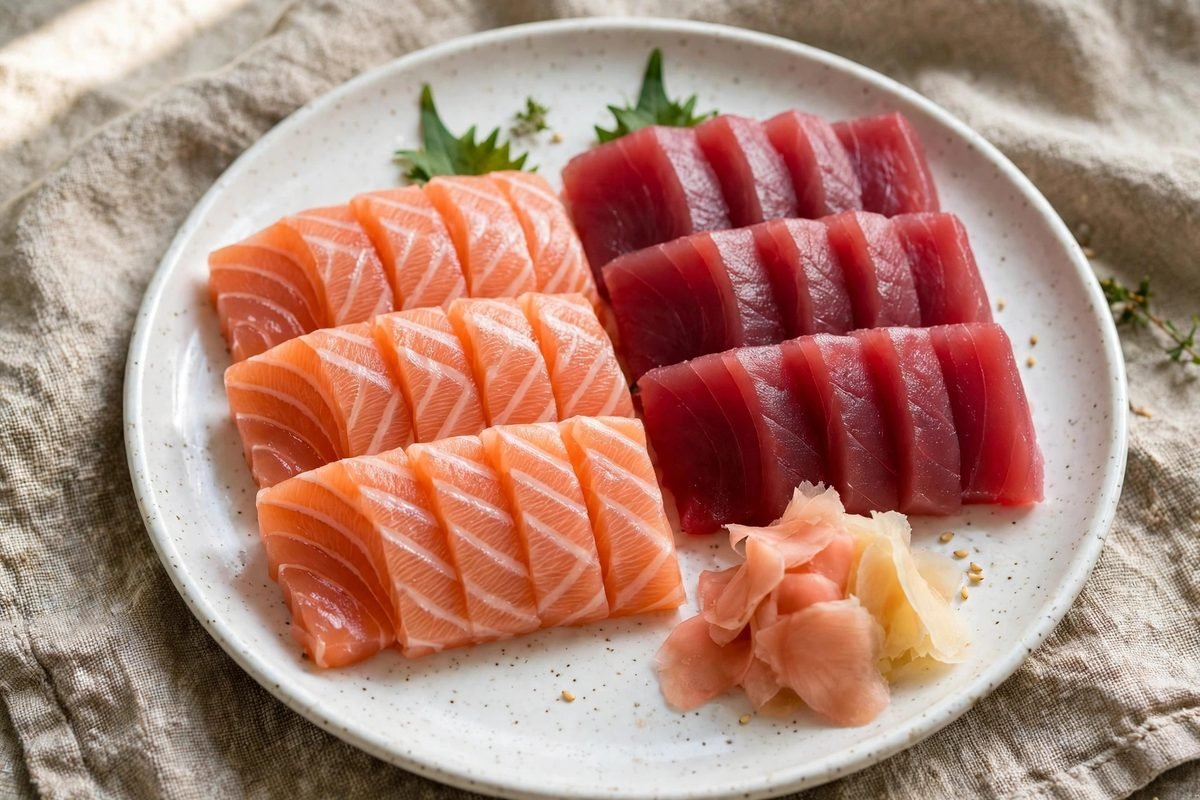
Good slicing starts with a sharp knife and cold fish. Keep the fish chilled until you cut it, and wipe the blade clean between slices. Cut with a single smooth stroke, pulling the knife towards you, rather than sawing back and forth.
For nigiri, cut slices about the width of two fingers, so the fish drapes over the rice. For rolls, cut neat strips that run the length of the roll. For sashimi, slice against the grain and serve at once.
The 10 best fish for sushi at home in 2027
Here are the ten best fish for sushi at home in 2027, ranked from first to tenth. Read the “Best for” line under each pick to find the fish that suits your sushi.
1. Salmon
Salmon is the best fish for sushi at home, and the easiest place to start. Its flesh is a rich orange colour, its flavour is mild and buttery, and its fat gives it a soft texture that melts on the tongue. It slices cleanly, holds its shape on rice, and looks beautiful on the plate, which is why it appears on almost every sushi menu.
Look for a centre-cut fillet with even colour and no brown edges. Salmon suits nigiri, rolls and sashimi alike.
Best for: first-time sushi makers and nigiri.
2. Yellowfin tuna
Yellowfin tuna is the classic sushi tuna for home cooks. Its flesh is a deep red, its flavour is clean and meaty, and its firm texture slices into neat, even pieces. It is leaner than salmon, so it tastes lighter, and it works beautifully as nigiri, sashimi or the filling for a spicy tuna roll.
Buy a solid loin rather than thin steaks, and slice only what you need, keeping the rest wrapped and chilled.
Best for: classic nigiri and spicy tuna rolls.
3. Hamachi (yellowtail)
Hamachi, also known as yellowtail, is the fish sushi lovers graduate to after salmon and tuna. Its flesh is pale and buttery, with a rich flavour and a soft texture that feels luxurious. It is often served with a squeeze of lemon or a little jalapeño, which cuts through the richness and shows off the flavour.
Hamachi is usually sold as a loin and slices best when very cold. Ask your fishmonger for the belly cut for the richest pieces.
Best for: rich, buttery nigiri and sashimi.
4. Sea bass
Sea bass is a delicate white fish that brings a clean, sweet flavour to sushi. Its flesh is firm and white, with a gentle taste that suits diners who find oily fish too rich. It slices into thin, elegant pieces, and it is often served as nigiri with a touch of citrus or a light garnish.
Slice it thinly, serve it cold, and let a little yuzu or lemon do the seasoning. It balances the richer fish on a mixed platter.
Best for: delicate nigiri and mixed sushi platters.
5. Mackerel
Mackerel is a bold, oily fish with a strong flavour that experienced sushi eaters love. It is usually cured in salt and vinegar before serving, a traditional preparation that firms the flesh, softens the oiliness and gives it a bright, sharp edge. The result is a slice with a silvery skin and a flavour unlike anything else on this list.
Buy it ready-cured from your fishmonger if you are new to it, and keep portions small, because the flavour is intense.
Best for: bold flavour and traditional cured nigiri.
6. Scallops
Scallops are the sweetest pick on this list, and one of the most forgiving. A fresh scallop is soft, sweet and almost creamy, with a delicate flavour that needs no seasoning beyond a little soy sauce or citrus. The round shape makes a beautiful piece of nigiri, sitting neatly on a small bed of rice.
Buy large, dry-packed scallops and slice each one in half across the middle to make two thin rounds.
Best for: sweet, delicate nigiri.
7. Sweet shrimp (amaebi)
Sweet shrimp, known as amaebi, are small, tender and naturally sweet, with a soft texture that melts in the mouth. They are usually served raw as nigiri, often with the tail left on for looks, and they need nothing more than a dab of wasabi and a drop of soy sauce. Children and cautious eaters often like them best.
Buy amaebi from a fishmonger who sells them for raw eating, peel them just before use, and serve at once.
Best for: a light, sweet nigiri.
8. Squid
Squid brings a clean flavour and a firm, slightly chewy texture to sushi. Its flesh is white and mild, and it is often scored with fine cuts before serving, which softens the texture and helps it hold sauce. A piece of squid nigiri looks striking on the plate, with its pale flesh and neat scoring.
Buy fresh squid or ask your fishmonger to prepare it, then slice thinly, score lightly and serve cold.
Best for: texture and variety on a sushi platter.
9. Octopus
Octopus is usually served cooked rather than raw, which makes it a reassuring choice for cautious cooks. Its flesh is firm and mildly sweet, with a pleasant chew, and it is often sliced thinly and served as nigiri with a little soy sauce. The pale flesh with its darker edge looks elegant on rice.
Buy octopus already cooked and sliced by your fishmonger if you can, and serve it as part of a mixed selection. Our baked chicken breast guide covers the same careful approach to temperature and timing, and our high-protein foods guide explains why fish earns its place in a healthy diet.
Best for: a cooked option on a raw-fish platter.
10. Unagi (eel)
Unagi, or freshwater eel, is always served cooked, and it is the richest fish on this list. It is grilled and brushed with a sweet soy glaze, giving it a smoky, caramel flavour and a soft, almost melting texture. A slice of unagi draped over rice, with a little extra glaze and sesame seeds, is one of the most satisfying pieces of sushi there is.
Buy unagi ready-grilled from a fishmonger or Asian grocer, warm it gently, slice it into strips and serve at once.
Best for: a rich, cooked finale to a sushi meal.
The 10 best fish for sushi at home compared
| Fish | Flavour | Texture | Best use |
|---|---|---|---|
| Salmon | Mild and buttery | Soft and rich | Nigiri and rolls |
| Yellowfin tuna | Clean and meaty | Firm and lean | Nigiri and sashimi |
| Hamachi | Rich and buttery | Soft and silky | Nigiri and sashimi |
| Sea bass | Clean and sweet | Firm and delicate | Thin nigiri |
| Mackerel | Bold and sharp | Firm and oily | Cured nigiri |
| Scallops | Sweet and delicate | Soft and creamy | Nigiri |
| Sweet shrimp | Sweet and mild | Tender and soft | Nigiri |
| Squid | Clean and mild | Firm and chewy | Scored nigiri |
| Octopus | Mild and sweet | Firm, cooked | Thin nigiri |
| Unagi | Rich and smoky | Soft, cooked | Glazed nigiri |
Homemade sushi checklist
Good sushi at home is mostly good preparation. Work through this list before you start.
- Buy fish sold for raw eating from a reputable fishmonger.
- Keep the fish cold and use it the same day.
- Chill your knife, board and serving plates before you start slicing.
- Cook the rice first and let it cool before shaping it.
- Slice only what you need, and keep the rest wrapped and chilled.
- Serve the sushi at once, while the fish is cold and the rice is fresh.
Frequently asked questions
What is the best fish for sushi at home for beginners?
Salmon is the best first choice: mild, widely available and forgiving to slice. Yellowfin tuna is the next fish to try.
Can I use supermarket fish for sushi?
Only if it is sold for raw eating. Ask at the fish counter, and buy from a reputable fishmonger when you can.
How do I keep fish safe for homemade sushi?
Buy fish sold for raw eating, keep it cold, and use it the same day. Much sushi fish has already been commercially frozen, so ask your fishmonger what has been done.
Which fish should be cooked before serving as sushi?
Unagi is always served cooked, with a sweet soy glaze, and octopus is usually served cooked too. Mackerel is traditionally cured in salt and vinegar before serving.
What should I serve with homemade sushi?
Soy sauce, wasabi, pickled ginger and miso soup are the classic partners. Our ground turkey recipes offer more ideas for simple home-cooked meals.
Sources
Buying and handling guidance reflects widely published food-safety advice for raw fish. Preparation notes for cured mackerel and cooked eel and octopus reflect traditional sushi practice.
The bottom line
The best fish for sushi at home is the freshest fish you can buy from a fishmonger you trust. Start with salmon, add tuna and yellowtail as your confidence grows, and round out the platter with scallops, shrimp and one cooked option. Your next step: visit a reputable fishmonger and ask what is freshest for sushi today.
Food-safety note: Raw fish carries a small risk of food poisoning, even when fresh and well handled. If you are pregnant or have a weakened immune system, check current guidance from your doctor or local food-safety authority first.














