

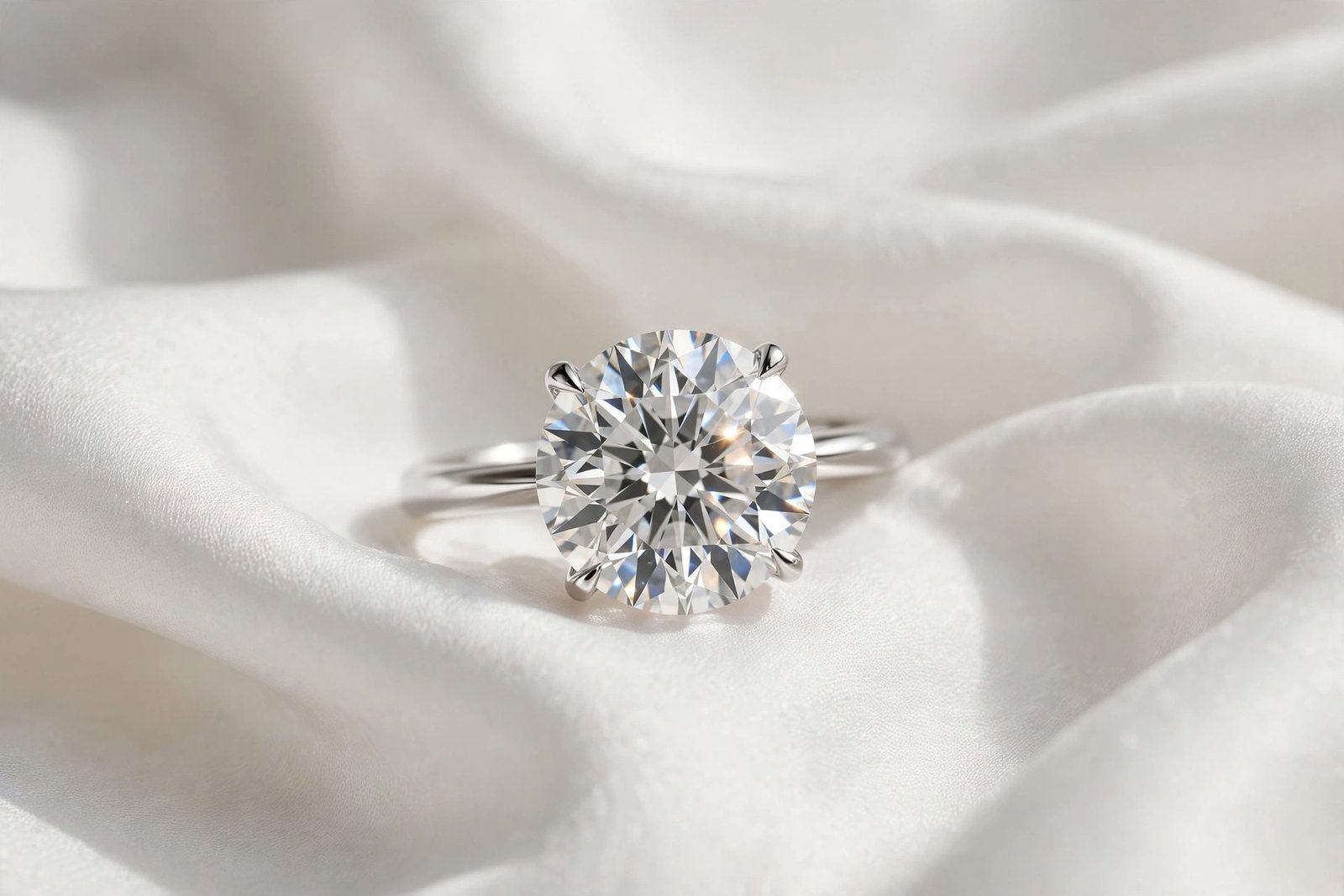

The best lab-grown diamonds in 2027 give you the most stone for your money without compromising on what matters: cut, colour and a proper certificate. A 1-carat round lab-grown diamond with a good cut and an IGI or GIA report now costs around $500 to $640 loose, against roughly $3,800 to $4,700 for its mined equivalent — and the gap only widens as the stone grows.
Lab-grown diamonds are real diamonds, with the same carbon crystal structure and the same 10 on the Mohs hardness scale as mined stones. They are grown in a laboratory, by CVD or HPHT, rather than dug from the earth. The ten picks below cover every shape and budget, with prices checked against live market data from October 2026.
Key takeaways:
- Best overall value: a 1-carat round brilliant solitaire, from around $500 to $640 loose.
- Price per carat stays roughly flat at $450 to $550 from 1.5 to 10 carats — size is cheap.
- Lab-grown stones cost about 87% less than mined diamonds of the same weight and quality.
- Always buy with an IGI or GIA certificate; GIA costs roughly twice as much as IGI for identical specs.
How to judge a lab-grown diamond
Judge a lab-grown diamond as you would a mined one: cut first, then colour, then clarity, then carat weight. Cut decides how the stone handles light, and it costs nothing extra — an Ideal cut round costs the same as an Excellent cut, so never pay more for it and never accept less.
Colour and clarity are where the money goes: at 2 carats, D to G colour moves the price by around $200, while VS2 to VVS2 clarity moves it by only about $90. HPHT stones run about 11% higher than CVD.
The 10 best lab-grown diamonds in 2027
1. Round brilliant solitaire, 1 carat — Best Overall Value
The round brilliant is the safest and smartest first lab-grown diamond. It returns more light than any other shape and suits every setting: a 1-carat round, D to G colour, VS1 clarity or better, with an IGI report, costs around $500 to $640 loose, and a finished ring in a 14k gold solitaire starts at around $1,590.
Buy Ideal or Excellent cut — they cost the same. Keep colour at G or better and clarity at VS2 or better.
Best for: a first engagement ring and the best value per pound in the whole guide.
2. Oval solitaire, 2 carats — Best Size for the Money
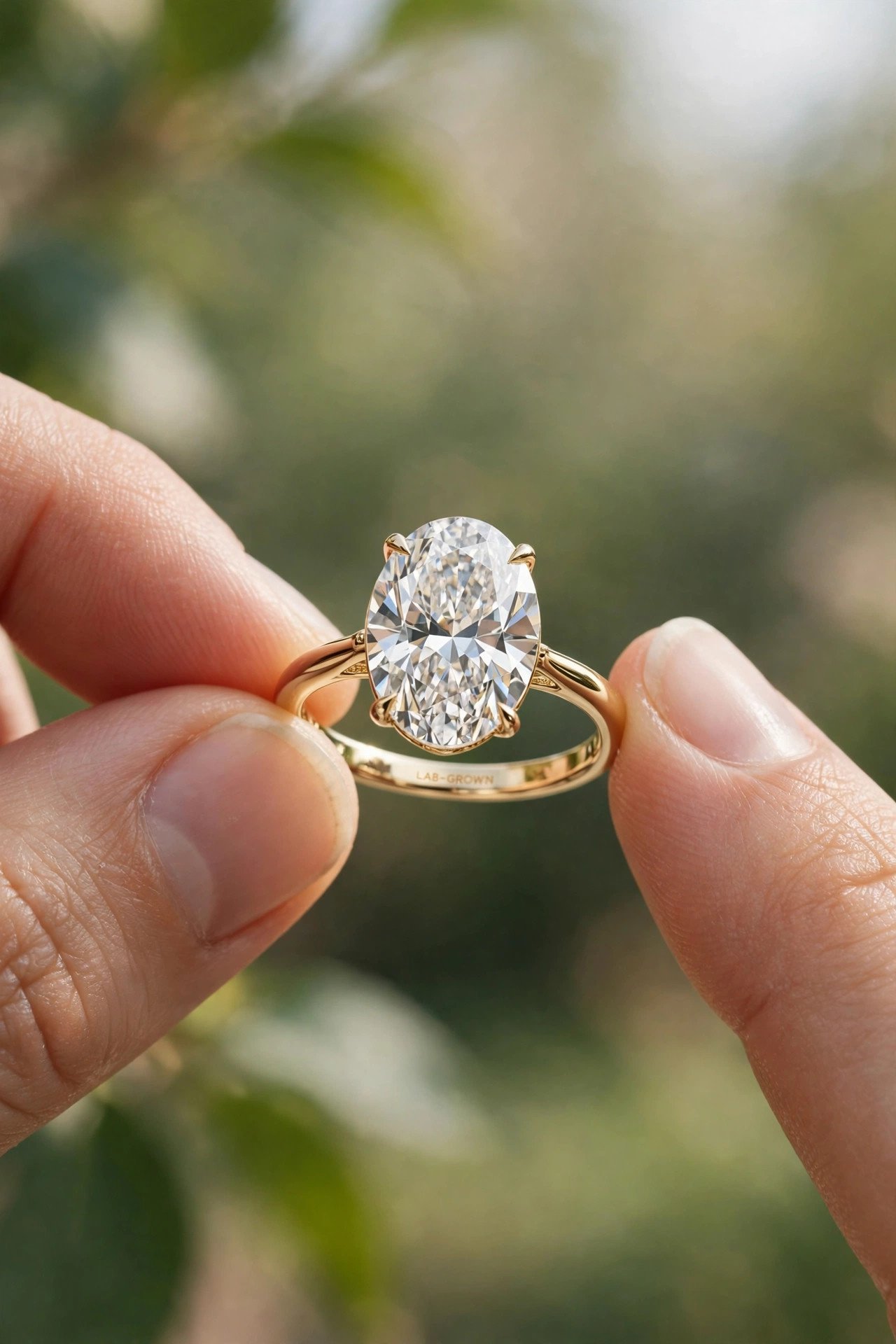
The oval is the shape for buyers who want size. A 2-carat oval looks larger than a 2-carat round because its elongated shape spreads across the finger, and it costs about the same — around $1,020 to $1,140 loose with an IGI report. A finished 2-carat oval ring in 14k gold starts at around $2,300.
Check for a bow-tie effect and ask for a video before you buy. A good oval has even brightness end to end.
Best for: maximum visible size without a bigger budget.
3. Cushion cut, 1.5 carats — Best Vintage Charm
The cushion cut, with its soft square shape and rounded corners, is the romantic of the diamond world. It suits vintage settings and halos, and its larger facets give it a softer, more candlelit sparkle than a round brilliant. A 1.5-carat cushion, F to G colour and VS1 to VS2 clarity, costs around $700 to $1,800 loose.
Cushions vary more in cut quality than rounds, so look for a near-square ratio and a depth that keeps the stone lively.
Best for: vintage-style rings and halo settings.
4. Emerald cut, 2 carats — Best for Showing Clarity
The emerald cut is the connoisseur’s shape: long, clean lines and a hall-of-mirrors flash instead of the round’s fire. Its large open table shows everything, so clarity matters more here than anywhere — buy VS1 or better. A 2-carat emerald, F to G colour and VS1 clarity, costs around $1,100 loose, and it flatters long fingers.
Best for: buyers who value clarity and quiet elegance over sparkle.
5. Pear shape, 1.5 carats — Best Finger Coverage
The pear, a teardrop combining a round and a marquise, covers more of the finger than any other shape at the same weight. A 1.5-carat pear, F to G colour and VS1 to VS2 clarity, costs around $700 to $1,800 loose, and worn point-out it makes the hand look longer and slimmer.
Check the symmetry, and protect the point with a V-prong — it is the most vulnerable part of the stone.
Best for: a distinctive shape that flatters the hand.
6. Radiant cut, 2 carats — Best Sparkle per Pound
The radiant is for buyers who want the fire of a round with the presence of an emerald cut. Its cropped corners and brilliant faceting give it exceptional sparkle, and at 2 carats it was one of the least expensive fancy shapes in live market data, at around $1,091 loose.
Radiants hide inclusions well, so VS2 or even SI1 still looks clean — the best shape for stretching a budget.
Best for: maximum sparkle on a mid-range budget.
7. Princess cut, 1 carat — Best Square Classic
The princess is the sharp-cornered square that defined a generation of engagement rings, and it still suits modern, architectural settings best. A 1-carat princess, D to G colour and VS1 to VS2 clarity, costs around $500 to $700 loose — a little less than a round of the same weight, because the square shape wastes less rough. Protect the corners with prongs — they chip more easily than a round’s edge.
Best for: modern settings and buyers who love a crisp square.
8. Marquise, 2 carats — Best Elongated Look
The marquise is the most dramatic shape here: a long, pointed oval that makes a 2-carat stone look closer to 2.5 carats on the finger. A 2-carat marquise, F to G colour and VS1 to VS2 clarity, costs around $1,000 to $1,300 loose, and it gives the most visual size per pound of any cut here.
Like the pear, it needs symmetry checks and V-prongs on both points. Worn lengthways, it is the most elongating shape here.
Best for: the biggest look for the money.
9. Asscher cut, 1.5 carats — Best Art Deco
The asscher is the emerald cut’s square cousin, and the most architectural shape here. Its stepped facets and high crown create a windmill pattern that rewards a slow look rather than a flash, and it suits Art Deco and vintage settings perfectly. A 1.5-carat asscher, F to G colour and VS1 clarity, costs around $700 to $1,500 loose. Like the emerald cut, it shows clarity, so do not drop below VS1.
Best for: Art Deco styling and a ring with real character.
10. Fancy-colour lab diamond, 1 carat — Best Statement
Fancy colours are where lab-grown diamonds have their biggest advantage. A vivid yellow or pink lab diamond costs a fraction of its mined equivalent, because the colour is created during growth rather than found by chance in the earth. A 1-carat fancy yellow lab diamond, well cut, costs around $500 to $900 loose.
Yellow is the best value and easiest to wear; pink and blue cost more. Set yellow in yellow gold to deepen the tone, or white gold to make it pop.
Best for: a statement ring that would cost ten times more as a mined stone.
The 10 best lab-grown diamonds compared
| Pick | Shape | Weight | Loose price, around | Best for |
|---|---|---|---|---|
| Round brilliant solitaire | Round | 1 ct | $500–$640 | Best overall value |
| Oval solitaire | Oval | 2 ct | $1,020–$1,140 | Size for the money |
| Cushion cut | Cushion | 1.5 ct | $700–$1,800 | Vintage charm |
| Emerald cut | Emerald | 2 ct | ~$1,100 | Showing clarity |
| Pear shape | Pear | 1.5 ct | $700–$1,800 | Finger coverage |
| Radiant cut | Radiant | 2 ct | ~$1,091 | Sparkle per pound |
| Princess cut | Princess | 1 ct | $500–$700 | Square classic |
| Marquise | Marquise | 2 ct | $1,000–$1,300 | Elongated look |
| Asscher cut | Asscher | 1.5 ct | $700–$1,500 | Art Deco |
| Fancy-colour lab diamond | Round or oval | 1 ct | $500–$900 | Statement |
How to choose the right lab-grown diamond
Five questions narrow ten options down to one.
- What is your real budget? A 1-carat round costs around $500 to $640 loose; a 2-carat stone of the same quality costs around $1,020 to $1,140. Price per carat stays roughly flat.
- Which shape suits the hand? Rounds and ovals suit everyone; elongated shapes flatter shorter fingers; emerald and asscher cuts suit longer fingers and quieter tastes.
- Which certificate? Insist on IGI or GIA. GIA-graded lab stones cost roughly twice as much as IGI for identical specs, so IGI is where the value is unless the GIA name matters to you.
- How will it be worn? Daily wear suits rounds, ovals and radiants; pointed shapes need V-prongs to protect their tips.
- What about resale? Lab-grown diamonds have weak resale value and prices are still falling — down 27% in the year to October 2026. Buy the stone you want to wear, not one you expect to sell.
And remember the ring is more than the stone. A well-made setting in 14k or 18k gold will outlast the stone’s fashion. If you like handmade jewellery, our guide to the best anodized aluminum rings for jewelry shows how much craft matters at the other end of the price scale — and if the ring is for a proposal, our guide to the best honeymoon destinations is the natural next step.
FAQs
Are lab-grown diamonds real diamonds?
Yes. They have the same carbon crystal structure and the same hardness — 10 on the Mohs scale — as mined diamonds. Only a grading laboratory can tell them apart, by looking for growth patterns.
How much cheaper are lab-grown diamonds than mined ones?
About 87% cheaper at the same weight and quality. A 1-carat lab-grown round costs around $500 to $640 loose, against roughly $3,800 to $4,700 mined; a 2-carat lab stone costs around $1,020 to $1,140, against around $17,400 mined.
What is the difference between CVD and HPHT lab diamonds?
CVD grows the diamond layer by layer in a vacuum chamber using carbon-rich gas; HPHT recreates the high heat and pressure found deep in the earth. Both make gem-quality stones, and HPHT stones cost about 11% more on average.
Should I buy IGI or GIA certified?
Either is respected, but GIA-graded lab stones cost roughly twice as much as IGI-graded stones with identical colour and clarity. IGI grades the large majority of the lab-grown market, so it is where the value is.
Do lab-grown diamonds hold their value?
No — resale value is weak, and prices are still falling. Lab-grown prices fell 27% in the year to October 2026. Buy the diamond you want to wear, not as an investment.
Sources
- Icestore, “Lab-Grown Diamond Prices: Real Data” — icestore.com
- Clairamor, “Lab-Grown Diamond Prices 2026: Cost by Carat and Shape” — clairamor.com
- Carat Capital, “The Lab-Grown Diamond Price List” — caratcapital.org
- The Carat Cut, “Lab Grown Diamonds Review 2026: Is It Worth It?” — thecaratcut.com
The bottom line
Lab-grown diamonds have changed the maths of buying a beautiful stone. A 1-carat round that once cost thousands now costs a few hundred, and a 2-carat oval once beyond reach is now affordable.
Start with the round solitaire for the safest choice, the oval for the biggest look, and the fancy colour for the story. Whichever you choose, insist on an IGI or GIA certificate, check the stone on video before you pay, and buy the diamond you want to wear — not the one you hope to sell.














