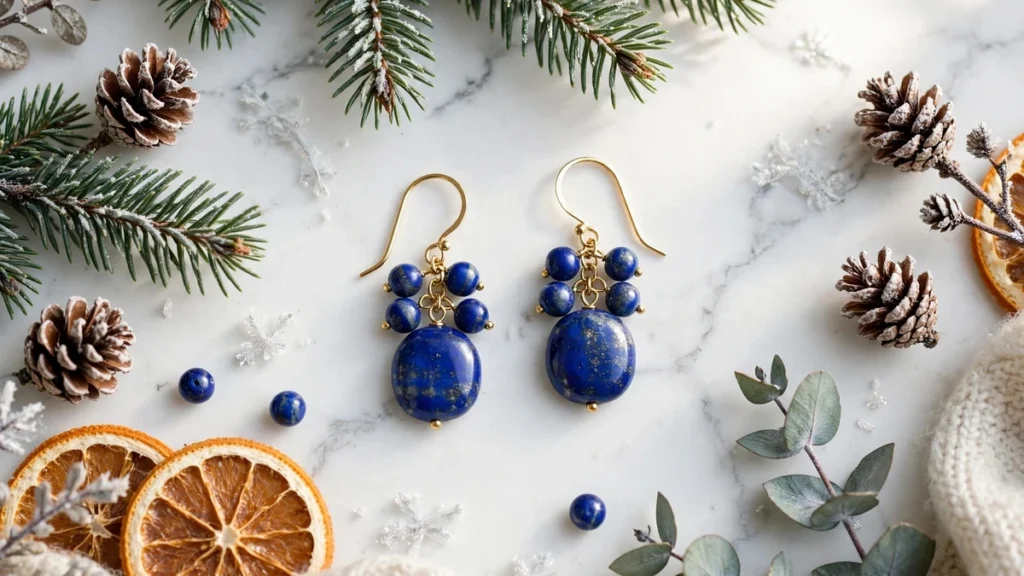
Lapis lazuli is the deep blue stone of winter. It is the colour of a clear night sky, flecked with gold, and it suits the season’s darker fabrics better than almost any other gemstone. A pair of lapis lazuli earrings can lift a black coat, a navy knit, or a grey suit in a way that a paler stone cannot, which is why they are a winter favourite year after year.
The problem is that lapis lazuli is also one of the most imitated stones on the market. Much of what is sold cheaply as lapis is dyed howlite, dyed jasper, or blue glass, and even genuine lapis varies widely in quality. A good stone is a rich, even blue with fine gold pyrite flecks. A poor one is pale, patchy, or so heavily dyed that the colour rubs off on skin.
Below are nine lapis lazuli earrings worth considering for winter 2027, from classic studs to longer drops. Each one is described by what it is good at, what to watch for, and who it suits best, so you can choose a pair that will look good in December and still look good next winter.
Key takeaways
- Lapis lazuli suits winter best: its deep blue works with dark coats, knits, and evening fabrics.
- Look for a rich, even blue with fine gold pyrite flecks, and ask whether the stone is natural or dyed.
- Choose a protective setting, such as a bezel, because lapis is relatively soft at Mohs 5 to 6.
- Clean lapis gently with lukewarm water and a soft cloth, and never use an ultrasonic or steam cleaner.
- Lapis lazuli has no proven healing properties and is not an investment stone, and dyed imitations are common at low prices.
What lapis lazuli actually is
Lapis lazuli is a rock, not a single mineral. It is mostly lazurite, which gives it the deep blue colour, mixed with white calcite and gold-coloured pyrite. The best stones come from Afghanistan, where lapis has been mined for thousands of years, and the finest material is a strong, even blue with small, evenly scattered pyrite flecks and very little white calcite showing.
That composition is also why lapis needs care. At Mohs 5 to 6 it is softer than sapphire, ruby, or diamond, and it can scratch and chip if it is knocked against a hard surface. It is also porous enough to absorb oils and chemicals, which is why perfume, hairspray, and harsh cleaners should never touch it. A good pair of lapis earrings will last for years if they are stored separately and cleaned gently, but they are not a stone to wear carelessly every day.
Winter is the season when lapis looks its best. The stone’s deep blue stands out against wool, cashmere, and velvet, and its gold flecks catch low winter light in a way that feels warm rather than flashy. It also pairs well with both gold and silver settings, which makes it easy to match to the rest of your jewellery.
There is one more thing worth knowing before you buy. Lapis lazuli is sometimes confused with sodalite, a related blue stone that is usually paler and lacks the fine gold pyrite of good lapis. Sodalite is a genuine stone in its own right, and it is often sold honestly under its own name, but it should not be sold at lapis prices. If a pair of earrings is described only as blue stone, or if the seller cannot say which stone it is, treat that as a reason to ask more questions, not as a reason to buy quickly.
How we chose these earrings and what to look for
Look first at the colour. A good lapis stone is a rich, saturated blue, not pale, greyish, or uneven. Fine gold pyrite flecks are a good sign, but large brassy patches or heavy white calcite veins usually mean a lower-grade stone. If the blue looks unnaturally bright and uniform, ask whether the stone has been dyed, and expect an honest seller to say so.

Look next at the setting. Because lapis is relatively soft, a bezel setting that wraps the stone’s edge is the safest choice for everyday wear. Prong settings show more of the stone, but they leave the edges exposed, so they suit occasional wear better. For drops and dangles, check that the stone is securely set and that the earring is not too heavy, because a heavy drop can pull on the earlobe over a long day.
Finally, look at the metal and the price. Lapis itself is not an expensive stone, so most of what you pay for is the metal, the setting, and the brand. A modest price is not a warning sign on its own, but a very low price for a large, perfectly blue stone usually means dyed howlite or glass. Our guide to the best diamond earrings explains how setting quality affects any stone, and the same checks apply here: smooth edges, secure prongs, and a comfortable post or hook.
Comfort matters more than it seems, because earrings that hurt get left in a drawer. Check that the post is not too long or too short for your earlobe, that the butterfly back holds firmly without pinching, and that a drop earring does not swing so much that it catches on a scarf or a coat collar. Winter is the worst season for earrings that catch, because high collars, scarves, and hats are all in daily use, and a hook that snags is an earring that gets lost.
The 9 best lapis lazuli earrings for winter 2027
Tiffany & Co. Studs
What we like: Classic round lapis studs in polished gold, with a deep, even blue and fine pyrite flecks, in a secure bezel setting that protects the stone. What to consider: Premium price for a stone that is not rare, and the studs are best for everyday rather than evening wear. Stone: Natural lapis lazuli. Setting: Gold bezel. Best for: Everyday winter wear. Price range: High.
A timeless choice from a house known for careful stone selection. The bezel setting is exactly what a soft stone like lapis needs.
Cartier Studs
What we like: Elegant lapis studs with a rich blue and a polished gold setting, understated enough for work and smart enough for evening. What to consider: The price reflects the brand more than the stone, and the studs are small, so they suit a subtle look. Stone: Natural lapis lazuli. Setting: Gold prong. Best for: Work and evening. Price range: High.
Cartier’s lapis is consistently well coloured, and the setting is finished to a high standard. A good choice if you want a quiet, polished pair.
David Yurman Studs
What we like: Lapis cabochons set in the brand’s signature cable design, with a deep blue that works well against winter knits. What to consider: The cable detail adds weight, so try them on before a long day. Stone: Natural lapis lazuli cabochon. Setting: Sterling silver or gold cable. Best for: Winter knitwear and coats. Price range: High.
The cabochon cut suits lapis well, because it shows the stone’s colour without sharp edges that could chip. A distinctive pair with a recognisable design.
Mejuri Stud Earrings
What we like: Small, well-made lapis studs at a fair price, with a clean bezel setting and a comfortable post. What to consider: The stones are modest in size, so they are subtle rather than a statement. Stone: Lapis lazuli. Setting: Gold vermeil bezel. Best for: Everyday wear and first lapis earrings. Price range: Mid.
A sensible first pair. The bezel setting protects the stone, and the size is easy to wear every day without worrying about damage.
Monica Vinader Studs
What we like: Polished lapis studs with a good blue and a slim gold setting, light enough for all-day wear. What to consider: The gold vermeil will need replating over time with regular wear. Stone: Lapis lazuli. Setting: Gold vermeil bezel. Best for: Daily wear and gifting. Price range: Mid.
A neat, wearable pair that does the job without fuss. Keep them away from perfume and store them in their pouch to protect the vermeil.
Missoma Stud Earrings
What we like: Contemporary lapis studs with a clean shape and a warm gold tone, easy to pair with other gold jewellery. What to consider: The stones vary slightly in colour, so check the pair in person if you can. Stone: Lapis lazuli. Setting: Gold vermeil. Best for: Layering with other gold pieces. Price range: Mid.
A modern, easy pair that works with a winter wardrobe. The warm gold setting brings out the stone’s blue nicely.
Maria Black Studs
What we like: Bold lapis studs with a strong blue and a distinctive design, for people who want their earrings noticed. What to consider: The design is more fashion-led, so it suits casual and evening looks better than formal workwear. Stone: Lapis lazuli. Setting: Sterling silver or gold. Best for: Evening and statement looks. Price range: Mid.
A confident pair that makes the most of lapis’s colour. Best worn as the main jewellery piece, with the rest of the outfit kept simple.
Astrid & Miyu Drops
What we like: Lapis drops that move well and catch the light, with a deep blue that suits winter evenings. What to consider: Drops are more exposed to knocks than studs, so they suit occasional rather than everyday wear. Stone: Lapis lazuli. Setting: Gold vermeil hook. Best for: Winter evenings and events. Price range: Mid.
The drop shape shows off the stone’s colour and movement. Wear them for an evening out, and store them carefully afterwards.
Thomas Sabo Drops
What we like: Lapis drops with a rich blue and a detailed silver setting, at a price that makes them easy to try. What to consider: Silver needs regular cleaning to stay bright, and the drops are best kept for occasional wear. Stone: Lapis lazuli. Setting: Sterling silver. Best for: Evening wear and trying the drop shape. Price range: Affordable.
A good way to try lapis drops without a large spend. The silver setting suits the stone’s cool blue well.
Which lapis lazuli earrings are right for you
For everyday winter wear, choose small studs in a bezel setting. They are the safest option for a soft stone, they sit comfortably under a scarf or a high collar, and they work with both casual and smart outfits. Gold brings out the warmth in the stone’s pyrite flecks, while silver keeps the look cool and understated.
For evenings, drops and dangles show the stone at its best. The movement catches low light, and the deep blue stands out against dark fabrics. Keep them for occasions rather than daily wear, because a drop is more likely to be knocked, and lapis chips more easily than a harder stone. A guide to gold jewellery for everyday wear can help you match the metal to the rest of your collection, so the earrings sit comfortably alongside rings and necklaces you already own.
If you are buying your first pair, start with a modest size and a reputable seller who will confirm whether the stone is natural or dyed. Dyed lapis is common and not necessarily a problem at a low price, but it should be disclosed, and it should not be sold at the price of a natural stone.
Skin tone is worth a quick thought too. Lapis suits most skin tones, because its blue is deep rather than bright, but it looks especially good on cool and neutral skin, where it echoes the undertones rather than fighting them. On warm skin, a gold setting helps the stone sit comfortably, because the warm metal bridges the gap between the cool blue and the skin. Either way, the simplest test is to hold the earrings up to your face in natural light and see whether your eyes go to the stone or to the setting first.
The caveats that matter
Lapis lazuli is a beautiful stone, but it is not a hard one, and it is not a rare one. Its price should reflect the metal and the workmanship, not the stone alone. Be wary of any seller who claims lapis has healing powers, brings luck, or will increase in value, because none of those claims has reliable evidence behind it.
| Detail | What is known |
|---|---|
| Hardness | Mohs 5 to 6, relatively soft, can scratch and chip |
| Best colour | Rich, even blue with fine gold pyrite flecks and little white calcite |
| Common imitations | Dyed howlite, dyed jasper, blue glass, and sodalite sold as lapis |
| Best setting | Bezel, which protects the stone’s edges from knocks |
| Cleaning | Lukewarm water and a soft cloth only, never ultrasonic or steam |
| What to keep away | Perfume, hairspray, harsh cleaners, and hard knocks |
| Storage | Separately in a soft pouch, away from harder stones |
| What it does not do | It has no proven healing properties and is not an investment stone |
Ask the seller directly whether the stone is natural, dyed, or stabilised, and whether the pyrite flecks are natural. A good seller will answer plainly. If the answer is vague, or the price seems too low for a large, perfectly blue stone, walk away.
Checklist: choosing lapis lazuli earrings honestly
Use these checks before you buy, and again when the earrings arrive.
- Check the colour: rich, even blue with fine gold flecks, not pale, patchy, or unnaturally bright.
- Check the setting: a bezel protects soft lapis better than exposed prongs for everyday wear.
- Ask about treatment: confirm whether the stone is natural or dyed, and expect a clear answer.
- Check the weight: drops should feel comfortable, not heavy, for a full evening.
- Check the metal: smooth edges, secure posts or hooks, and a finish that matches your other jewellery.
- Plan the care: lukewarm water and a soft cloth only, stored separately in a soft pouch.
Frequently asked questions
Is lapis lazuli a good stone for winter earrings?
Yes. Its deep blue works well with dark winter fabrics, and its gold flecks catch low light. It is best in a protective bezel setting, because the stone is relatively soft.
How can I tell real lapis lazuli from an imitation?
Real lapis is a rich, uneven blue with fine gold pyrite flecks and occasional white calcite. Dyed howlite often looks unnaturally bright and uniform, and glass feels colder and smoother. Ask the seller whether the stone is natural or dyed.
Can I wear lapis lazuli earrings every day?
Small studs in a bezel setting can be worn often, but lapis is softer than many stones, so avoid knocking them and take them off before sport or heavy work. Drops are better kept for occasions.
How do I clean lapis lazuli earrings?
Use lukewarm water and a soft cloth, then dry them gently. Never use an ultrasonic cleaner, a steam cleaner, or harsh chemicals, and keep perfume and hairspray away from the stone.
Does lapis lazuli have healing properties?
There is no reliable evidence that lapis lazuli, or any gemstone, has healing properties. Buy it for its colour and beauty, not for health claims.
Is lapis lazuli a good investment?
No. Lapis is widely available and its price reflects the metal and workmanship more than the stone. Buy earrings you enjoy wearing, not stones you expect to increase in value. Our guide to diamond jewellery for winter covers stones that hold value better, if investment is your aim.
The bottom line
The best lapis lazuli earrings for winter 2027 are the ones with a rich, even blue, a protective setting, and a size you will actually wear. Small bezel studs are the safest everyday choice, while drops suit evenings and events. Buy from a seller who will confirm whether the stone is natural or dyed, and pay for the metal and the workmanship, not for a story about rarity.
Choose one pair, wear it through the season, and look after it gently. Lapis is not the hardest stone, but treated with care it will keep its deep winter blue for years.