What happens to the lunch you packed at 7 a.m. by the time 1 p.m. rolls around? For many adults, the answer is a sad, lukewarm reality: wilted greens, a soggy sandwich, and a container that leaked soup across the bottom of a tote bag. The lunch box, an afterthought for most of us, turns out to be one of the most consequential pieces of gear in a working day.
The market has noticed. Adult lunch boxes have moved well beyond the vinyl bag with a cartoon character on the front. Today’s options include stainless steel bento boxes, insulated soft coolers, glass containers with locking lids, and modular systems with dozens of compartments. That variety is good news, but it also makes choosing harder than it should be. This guide breaks down what matters, what is marketing noise, and which type of box fits which kind of eater.
Why the Adult Lunch Box Got Serious
A few forces pushed lunch gear forward. Remote and hybrid work changed packing habits: people who once bought lunch near the office now carry food from home several days a week. Rising food costs made bringing lunch a budget strategy rather than a compromise. And a broader cultural shift toward reusable foodware gave adults permission to invest in gear that looks and performs better.
Reusable containers also carry an environmental argument. Packaging makes up a large share of municipal solid waste, and reusable foodware is one of the simplest ways to cut daily disposable waste. That is a genuine benefit, though it only holds if the container is actually used, cleaned, and kept for years rather than months.
The practical upshot: a good adult lunch box is now judged on insulation, leak resistance, material safety, and how well it survives a dishwasher. Those four factors, not brand names, should drive the decision.
The Four Things That Actually Matter
Insulation: Time, Not Miracles
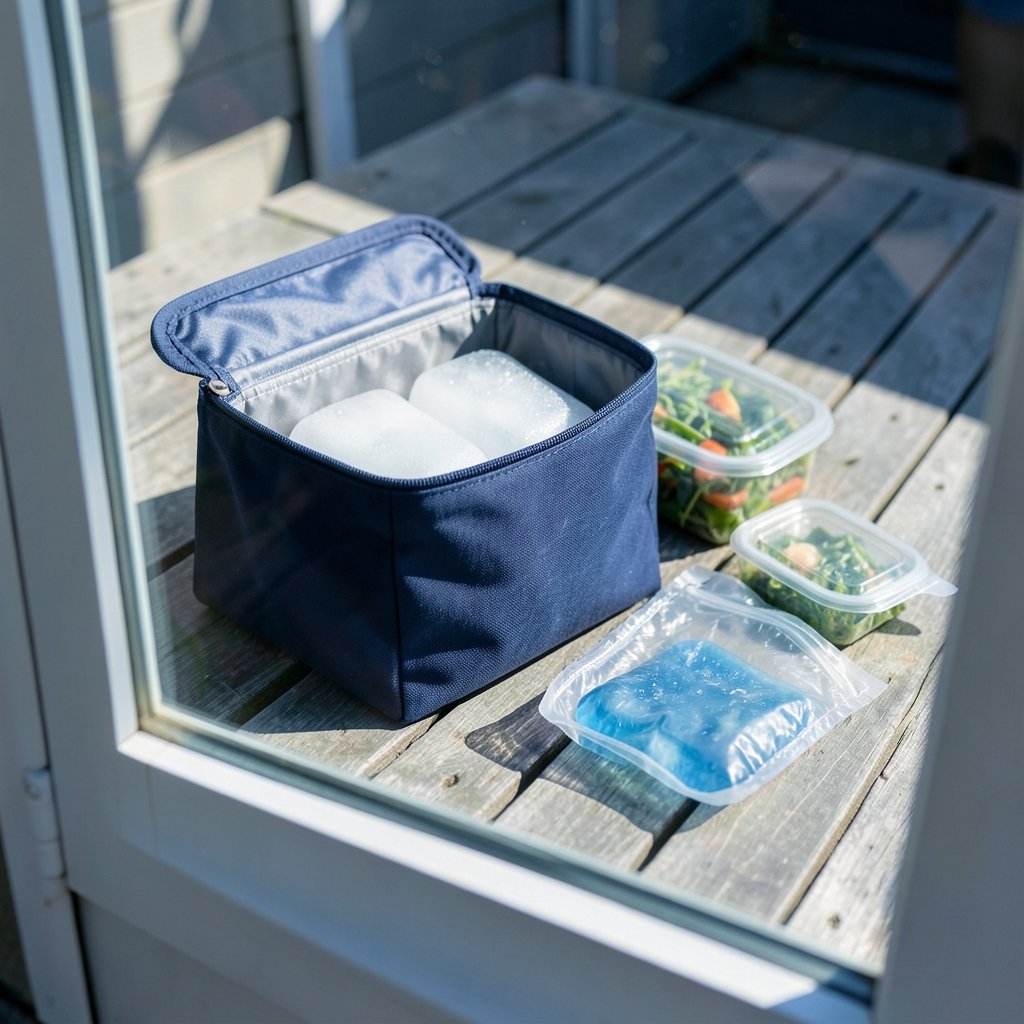
An insulated bag with an ice pack slows bacterial growth. It does not stop it. Perishable food should not sit in the temperature range between 40°F and 140°F (4°C to 60°C) for more than two hours, and that window shrinks to one hour when the room or car is above 90°F. This is the single most important rule in packed-lunch safety, and no lunch box on the market exempts you from it.
That means “keeps cold for 12 hours” claims deserve skepticism. Consumer lunch bags are generally not certified to a single public standard, so those numbers are usually manufacturer-tested under favorable conditions. A thick-walled insulated bag plus a properly sized ice pack is a reliable combination; a thin bag with a flimsy gel pack is not, no matter what the label says.
Leakproofing: It Is Almost Always the Gasket
Most leaks trace back to the lid seal, not the box body. Silicone gaskets sit inside the lid and create the pressure fit that keeps soup where it belongs. Those gaskets degrade with heat, and many manufacturers specify hand-washing for lids precisely because repeated hot dishwasher cycles warp the seal or the lid itself.
A practical test before trusting a new box: fill it with water, seal it, and shake it over a sink. Then lay it on its side for ten minutes. If a single drop escapes, that box is for sandwiches only.
Material Safety: Read Past the Buzzwords
Stainless steel and glass dominate the adult segment, and both are regulated as food-contact materials in the United States, with manufacturers responsible for ensuring safety. Plastic boxes are fine too, but the labeling deserves scrutiny. “BPA-free” is not a regulated term for adult lunch boxes; the federal restrictions on BPA applied to baby bottles, sippy cups, and infant formula packaging, not to adult food containers. Treat “BPA-free” as a claim to verify rather than a safety guarantee, and look for boxes that name their base material plainly. (Gift boxes for every occasion)
Microwave safety is a separate question, and it depends entirely on the container. Only items labeled microwave-safe belong in a microwave, and metal, stainless steel included, never does. Many adult boxes pair a plastic or glass base with a steel or plastic lid, so check the base material, not the whole product.
Cleaning: The Make-or-Break Detail
A lunch box that cannot go in the dishwasher will, in practice, get washed less thoroughly. Narrow compartments, deep corners, and removable gaskets all collect residue. Before buying, check which parts are dishwasher-safe and which are hand-wash only. Boxes with fewer, wider compartments and removable seals tend to hold up best over years of daily use.
Matching the Box to the Eater
There is no universal best lunch box, only the best fit. Four common adult profiles cover most buyers.
| Eater profile | Best fit | Why it works | Watch out for |
|---|---|---|---|
| Desk worker with microwave access | Glass or microwave-safe plastic container set | Reheats evenly; clear sides show contents | Glass is heavy; check bag fit |
| Commuter without reheating options | Insulated soft cooler with ice pack | Holds temperature for hours | Not leakproof unless specified |
| Grazer who eats small portions all day | Multi-compartment bento box | Separation without plastic bags | Small total volume; fiddly to clean |
| Soup, stew, and sauce lover | Wide-mouth insulated food jar | True leak resistance for liquids | Limited to one dish per jar |
Two rules of thumb help narrow the field. Adult lunches typically need roughly one to two quarts (about one to two liters) of usable volume for a main plus sides. And multi-compartment boxes trade total capacity for separation, so a box that looks generous in photos may hold less food than a plain rectangular container of the same outer size.
Soft Coolers vs. Hard Boxes vs. Bento Systems
Soft-sided insulated coolers win on portability. They squash into bags, weigh little, and pair well with a slim ice pack. Their weakness is crush protection and, often, leak resistance: many soft bags have seams that seep if a container inside fails.
Hard-sided boxes protect food and hold their shape, but they are bulky and rarely fit inside a work bag. They suit people who drive to work or have a dedicated fridge shelf.
Bento-style systems with clip-on lids and removable dividers offer the best separation for mixed meals. They are also the most demanding to maintain, because every divider and gasket is another part to wash and another potential leak point.
Insulated food jars deserve their own category. For hot soups, chili, or stews, a wide-mouth vacuum jar outperforms every flat container. Preheating the jar with boiling water for a few minutes before filling extends its performance noticeably.
Practical Tips That Make Any Box Better
Experience from daily packers suggests a handful of habits matter more than the box itself.
- Pre-chill the box. Put the lunch bag in the fridge overnight, or add the ice pack an hour before packing. A cold box starts ahead.
- Pack the ice pack against the food, not the wall. Cold travels by contact. An ice pack pressed to the side of the bag cools the air, not the sandwich.
- Keep liquids in their own container. Even leakproof boxes fail eventually. A separate small jar for dressing or sauce protects everything else.
- Fill containers fully. Air space lets contents shift and slosh. Packing food to the top reduces leaks and keeps textures better.
- Hand-wash lids and gaskets. It takes thirty seconds and extends the life of the seal considerably.
- Rotate two boxes. One in the wash, one in the bag. Boxes that never fully dry develop odors that no amount of scrubbing fixes.
A common mistake is buying an oversized box. A large container that does not fit in the work bag gets left at home, and a lunch box left at home saves nothing. Measure the bag first, then buy.
A Note on Gifting and Pairing
Adult lunch boxes have become a popular gift, particularly for new hires, graduates, and anyone returning to an office. A well-chosen box pairs naturally with other small luxuries: a good thermos, a linen napkin, a tin of something sweet tucked inside. Curated sets like these luxury gift boxes show how a practical object becomes a thoughtful one when the presentation matches the quality. If the recipient eats lunch away from a fridge, lean toward insulated options; if they have a microwave and a sink nearby, a glass set with a locking lid is the more useful gift.
The same logic applies to everyday indulgence. A packed lunch is better with a small treat, and gourmet chocolate boxes travel well in an insulated bag beside an ice pack. For readers who think in themes, gift boxes for every occasion offer a useful template: one practical item, one edible item, one small luxury. A lunch box fits that formula almost too easily.
There is also a small but real pleasure in a lunch that survives the day intact, the kind of detail that makes a long afternoon at a desk feel less like a grind. The same care that goes into packing a lunch shows up elsewhere, whether that is a lipstick that survives coffee and lunch or the social dynamics of an office kitchen. Good gear is never just gear; it is a small daily kindness to yourself.
Common Mistakes and What Actually Works
The most frequent error is trusting a leakproof claim without testing it. The second is assuming insulation equals refrigeration. The third is buying for looks: a beautiful matte-finish box with a narrow neck and a screw-on lid is a joy for a week and a chore by month two.
What works, consistently, is boring. A box with a wide opening, a removable silicone gasket, a base material you can identify, and a size that fits your bag. Add a decent ice pack and a separate sauce jar, and you have solved 90 percent of packed-lunch problems. The remaining 10 percent is remembering to wash it.
Conclusion
The best lunch boxes for adults are not the ones with the longest feature list. They are the ones that match how you actually eat: whether you reheat, whether you commute, whether you carry soup, and whether you will genuinely hand-wash a lid. Insulation buys time but never beats the two-hour rule. Leak resistance lives in the gasket. Material safety lives in the fine print. Get those three right, size the box to your bag, and lunch stops being a daily gamble. The payoff is quiet but real: better food, less waste, and one less thing to think about before noon.
Frequently Asked Questions
How long can food safely stay in an insulated lunch box?
Perishable food should not sit between 40°F and 140°F for more than two hours, or one hour if the surrounding temperature is above 90°F. An insulated bag with an ice pack slows warming but does not reset that clock. If lunch will sit longer than two hours, use a fridge or a well-insulated jar with a pre-chilled ice pack.
Are stainless steel lunch boxes microwave-safe?
No. Metal, including stainless steel, must never go in a microwave. Only containers labeled microwave-safe should be used for reheating. Many adult boxes combine a steel outer shell with a plastic or glass inner container, so check the inner base material before reheating.
Does “BPA-free” mean a lunch box is safer?
Not necessarily. “BPA-free” is not a regulated term for adult lunch boxes. Federal restrictions on BPA applied to baby bottles, sippy cups, and infant formula packaging, not adult food containers. Look for a box that names its base material clearly rather than relying on a marketing phrase.
Why does my lunch box leak even though it says leakproof?
The usual culprit is the lid gasket. Silicone seals warp with heat and repeated dishwasher cycles, and many lids are hand-wash only for that reason. Test a new box with water before trusting it, and replace gaskets when they stiffen or lose shape.
How much food volume does an adult lunch box need?
A practical range is one to two quarts (about one to two liters) of usable volume for a main dish plus sides. Multi-compartment bento boxes often hold less than their outer size suggests, because dividers and lids take up space. Measure your work bag before buying.
Is glass or plastic better for an adult lunch box?
Glass reheats evenly, does not stain, and shows contents clearly, but it is heavy and breakable. Plastic is lighter and more forgiving but can stain and warp with heat. The better choice depends on whether you reheat at work and how much weight you are willing to carry.