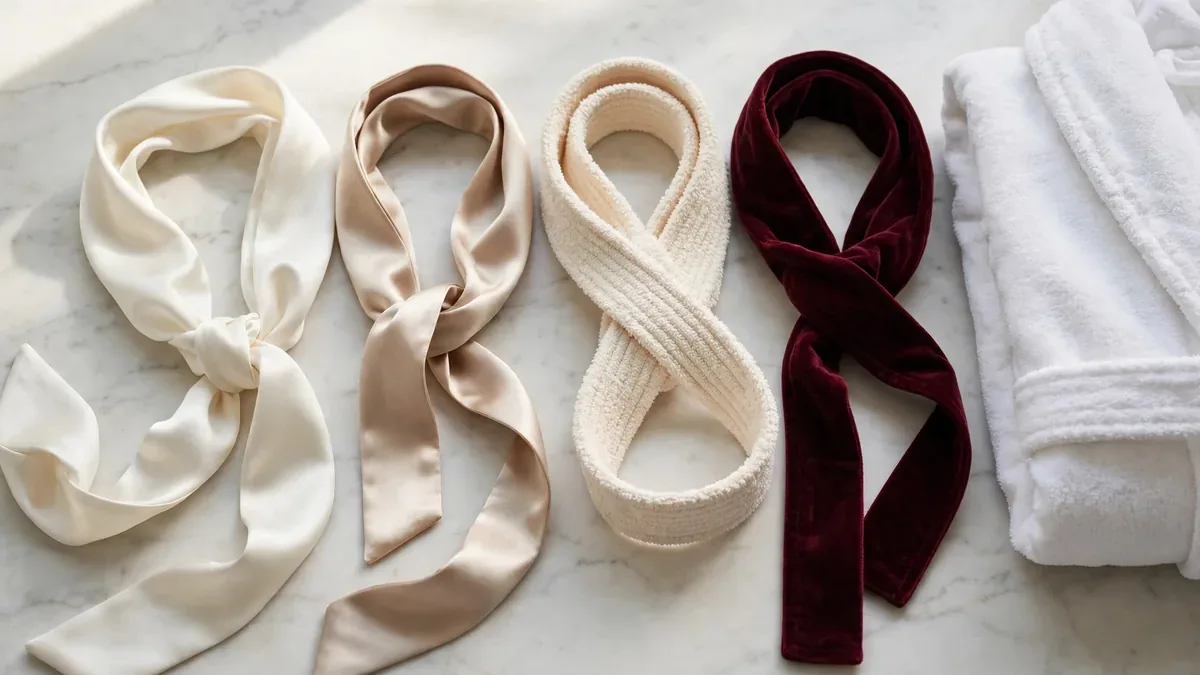

Best Luxury Bathrobe Belt Brands are the quiet detail that decides whether a beautiful robe actually feels luxurious. A robe can be cut from the finest cotton or silk, yet if its belt is too short, too stiff, too narrow, or slips loose every few minutes, the whole experience falls apart. The belt is the part you touch every time you put the robe on, and it holds everything together, quite literally.
Most shoppers never think about the belt until it disappoints them. They compare robe fabrics and collar styles, then accept whatever sash comes in the box. That is a mistake: luxury makers treat the belt as a designed component, cut to drape cleanly and matched in weight to the robe so the knot sits flat and stays put.
This guide looks only at the belts and sashes themselves: the waist ties sold with or made for bathrobes, in silk, cotton, velvet, terry, and linen. It does not rank robes. Instead, it compares the brands whose belts are best made, most comfortable to tie, and easiest to live with.
Key takeaways
- A great belt should wrap around your waist and tie securely, with 15 to 20 centimetres of tail left on each side.
- Silk and satin sashes drape beautifully but slip easily, so choose a textured weave or a wider cut for a knot that holds.
- Cotton terry and waffle belts grip naturally and stay tied, making them the most practical choice for everyday and post-shower wear.
- Velvet sashes add warmth and a rich finish, but suit heavier robes best and need gentle cleaning to keep the pile smooth.
- Match the belt weight to the robe: a heavy belt overwhelms a light robe, and a flimsy belt cannot hold a thick terry robe closed.
Why the Belt Matters More Than You Think
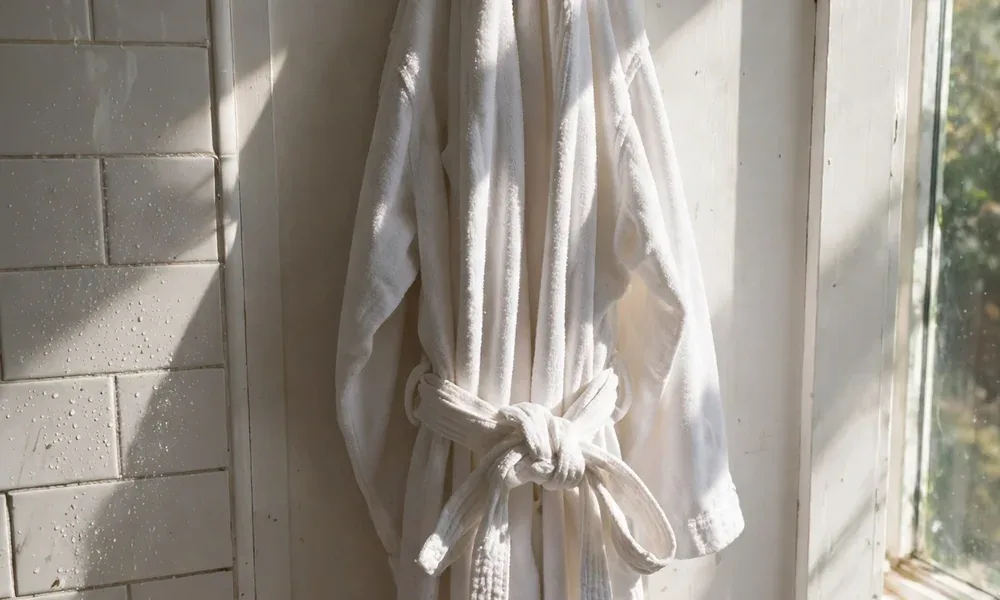
A bathrobe belt does three jobs at once. It closes the robe and keeps it closed, shapes the silhouette by drawing the robe in at the waist, and sets the tone: a wide silk sash reads as evening luxury, while a thick terry belt reads as spa comfort.
The difference between a cheap belt and a luxury one is easy to feel. A cheap belt is often cut too short, sewn from thin fabric with roughly finished ends, and it twists, bunches, and works loose. A luxury belt is cut longer and wider, finished with a neat taper or mitred end, and sewn so the fabric lies flat. Length is the most practical measure: the best belts run 180 to 220 centimetres, so you can wrap the robe fully closed and tie a proper knot with generous tails. Most sit between 6 and 10 centimetres wide.
What Makes a Luxury Bathrobe Belt
A luxury belt is not simply an expensive strip of fabric. It is made from a material chosen for the job, cut and finished with care, and designed to work with the robe it belongs to.
Material and Hand Feel
The fabric decides how the belt feels and behaves when tied. Mulberry silk is smooth, cool, and lustrous, but slippery, so a silk sash needs width and texture to stay knotted. Cotton terry is soft, absorbent, and grippy, making it the easiest belt to tie. Velvet is plush and warm, while linen is crisp and breathable for summer, though it creases more readily.
Construction and Finishing
Look at the ends and the long edges. Luxury belts have neatly finished ends, often cut at an angle or with a clean mitre, so they do not fray. The long edges should be turned and stitched smoothly, with no loose threads or puckering. The finest sashes use a single piece of fabric folded and stitched with no centre seam, so the belt lies flat.
Length, Width, and Fit
A belt should fit the wearer, not just the robe. The best brands cut their belts generously or offer more than one length. Check whether the belt is sewn into the robe at the back, which keeps it from getting lost in the wash, or supplied loose, which lets you replace it or swap it between robes. A loose belt is easier to wash, iron, and replace.
Knot Hold and Drape
A belt that will not stay tied is a failed belt, no matter how beautiful the fabric. Terry, cotton, and velvet grip well because their surfaces create friction, while smooth silk and satin need a wider cut or a heavier weave to hold a knot. A good belt falls in a clean line from the knot instead of sticking out stiffly or twisting into a rope.
The 9 Best Luxury Bathrobe Belt Brands
The brands below are ranked for their belts and sashes specifically, not their robes as a whole.
1. Frette
Frette has supplied fine linens to grand hotels for more than a century and a half. Its silk and cotton belts are cut generously long with cleanly finished tapered ends and matched in weight to Frette robes, so a light summer robe gets a light sash and a plush terry robe gets a belt with real substance. The silk has a subtle lustre and just enough texture to hold a knot better than most silk belts.
2. Sferra
Sferra is best known for fine bed linen, and its robe belts follow the same philosophy: excellent fibres, careful weaving, and restrained design. Its cotton sashes use long-staple cotton with a smooth, dense weave that feels cool and clean, and the terry belts are plush without being heavy. The belts are cut wide enough to sit comfortably and long enough to tie with generous tails, even on larger frames. Colours are quiet and classic, and the finishing is immaculate, with neat mitred ends.
3. Matouk
Matouk makes some of the most carefully finished sashes in the luxury market. The belts feature precisely turned edges, angled ends that resist fraying, and a balanced weight that helps the sash drape in a straight line from the knot. Matouk offers belts in smooth cotton and soft terry, and the terry versions are notably well made, with a dense loop that feels plush but dries quickly. The belts are colour-matched to the brand’s robes and supplied loose, so they are easy to wash and replace. If you already own one of the best luxury bathrobes on the market, a Matouk sash in a matching tone is an easy upgrade.
4. Boll & Branch
Boll & Branch built its reputation on organic cotton, and its robe belts show why that matters. The cotton sashes are soft from the first wear, with a smooth weave that does not pill or roughen with washing. The belts are cut in a comfortable mid-width that ties easily and sits flat, and the length is generous enough to wrap and knot without pulling the robe tight across the chest. Machine washable, quick drying, and colourfast, they suit daily wear better than almost any other belt on this list.
5. Parachute
Parachute’s robe belts are designed for real life, and the brand’s practical approach is their greatest strength. The waffle and terry belts are lightweight, quick drying, and grippy enough to stay tied through a whole morning, which is exactly what you want from a belt you reach for after a shower. The sashes are cut wide enough to be comfortable and long enough to tie properly, with cleanly finished edges. Parachute also matches belt width to robe weight, keeping the whole garment balanced.
6. Olivia Von Halle
Olivia Von Halle is the brand to choose when the sash itself is the point. Known for silk robes with a glamorous, old-Hollywood feel, the brand makes wide silk sashes that are genuinely beautiful: lustrous, fluid, and cut to drape in a long, elegant line. These are the widest sashes on this list, and they transform a simple wrap into something that feels like eveningwear. The broad sash creates enough friction and weight to hold a knot far better than a narrow silk tie, and the colour range runs from deep jewel tones to soft champagne.
7. Lunya
Lunya focuses on washable silk, and its robe sashes benefit directly from that expertise. The silk belts are smoother and more forgiving than traditional silk, with a soft drape and a gentle sheen, and because the silk is machine washable, you can launder the belt with the robe instead of treating it as a delicate accessory. The belts are cut in a flattering mid-to-wide width with clean, tapered ends, and they hold a knot reasonably well for silk. A smart choice for silk lovers who want easy care.
8. Coyuchi
Coyuchi makes organic cotton and linen robe belts for anyone who prefers natural fibres and quiet design. The cotton terry belts are soft, absorbent, and reassuringly sturdy, with a dense loop that grips well and stays tied. The linen-blend sashes are lighter and crisper, with a relaxed texture that suits warm weather, and they soften beautifully with each wash. The belts are cut generously and finished simply, with no unnecessary decoration. The organic cotton is grown without synthetic pesticides, and the dyes are low impact.
9. Tekla
Tekla, the Copenhagen-based textile brand, brings a Scandinavian eye to the humble robe belt. Its sashes are made from organic cotton in the brand’s signature striped and solid designs, with a clean, modern look. The belts are cut long and finished neatly, and the cotton has a crisp, fresh hand feel that softens with washing while keeping its shape. The stripes add a graphic touch that makes the sash feel intentional, and the belts are machine washable, quick drying, and grippy enough to hold a knot.
Comparison Table
Use this table to compare the nine brands at a glance. Prices are approximate and refer to a replacement belt where sold separately.
| Brand | Best Material | Typical Width | Knot Hold | Care | Best For |
|---|---|---|---|---|---|
| Frette | Silk and cotton | 8–10 cm | Very good | Gentle wash | Classic hotel luxury |
| Sferra | Long-staple cotton | 7–9 cm | Very good | Machine wash | Understated everyday luxury |
| Matouk | Cotton and terry | 7–9 cm | Excellent | Machine wash | Precise finishing and matching sets |
| Boll & Branch | Organic cotton | 7–9 cm | Very good | Machine wash | Daily wear and durability |
| Parachute | Waffle and terry | 8–10 cm | Excellent | Machine wash | Post-shower practicality |
| Olivia Von Halle | Mulberry silk | 10–12 cm | Good | Dry clean or hand wash | Glamorous evening lounging |
| Lunya | Washable silk | 8–10 cm | Good | Machine wash | Silk look with easy care |
| Coyuchi | Organic terry and linen | 7–9 cm | Excellent | Machine wash | Natural fibres and comfort |
| Tekla | Organic cotton | 7–9 cm | Very good | Machine wash | Modern Scandinavian design |
How to Choose the Right Bathrobe Belt
Choosing a belt is simpler than choosing a robe, but a few checks will save you from a sash that slips, bunches, or looks wrong with the robe you own. Work through the checklist below before you buy.
Your 6-Item Checklist
- Measure the length you need. Wrap a tape measure around your waist over the robe, add enough for the knot and 15 centimetres of tail on each side, and compare that with the belt length.
- Match the fabric to the robe. Choose terry or cotton for terry and waffle robes, silk for silk robes, and velvet for heavier winter robes.
- Check the width. Aim for 6 to 10 centimetres; narrower belts can dig in and roll, while very wide belts can bunch on a light robe.
- Test the knot hold. If you are buying silk, pick a wider cut or a textured weave, because smooth narrow silk slips loose most easily.
- Inspect the finishing. Look for neatly turned edges, tapered or mitred ends, and even stitching with no loose threads.
- Confirm the care instructions. Machine washable cotton and terry are the easiest, while silk and velvet may need hand washing or dry cleaning.
How to Tie a Bathrobe Belt So It Stays Put
Even the best belt will slip if it is tied badly, and a good technique can rescue a slippery sash. Wrap the robe fully closed, with the inner panel tucked flat and the outer panel overlapping it. Thread the belt through the loops, pull both ends even, and cross the right end over the left to form the first half knot. Then tie a simple square knot rather than a bow: cross the ends a second time in the opposite direction and pull snug. If your silk belt keeps slipping, wrap it twice around your waist before knotting, which adds friction. The belt should sit at your natural waist with the tails hanging evenly. If you are comparing robes as well as belts, our guide to the best cashmere robes for men covers the robes that pair best with a wide, well-made sash.
Caring for Luxury Belts and Sashes
A belt is washed as often as the robe, so care matters. Cotton, terry, and waffle belts can usually be machine washed with a gentle detergent, then hung to dry or tumble dried on low. Avoid fabric softener on terry belts, because it coats the loops and reduces absorbency. Washable silk can go in the machine on a delicate cycle in a mesh bag, but traditional silk is best hand washed in cool water and laid flat to dry. Never wring a silk sash or hang it in direct sunlight. Velvet belts should be brushed gently after wear and dry cleaned when they need a deeper clean. Store the belt hung over a hook or folded loosely in a drawer, never knotted tightly.
Replacing a Lost or Worn Belt
Belts are the first part of a robe to wear out or go missing, and replacing one is usually cheaper and easier than replacing the robe. Most brands in this guide sell replacement sashes through their websites or customer service, and a well-chosen replacement can improve a robe that came with a mediocre belt. Measure your old belt before ordering, or measure around your waist over the robe if it is lost. Match the colour and weight to the robe. Before ordering a spare from a new brand, read a detailed buying guide such as the Frontgate robes buying guide, which explains how robe sizing and belt placement work together.
Frequently Asked Questions
What is the best material for a bathrobe belt?
There is no single best material: the right choice depends on the robe and how you use it. Cotton terry is the most practical all-rounder, gripping well, staying tied, and washing easily. Silk is the most luxurious and drapes beautifully, but slips more and needs gentler care. Velvet is warm and rich but best on heavier robes, while linen is light and breathable for summer.
How long should a bathrobe belt be?
For most adults, 180 to 220 centimetres works well, allowing the robe to wrap fully closed with enough length for a secure knot and 15 to 20 centimetre tails. Taller or broader wearers should look for extended lengths. If in doubt, choose longer: excess length can be managed with a second wrap, but a short belt cannot be fixed.
Why does my silk bathrobe belt keep coming undone?
Silk is smooth, so there is very little friction to hold a knot, especially if the sash is narrow. A wider silk belt holds better, and a slightly textured or heavier weave also helps. Try wrapping the belt twice around your waist before knotting, tie a square knot instead of a bow, and make sure the robe is wrapped fully closed before you tie.
Can I buy a bathrobe belt separately?
Yes, most luxury brands sell replacement belts and sashes separately, either through their websites or by contacting customer service. Measure your old belt or your waist over the robe before ordering, and check the width, length, and material so the replacement matches the robe it will be used with.
Should a bathrobe belt be sewn in or loose?
Both designs work, and the choice is mostly about convenience. A sewn-in belt cannot get lost in the wash and always sits at the right height, but it is harder to replace and iron. A loose belt is easier to wash, press, and replace, and lets you swap sashes between robes, but it can be misplaced.
How do I stop a bathrobe belt from fraying?
Fraying usually starts at the ends, so look for belts with neatly finished tapered or mitred ends when you buy. If a belt you own is already fraying, trim the loose threads neatly rather than pulling them, and wash it in a mesh bag to reduce friction. For a valuable silk sash, a tailor can re-finish the ends.
The Bottom Line
The best luxury bathrobe belt brands understand that the sash is a working part of the robe, not an accessory. Frette and Sferra lead for classic, beautifully finished cotton and silk; Matouk and Parachute are strongest for belts that stay tied through daily wear; Olivia Von Halle and Lunya make the most beautiful silk sashes, with Lunya’s washable silk the more practical; and Coyuchi, Boll & Branch, and Tekla offer the best natural-fibre belts for everyday comfort. Measure your waist over the robe, match the belt weight to the robe, and choose a width between 6 and 10 centimetres.