An office bracelet has a harder job than almost any other piece of jewellery. It has to look polished in a meeting, stay quiet on a keyboard, survive a full working day without catching on a sleeve, and still feel like something you chose for yourself rather than something chosen by a dress code. The wrong bracelet clicks against a desk all afternoon, snags on a cuff, or slides around so much that you take it off by ten in the morning and never put it back on.
That is why this guide is organised around how a bracelet behaves at work, not just how it looks in a photograph. A slim solid-gold bangle can be the most professional piece you own, while a beautiful charm bracelet can be the most distracting. Weight, width, clasp and finish matter more than sparkle, and a bracelet that sits flat against the wrist will always outlast one that needs constant adjusting.
Below are nine office bracelets worth considering in 2027, from a classic gold bangle to a discreet diamond tennis bracelet and a practical leather wrap. Each one is described by what it is good at, what to watch for, and who it suits best, so you can choose with your working day in mind, not just a bestseller list.
Key takeaways
- The best office bracelet is slim, secure and quiet: it should sit flat, not slide, and never click loudly against a desk or keyboard.
- Solid 14k gold, sterling silver and platinum outlast vermeil and plated finishes, which wear through in one to three years of daily wear.
- A bangle, tennis bracelet or slim cuff suits most offices; charm bracelets, wide cuffs and noisy link bracelets are best saved for weekends.
- Choose a clasp you can fasten yourself in seconds, and check that the bracelet fits over your hand without sliding down to your knuckles.
- No bracelet suits every workplace, and no bracelet overrides a dress code, so check your employer’s policy before wearing anything bold.
What an office bracelet actually needs to do
An office bracelet is worn for eight to ten hours, often while typing, writing, shaking hands and carrying a bag. That means comfort is not a luxury, it is the whole point. A bracelet that is too tight leaves a mark by lunchtime. A bracelet that is too loose slides to the hand and gets in the way of every keystroke. The right fit is one where the bracelet moves about a centimetre on the wrist and no more, and where you forget you are wearing it within an hour.
Noise is the other quiet problem. A link bracelet that jingles, a bangle that clatters against a desk, or a charm bracelet that rattles in a quiet meeting room is a distraction for you and for everyone around you. Slim, close-fitting designs are quieter by nature, and a soft lining or a bracelet worn over a sleeve can help, but the simplest fix is to choose a design that does not move much in the first place.
Appearance matters too, but in a specific way. An office bracelet should read as finished and intentional, not flashy. A thin gold bangle, a small diamond tennis bracelet, or a plain silver cuff all do this well. They catch light without demanding attention, they work with a blazer and with a shirt, and they do not compete with a watch, a ring, or a necklace.
How we chose these bracelets and what to look for
Look first at the metal and the finish. Solid 14k gold is the most practical choice for daily office wear: it does not tarnish, it holds its colour, and it can be polished back to new. Sterling silver is a good second choice, though it needs an occasional polish to keep its shine. Gold vermeil, which is a layer of gold over sterling silver, looks the same at first but wears through in one to three years of daily wear, so it is better for occasional pieces than for an everyday office bracelet.

Look next at the clasp and the fit. A bracelet you cannot fasten yourself is a bracelet you will stop wearing, so test the clasp before you buy. A lobster clasp is secure and common. A box clasp with a safety latch is the most secure choice for a valuable piece. Our guide to power suits for women makes the same point about fit: a piece that fits properly looks expensive, and a piece that does not will always look wrong, however much it cost.
Finally, look at the weight and the width. A bracelet under 20 grams is easy to forget, which is a compliment at work. A wide cuff looks striking, but it can dig into the wrist when you rest your arm on a desk, and it can catch on a jacket cuff. Slim designs, from two to eight millimetres wide, are the safest choice for a first office bracelet, and they stack neatly if you want to wear two.
The 9 best office bracelets of 2027
Mejuri 14k Solid Gold Bangle
What we like: A slim, polished solid-gold bangle that sits flat, stays quiet, and works with everything from a suit to a shirt dress. What to consider: A bangle must fit over your hand, so try the size in person if you can. Stone: None. Setting: Solid bangle, no clasp. Best for: Everyday office wear. Price range: Mid-range, around $300 to $500.
This is the office bracelet other bracelets are measured against. It is simple, it is solid gold, and it does the quiet, polished job without ever needing attention.
Monica Vinader 18k Gold Vermeil Tennis Bracelet
What we like: A row of small, evenly set cubic zirconia stones in a slim line, with a secure box clasp and a clean, professional sparkle. What to consider: Vermeil wears through in one to three years of daily wear, so treat this as a piece to rotate rather than wear every day. Stone: Cubic zirconia. Setting: Prong-set line, box clasp with safety latch. Best for: Meetings and presentations. Price range: Affordable, around $150 to $250.
A tennis bracelet reads as polished without reading as flashy, and the small stones catch light in a meeting room without distracting from it.
Cartier Juste un Clou Bracelet
What we like: An iconic nail-shaped bangle in 18k gold, slim, sculptural, and instantly recognisable without being loud. What to consider: Luxury price, and the bangle fit means it must slide over the hand. Stone: None. Setting: Solid bangle. Best for: Senior roles and client-facing days. Price range: Luxury, around $7,000 to $9,000.
This is a statement piece that still behaves at work. It is slim enough to sit under a cuff, and its shape is distinctive without being distracting.
Tiffany & Co. Diamond Tennis Bracelet
What we like: Small, well-matched diamonds in a slim platinum or gold line, with a secure clasp and a finish that stays bright for years. What to consider: Premium price, and diamonds need an occasional clean to keep their sparkle. Stone: Round brilliant diamonds. Setting: Prong-set line, box clasp with safety latch. Best for: Important meetings and formal office days. Price range: Luxury, around $4,000 to $8,000.
A small-stone tennis bracelet is the most classic office bracelet there is. It is polished, it is quiet, and it never looks out of place.
Missoma Gold Vermeil Cuff Bracelet
What we like: A slim, open cuff in gold vermeil that is easy to put on, sits flat on the wrist, and pairs well with a watch on the other wrist. What to consider: An open cuff can catch on a sleeve, and vermeil wears through with daily use. Stone: None. Setting: Open cuff, no clasp. Best for: Smart-casual offices. Price range: Affordable, around $100 to $200.
A slim cuff is the easiest office bracelet to wear, because there is no clasp to fiddle with and no bangle to squeeze over the hand.
David Yurman Cable Bracelet
What we like: A twisted cable design in sterling silver with 18k gold end caps, slim, comfortable, and recognisable without a logo. What to consider: Silver needs an occasional polish, and the cable texture can catch on fine knitwear. Stone: None. Setting: Cable bangle, no clasp. Best for: Creative and smart-casual offices. Price range: Mid-range, around $400 to $700.
The cable bracelet has a texture that makes it interesting up close, while still reading as a simple silver bangle from across a room.
Thomas Sabo Sterling Silver Link Bracelet
What we like: A fine, close-fitting link bracelet in sterling silver, with a lobster clasp and a neat, understated finish. What to consider: Link bracelets can jingle if they are too loose, so the fit matters more here than with a bangle. Stone: None. Setting: Link chain, lobster clasp. Best for: Everyday office wear. Price range: Affordable, around $100 to $200.
A fine link bracelet is a good middle ground between a bangle and a cuff, and it adjusts to the wrist more easily than either.
Astrid & Miyu Gold Plated Tennis Bracelet
What we like: A slim line of small stones at an accessible price, with a secure clasp and a clean, professional look. What to consider: Gold plating wears faster than vermeil, so this is a piece to rotate, not to wear every day. Stone: Cubic zirconia. Setting: Prong-set line, box clasp. Best for: Trying the tennis bracelet look before investing more. Price range: Budget, around $60 to $120.
If you are not sure a tennis bracelet suits your working day, this is a low-cost way to find out before spending more on solid gold or diamonds.
Maria Black 14k Gold Slim Bangle
What we like: A sculptural, slim solid-gold bangle with a modern shape, comfortable to wear all day and easy to pair with a watch. What to consider: The sculptural shape is less traditional, so it suits creative offices better than very formal ones. Stone: None. Setting: Solid bangle, no clasp. Best for: Design, media and creative offices. Price range: Mid-range, around $400 to $700.
A modern bangle proves that an office bracelet does not have to be plain to be professional, as long as it is slim, quiet and well made.
Which office bracelet is right for you
For a formal office, choose a slim gold bangle or a small-stone tennis bracelet. Both read as polished and intentional, they work with a suit, and they do not distract in a meeting. Keep the width under eight millimetres, keep the stones small, and keep the bracelet on the wrist opposite your watch, or choose a piece slim enough to sit beside it without scratching.
For a smart-casual or creative office, you have more room. A slim cuff, a cable bracelet, or a sculptural bangle all work, and a little texture or shape is fine as long as the bracelet stays quiet and comfortable. A gold bracelet for everyday wear is a good starting point here, because the same qualities that make a bracelet work every day, solid metal, a secure fit, a slim profile, are exactly what make it work at the office.
For a first office bracelet, start with one piece and wear it for two weeks before buying another. You will learn quickly whether you prefer a bangle, a cuff or a link bracelet, whether the weight bothers you by the afternoon, and whether the clasp is easy enough to fasten on a busy morning. One good bracelet you wear every day is worth more than three you leave in a drawer.
The caveats that matter
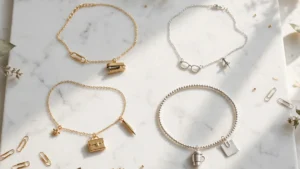
An office bracelet is not a weekend bracelet. A charm bracelet, a wide cuff, or a heavy link bracelet can all be beautiful, but they are noisy, they catch on sleeves, and they draw attention in a way that works against you in a meeting. Save them for evenings and weekends, and keep the office piece slim and quiet.
| Detail | What is known |
|---|---|
| Best width for work | Two to eight millimetres; slim designs sit flat and stay quiet |
| Best metals for daily wear | Solid 14k gold, sterling silver, platinum; vermeil wears through in one to three years |
| Most secure clasp | Box clasp with a safety latch; lobster clasps are a good second choice |
| Best fit | Moves about one centimetre on the wrist, no more, and fits over the hand without forcing |
| What to avoid at work | Charm bracelets, wide cuffs, noisy links, and anything that catches on sleeves |
| Wearing with a watch | Keep the bracelet on the opposite wrist, or choose a slim piece that will not scratch the watch |
| Cleaning | Warm water and mild soap for gold and silver; diamonds need an occasional professional clean |
| What it does not do | No bracelet suits every workplace or overrides a dress code, so check your employer’s policy |
If your workplace has a dress code, read it before you buy. Some employers restrict jewellery in client-facing roles, in healthcare, or around machinery, and a bracelet that is perfect for one office may be unsuitable in another. When in doubt, choose the slimmer, quieter piece, and keep anything bold for outside working hours.
Checklist: choosing an office bracelet honestly
Use these checks before you buy, and again after two weeks of wear.
- Check the width: two to eight millimetres is the safest range for a working day.
- Check the fit: it should move about one centimetre on the wrist and fit over your hand without forcing.
- Check the clasp: you should be able to fasten it yourself in seconds, without help.
- Check the noise: shake your wrist gently; if it jingles or clatters, it will do the same at your desk.
- Check the metal: solid gold or sterling silver for daily wear, vermeil or plating only for pieces you will rotate.
- Check the dress code: make sure the bracelet is allowed in your role before you wear it to work.
Frequently asked questions
Can I wear a bracelet while typing all day?
Yes, if it is slim and fits well. A bangle, tennis bracelet or slim cuff that sits flat will not get in the way of a keyboard. A loose link bracelet or a wide cuff will, so choose the fit first and the style second.
Should I wear a bracelet on the same wrist as my watch?
It is better not to. A bracelet can scratch a watch case or crystal, and the two pieces together can feel crowded. Wear the bracelet on the opposite wrist, or choose a very slim piece if you prefer them together.
Are tennis bracelets appropriate for the office?
Yes, with small stones. A slim tennis bracelet with stones under three millimetres reads as polished and professional. A large-stone tennis bracelet reads as evening jewellery, so save it for after work.
Is gold vermeil good enough for an office bracelet?
It can be, if you rotate it. Vermeil looks like solid gold at first, but the gold layer wears through in one to three years of daily wear. For a bracelet you will wear every day, solid gold or sterling silver is the better investment.
How do I stop my bracelet from sliding around?
Choose the right size, and prefer a bangle or a cuff that holds its shape over a loose link bracelet. A bracelet that moves about one centimetre is right; one that slides to your hand needs a smaller size, and a blazer with a fitted cuff can also help hold a slim bangle in place during the day.
Can I wear more than one bracelet to the office?
You can, but keep it to two slim pieces at most. Two thin bangles or a bangle and a tennis bracelet look intentional. Three or more, or a mix of noisy designs, looks cluttered and distracts in meetings.
The bottom line
The best office bracelet in 2027 is not the most expensive or the most sparkling. It is the one that fits well, stays quiet, and looks polished from the first meeting to the last email. A slim solid-gold bangle or a small-stone tennis bracelet is the safest first choice, because both work in formal and smart-casual offices, and both are easy to wear every day.
Choose one bracelet, wear it for two weeks, and judge it on how it behaves at your desk, not on how it looks in the box. If you forget you are wearing it, it is the right one, and that is the honest test of an office bracelet.