Have you ever pressed down on a toenail clipper with both hands, gritted your teeth, and still ended up with a jagged, half-cut nail? If so, the problem probably isn’t your nails. It’s the clipper. Toenails are roughly twice as thick as fingernails, and they take far more force to cut cleanly. A flimsy tool made for fingers simply can’t do the job, no matter how hard you squeeze.
This guide walks through what separates a genuinely good toenail clipper from a frustrating one: the lever design, the jaw shape, the steel, and the grip. It also covers who should skip drugstore clippers entirely and see a professional. There is no official body that certifies one clipper as “best,” so every ranking out there, including this one, is editorial judgment. What follows is the reasoning behind those judgments, so you can match a tool to your own nails.
How toenail clippers differ from big fingernail clippers
The standard clipper most people own is a single-lever design. The handle and the jaw sit on the same lever, pivoting at one point. It’s cheap to make and fine for thin fingernails. On a thick toenail, though, the force you apply at the handle translates poorly to the cutting edge. The result is the familiar crunch-and-tear, which leaves a rough edge that catches on socks and can encourage splitting.
Compound-lever clippers solve this with a second pivot. The handle drives a short link, which drives the jaw. That extra stage multiplies the force your hand produces, so a moderate squeeze delivers a clean cut through a thick nail. The design is widely credited to a mid-1940s patent and was popularized by the Trim brand, though published accounts of the exact patent date are inconsistent, so treat the history as background rather than gospel.
The practical difference is easy to feel. A compound-lever clipper cuts a big toenail in one smooth motion. A single-lever clipper on the same nail often needs two or three bites, and each one leaves a small ridge.
The features that actually matter
Lever type and jaw shape
For toenails, a compound lever is the baseline recommendation for most adults. Within that category, the jaw shape matters just as much:
- Straight jaws cut the nail in a clean line across. This is what most foot-health guidance favors, because a straight edge is less likely to dig into the corners of the nail.
- Curved jaws follow the toe’s contour and are common on smaller clippers. They’re fine for thin nails but can encourage rounding the corners too aggressively.
- Wide jaws (often 12 to 15 mm) handle big toenails without repositioning. Narrow jaws force multiple cuts, which is where ridges come from.
Steel and sharpness
Look for stainless steel or surgical-grade steel with a beveled, hand-finished edge. A sharp edge slices; a dull one crushes. Crushing is what causes the white, flaky layering at the tip of the nail. Cheaper clippers often have stamped edges that feel sharp out of the box but lose their bite within months. There is no reliable way to resharpen a consumer clipper, so edge quality is effectively a lifespan question.
Grip and handle length
Longer handles give more leverage. Textured or rubberized grips matter more than most buyers expect, especially for anyone with arthritis, reduced hand strength, or slippery skin after a shower. A clipper that twists in your hand is a clipper that cuts at an angle.
The catcher and the mess
Many toenail clippers now include a small catcher or guard that traps clippings. It sounds like a gimmick until you’ve hunted a stray nail shard across a bathroom floor. For anyone trimming over carpet or in bed, it’s a genuine quality-of-life feature.
A comparison of the main clipper types
| Type | Best for | Force needed | Typical price band | Main drawback |
|---|---|---|---|---|
| Single-lever, standard | Thin nails, occasional use | High | Low | Crushes thick nails |
| Compound-lever, straight jaw | Most adults, thick nails | Low to moderate | Mid | Bulkier to store |
| Compound-lever, wide jaw | Very thick or large toenails | Low | Mid to high | Can be heavy |
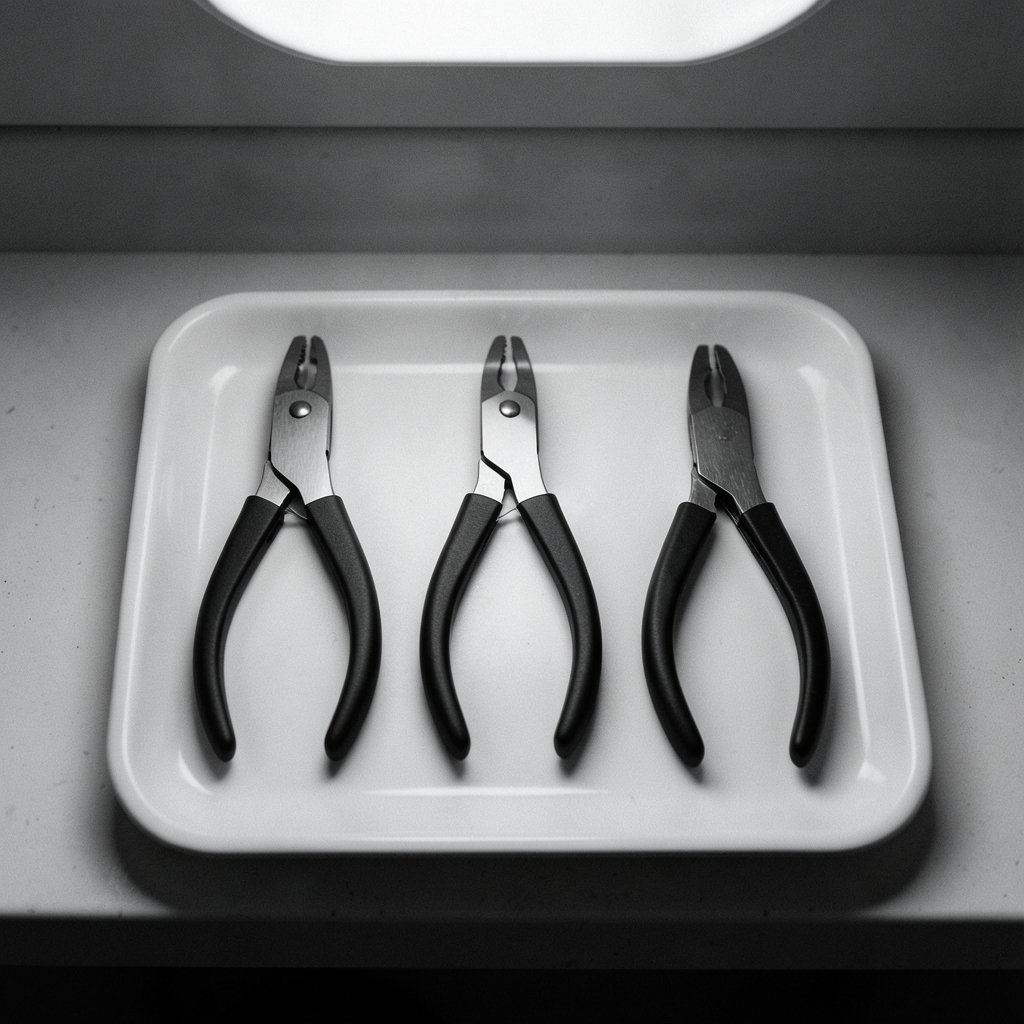
| Toenail nipper (pliers-style) | Thick, fungal, or curved nails | Moderate, controlled | Mid to high | Requires technique; sharp tips |
| Electric file or grinder | Very thick nails, reduced hand strength | Very low | High | Slower; dust; learning curve |
The table hides one important point: nippers are not clippers. They look like small pliers and cut by squeezing two sharp jaws together. They give excellent control on a thick or unusually curved nail, but the tips are sharp and the technique takes practice. They’re a specialist tool, not a default upgrade.
How to trim a toenail so it doesn’t become a problem
Good clippers only get you halfway. Technique decides whether you end up with an ingrown nail. Public-health guidance on ingrown toenails is consistent on the fundamentals:
- Trim after a shower or bath, when the nail is softened.
- Cut straight across, not down into the corners.
- Leave the nail roughly level with the tip of the toe. Shorter than that is where trouble starts.
- Smooth any rough edges with a file, moving in one direction rather than sawing back and forth.
- Don’t dig under the nail or push the cuticle back aggressively.
- Give yourself good light and a stable seat. Most injuries happen in a hurry.
Cutting nails too short, cutting down the sides, wearing tight shoes, and injuring the toe are all listed as risk factors for ingrown toenails. Notice that three of those four are things you control at the trimming stage. If you like to keep your toes looking polished between trims, ideas for natural nail designs work well on short, straight-cut toenails, and soft pastel nail ideas hide minor ridges better than dark shades. If you wear polish regularly, it’s worth knowing that press on nail care principles apply to toenails too: keep the nail plate dry and clean, and never force an artificial tip onto a nail that’s already tender.
Common mistakes that make clippers seem worse than they are
A few habits sabotage even good tools. Watch for these:
- Trimming dry, hard nails. Cold nails are brittle. Cut after bathing, or at least after a warm shower.
- Using fingernail clippers on toes. The jaws are too narrow and the lever too weak. This is the single most common cause of the “my clipper is useless” complaint.
- Cutting in layers. Biting off a bit at a time with the tip of the jaw crushes the nail edge. Take one full cut across.
- Skipping the file. The file is not optional. It’s what removes the snag that catches on socks.
- Sharing clippers. Nail tools can carry skin flora and fungal material. Keep your own, and clean it.
- Ignoring a nail that has changed. Thickening, discoloration, or a nail that curves sharply downward is a signal to get advice, not to buy a bigger clipper.
When to skip the clipper and see a professional
Some nails should not be trimmed at home with consumer tools. Guidance for people with diabetes is explicit: regular foot checks matter, and problem nails should go to a podiatrist rather than being self-treated. Diabetes can reduce sensation and circulation in the feet, so a small cut or an infection can escalate before it’s noticed.
The same logic applies more broadly. See a professional if you have:
- A nail that is thickened, crumbling, or discolored (possible fungal infection)
- Repeated ingrown toenails, especially with redness, swelling, or pus
- A nail that has lifted from the nail bed or changed shape
- Poor circulation, neuropathy, or a compromised immune system
- Trouble reaching your feet or holding a clipper safely
A podiatrist can trim a problematic nail properly and treat the underlying cause. Buying a stronger clipper is not a substitute for that visit.
Practical buying advice
If you’re shopping, here’s a short checklist that filters out most disappointments:
- Confirm the lever. Product listings often say “compound lever” or “double-action.” If the description doesn’t mention it, assume single-lever.
- Check jaw width. Look for a stated measurement. Under 10 mm is narrow for a big toe.
- Look for a straight cutting edge if you want the safest trim.
- Read for steel type. “Stainless steel” is the minimum. Vague “high-carbon steel” claims without a grade are a warning sign.
- Consider grip and weight. Heavier clippers feel solid but tire the hand. If you have arthritis, a longer handle with a soft grip beats a heavy one.
- Skip the multi-tool sets unless you’ll use every piece. A dedicated toenail clipper outperforms a folding gadget with a nail file bolted on.
For anyone who likes to keep their grooming kit coordinated and their nails polished, nude nail polish shades are forgiving on toenails that have ridges or uneven edges, and milky white nail designs are a popular low-contrast choice for summer. Neither hides a nail problem, though, so sort out the trimming first. If you’re layering polish over a repaired or artificial nail, the same gel x nail designs guidance about prep and drying time applies. And if you’re comparing finishes for a special occasion, browsing nail art ideas is a better use of time than buying a clipper you don’t need.
Caring for the clipper itself
A good clipper lasts years if you treat it well. Wipe the jaws after each use to remove nail dust and moisture, and store it dry. Many stainless clippers can be rinsed, but dry them immediately, because standing water degrades the pivot. A drop of mineral oil at the joint once in a while keeps the action smooth. Don’t drop it. A knocked edge on a hard tile floor can dent the cutting edge, and a dented edge will never cut cleanly again.
Conclusion
The best toenail clipper is not the most expensive one or the one with the longest feature list. It’s a compound-lever tool with a straight, sharp jaw wide enough for your biggest nail and a handle you can grip without strain. Pair it with proper technique, meaning trim after bathing, cut straight across, leave a little length, and file the edges, and most of the frustration people associate with toenails disappears. And when a nail looks thickened, discolored, or repeatedly inflamed, put the clipper down. That’s a job for a podiatrist, not a sharper blade.
Frequently asked questions
Are compound-lever toenail clippers really better?
For most adults, yes. The second pivot multiplies the force from your hand, so a thick toenail cuts in one clean motion instead of several crushing bites. Single-lever clippers are cheaper and fine for thin nails, but they struggle on big toenails and often leave a ragged edge that catches on socks.
Can I use fingernail clippers on my toenails?
It’s not recommended. Fingernail clippers have narrow jaws and a weaker lever, so they tend to crush rather than slice toenails. That crushing is what produces the white, flaky layering at the tip and the ridges that snag. A dedicated toenail clipper with a wider jaw does the job in one cut.
What is the right way to cut a thick toenail?
Soften the nail first with a warm shower or bath, then take one full cut straight across with a compound-lever clipper or a nipper. Leave the nail roughly level with the tip of the toe, and file any rough edge in one direction. Avoid cutting down into the corners, since that’s a known risk factor for ingrown toenails.
Should people with diabetes trim their own toenails?
Guidance for people with diabetes emphasizes regular foot checks and careful nail care, and advises seeing a podiatrist for problem nails rather than self-treating. Reduced sensation and circulation mean a small nick or infection can escalate before it’s noticed. If you have diabetes and any doubt about your feet, book the appointment.
Are toenail nippers better than clippers?
They’re different tools. Nippers cut by squeezing two sharp jaws together and give excellent control on very thick or curved nails, but they require practice and have sharp tips. Clippers are faster and safer for routine trimming. Most people are best served by a good compound-lever clipper, with nippers as a specialist addition.
How often should toenail clippers be replaced?
There’s no fixed schedule, but replace a clipper when it stops cutting cleanly. Signs include a crunching sensation, a nail edge that looks crushed rather than sliced, or a jaw that no longer meets evenly. Consumer clippers can’t be reliably resharpened, so a dull edge means a new tool. With dry storage and occasional oil at the pivot, a good stainless clipper can last several years.