


What if the food in your fridge could stay fresh up to eight times longer than it does now? That is the claim Solis makes for its Vac Prestige line, and it is the reason so many people go hunting for the best vacuum packaging machine. Whether you buy meat in bulk, grow too many tomatoes, hunt, fish, or run a small food business, the right sealer turns wasted food into planned meals. The wrong one leaves you with crushed berries and failed seals.
This roundup covers the specific models that keep showing up in expert tests and retailer bestseller lists. Each entry explains who it suits, what it does well, where it falls short, and what it costs when a published price exists. Prices move, so treat any figure here as a starting point and confirm it on the product page before buying.
The Shortlist at a Glance
| Model | Best for | Standout feature | Known limitation | Listed price |
|---|---|---|---|---|
| Solis Vac Prestige 575 | All-round home use | Pulse vacuum for soft foods, 2.5 mm double weld | Premium price tier | Not stated |
| Caso VRH 790 Pro | Delicate and liquid foods | Adjustable vacuum strength, marinating function | Bulky footprint | EUR196,01 |
| Rommelsbacher VAC 585 | Speed and one-hand operation | Very fast cycle, opens and closes one-handed | Not a budget pick | Not stated |
| Magic Vac Maxima 2 | Families and small commercial use | Dual pump at 18 l/min, ActiSeal 3D | Large machine | Not stated |
| Anova Precision Pro | Design-conscious kitchens | Digital controls, gentle mode, built-in cutter | Crushed fragile berries even on gentle | Not stated |
| NESCO Premium | First-time buyers on a budget | Seven settings, LiquidLock for soups and sauces | Cheaper plastic build | Not stated |
| LKKNC Budget Sealer | Tight budgets | Low entry cost | Fewer features than rivals | Not stated |
Solis Vac Prestige 575: The Do-It-All Choice
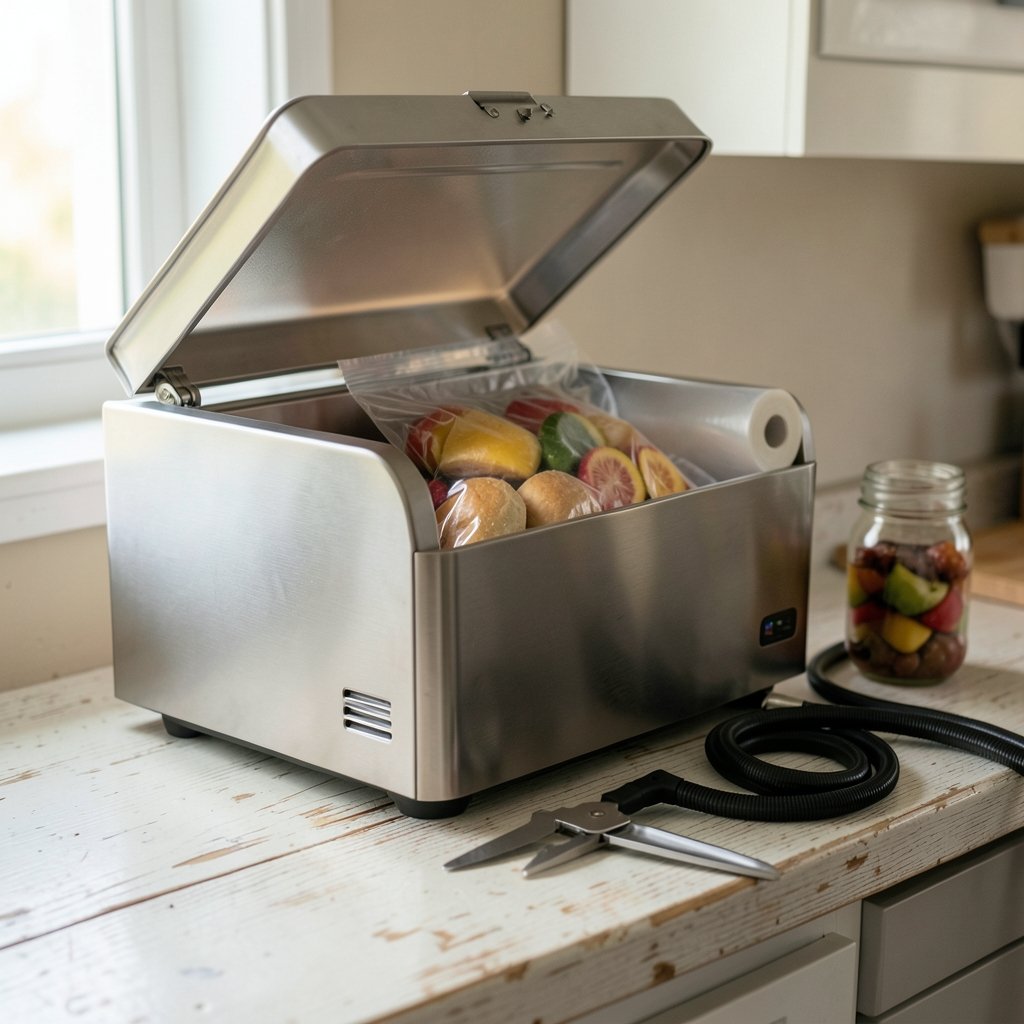
The Solis Vac Prestige 575 is the model to beat if you want one machine that handles everything. It runs a fully automatic vacuum system that adapts to dry, moist, hard, and soft foods, and the pulse vacuum function means pressure-sensitive items like bread and soft fruit do not get squashed flat. The pump pulls up to -0.8 bar at roughly 12 liters per minute, and the 2.5 mm weld seam is one of the thickest in this group, which matters if you freeze a lot and want bags that hold.
It suits households that cook sous vide, marinate regularly, and freeze in batches. The integrated roll compartment and film cutter keep bag making tidy, and a hose for vacuum containers comes in the box. The limitation is positioning: this is a fully loaded machine, and buyers who only seal a few bags a week may not need that much capability. Solis also sells a cheaper sibling, the Vac Prestige, which the brand says keeps food fresh up to eight times longer and supports marinating and sous vide cooking.
Caso VRH 790 Pro: Built for Delicate and Wet Foods
If your main frustration is liquid, the Caso VRH 790 Pro deserves a hard look. Owners describe it as handling liquid products without drama, with perfect welds and a double seal for extra safety. The adjustable vacuum strength is the feature that earns its keep: you dial the suction down for soft or delicate foods instead of watching them collapse. A marinating function and a hose connection for containers round out the package.
Buyers report one clear trade-off. The machine is large and needs a lot of counter or cupboard space, and it runs a little loud and a little slow compared with the fastest units here. For a normal household that is fine. For someone sealing twenty portions in one sitting, the pace may wear thin. At EUR196,01 in the listing reviewed, it sits in the mid-to-upper range.
Rommelsbacher VAC 585: Fast, One-Handed, Versatile
The Rommelsbacher VAC 585 is the speed pick. It opens effortlessly and closes securely with one hand, which sounds like a small thing until you are holding a dripping bag of marinated chicken. The cycle is exceptionally quick, and the machine is built for a wide audience: private households, anglers, hunters, and small catering businesses all appear in its marketing because the same strengths apply to each.
That breadth is the point. It suits people who process a lot of game, fish, or bulk produce and want a machine that keeps up without a long learning curve. The limitation is that speed and build quality come at a price that puts it above entry-level sealers, and the feature list is focused on sealing rather than extras like container modes or built-in cutters. If you mainly seal bags and want it done fast, that focus is a feature, not a flaw.
Magic Vac Maxima 2: For Families and Small Commercial Use
The Magic Vac Maxima 2 takes a different approach: it is a workhorse with a powerful dual pump rated at 18 liters per minute, one of the highest airflow figures in this roundup. ActiSeal 3D technology adjusts the seal automatically, and the machine offers a dedicated cycle for vacuuming containers plus integrated cable storage. It stores upright, which saves counter space in a small kitchen, and the digital LED display shows cycle progress so you are not guessing when it is done.
It suits families that buy in bulk, hunters, and small commercial kitchens that need throughput without stepping up to a chamber machine. The clear limitation is size: this is a substantial appliance, and the upright design helps but does not make it small. If your kitchen has limited storage, measure before you commit.
Anova Precision Pro: The Design-Led Performer
The Anova Precision Pro earns praise for its elegant digital button controls. Testers report operating it easily without looking at the instructions, and the manual is described as the most informative of the group. It offers gentle and normal sealing modes plus dry and moist food settings, so it adapts to different textures and shapes. A built-in cutter lets you size bags from a roll.
In testing, the gentle setting worked well for strawberries and crackers, but raspberries still crushed a little even on the moist, gentle setting. That is the honest limitation: no external suction sealer is perfect with the most fragile foods, and pressure-sensitive items are better handled with a pulse function or a container. The Pro suits cooks who want a good-looking machine on the counter and a straightforward interface.
NESCO Premium: The Best Budget All-Rounder
The NESCO Premium is the top vacuum sealer in its price bracket according to comparative testing, and it earns that spot with features rather than polish. It offers seven settings, including a proprietary LiquidLock mode that produces a leakproof, airtight seal for soups and sauces, which is rare at this price. It also handles bag rolls so you can make custom sizes for different cuts of meat and fish.
The trade-off is build quality. Testers note it is made from cheaper plastic, and you can tell. That does not stop it sealing well, but it may not survive years of heavy use the way a metal-bodied machine would. For a first sealer, a gift, or a household that seals a few times a week, it is the sensible entry point. It is also a good answer if you are weighing up how much machine you really need before spending more.
LKKNC Budget Sealer: The Cheapest Way In
The LKKNC Budget Vacuum Sealer exists for one reason: getting started for as little money as possible. In head-to-head testing against the NESCO Premium and the Anova Precision Pro, it was judged on ease of use, performance, functionality, and durability, and it is the budget option of that trio. It seals bags and does the basic job.
The limitation is obvious: fewer settings, less refined control, and no liquid-specific mode. If you only freeze the occasional batch of mince, it will do. If you plan to seal weekly, spend a little more. The same logic applies across kitchen gear: buying for your real habits beats buying for the shelf. That is the same principle behind how to choose the best vacuum for your home, not the hype, and it holds for sealers too.
How to Choose a Vacuum Packaging Machine
Work through these points after you have a shortlist, not before. They narrow the field fast.
- Match the machine to your volume. Sealing a few bags a week needs a basic unit. Sealing a whole deer or a bulk meat order needs a fast pump and a thick weld seam.
- Check the seal width. A double weld seam of 2.5 mm, like the Solis, gives extra insurance against freezer burn and leaks.
- Decide whether you need pulse or adjustable suction. If you seal soft fruit, bread, or marinated meat, you do.
- Confirm bag and roll compatibility. A built-in cutter and roll compartment save money over pre-sized bags, and bag width caps what you can seal.
- Think about liquids. A dedicated moist setting or a liquid mode like LiquidLock matters if you seal soups, sauces, or wet marinades.
- Measure your storage. Several of these machines are large, and a sealer that lives in a cupboard you hate opening will not get used.
- Check the price on the product page. Listed prices change, and the figures in this roundup come from retailer listings that may be out of date.
One practical tip that applies to every model: freeze liquids and wet marinades briefly before sealing. It reduces the chance of moisture reaching the weld and spoiling the seal, which is the single most common cause of bags failing in the freezer.
If you also pack food as gifts, presentation matters as much as preservation. A well-sealed bag of coffee, cured meat, or cookies lands better in proper luxury gift wrap that suits the occasion, and sturdy premium gift packaging protects the seal from being punctured in transit.
Common Mistakes That Ruin Good Seals
Even a great machine fails in careless hands. The most frequent errors are filling bags too full, leaving moisture or crumbs across the seal line, and using bags that are too thin for the pump. Another is sealing soft food on full suction when the machine offers a gentler setting. A fourth is skipping the rest before freezing: give the bag a moment, check the weld, then freeze flat so it stacks neatly.
Buyers also overbuy. A machine with every function is not automatically better if you never use container mode or marinating. The same trap shows up in cleaning gear, where matching the tool to daily habits beats chasing specs, as this guide to picking a cordless vacuum around your home habits explains. Buy for the ten things you do weekly, not the one thing you might do once.
Conclusion
There is no single best vacuum packaging machine, only the best one for how you cook. The Solis Vac Prestige 575 is the safest all-round pick for households that want every function. The Caso VRH 790 Pro wins on delicate and liquid foods. The Rommelsbacher VAC 585 is the speed choice, the Magic Vac Maxima 2 the throughput choice, and the Anova Precision Pro the design choice. On a budget, the NESCO Premium offers the most features for the money, with the LKKNC as the cheapest way to start. Pick the one that matches your volume and your food, confirm the current price, and spend the savings on bags you will actually use.
Frequently Asked Questions
How long does vacuum-sealed food last?
It depends on the food and storage temperature. Vacuum-sealed raw meat can keep on ice for up to three years, and it stays free of freezer burn until you unseal it. For everyday fridge storage, sealed portions of cooked food and produce typically last noticeably longer than loosely wrapped equivalents.
Is a vacuum sealer worth it for a small household?
Often, yes. The main savings come from buying meat, fish, and produce in bulk, portioning it, and freezing it without waste. A basic model like the NESCO Premium covers that job well. If you only seal a bag or two a month, a cheaper unit or shared use makes more sense.
Can I vacuum seal soft foods like berries and bread?
Yes, but use the right setting. Choose a machine with a gentle mode, pulse vacuum, or adjustable suction. Testers found that even a good gentle setting crushed raspberries slightly, so very fragile items are better sealed in a container than a bag.
What is the difference between a double seal and a single seal?
A double seal creates two weld lines instead of one, so if one line has a weak spot, the other still holds. It is worth having if you freeze long-term or seal wet foods. Look for a weld width figure, such as the 2.5 mm seam on the Solis Vac Prestige 575.
Do I need a machine with a container mode?
Only if you plan to seal jars, canisters, or marinade containers. Container mode uses a hose and a compatible lid, and it is the better route for liquids and fragile foods. If you only seal bags, skip it and put the money toward a stronger pump.
How much should I expect to spend?
Entry-level sealers cost the least, mid-range models like the Caso VRH 790 Pro sit around EUR196 based on the listing reviewed, and fully loaded machines cost more. Prices change often, so check the current figure on the retailer or brand page before you buy.






