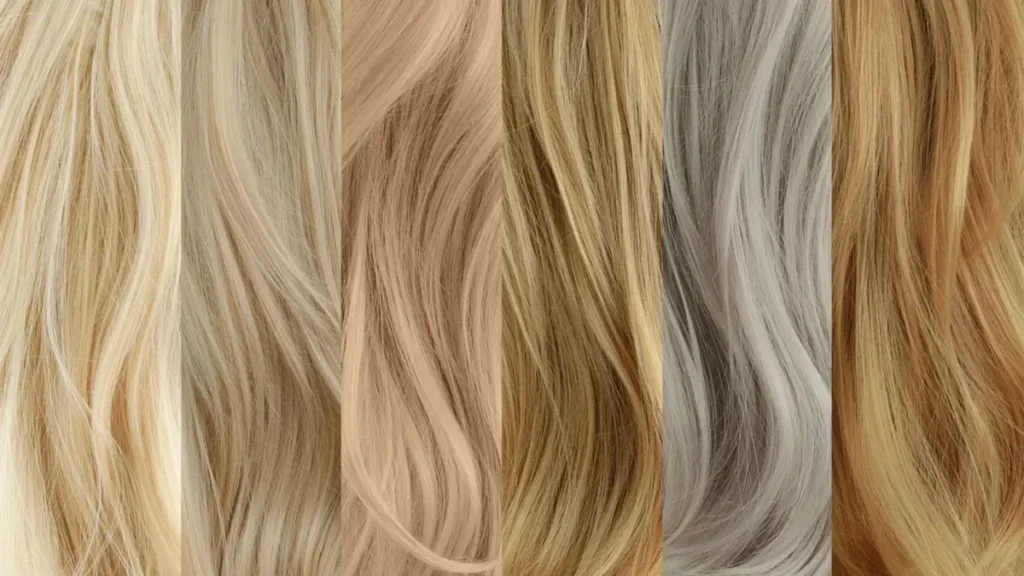
Blonde hair comes in many shades, from warm honey and golden blonde to cool ash and icy platinum. Some shades look bright and bold, while others have a soft, natural finish. The right choice depends on your preferred look, your starting hair color, and how much maintenance you can manage.
Understanding blonde hair shades makes it easier to choose a color and explain what you want to a stylist. It also helps you understand why blonde hair sometimes turns yellow or orange, why purple shampoo does not fix every color problem, and how to keep bleached hair in better condition.
This guide explains the blonde level system, six popular blonde shades, skin undertones, brassiness, and a realistic care routine.
Key Takeaways
- The blonde level system describes how light or dark hair is, usually on a scale from 1 to 10.
- Platinum, ash, golden, honey, caramel, dirty blonde, and strawberry blonde all create different looks.
- Skin undertone can help guide your choice, but personal style and natural hair color matter too.
- Purple shampoo helps reduce yellow tones, while blue pigments are better suited to orange tones.
- Bleached blonde hair needs gentle washing, conditioning, heat protection, and care in the sun and pool.
- Moving from dark hair to very light blonde may require several salon visits.
The Blonde Hair Level System: How Light Is Your Blonde?

Hair colorists use a level system to describe how light or dark a hair color is. In many professional color systems, level 1 represents black and level 10 represents the lightest blonde. The exact descriptions can vary by brand.
Here is a simple guide:
| Level | General description |
| 1–3 | Black to dark brown |
| 4–5 | Medium to light brown |
| 6–7 | Dark to medium blonde |
| 8 | Light blonde |
| 9 | Very light blonde |
| 10 | Lightest blonde |
The level tells you about lightness, not the exact shade. Tone describes whether the color looks warm, cool, or neutral.
For example, two people may both have level 9 hair, but one may have a golden blonde shade while the other has a cool, pale blonde. The level is similar, but the tones are different.
Professional color codes can also include numbers or letters for tone. However, these codes are not identical across all brands. A colorist can explain the code used for your chosen formula.
One important point: toner changes the visible tone, but it does not significantly lighten hair. If your hair is too dark for a pale platinum result, it usually needs further lightening before a toner can create the intended shade.
Six Blonde Hair Shades to Know

Blonde is not one single color. The shade you choose can change how bright, soft, warm, or natural your hair looks.
| Blonde shade | What it looks like | What to consider |
| Platinum blonde | Very pale blonde, often close to white | High maintenance and careful lightening |
| Ash blonde | Cool blonde with reduced golden warmth | Useful for people who prefer a cooler finish |
| Golden blonde | Warm, sunny blonde with golden tones | A good option for a bright, warm look |
| Honey blonde | Soft golden blonde with a rich, warm finish | Can add warmth and dimension |
| Caramel blonde | A blend of blonde and deeper golden-brown tones | Often works well for a softer transition from brown hair |
| Dirty blonde | A muted blonde with darker, natural-looking depth | Can create a softer contrast with darker roots |
| Strawberry blonde | Blonde mixed with warm red or copper tones | A distinctive choice for people who like a hint of red |
These descriptions are general. The same shade name can look different depending on the starting color, lighting, technique, and color formula. Drawn to the warmer end of the spectrum? Our red hair guide covers copper, ginger, auburn, and burgundy and how to stop red from fading.
If you want a dramatic change, platinum may appeal to you. If you prefer a softer look or want less noticeable regrowth, dirty blonde, honey blonde, or a blended blonde may be worth discussing with your stylist.
How to Choose Blonde Hair for Your Skin Undertone

Skin undertone can help you narrow down blonde hair shades, but it should not be the only factor in your decision. Your natural hair color, eye color, preferred makeup, and personal style can all affect which shade you enjoy wearing.
Warm undertones
Warm undertones often have a golden, peachy, or yellow appearance. Honey blonde, golden blonde, and caramel blonde can complement this warmth.
If you prefer a brighter result, ask your stylist about adding lighter pieces around the face rather than choosing one solid color.
Cool undertones
Cool undertones may have pink, rosy, or bluish hints. Ash blonde, cool beige blonde, and platinum can work well if you like a cooler finish.
Very pale or icy shades create a stronger contrast, so consider how much contrast you want between your hair, skin, and natural roots.
Neutral undertones
Neutral undertones sit between warm and cool. Beige blonde, balanced honey blonde, and soft dirty blonde may be useful starting points.
You do not have to choose a completely warm or cool shade. A stylist can combine tones to create a balanced result.
Olive undertones
Olive skin can have greenish, golden, or muted undertones, so the best blonde depends on the individual. Neutral beige, soft honey, and carefully balanced golden shades may be worth trying.
If a shade makes your complexion look dull, ask about adjusting its warmth or depth rather than assuming blonde does not suit you.
A simple way to narrow your choice
Look at your hair and skin together in natural daylight. Save a few reference photos that show the shade you like, ideally on people with a similar starting hair color.
Also consider the roots. A blonde shade that blends with your natural color may need less frequent upkeep than a very pale, all-over blonde.
Why Blonde Hair Turns Brassy and How to Fix It

Brassy blonde hair has unwanted yellow, orange, or copper tones. This is common in lightened hair because bleaching reveals underlying warm pigments. As the toner fades, some of that warmth becomes more visible.
Sun exposure, frequent washing, heat styling, mineral buildup, and swimming can also affect how blonde hair looks over time. The cause is not always the same, so using a stronger toning shampoo is not necessarily the right answer.
Yellow tones: Try purple shampoo
Purple pigments help neutralize yellow tones. Purple shampoo can be useful when pale blonde, platinum, or highlighted hair begins to look too yellow.
Start by following the product instructions and using it occasionally rather than at every wash. The right frequency depends on your hair, the product, and the result you want.
If your hair starts looking purple, grey, or dull, reduce how often you use it or rinse it out sooner.
Orange tones: Purple shampoo may not be enough
Orange or copper tones often appear when darker hair has not been lightened enough for the intended cool blonde shade.
Blue pigments can help neutralize orange tones, but they are not a universal fix for every blonde. If your hair is clearly orange, patchy, or much darker than the color you wanted, ask a colorist to assess it before adding more toning products.
When do you need a toner or gloss?
A salon toner or gloss may help refresh faded color and bring the shade closer to its intended result. It will not solve every problem, especially if the hair needs more lightening or has uneven color.
A useful rule is to identify the problem first:
- Yellow: Purple shampoo may help.
- Orange: Blue-based toning may be more appropriate, depending on the hair level.
- Uneven or too dark: A professional color assessment may be needed.
- Dull or coated: Product or mineral buildup may be contributing.
Purple shampoo and toner can adjust the appearance of color, but neither repairs all forms of hair damage.
The Blonde Hair Care Routine That Makes a Difference

Bleaching changes the hair’s structure and can leave it dry, fragile, or more likely to break. The American Academy of Dermatology advises protecting color-treated hair from the sun and taking steps to reduce damage.
A simple routine is usually easier to maintain than a shelf full of products.
1. Wash according to your hair’s needs
Wash when your scalp and hair need it. Some people do well with two or three washes a week, while others need to wash more often.
Use a gentle shampoo and follow with conditioner, especially on the mid-lengths and ends. If your hair feels dry, focus on conditioning rather than adding more toning products.
2. Use heat protection
Apply a suitable heat protectant before using a blow-dryer, curling iron, or straightener. Use a lower heat setting when possible, and avoid repeatedly passing hot tools over the same section.
Heat protection can reduce damage, but it cannot prevent all heat-related harm. If you are upgrading your tools, our Shark hair dryer review compares Speed Style models, prices, and heat-protection features.
3. Add a conditioning treatment
A weekly deep-conditioning treatment may help improve softness and manageability. Some bond-building treatments are designed for chemically treated hair and may help reduce breakage when used as directed.
Choose products based on how your hair feels and behaves. No treatment can completely reverse severe chemical damage.
4. Protect blonde hair from the sun
Strong sun exposure can make colored hair feel drier and affect its appearance. Wear a hat during long periods outdoors or use a hair product designed for UV protection.
This is especially helpful if your hair is bleached or already feels fragile.
5. Take care around swimming pools
Chlorinated water can affect bleached hair. Before swimming, wet your hair with clean water and consider using a leave-in conditioner suitable for swimming. Rinse your hair after getting out of the pool, then wash and condition it as needed.
If your blonde changes color after swimming, do not immediately bleach it again. Mineral deposits or other buildup may be involved, and the best treatment depends on the cause.
Blonde Hair Maintenance: A Realistic Calendar

Blonde maintenance depends on your shade, the contrast between your roots and colored hair, how quickly your hair grows, and its condition. The following calendar is a starting point, not a strict schedule.
| When | What to do |
| Every wash | Use a suitable shampoo and conditioner; handle wet hair gently |
| Weekly, if needed | Use a deep-conditioning treatment |
| As needed | Use purple shampoo when yellow tones appear, following the label |
| Every few weeks | Check for fading, dryness, breakage, and changes in tone |
| Around 4–8 weeks or as advised | Ask your stylist whether a toner or root appointment is needed |
| Before a major color change | Discuss your hair history, starting level, and realistic results |
Solid blonde with a strong contrast at the roots may need more frequent salon visits than a blended look. Balayage, a root melt, or darker roots can make regrowth less noticeable, although these techniques still need care.
Do not book a lightening session based on the calendar alone. Your hair’s condition should help determine when it is safe to lighten it again.
Going Blonde Safely: What to Expect

Moving from dark brown or black hair to very light blonde can take more than one salon visit. The number of sessions depends on your starting color, previous dye, hair texture, condition, and target shade.
A stylist may recommend gradual lightening instead of trying to reach platinum in one appointment. This can help manage the risk of breakage, although no bleaching process is completely risk-free.
Before your appointment, explain any previous color treatments, including box dye, henna, relaxers, or other chemical services. This history can affect how the hair responds to lightener.
If your hair is already breaking, feels unusually stretchy when wet, or has been heavily processed, get professional advice before attempting further lightening. Stop a chemical service and seek help if you experience severe burning or irritation.
The goal is not simply to reach the lightest possible blonde. It is to choose a shade your hair can handle and that you can maintain comfortably.
Frequently Asked Questions About Blonde Hair
How often should I use purple shampoo?
Start with occasional use, such as once a week if your hair needs it, and follow the product instructions. You may need it less often if your blonde is already cool. Reduce use if your hair develops a purple cast or looks dull.
Does purple shampoo lighten blonde hair?
No. Purple shampoo deposits violet pigment to help reduce the appearance of yellow tones. It does not bleach the hair or make a dark blonde several levels lighter.
Which blonde shade suits warm skin tones?
Golden, honey, and caramel blonde are common starting points for warm undertones. However, the best choice also depends on your natural hair color, desired contrast, and personal style.
How long does it take to go from brown to blonde?
There is no single timeline. Some people can reach their target in one appointment, while others need several sessions spread over weeks or longer. Dark, previously colored, or fragile hair may require a slower plan.
Is blonde hair naturally high-maintenance?
Natural blonde hair does not automatically need the same upkeep as bleached blonde. Maintenance depends on the color and the hair’s condition. Platinum and solid blonde often need more frequent attention than darker-rooted or blended shades.
Final Thoughts
Blonde hair is easier to choose and maintain when you understand the difference between level and tone. Start with the shade you like, use your skin undertone as a guide rather than a strict rule, and be realistic about the upkeep.
When brassiness appears, identify whether it is yellow or orange before choosing a toning product. Keep bleached hair conditioned, protect it from heat and sun, and let its condition guide your next lightening appointment.
The best blonde is not always the palest one. It is the shade that gives you the look you want while fitting your hair’s condition and the amount of maintenance you are happy to do.