Key takeaways
- Bottega Veneta was founded in 1966 in Vicenza, Italy.
- Intrecciato is the leather weaving technique most closely linked with the brand.
- The house became famous for luxury without obvious logos.
- Bottega makes bags, shoes, ready-to-wear clothing and other products.
- The price reflects more than the leather. You’re also paying for design, skilled work and the luxury brand itself.
- Louise Trotter became creative director in January 2025.
- In 2026, the brand is still building on its old leatherworking roots while Trotter shapes its next chapter.
- Bottega Veneta can be worth the money if you genuinely like the design and expect to use the piece for years.
Bottega Veneta is an Italian luxury fashion house known for leather goods, especially its woven Intrecciato bags. The brand started in Vicenza in 1966 and built its name around leather craftsmanship rather than big logos.
Today you’ll find Bottega Veneta bags, shoes, clothing and accessories with the same basic idea running through them: good materials, strong design and a very Italian sense of craft.
What is Bottega Veneta?
Bottega Veneta is an Italian luxury fashion house that started in Vicenza in 1966. It was founded by Renzo Zengiaro and Michele Taddei with a focus on leather goods.
The name gives you a clue about the original idea.
“Bottega Veneta” roughly means Venetian artisan workshop. The brand was built around the workshop rather than the name of one designer. Bottega’s own founding principles still describe craft and creativity as the heart of the house.
That old idea still makes sense when you look at the products today. You see soft leather. You see unusual shapes. You see the famous woven pattern. And quite often you don’t see a huge logo. That last part matters. Bottega Veneta has built a name around products that can be recognized by their design instead of a giant piece of branding.
What is Bottega Veneta known for?

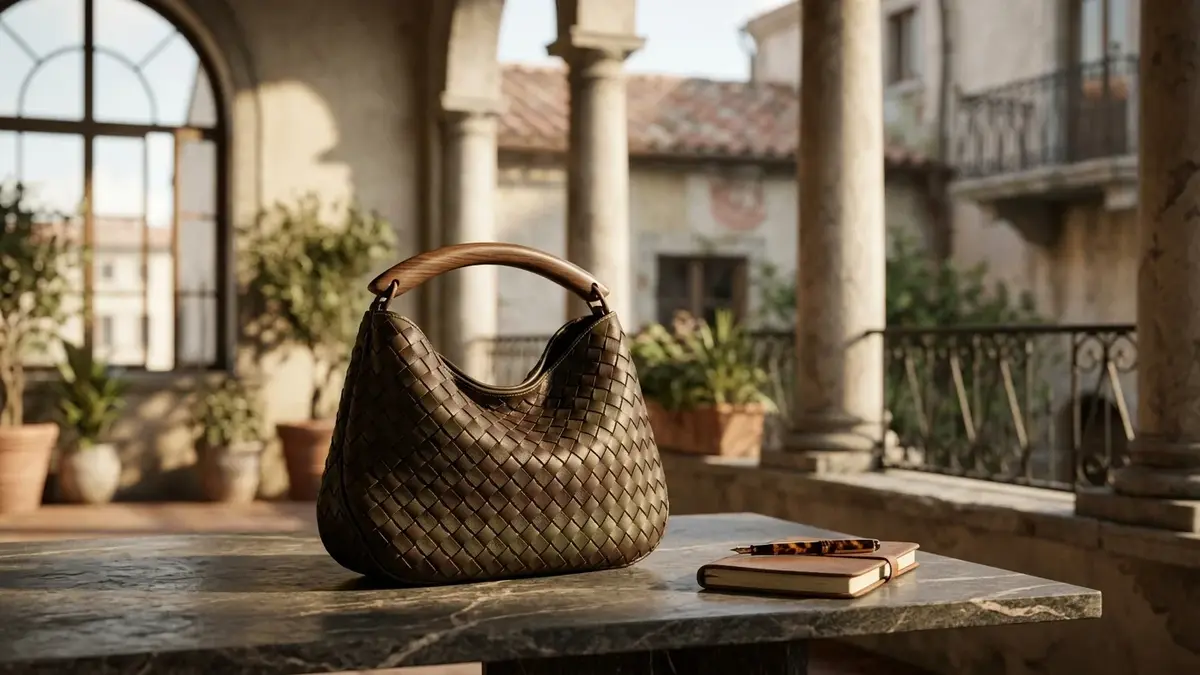
The easiest answer is Intrecciato. It is the woven leather technique that has been part of Bottega Veneta since 1975. The strips of leather are woven together to create the pattern you’ll see on many of the house’s bags and other leather pieces.
But Intrecciato is only part of the story. Bottega is also known for soft leather, unusual proportions and a quieter approach to branding. That combination gives the brand its own look.
Why is Bottega Veneta a luxury brand?
There are several reasons. Bottega Veneta works with high-end materials and skilled leather artisans. It also spends heavily on design, product development, stores and the wider business needed to run a global fashion house.
The craft side is especially important. Bottega says its founding principles come from the Latin phrase Labor et Ingenium, which means craft and creativity. The company also has an artisan training program called Accademia Labor et Ingenium.
So when you hear Bottega talk about craftsmanship there is a real structure behind that claim. Still, there’s something else to remember. A luxury price is never just the cost of making the product. You’re paying for the leather and the people who work with it. You’re also paying for design, stores, distribution, marketing, brand history and the profit built into the business.
That’s true for Bottega just as it is for other major luxury houses.
Why doesn’t Bottega Veneta use big logos?
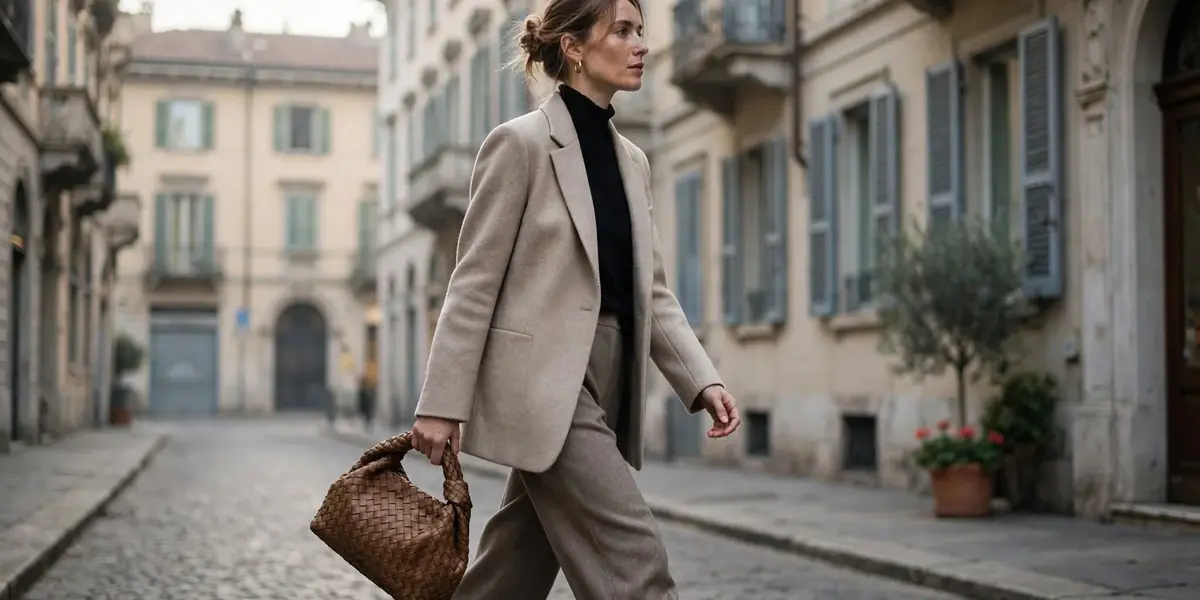
Because the brand built its identity around a different idea of recognition. Kering traces the famous Bottega phrase “When Your Own Initials Are Enough” to 1975 when Intrecciato was introduced.
The point was simple. You could carry a Bottega bag without putting your name all over it. For some buyers that is exactly what makes the brand attractive. You get something recognizable to people who know fashion while it can still look like a normal leather bag to everyone else.
That’s a very different kind of status.
Bottega Veneta history
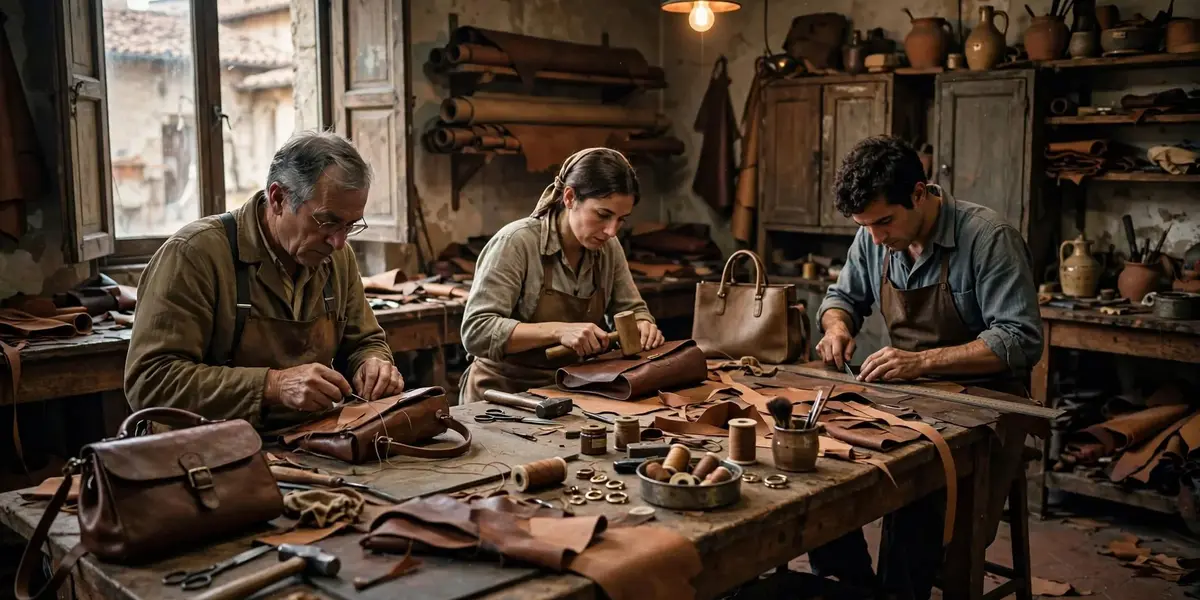
Bottega Veneta started in Vicenza in 1966. The house became known for leather goods and its soft construction. Then in 1975 it introduced Intrecciato which became one of the strongest visual signs of the brand.
A few years later the technique became part of popular culture. In the 1980 film American Gigolo, Lauren Hutton’s character carried a Bottega Veneta Intrecciato clutch. Kering lists that moment as an important point in the pattern’s wider recognition.
Bottega joined Kering in 2001. Since then the house has gone through several creative eras while keeping leather craftsmanship at the center. That matters because fashion changes quickly. A brand can become famous for one product and then spend the next 20 years trying to repeat it. Bottega has kept changing the shapes and uses of Intrecciato instead.
What is Bottega Veneta Intrecciato?
Intrecciato is basically woven leather. Leather strips are interlaced by hand to create the familiar pattern. Bottega describes it as a craft that can be changed through different materials, treatments, colors, shapes and sizes.
That last part is easy to miss. Intrecciato isn’t one fixed pattern that gets copied onto every bag. The weave can be made tighter or wider. It can appear on different shapes. It can be changed through color and texture. That gives the designers room to play with an old technique. And that’s probably why the pattern has lasted for so long. The technique itself is old. The way Bottega uses it keeps changing.
Bottega Veneta bags
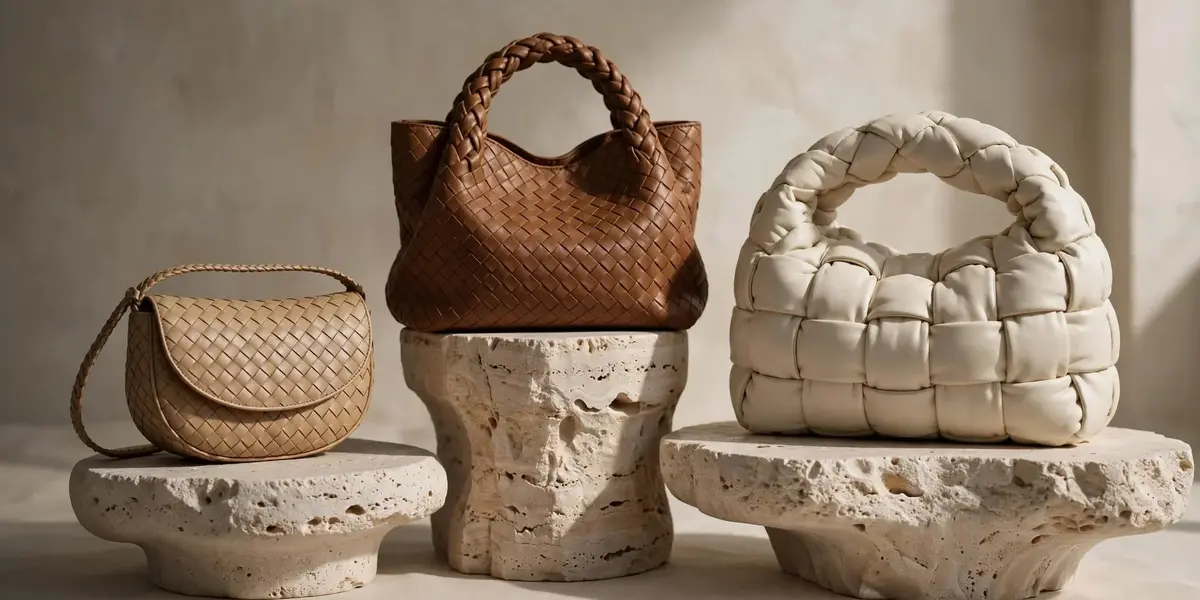
Bottega Veneta bags are probably the first products people think about when they hear the brand’s name. It makes sense. The house has been working with leather for decades and handbags give designers plenty of room to experiment with shape and construction.
Some Bottega bags are heavily woven. Others are much simpler. The common thread is that the design usually does more of the talking than the logo.
Bottega Veneta Jodie
The Jodie became one of Bottega’s best-known modern bags. Its curved shape and short handle give it a relaxed look while the construction keeps it polished. It also works as a good example of Bottega’s approach to branding.
You don’t need the name printed across the front to know what kind of bag you’re looking at. The Jodie has also had enough staying power to move beyond a single fashion season. That’s useful if you’re spending serious money on a bag. You want something you’ll still enjoy carrying after the social media trend has moved on.
Bottega Veneta Andiamo
The Andiamo takes a slightly different approach. It’s designed as an everyday bag with a braided chain detail and Intrecciato construction. Bottega also makes the style in different sizes and materials.
That’s what makes the Andiamo interesting to me. It looks like a luxury bag without becoming so precious that you can only imagine carrying it to dinner. If you carry a laptop, sunglasses, wallet, phone and the other random things that somehow end up in a handbag then size matters more than the name of the bag.
The right Bottega bag should fit your actual life.
Bottega Veneta Cassette
The Cassette pushed Intrecciato in a more graphic direction. The padded construction made the woven leather look larger and more obvious. It became one of the modern Bottega designs that helped bring the house back into everyday fashion conversations.
And it shows how the brand works.
Take an old craft.
Change the scale.
Change the shape.
Give it a completely different feel.
That’s how you keep a heritage technique from becoming boring.
What makes Bottega Veneta bags different?
Start with the leather.
Then look at the shape.
Then look at how the bag has been put together.
The logo comes much later.
That sounds like a small difference but it changes the whole experience of the product.
A logo-heavy bag tells people where you bought it.
A Bottega bag can make someone notice the material or shape first.
There’s also a practical side.
Leather ages. It gets scratched. It softens. It changes.
So if you’re buying a Bottega bag because you want something that looks exactly the same five years from now then think carefully about the leather and finish you choose.
If you like the idea of a bag developing some character then that can be part of the fun.
Bottega Veneta shoes
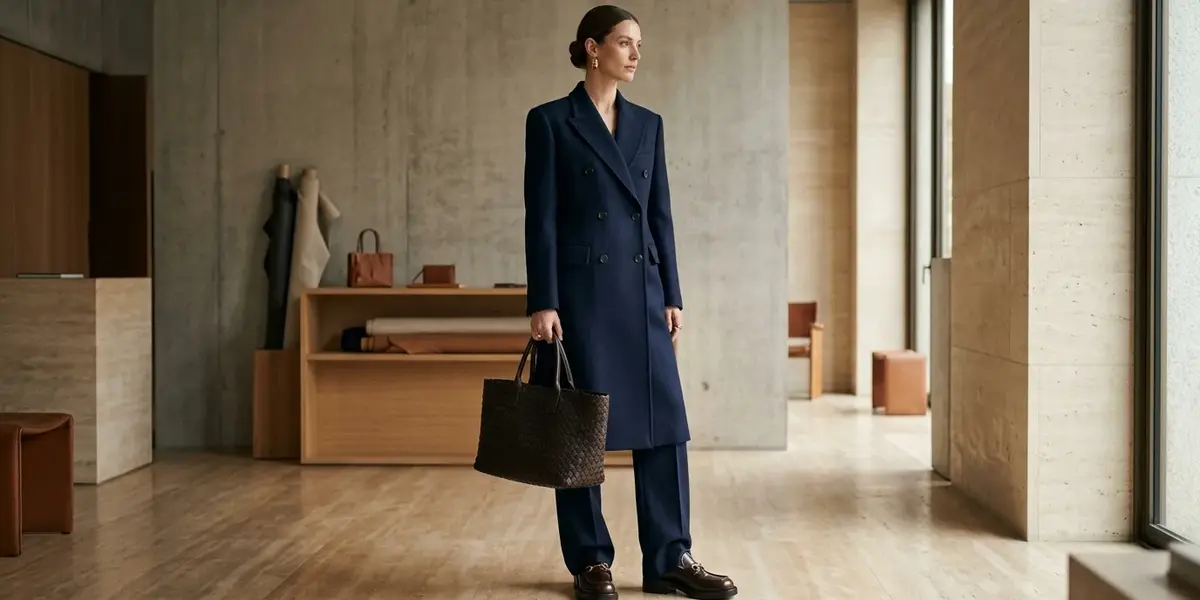
Bottega Veneta shoes don’t get quite as much attention as the handbags but the footwear collection is a big part of the house. The women’s range includes sandals, sneakers, boots, pumps, loafers, ballerinas and other styles.
The same design attitude appears here. Some shoes are simple. Some are sculptural. Some are the kind of shoe that becomes the main thing people notice about your outfit. That gives you a lot of choice but it also means you shouldn’t buy a pair just because the name says Bottega Veneta.
Try them.
Walk around.
Check the fit.
A $1,000-plus shoe that hurts after 20 minutes is still a shoe you won’t wear.
Luxury doesn’t fix bad fit.
Bottega Veneta clothing
Bottega Veneta also makes ready-to-wear clothing for men and women. You’ll find jackets, coats, trousers, dresses, knitwear, shirts, skirts and leather clothing alongside accessories. Kering describes ready-to-wear as part of the house’s wider product offering.
Clothing is where Bottega becomes a little harder to define. A handbag can have Intrecciato and you immediately know what you’re looking at. A plain-looking Bottega coat may not give you that same instant recognition.
Instead, the design might come through the cut or the fabric. That’s actually a good thing if you like clothes that don’t scream designer. You can wear a piece because you like how it looks rather than because you want everyone to know how much it cost.
Bottega Veneta style
If I had to describe Bottega Veneta style in simple terms I’d call it quiet but confident.
The brand often plays with leather, texture and shape.
A simple outfit might get its personality from an unusual bag. A plain-looking shoe might have a strange heel. A familiar jacket might have a different cut. And then you get the occasional piece that is much louder.
So don’t think of Bottega as a brand where everything has to be beige or minimal.
It can use strong colors.
It can use big shapes.
It can get playful.
The common idea is that the design has to carry the piece.
Bottega Veneta in 2026: Louise Trotter
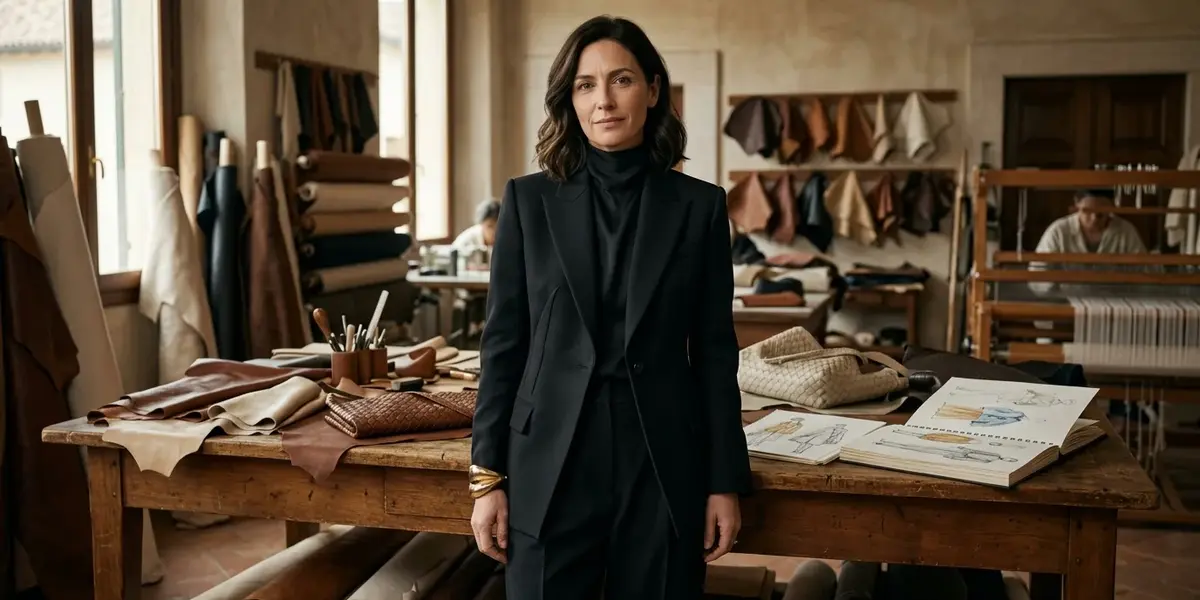
If you’re reading older Bottega Veneta guides you’ll probably notice one name missing.
Louise Trotter.
She became the brand’s creative director in January 2025 after Matthieu Blazy left the house.
Trotter presented her first Bottega Veneta show in September 2025.
Her first collection looked at the house’s history while giving it her own point of view. Vogue’s coverage of the debut described the collection as a new chapter for the house while Trotter herself spoke about making Bottega feel like a living person with its own journey.
That’s probably the part to watch in 2026.
Trotter isn’t starting with an empty page.
Bottega already has Intrecciato. It has decades of leather work. It has a strong customer base.
Her job is figuring out what those things can become next.
And she has already said she spent time with Bottega’s archives and artisans in Montebello Vicentino while learning the house.
That approach makes sense for a brand like Bottega.
You need to understand the old work before you start changing it.
Is Bottega Veneta still popular in 2026?
Yes.
The business numbers give us a useful reality check.
Kering reported €1.7 billion in Bottega Veneta revenue for 2025. Revenue was stable on a reported basis and rose 3% on a comparable basis. Kering also said ready-to-wear and shoes grew strongly in the fourth quarter while newer handbag lines such as Campana and Veneta performed well.
So the brand isn’t surviving on old handbag names alone.
It’s still growing across different parts of the business.
That’s useful context when judging how relevant Bottega is right now.
Bottega Veneta review: is it worth the money?
This is where I’d be careful with the word “worth.”
A Bottega Veneta bag can be beautifully made and still be too expensive for you.
Both things can be true.
You’re paying for the leather. You’re paying for the construction. You’re paying for the design team and the people making the product.
You’re also paying for the Bottega Veneta name.
That’s how luxury works.
What are you really paying for?
Imagine two leather bags sitting next to each other.
One costs $300.
The other costs $3,500.
The second bag isn’t automatically 10 times better because it costs more.
The materials may be better. The construction may be better. The design may be more distinctive.
But luxury prices also include the cost of running a major fashion house.
That’s why comparing luxury goods only by material cost doesn’t tell you the whole story.
Who should buy Bottega Veneta?
Bottega makes sense for you if you:
- Like quiet branding.
- Care about leather and construction.
- Want a bag that people can recognize without a giant logo.
- Have the budget to buy luxury without creating financial stress.
- Plan to use the piece regularly.
- Still like the design even if the trend disappears next year.
That last one matters.
Fashion moves quickly.
Your wallet doesn’t.
Who might not like Bottega?
If you want a bag where everyone immediately sees the brand then Bottega may not give you that feeling.
You also might not like the price.
That’s fair.
A Bottega bag can be beautifully made and still be a bad purchase for someone who doesn’t love the design.
The best luxury purchase is usually the one you keep reaching for.
Bottega Veneta vs other luxury brands
Every major luxury house has its own way of selling the idea of luxury.
| Brand | What it is best known for |
| Bottega Veneta | Leather craftsmanship, Intrecciato and quiet branding |
| Gucci | Logos, heritage motifs and bold fashion |
| Louis Vuitton | Monogram, travel history and leather goods |
| Loewe | Leather work, artistic shapes and craft |
| Prada | Clean design, fashion-forward clothing and technical materials |
There isn’t one winner here.
It depends on what you want people to notice.
If you like obvious branding then Bottega may feel too quiet.
If you like materials and shape then Bottega starts making more sense.
Is Bottega Veneta worth it?
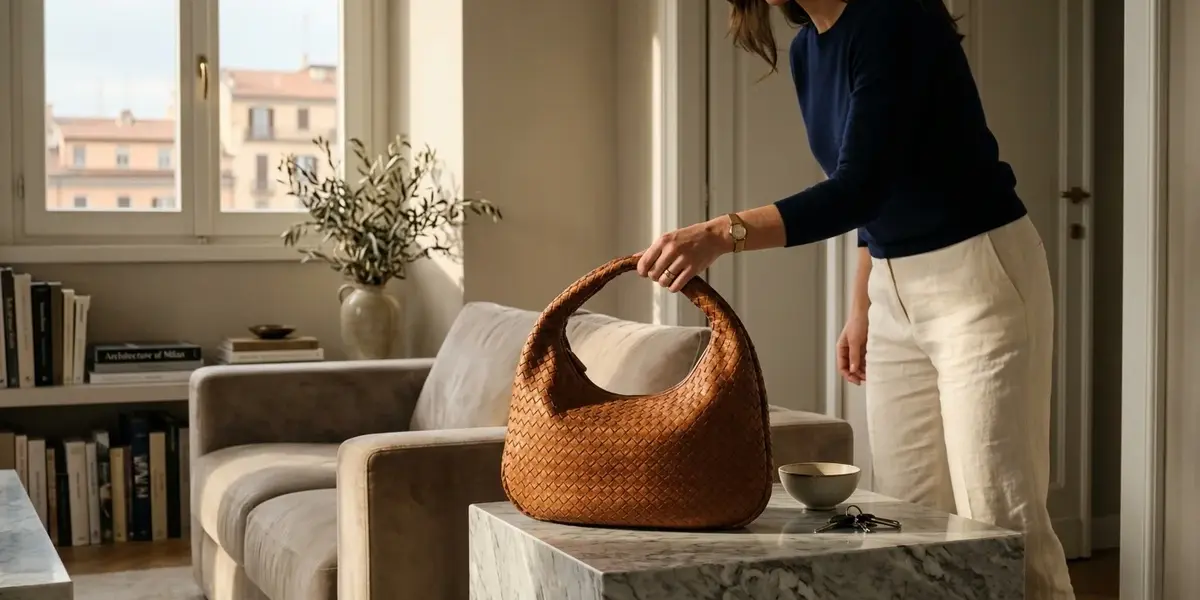
For the right person, yes.
Bottega has a real history in Italian leather goods. Intrecciato has been part of the house since 1975 and the company still puts serious attention into craft and artisan training.
But don’t buy it simply because someone online called it a “must-have.”
Look at the actual product.
Touch the leather if you can.
Try the bag on.
Think about how often you’ll use it.
Then ask yourself one simple question:
Would I still want this if nobody knew the brand name?
If the answer is yes then you’re probably looking at the right reason to buy Bottega.
If the answer is no then I’d save the money.
Final thoughts
Bottega Veneta has spent decades building a very particular kind of luxury.
You can see it in the Intrecciato weave. You can feel it in the leather. You can see it in the shapes of the bags and shoes.
And you don’t need a giant logo to understand where it came from.
That’s probably the best reason to like Bottega.
The brand has enough history to have a recognizable identity while still giving its designers room to change things. Louise Trotter is now working out what that next version looks like.
If you’re thinking about buying Bottega Veneta then don’t start with the question “Is it expensive?”
Start with “Would I use it?”
If the answer is yes and you genuinely like the piece then the price becomes a personal decision.
If you’re buying it only for the name then there are much cheaper ways to fill a wardrobe.
FAQs
Is Bottega Veneta a luxury brand?
Yes. Bottega Veneta is an Italian luxury fashion house owned by Kering with a long history in leather goods and fashion.
What is Bottega Veneta famous for?
It’s best known for Intrecciato woven leather, luxury bags and a style that usually avoids large logos.
Why is Bottega Veneta so expensive?
The price includes materials, skilled production, design, retail costs and the premium attached to a major luxury brand.
Are Bottega Veneta bags good quality?
Bottega has a long reputation for leather craftsmanship and maintains artisan training and production work in Italy.
Still, check the specific bag before buying it. Materials and construction can vary between products.
What does Intrecciato mean?
Intrecciato refers to the woven leather technique associated with Bottega Veneta. The house has used it since 1975.
Is Bottega Veneta worth the money?
It can be if you love the design and will use the product for years. The price is harder to justify if you’re buying it only because it’s fashionable right now.
Who is Bottega Veneta’s creative director?
Louise Trotter became Bottega Veneta’s creative director in January 2025. She presented her first collection for the house in September 2025.
Who owns Bottega Veneta?
Bottega Veneta is owned by Kering. It joined the group in 2001.