Hair tinsel adds thin, shiny strands to your hair without changing its natural color. The strands catch the light when you move, creating a subtle shimmer or a more noticeable effect. You can wear them for a special event or keep them in for longer, depending on how they are attached.
But not all hair tinsel works the same way. Some strands are tied directly to your hair, while others use small beads or removable clips. The attachment method affects how long the tinsel stays in, how comfortable it feels, and how easily you can remove it.
Before trying hair tinsel, it helps to know what it costs, whether you can wash and style your hair normally, and what can cause strands to slip out or damage your hair. This guide covers those practical details so you can decide whether DIY installation or a salon appointment makes more sense for you.
Key Takeaways
- Hair tinsel is a decorative strand that adds sparkle without changing your natural hair color.
- Knots, microbeads, and clips suit different wear times and needs.
- Retention depends on attachment, natural hair shedding, and handling.
- Not all tinsel is heat-resistant, so check the product instructions before styling.
- DIY kits can cost less, while salon prices depend on strand count and service fees.
- Remove tinsel gently and stop wearing it if it causes pain or persistent irritation.
What Is Hair Tinsel?
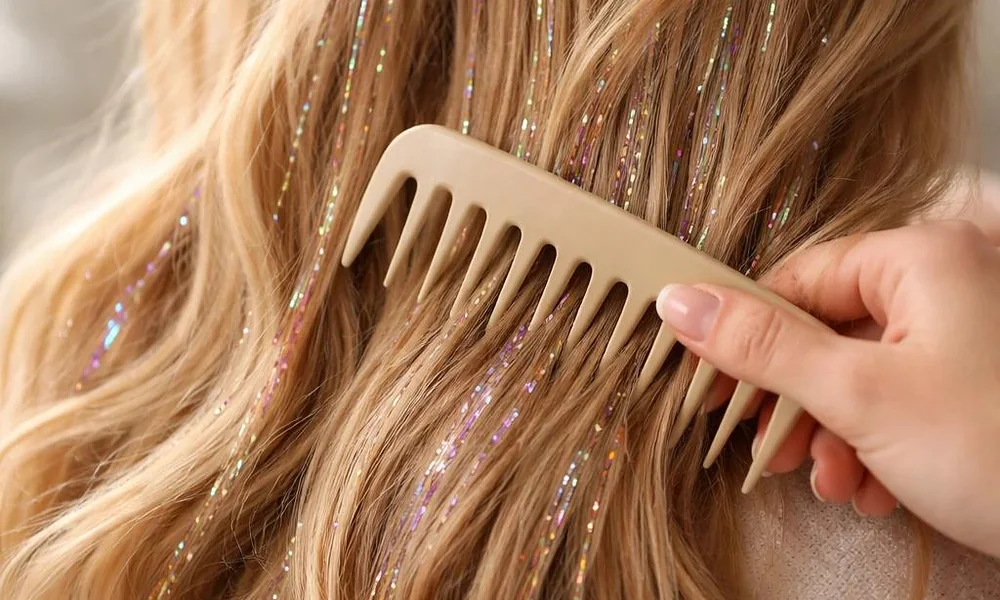
Hair tinsel is a thin, shiny strand attached to natural hair to create a sparkling effect. It is commonly made from synthetic materials such as polyester or other plastic-based fibers, although the material varies by product.
Unlike hair dye, tinsel does not change your natural hair color. It also does not require bleaching or chemical processing when installed as a simple decorative strand.
You can choose gold, silver, rainbow, holographic, or other colors. A few strands can create a subtle shimmer, while more strands produce a brighter effect.
Hair tinsel is suitable for many hair colors and textures, but the attachment method matters. Very fine hair may not hold some knots or beads securely, while short hair may not provide enough length to hide the attachment point.
One detail to know: Hair tinsel does not automatically stay in for weeks just because it is lightweight. How securely it is attached, how quickly your hair sheds naturally, and how you brush and wash your hair all affect how long it remains in place.
Hair Tinsel Installation Methods Compared

There are several ways to attach hair tinsel. The best choice depends on how long you want to wear it and whether you prefer something removable or more secure.
| Method | Typical wear time | Best for | Main drawback |
| Slip knot | A few days to around two weeks, sometimes longer | Short-term wear and simple DIY use | Can loosen or slip out |
| Elastic loop | Often several days to a couple of weeks | Beginners who prefer a loop attachment | May loosen with handling |
| Microbead | Often a few weeks, depending on the attachment | Longer wear when properly installed | Can pull on hair if too tight |
| Clip-in tinsel | Until you remove it | Events and occasional use | Must be removed and reattached |
| Salon-installed tinsel | Varies by method and hair | Precise placement or help with installation | Higher cost than doing it yourself |
These are general estimates, not guarantees. Different products and attachment techniques can produce different results. Some salon professionals use knots rather than beads, so a salon installation does not automatically last longer than every DIY method.
Which Installation Method Should You Choose?
- For one event: Clip-in tinsel is convenient because you can remove it afterward.
- For a low-cost experiment: A simple knot method may be enough if you are comfortable working with small sections of hair.
- For longer wear: Consider a properly fitted knot or microbead method, but make sure the attachment does not pull on your hair.
- For fine or fragile hair: Avoid heavy attachments and tight knots. A removable clip may be a better option.
If you are unsure, start with a small number of strands rather than installing a large cluster. This lets you check how the tinsel feels and behaves before committing to more.
How to Install Hair Tinsel With Microbeads

Microbeads hold tinsel by securing a small section of natural hair and the decorative strand inside a tiny bead. This method requires more care than a simple knot because a poorly placed or tightly clamped bead can pull on the hair.
You will need hair tinsel, suitable microbeads, a threading tool, and the correct bead-clamping tool for your kit.
- Start with dry, detangled hair. Remove knots so the hair can move freely around the attachment.
- Choose a small section. Select a section of hair that is suitable for the bead size. Avoid using a section that is too thin to support the attachment.
- Thread the hair and tinsel. Follow the instructions supplied with your specific bead and threading tool.
- Position the bead carefully. Keep it far enough from the scalp that it does not press against the skin or cause tension.
- Secure it gently. Use the correct tool and follow the product instructions. Do not crush the bead excessively or clamp it so tightly that the hair feels pulled.
- Check the result. The attachment should feel comfortable. If it causes pain, tightness, or scalp irritation, remove it rather than waiting for the discomfort to pass.
Microbead installation can be difficult to do neatly on yourself, particularly at the back of your head. If you cannot see the attachment clearly or do not know how to release the bead safely, a stylist can help.
How Long Does Hair Tinsel Last?

Hair tinsel may stay in for several days or several weeks, depending on how it is installed and how you care for it. There is no single wear time that applies to every product or person.
A simple knot can loosen during brushing or washing. A bead may hold the strand more securely, but it can still move or cause problems if it is poorly fitted. Clip-in tinsel lasts only while you choose to wear it.
Natural hair shedding also affects retention. Hair sheds as part of its normal growth cycle, and a tinsel strand attached to a shed hair may fall out with it. This does not necessarily mean the installation failed.
To help your tinsel stay in place:
- Detangle gently, starting at the ends.
- Avoid pulling directly on knots or beads.
- Use a loose braid at bedtime if your hair tends to tangle.
- Follow the care instructions for your specific tinsel.
- Check attachments regularly for looseness or discomfort.
If a strand slips out, do not pull it back into place by force. Reinstall it only if the hair and attachment are in good condition and the product instructions allow it.
Can You Wash, Brush, and Heat-Style Hair With Tinsel?

Usually, you can wash and brush your hair with securely attached tinsel, but you should handle the attachment points gently. Heat styling is different: never assume that every tinsel strand is heat-resistant.
Washing
Use your usual suitable shampoo and concentrate on cleaning your scalp without aggressively rubbing the attachment points. Rinse carefully and avoid twisting or pulling the strands while your hair is wet. If your tinsel is clip-in or the manufacturer says it should not get wet, remove it before washing.
Brushing
Use a gentle brush or wide-tooth comb and work from the ends upward. If a knot or bead catches, stop and loosen the tangle rather than pulling through it. A useful trick is to support the hair near the attachment with your fingers while detangling. This reduces the force placed on the individual hair holding the tinsel.
Heat Styling
Some tinsel products are designed to tolerate heat, while others can melt, shrink, or lose their shape. Product instructions vary, so there is no universal safe temperature for all hair tinsel.
If the packaging does not clearly confirm heat resistance, keep straighteners and curling irons away from the tinsel. Style your hair before installing it, or use a no-heat hairstyle instead. Even when a product is heat-resistant, avoid prolonged direct contact with a hot tool, especially near the knot or bead.
How Much Does Hair Tinsel Cost?
The cost depends on whether you install it yourself or pay someone to do it.
DIY kits are usually the lower-cost option because one kit may contain enough strands for several applications. However, you may need to buy additional tools or beads if they are not included.
Salon or event installations are often priced by strand count, package size, or service. Published US salon menus include examples around $1.50 to $2.50 per strand, but prices vary, and some providers charge more.
Before booking, ask:
- How many strands are included?
- Is the price per strand or for the full service?
- Which attachment method will be used?
- Is removal included, or is there an additional charge?
The total price matters more than the advertised price per strand. A low rate may still cost more if the service has a minimum strand count or booking fee.
How to Remove Hair Tinsel Safely
The removal method depends on how the tinsel was attached.
- Knotted tinsel: Carefully locate the knot and loosen it if possible. If cutting is necessary, make sure you can clearly separate the tinsel from your natural hair before using scissors.
- Microbead tinsel: The bead needs to be opened with the correct tool. Squeezing it in the wrong direction can make removal harder or damage the hair.
- Clip-in tinsel: Open the clip and slide it out gently without pulling.
Never yank a stubborn strand or cut close to the scalp when you cannot see where your natural hair sits. If a bead will not open or a knot has become tangled with shed hair, ask a stylist for help.
Remove the tinsel if it causes pain, persistent itching, tightness, or unusual tangling. You do not need to keep it in until the expected wear time is over.
Expert Tips Before You Try Hair Tinsel

- Test a few strands first. Check how they look and feel before adding more.
- Choose the attachment for your routine. If you wash your hair frequently or brush it often, consider how the method will hold up to your habits.
- Check the heat instructions. Do not rely on a seller’s general claim that all tinsel can be straightened or curled.
- Think about your hair condition. Fragile, heavily tangled, or easily broken hair may not be a good match for tight knots or beads.
- Compare the full cost. Ask about strand count, installation, and removal before paying.
- Do not ignore discomfort. A secure attachment should not hurt or pull at your scalp.
Frequently Asked Questions
Does hair tinsel damage hair?
It usually does not require chemicals, but tight attachments, rough brushing, and forceful removal can break or pull out hair.
Can I sleep with hair tinsel?
Usually, yes, if it is securely attached. A loose braid can reduce tangling, but follow the instructions for your specific product.
Can I swim with hair tinsel?
It depends on the product and attachment. Water may not dissolve the strand, but swimming and towel-drying can increase tangling or loosen attachments.
Does hair tinsel work on short hair?
It can work if the hair is long enough to hold the attachment and cover it. Very short hair may make knots or beads difficult to hide.
Can I curl or straighten hair tinsel?
Only if the manufacturer confirms that the specific tinsel is heat-resistant. Otherwise, keep hot tools away from it.
Can I remove hair tinsel at home?
Yes, if you can safely release the attachment. Do not pull it out, and seek help if a bead or knot is stuck.
Final Thoughts
Hair tinsel can be a simple way to try a sparkling hair accessory without committing to a new hair color. The important decision is not just which color looks best, but how you plan to wear it, how much care you are willing to give it, and how easily you want to remove it.
For a single event, a clip-in option may be all you need. For longer wear, choose an attachment that suits your hair and does not create tension. Proper hair care also matters, so follow a suitable hair mask guide to keep your natural hair moisturized and healthy. Check heat instructions, brush gently, and never force a knot or bead out.
Disclaimer: Hair tinsel products and installation methods vary. Always follow the manufacturer’s instructions, and seek help from a qualified stylist if an attachment causes pain, tangling, or difficulty during removal.