Learning how to freeze fresh herbs is the easiest way to stop throwing away half a bunch every week. Freezing fresh herbs means packing clean, chopped or whole herbs into a tray, bag or container and storing them in the freezer, so you can drop them straight into cooking for months afterwards.
So which method works best? For most herbs, chopped herbs frozen in water or oil in an ice cube tray keep the most flavour, and they are the easiest to use. This guide covers which herbs freeze well, the three main methods, and how to use the frozen herbs once they are in the freezer.
Key takeaways:
- How to freeze fresh herbs is simple: wash, dry, chop, pack into a tray or bag, and label with the herb and the date.
- Hardy herbs such as rosemary, thyme, sage and oregano freeze very well, while soft herbs such as basil and parsley freeze best in water or oil.
- Ice cube trays are the most useful method, because each cube is one portion you can drop straight into a pan.
- Frozen herbs keep well for several months, but use them in cooking rather than as a garnish, since freezing softens their texture.
Why freeze fresh herbs?
Fresh herbs are sold in bunches far bigger than most recipes need, and the rest often wilts in the fridge before the next meal. Freezing stops that waste at a stroke: the herbs you cannot use this week are ready in the freezer next month, with most of their flavour intact.
Which herbs freeze well?
Hardy, woody herbs freeze best of all. Rosemary, thyme, sage, oregano and bay keep their flavour and much of their structure after months in the freezer, and they can be frozen whole on the stem or stripped from it. These are the herbs to freeze first if you are new to the method.
Soft, leafy herbs freeze well too, but they need a little more care. Basil, parsley, coriander, dill, mint and chives all keep good flavour when frozen in water or oil, though they lose their fresh appearance. Freeze them chopped, in small portions, and add them to cooking rather than using them raw.
Should you wash herbs before freezing?
Yes, always wash herbs before freezing them. Rinse the leaves gently in cold water to remove soil and any insects, then shake off the excess water. A salad spinner is useful here, but shaking the bunch over the sink and patting the leaves dry with a clean tea towel works just as well.
Drying matters more than it looks. Herbs frozen while dripping wet form large ice crystals, which damage the leaves and dilute the flavour when they thaw. Pat the leaves dry, then leave them spread on a tea towel for a few minutes before chopping.
What is the best way to freeze fresh herbs?
There are three main methods, and the best one depends on the herb and how you plan to use it. The ice cube tray method suits soft herbs and everyday cooking. The freezer bag method suits hardy herbs and larger quantities. The oil method suits herbs you will use in roasting, frying and pasta sauces.
How to freeze fresh herbs, step by step
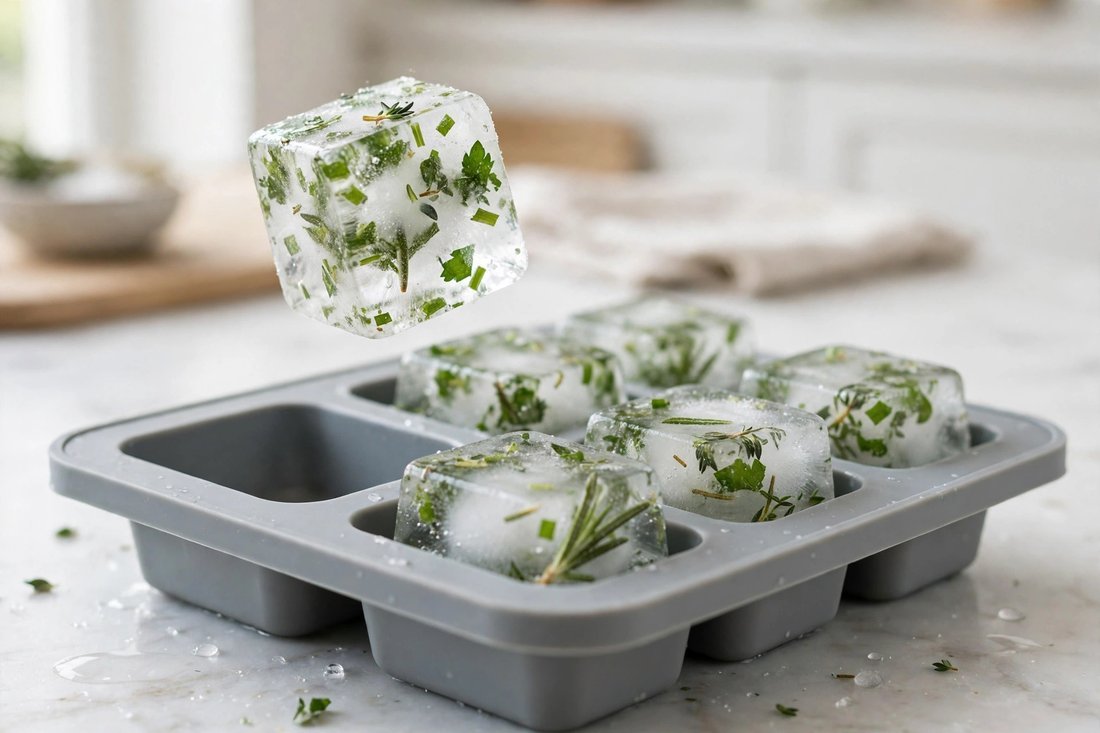
Start by choosing herbs that are fresh and dry, with no yellowed leaves. Rinse them gently in cold water, shake off the excess, and pat them dry with a clean tea towel. Leave them spread out for a few minutes so the last of the surface water evaporates.
Next, prepare the herbs for the tray. Strip hardy herbs such as rosemary and thyme from their woody stems, and chop soft herbs such as parsley and basil. You can freeze a single herb per tray, or mix herbs that you use together, such as rosemary and thyme for roasting.
Pack the chopped herbs loosely into the compartments of an ice cube tray, filling each one about two-thirds full. Pour cold water over the herbs until each compartment is full, or use olive oil if the herbs are destined for frying or roasting. Push any floating leaves down with a spoon so they are covered.
Place the tray flat in the freezer and leave it until the cubes are solid, which usually takes a few hours or overnight. Once frozen, pop the cubes out and transfer them to a labelled freezer bag, squeezing out the air before sealing it. Write the herb and the date on the bag, and return it to the freezer.
To use the cubes, drop one or two straight into a pan, soup, stew or sauce while it is cooking. There is no need to thaw them first: the heat of the pan does the work, and the water or oil in the cube simply joins the dish.
How to freeze herbs in oil
Freezing herbs in oil is a good choice for herbs you use in roasting, frying and pasta sauces, such as rosemary, thyme, sage and basil. The oil protects the leaves from freezer burn, and the cube melts into the pan with the herb already in it.
The method is the same as the water method, with oil in place of water. Chop the herbs, pack them into a tray, and cover with a light olive oil. Freeze until solid, then transfer the cubes to a labelled bag.
How to freeze herbs in freezer bags
Freezer bags suit hardy herbs best, because their leaves are tough enough to survive without the protection of water or oil. Strip rosemary, thyme, oregano or sage from their stems, pack the leaves into a bag, press out the air, and seal it.
Lay the bag flat in the freezer until the herbs are solid, then store it upright to save space. Because the herbs are loose, you can snap off a handful without thawing the whole bag, which makes this method very practical for everyday cooking.
Can you freeze whole herb leaves?
Yes, some herbs freeze well whole, and it saves the chopping altogether. Bay leaves freeze whole with no preparation at all beyond washing and drying, and they can go straight from the freezer into a stew or a stock.
How long do frozen herbs last?
Frozen herbs keep well for several months, and most guides suggest using them within three to six months for the best flavour. They do not become unsafe after that point if they have stayed frozen, but the flavour fades gradually, and freezer burn can dry out the leaves.
How do you use frozen herbs?
Frozen herbs are for cooking, not for garnishing. Drop cubes straight into soups, stews, sauces, curries and casseroles during the last part of cooking, so their flavour has time to spread through the dish without being cooked away entirely. A cube of frozen parsley stirred into mash at the last minute is a good example, and our guide to how to make mashed potatoes covers the dish it suits best.
What are the most common mistakes?
Freezing herbs wet is the first mistake. Leaves frozen with water clinging to them form large ice crystals, which damage the cell walls and leave the herbs limp and watery when thawed. Dry the leaves properly, and the difference is obvious.
Forgetting to label the bags is the second. Basil, parsley and coriander all look much the same once frozen, and an unlabelled bag is a guess at dinnertime. A marker pen and a few seconds of labelling save a great deal of confusion later.
Freezing too much at once is the third. A huge bag of herbs is hard to use, because you have to thaw the whole thing to take out a little. Small portions, in cubes or flat bags, are far more useful, and they freeze faster too.
Freezing herbs compared: which method for which herb
| Herb | Best method | Freezes well? | Best used in |
|---|---|---|---|
| Rosemary | Bag, whole or stripped | Yes, very well | Roasts, potatoes, stews |
| Thyme | Bag or oil cubes | Yes, very well | Soups, roasts, sauces |
| Basil | Water or oil cubes | Yes, in cubes | Pasta sauces, soups |
| Parsley | Water cubes | Yes, in cubes | Soups, stews, mash |
| Mint | Water cubes | Yes, in cubes | Teas, sauces, puddings |
| Sage | Bag or oil cubes | Yes, very well | Roasts, butter sauces |
Your freeze fresh herbs checklist
Work through this list before you start.
- Pick fresh herbs: no yellowed, slimy or damaged leaves, and freeze them the day you buy or pick them.
- Wash gently: rinse in cold water, shake off the excess, and pat the leaves dry.
- Chop or strip: chop soft herbs, strip hardy herbs from their woody stems.
- Choose a method: ice cube trays for soft herbs, freezer bags for hardy herbs, oil for roasting herbs.
- Pack in small portions: fill trays two-thirds full, or pack bags flat so you can snap off what you need.
- Cover and freeze flat: water or oil over the cubes, air pressed out of bags, trays level in the freezer.
- Label every bag: herb name and date, and use the oldest first.
- Use in cooking only: drop cubes straight into the pan, never thaw and refreeze.
Frequently asked questions
Can you freeze fresh herbs without blanching?
Yes. Most herbs freeze well without blanching, and blanching can dull their flavour and colour. Wash, dry, chop and freeze them raw, in water, oil or a bag, and they will keep well for several months.
How long do frozen herbs last in the freezer?
Most herbs keep their best flavour for three to six months in the freezer. They do not become unsafe after that if they have stayed frozen, but the flavour fades, so label every bag with the date and use the oldest first.
Can you freeze basil?
Yes, basil freezes well in water or oil cubes, though the leaves darken and soften. Use frozen basil in pasta sauces, soups and stews, where its flavour matters more than its appearance, rather than as a fresh garnish.
Can you freeze herbs in olive oil?
Yes, and it works well for rosemary, thyme, sage and basil that you will use in roasting and frying. Freeze the oil cubes, store them in a labelled bag in the freezer, and use them in cooking where they will be heated through.
Should you thaw frozen herbs before cooking?
No, there is no need. Drop the cubes straight into the pan, soup or sauce while it is cooking, and let the heat thaw them. Thawing first only makes the leaves soft and watery, and you should never refreeze herbs once thawed.
Sources
Food safety guidance here reflects widely published advice from the UK Food Standards Agency and the US Department of Agriculture, including keeping frozen food at a steady freezing temperature, labelling with dates, and never refreezing food once thawed. For more kitchen basics, our guide to baked chicken breast covers a dish that frozen herbs suit well, and our guide to how to roast a chicken covers another.
The bottom line
Freezing fresh herbs is a small habit with an outsized payoff. Ten minutes with a tray and a chopping board turns a bunch that would have wilted into months of flavour, ready to drop into whatever you are cooking.
Your next step is simple: take the herbs already in your fridge, wash and dry them, and freeze one tray of cubes tonight. Tomorrow’s dinner will be better for it, and so will the one after that.
Food safety note: wash herbs before freezing, freeze them promptly, label bags with the herb and date, and use frozen herbs in cooking. Never store fresh herbs in oil at room temperature, and never refreeze herbs once thawed.