

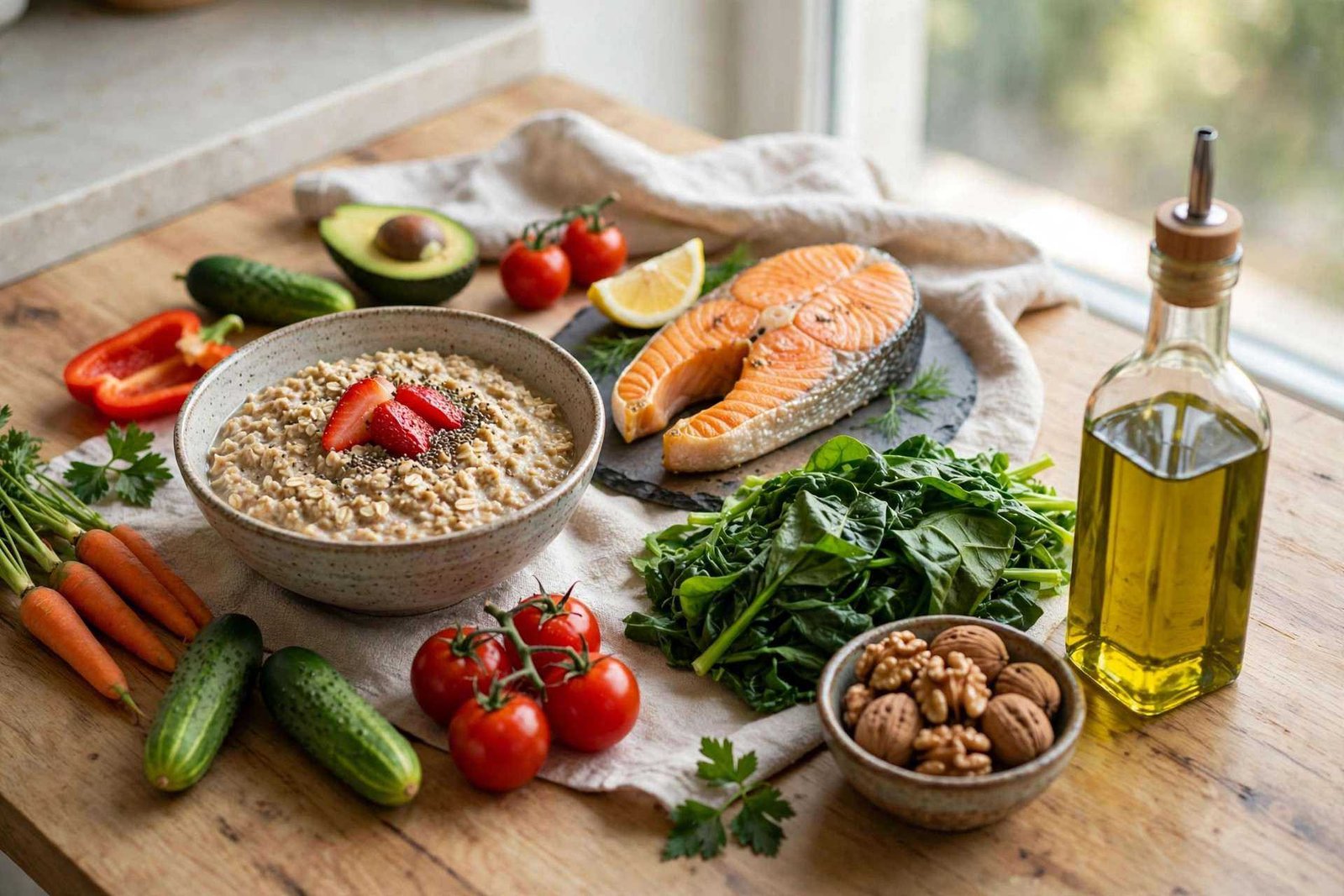
Learning how to lower LDL cholesterol starts with understanding what the number on your blood test actually means, and what you can do about it. LDL, often called “bad” cholesterol, is a type of fat that travels through your blood, and when there is too much of it, it can gradually build up inside your artery walls.
So what is the most effective way to lower LDL cholesterol? No single food or habit does the job on its own. The strongest approach combines more fibre-rich and plant-based foods, less saturated fat, regular movement, a healthy weight and not smoking. Together, these steps support your heart in ways that go well beyond one blood test result.
Key takeaways:
- LDL is the “bad” cholesterol that can build up in artery walls when levels stay high.
- Fibre-rich foods, plant foods and healthy fats support healthier cholesterol.
- Cutting back on saturated fat is one of the most useful changes you can make.
- Regular movement, a healthy weight and not smoking all help.
- Changes take weeks to show up in blood tests, so consistency matters more than perfection.
- Talk to your clinician before major changes, especially if you take medication.
What Is LDL Cholesterol?
Cholesterol is a waxy substance your body needs to build cells and make hormones. Your liver makes most of it, and the rest comes from food. It travels through blood inside particles called lipoproteins, and LDL is one of the main types.
LDL stands for low-density lipoprotein. It carries cholesterol from the liver to the cells that need it. When there is more LDL than the body needs, the excess can settle in artery walls as fatty deposits known as plaque. Over time, plaque can narrow the arteries, raising the risk of heart disease and stroke.
HDL, the “good” cholesterol, carries cholesterol away from the arteries. A healthy profile means lower LDL and higher HDL, although your clinician will look at total cholesterol, triglycerides and blood pressure.
High LDL causes no symptoms at all. You cannot feel it, and only a blood test can tell you where you stand.
Why Does LDL Cholesterol Rise?
Diet is one of the biggest influences. Eating a lot of saturated fat, found in fatty cuts of meat, butter, cheese, cream and many processed foods, tends to raise LDL. Trans fats, once common in fried foods and some baked goods, also raise LDL, although food makers have now reduced their use.
Weight and activity matter too. Carrying extra weight, particularly around the waist, is linked with higher LDL and lower HDL, while regular movement helps the body use fats more efficiently. Smoking damages blood vessel walls and lowers HDL.
Some factors cannot be changed. Cholesterol tends to rise with age, and family history matters: a small number of people have a genetic condition called familial hypercholesterolaemia, which causes very high LDL from a young age and needs medical care. An underactive thyroid can also raise cholesterol.
Foods That Support Healthier Cholesterol
Food is the most practical place to start, and the most helpful changes are additions rather than punishments. Think about what to add to your plate, not only what to cut out.
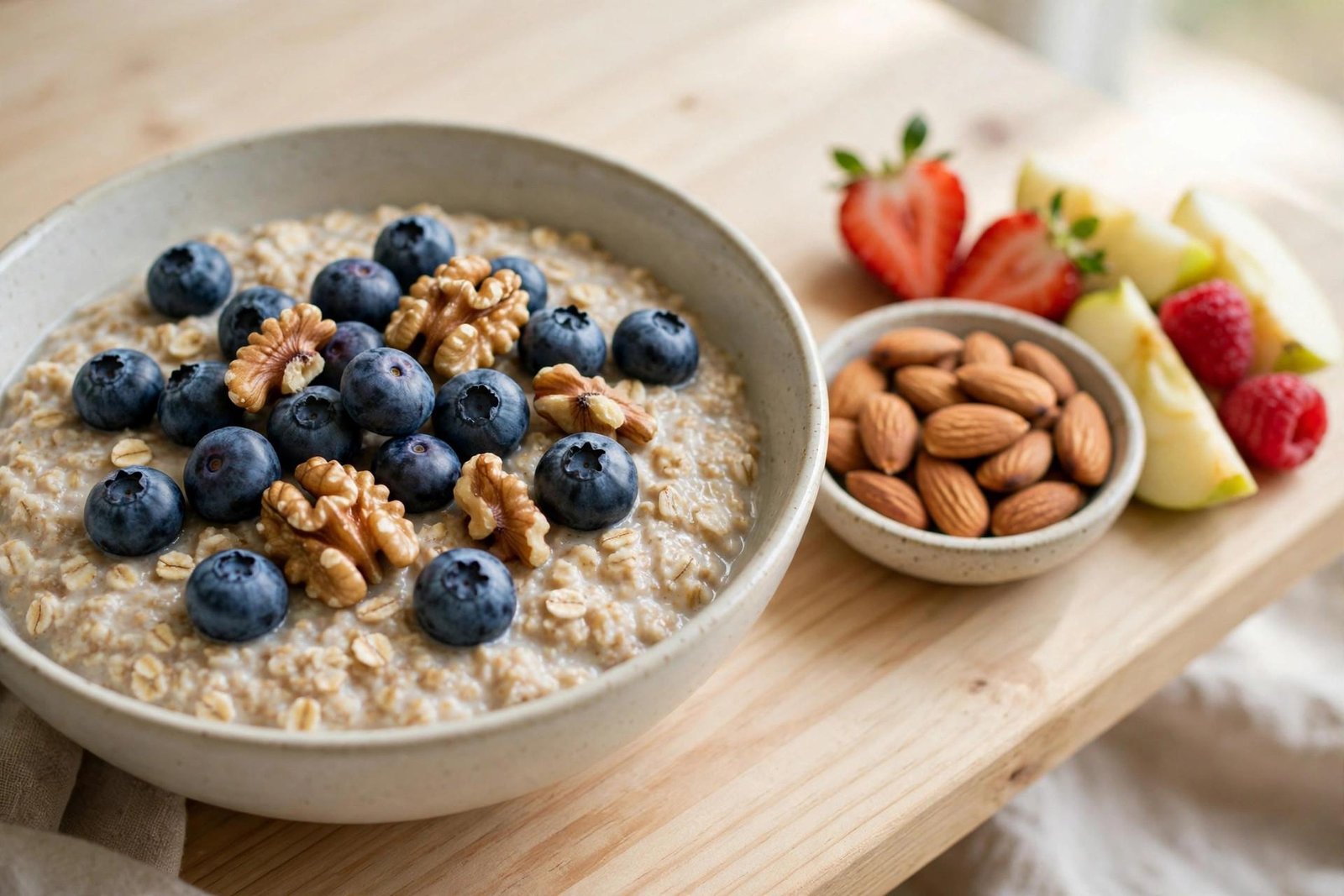
Oats and barley are a strong place to begin. They are rich in a type of soluble fibre called beta-glucan, which helps the body remove cholesterol. A bowl of porridge for breakfast is an easy daily habit. Beans, lentils and chickpeas work in a similar way: high in soluble fibre and plant protein, they can replace meat in a few meals each week.
Fruits and vegetables belong at the centre of the plate. They are naturally low in fat, high in fibre and full of plant compounds that support heart health. Apples, pears, citrus fruits and berries are good sources of soluble fibre, while leafy greens, carrots and aubergines add variety. A colourful mix across the week gives you a good range.
Walnuts, almonds and pistachios contain unsaturated fats, fibre and plant sterols. A small handful a day is enough, since nuts are energy-dense. Flaxseed, chia seeds and pumpkin seeds can be stirred into porridge, yoghurt or salads.
Oily fish is worth eating a couple of times a week if you eat fish. Salmon, mackerel, sardines and trout are rich in omega-3 fats, which support heart health and help lower triglycerides. If you do not eat fish, flaxseed and walnuts are useful plant sources. For cooking, olive oil and rapeseed oil are good choices, rich in monounsaturated fats.
Foods to Eat Less Often
Just as some foods support healthier cholesterol, others tend to push LDL upwards. The main one is saturated fat. Fatty cuts of red meat, sausages, bacon and other processed meats are high in saturated fat, as are butter, ghee, lard, hard cheeses and cream. You do not need to give them up entirely, but smaller portions and less frequent servings make a difference.
| Food group | Choose more often | Eat less often |
|---|---|---|
| Cooking fats | Olive oil, rapeseed oil | Butter, lard, ghee |
| Protein | Beans, lentils, oily fish, chicken | Fatty red meat, sausages, bacon |
| Breakfast | Porridge, wholegrain cereal | Pastries, croissants |
| Snacks | Unsalted nuts, fresh fruit | Biscuits, crisps, cakes |
| Dairy | Low-fat yoghurt, semi-skimmed milk | Hard cheese, cream, full-fat dairy |
Pastries, biscuits and cakes are often made with butter or palm oil, so they are high in saturated fat too, and fried foods absorb a lot of fat during cooking. Grilling, baking and roasting use far less. Our guide to high-protein foods includes plenty of lean options that fit well into a cholesterol-friendly way of eating.
Everyday Habits That Make a Difference
Food is only part of the picture. Regular physical activity raises HDL cholesterol and helps the body process fats more efficiently. It does not need to be intense: brisk walking, cycling, swimming, dancing or gardening all count, and the key is doing something most days. If you are currently inactive, start gently and build up gradually. If you are working on your overall fitness, our guide on how to lower your resting heart rate covers many of the same habits.
Keeping a healthy weight supports healthier cholesterol too, and even modest weight loss can help. Crash diets are not the answer: slow, steady changes to eating and activity are easier to maintain. Eating mindfully, watching portion sizes and cutting back on sugary drinks and alcohol are practical steps that add up. If weight is a concern, our article on how to lose belly fat offers a sensible, sustainable approach.
Smoking is one of the most damaging habits for heart health: it lowers HDL, damages artery walls and makes plaque more likely to form. Stopping is one of the single most powerful things you can do for your heart, so speak to your clinician or pharmacist about the support available. Alcohol deserves attention too: drinking too much can raise triglycerides and blood pressure, so keep within recommended limits and take alcohol-free days each week.
Your Cholesterol-Lowering Checklist
- Start the day with oats or wholegrain cereal for soluble fibre.
- Add beans, lentils or chickpeas to a few meals each week.
- Fill half your plate with vegetables or salad.
- Choose olive oil or rapeseed oil instead of butter for cooking.
- Eat oily fish twice a week if you enjoy it.
- Keep a small handful of unsalted nuts as your go-to snack.
- Cut back on processed meats, pastries and fried takeaways.
- Take at least a short walk every day, building up gradually.
- Stop smoking, or ask your clinician about support to quit.
- Keep alcohol within recommended limits and take alcohol-free days.
- Book a blood test after a few months.
How Long Does It Take to See a Change?
Dietary changes can begin to affect cholesterol within a few weeks, but most clinicians suggest waiting around three months before retesting, because that gives the changes time to show up clearly in a blood test. Some people see a noticeable improvement, while others see a smaller shift. That does not mean the effort was wasted: the same habits also support blood pressure, blood sugar and overall heart health.
If your cholesterol does not fall as much as you hoped, it does not mean you have failed. Genetics, age and other health conditions all play a role, and some people need medication as well as lifestyle changes. That is not a defeat: medication and healthy habits work together. If staying consistent is hard, our guide to how to build good habits has practical ideas for making new routines stick.
When to Talk to a Clinician
Some situations call for professional advice rather than self-help alone. If your blood test shows very high LDL, or if you have already had a heart attack, stroke or other heart condition, your clinician may recommend medication alongside lifestyle changes. That is a decision to make together, based on your overall risk, not on one number alone.
Talk to your clinician too if high cholesterol runs in your family, especially if relatives developed heart disease at a young age, or if you have diabetes, high blood pressure or kidney disease. Get advice before major dietary changes if you take medication, including cholesterol-lowering drugs, blood thinners or diabetes medicines, since some foods and supplements can interact with them. Never stop prescribed medication because you have changed your diet.
Frequently Asked Questions
Can diet alone lower LDL cholesterol?
For many people, dietary changes can lower LDL noticeably, particularly combined with more activity and weight management. Some people, especially those with a strong family history, may also need medication. Diet and medicine work best together.
Are eggs bad for cholesterol?
Eggs contain cholesterol, but for most people, the saturated fat in the overall diet has a bigger effect on blood cholesterol than the cholesterol in foods like eggs. Eating eggs in moderation as part of a balanced diet is generally fine.
Does exercise lower LDL directly?
Exercise has its biggest effect on HDL and triglycerides, and it supports weight management, which in turn helps LDL. The strongest results come from combining regular movement with dietary changes.
Are plant sterol spreads worth using?
Spreads and yoghurts with added plant sterols can help lower LDL when eaten regularly in the recommended amount. They work best as part of an overall healthy diet, not as a replacement for one, so check the label.
How often should I have my cholesterol checked?
That depends on your age, health and previous results. Many clinicians suggest a check every few years for healthy adults, and more often if your levels are high or you have other risk factors.
Can stress raise cholesterol?
Stress itself does not directly raise LDL very much, but it can lead to habits that do, such as comfort eating, drinking more alcohol or skipping exercise. Managing stress supports healthier cholesterol indirectly.
The Bottom Line
Lowering LDL cholesterol is not about a single magic food or a short-term fix. It is about a pattern: more fibre and plant foods, less saturated fat, regular movement, a healthy weight and no smoking. Those habits support your heart in many ways at once, and you can build them gradually, one small change at a time.
Start with one or two easy changes, such as porridge for breakfast or a daily walk, and add more when they feel natural. Book a blood test in a few months, and take your results to your clinician to talk through the next steps.
Please note: this article is general information only and is not medical advice. Talk to your doctor or another qualified clinician before changing your diet, starting supplements or making major lifestyle changes, especially if you take medication or have a heart condition. Never stop prescribed medicine without medical advice.














