

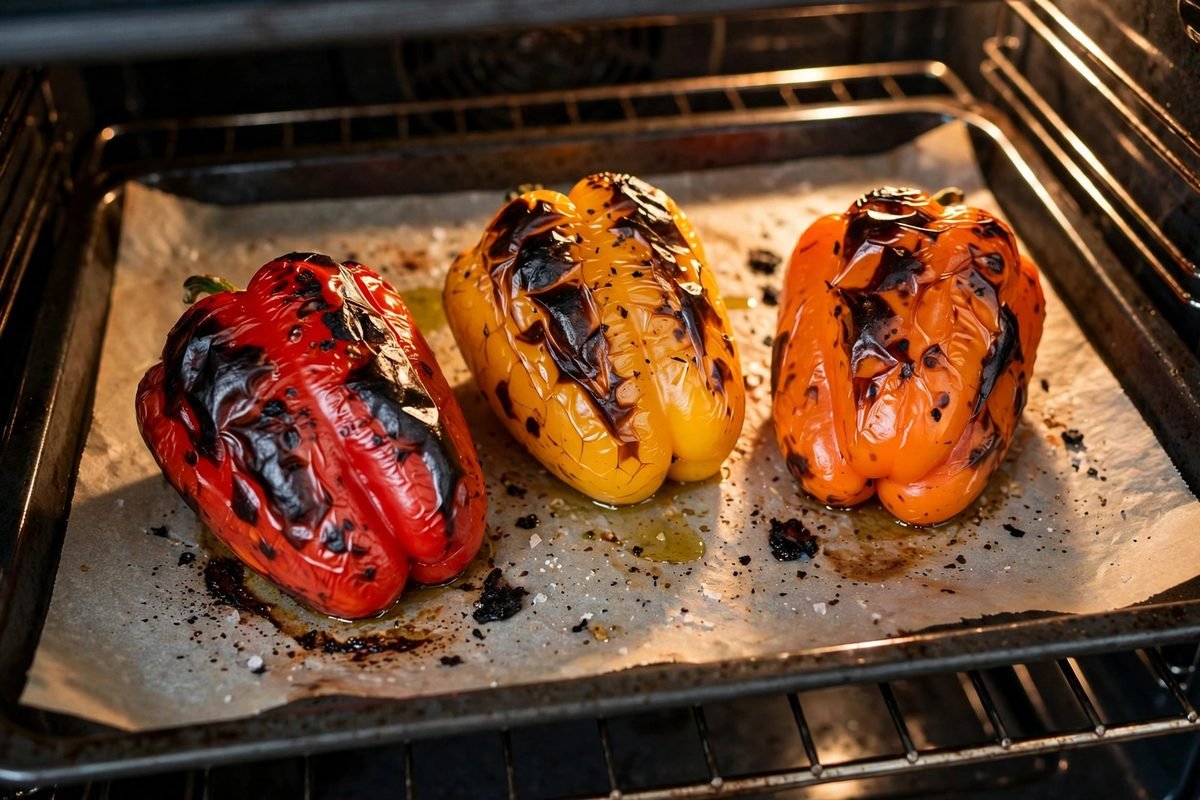

Learning how to roast sweet peppers is one of the quickest ways to make everyday cooking taste more generous. A raw pepper is crisp and bright, but a roasted one turns soft, sweet and faintly smoky, with a silky texture for salads, sandwiches, pasta and dips.
So how do you roast sweet peppers properly? You need high heat, a little patience and a way to steam the skins loose once the peppers are charred. This guide covers four methods — oven, grill, gas hob flame and air fryer.
Key takeaways:
- Roast sweet peppers with high, direct heat until the skins blister and blacken.
- Steam the hot peppers in a covered bowl for ten minutes and the skins will slip off.
- Red peppers are the sweetest roasted; yellow and orange peppers are milder and just as good.
- Roasted peppers keep for days in the fridge and freeze well in portions.
- Use tongs for hot peppers and trays, and never leave a hob flame unattended.
Choosing peppers for roasting
Start with peppers that feel heavy for their size, with firm, glossy skins and no soft patches. A heavy pepper has thick flesh, which gives you a good yield once the skin comes off. Avoid peppers with wrinkled skin or dark, sunken spots, because they roast unevenly and may taste bitter.
Red peppers are the classic choice for roasting. They are the ripest sweet peppers, so they taste the sweetest and develop the deepest flavour under heat. Yellow and orange peppers are a little milder and fruitier, and they roast just as well, so a mixed tray looks beautiful.
Wash the peppers and dry them well, then leave them whole, with the stalk on, for every method in this guide. A dry pepper chars more quickly, and keeping it whole protects the flesh while the skin takes the heat. Work safely: hot peppers and trays need tongs and oven gloves, keep hands and face clear of steam, and never leave a gas hob flame unattended.
Method 1: Roasting peppers in the oven
The oven is the easiest and most reliable method, especially for a whole batch. Heat it to 220°C, or 200°C for a fan oven, and put a baking tray in to warm up, so the peppers start charring the moment they touch it.
Place the whole peppers on the hot tray in a single layer on a high shelf, close to the top element, and roast for 20 to 25 minutes, turning them with tongs every five to seven minutes. You are looking for skins blackened and blistered over most of the surface, with the peppers soft and slightly collapsed. Then tip them into a bowl, cover it and leave them to steam for ten minutes to loosen the skins.
Method 2: On the grill or under the broiler

The grill and the broiler both give fierce heat that chars the skins fast, with a smoky edge the oven cannot quite match. For a barbecue, place the whole peppers directly on the grill over a medium-high heat and close the lid if you have one. For a broiler, set the rack about 15 centimetres below the element and put the peppers on a foil-lined tray. Either way, they need about 10 to 15 minutes.
Turn the peppers with tongs every few minutes so the charring is even, until the skins blister and blacken on all sides and the peppers soften and sag. Watch them closely, because a broiler can burn a pepper in under a minute. Then move them to a bowl with tongs, cover it, and leave them to steam for ten minutes before peeling.
Method 3: Over a gas hob flame
Roasting a pepper directly over a gas flame is the fastest method of all, and the one many cooks reach for when they need a single pepper in a hurry. It takes about five minutes and gives the deepest char of any method, with a flavour close to an open fire.
Turn a gas burner to a medium-high flame and place a whole pepper directly on the burner, balanced on the grate. Use long tongs to turn it every minute or so, so each side spends time in the flame. The skin will blacken and blister quickly, and you may hear it crackle.
This method needs your full attention. Never leave a hob flame unattended while a pepper is roasting on it, keep your hands and face clear of the heat and steam, and keep flammable things well away from the burner. Once the skin is blackened all over, lift the pepper off with tongs, drop it into a bowl, cover it and leave it to steam for ten minutes. The hob method suits one or two peppers at a time; for a large batch, the oven is far more practical.
Method 4: In the air fryer
The air fryer is a handy option for a small batch, and the neatest of the four methods, because the mess stays inside the basket. It works best for two or three peppers at a time, and the result is very close to the oven’s.
Heat the air fryer to 200°C for a few minutes. Place the whole peppers in the basket in a single layer, with space around each one so the hot air can circulate. Cook for 12 to 15 minutes, turning them with tongs halfway through, until the skins are blistered and the flesh is soft.
Large peppers may need a few extra minutes, so check after 12 minutes and judge by the skin: if it is still smooth and glossy in places, give them a little longer. Tip the hot peppers into a bowl, cover it and leave them to steam for ten minutes, then peel and seed them as described below.
How to skin and seed roasted peppers
Once the peppers have steamed for ten minutes, they should be cool enough to handle but still warm. Hold a pepper over a bowl and peel the skin away with your fingers; it should come off in large, soft sheets, and any stubborn patches can be eased off with the back of a knife. Do not rinse the peppers under the tap, which would wash away the smoky juices and some of the flavour. A little char left on the flesh is fine and adds to the taste.
Pull out the stalk, then open the pepper and scrape out the seeds and the pale membrane inside, which come away easily once the pepper is soft. Tear or slice the flesh into strips or pieces, depending on how you plan to use it, and keep any juices from the bowl for a dressing or a sauce.
How to store roasted peppers
Roasted peppers keep well, which makes them worth making in a batch. In the fridge, they will keep for four to five days in a sealed container, covered with a little olive oil, which keeps them moist and picks up their flavour for later use.
For longer storage, freeze the peppers in portions. Lay the strips flat in freezer bags, squeeze out as much air as you can, and label each bag with the date. Frozen roasted peppers keep for up to three months, and they thaw quickly in the fridge overnight. Cool them fully before sealing.
Serving ideas for roasted sweet peppers
Roasted peppers are one of the most useful things you can keep in the fridge, because they lift almost anything they touch. In salads, their sweetness balances sharp cheese, bitter leaves and salty olives, and a drizzle of roasting juices finishes a simple salad.
In sandwiches, roasted peppers add moisture and flavour without the crunch of a raw pepper. They are particularly good with grilled cheese, and our guide to the best bread for grilled cheese will help you pick a loaf that holds up to a juicy filling.
In pasta, roasted peppers make a sauce in minutes. Blend them with olive oil, garlic and a little of their juice for a smooth sauce, or toss strips through hot pasta with parmesan and black pepper. They also work stirred through risotto or folded into a frittata.
As a dip, roasted peppers are hard to beat. Blend them with chickpeas, tahini and lemon for a red pepper hummus, or with walnuts and breadcrumbs for a rough, smoky dip that goes well with flatbread. As a side, warm strips with olive oil, garlic and a little vinegar make a simple accompaniment to roast chicken — see our baked chicken breast guide for a reliable main — or to grilled fish.
How the four roasting methods compare
| Method | Time | Batch size | Flavour | Suits |
|---|---|---|---|---|
| Oven | 20–25 minutes | Four to six | Sweet, evenly roasted | A full batch |
| Grill or broiler | 10–15 minutes | One to four | Smoky, charred | Small batches |
| Gas hob flame | About 5 minutes | One or two | Deep char, smoky | One pepper |
| Air fryer | 12–15 minutes | Two or three | Sweet, oven-like | A small, neat batch |
Your roasted pepper checklist
Run through this list before you start.
- Choose heavy, glossy peppers: firm skins, no soft patches, red for sweetness.
- Preheat fully: a hot oven or grill chars the skin instead of steaming it.
- Turn with tongs: every side needs time near the heat for even blackening.
- Steam for ten minutes: a covered bowl loosens the skins so they peel off easily.
- Peel, don’t rinse: keep the smoky juices and the flavour they carry.
- Store in the fridge: covered with olive oil, and use within four to five days.
- Stay safe: use tongs and oven gloves, and never leave a hob flame unattended.
Frequently asked questions
Do you need to peel roasted sweet peppers?
Peeling is worth doing, because the charred skin is tough and papery, while the soft flesh underneath is the part you want to eat. The skin slips off easily after ten minutes of steaming in a covered bowl.
Can you roast sweet peppers without oil?
Yes, you can roast peppers with no oil at all, and most cooks do. The skin chars and the flesh softens under dry heat; save the olive oil for storing or dressing the peppers once peeled.
Why won’t the skins come off my roasted peppers?
The usual reason is that the peppers were not charred enough, or they were not steamed after roasting. The skins need to blister and blacken all over, then ten minutes in a covered bowl will loosen them.
How long do roasted peppers keep in the fridge?
Roasted peppers keep for four to five days in a sealed container in the fridge, covered with a little olive oil. For longer storage, freeze them in portions for up to three months.
Sources
This guide reflects widely published cooking guidance on roasting peppers by oven, grill, flame and air fryer. For more, see our guides to how to make mashed potatoes and how to clean an oven.
The bottom line
Roasting sweet peppers is a small skill with an outsized return. Once you know how to char, steam, peel and store them, you will have sweet, smoky strips in the fridge that can turn a plain salad, sandwich or bowl of pasta into something special.
Your next step is simple: buy four red peppers, heat the oven to 220°C, and roast your first batch this week. Peel them, taste one strip warm with olive oil and salt, and decide which method to try next.














