


Learning how to start a vegetable garden is simpler than most beginners expect. You do not need a large plot, a greenhouse or years of experience; you need a sunny patch of ground or a few containers, decent soil, and a handful of forgiving crops to learn with.
So where do you begin? Start small, with a sunny spot, a bed or container you can reach easily, and three or four easy crops such as lettuce, radishes and courgettes. This guide takes you through each step in order, from choosing a site to your first harvest, so you can grow food with confidence in your first season.
Key takeaways:
- Most vegetables need at least six hours of direct sun a day and shelter from strong wind.
- Good soil matters more than anything else: feed it with compost before you plant.
- Start with easy, fast crops such as lettuce, radishes, courgettes and beans.
- Water deeply and less often, at the base of the plants, ideally in the morning.
- Sow a little at a time, so your harvest is spread across the season.
Choosing the right site
Sunlight is the first thing to get right, because most vegetables need at least six hours of direct sun a day to grow well. Watch your garden through a day and note which patches stay sunny from morning to afternoon. A south-facing spot is usually the sunniest in the northern hemisphere, while a shady spot will suit only leafy crops.
Water and access matter almost as much as sun. Choose a spot you can reach easily with a hose or a watering can, because you will be visiting it daily in dry weather, and a bed that is hard to reach will be neglected. Avoid low ground where water sits after rain, since roots standing in water can rot, and avoid the dry shade beneath large trees, where roots compete for every drop.
Getting the soil ready

Good soil is the foundation of a vegetable garden, and it is worth more than any seed or tool. Most vegetables grow best in soil that is dark, crumbly and full of life: it should hold moisture without turning to mud, and drain freely without drying out in a day. A handful that forms a ball and then crumbles when poked is usually in good shape.
Whatever your soil is like, compost will improve it. Spread a thick layer of well-rotted compost over the bed, around five to eight centimetres deep, and work it into the top twenty centimetres or so with a fork. Compost feeds the life in the soil, helps clay drain better, helps sand hold water, and gives young roots the nutrients they need. Do this a few weeks before planting if you can, so the soil has time to settle.
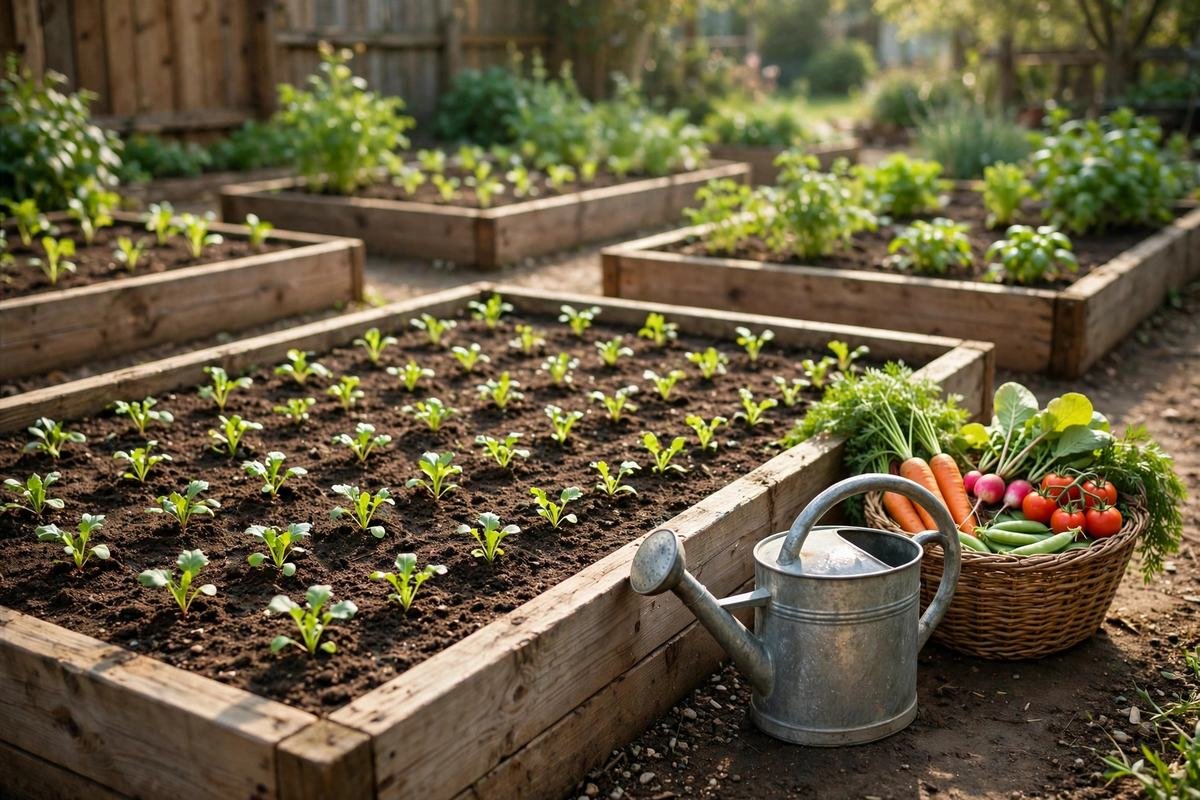
Raised beds are a good option if your soil is poor or heavy, or if bending down is difficult. A bed about thirty centimetres deep, filled with topsoil and compost, warms up earlier in spring and drains well. Containers work the same way on a smaller scale, and whichever you choose, do not walk on the bed once it is prepared.
What to grow first
Your first crops should be forgiving, fast and generous, because early success is what keeps a new gardener going. Lettuce is one of the best first crops: it grows quickly, you can pick leaves a few at a time, . Our guide to how to grow lettuce covers sowing and picking in detail.
Radishes are another excellent beginner crop, ready to pull in as little as four weeks in most regions, and they give a quick reward while slower crops are still growing. Courgettes are generous plants that usually produce far more than one household can eat, so one or two plants are plenty.
Herbs deserve a place in every first garden. Basil, parsley and chives grow easily, need little space, and transform everyday cooking, so you will use them constantly. Tomatoes are the crop most beginners dream of, and they are worth growing, but they need a sunny, sheltered spot and regular watering; in cooler regions, a cherry tomato in a large pot against a sunny wall is the most reliable way to start.
Sowing and planting
Seeds and young plants need different handling, and knowing which is which saves a lot of disappointment. Some crops, such as carrots, radishes and beans, are best sown directly where they will grow, because they dislike being moved. Others, such as tomatoes, courgettes and lettuces, are usually started indoors or bought as young plants, then planted out once the weather warms up.
Timing matters more than enthusiasm. Sowing too early in cold, wet soil usually means seeds rot or seedlings sulk, while sowing a little later into warm soil often catches up quickly. In most regions, the last frost is the key date: tender crops such as courgettes, beans and tomatoes should wait until frosts have passed, while hardy crops such as peas, broad beans and lettuce can go out earlier.
When you sow, follow the depth on the packet: a seed buried too deep may never reach the surface, while one left on top can dry out. Water the soil gently before sowing, so seeds sit in damp ground, and keep the surface moist until they appear. Space plants as the packet suggests; crowded plants compete for light, water and food.
Watering well
Watering is where most beginners go wrong, usually by watering a little and often. Shallow watering wets only the surface, which encourages roots to stay near the top, where they dry out quickly. It is better to water deeply and less often, soaking the soil around the roots so moisture reaches down where roots can use it. In most regions, a good soak two or three times a week suits a vegetable bed better than a light sprinkle every day.
Morning is usually the best time to water. The soil absorbs the water before the heat of the day, leaves dry quickly in the sun, and plants are ready for a warm afternoon. Water at the base of the plants, not over the leaves, and use a watering can with a rose or a hose on a gentle setting so you do not wash soil away from the roots.
Feeding your plants
Vegetables are hungry plants, and they take a lot of nutrients from the soil in a single season. The compost you dug in before planting covers much of their needs, but heavy feeders such as tomatoes, courgettes and brassicas usually benefit from extra feeding once they are growing strongly. A general liquid feed, applied as the maker directs, is the simplest option for a beginner, and a mulch of compost around plants feeds the soil slowly through the season.
Different crops have different appetites. Leafy crops such as lettuce and spinach need nitrogen for green growth, while fruiting crops such as tomatoes and courgettes need potassium to help flowers and fruit develop. More feed is not better: overfeeding can produce lush, soft growth that pests love, and can damage roots, so follow the directions on the pack.
Common mistakes to avoid
The most common mistake is starting too big. A large plot looks exciting in spring, but by midsummer it can be a weedy tangle that no one wants to face. A small bed, well tended, will give you more food and more pleasure than a large one that runs wild. Start with a bed you can manage in a few minutes a day, .
The second mistake is planting too much of one thing. A single packet of courgette seed can produce more courgettes than a family can eat, and a whole row of lettuce will all be ready at once. Sow a little at a time, a few seeds every two or three weeks, so your harvest is spread across the season instead of arriving in one glut. Other easy mistakes include forgetting to water containers in a dry spell, planting tender crops before the last frost.
How the main approaches compare
There are three common ways to start a vegetable garden. The table below compares them, so you can choose the approach that fits your garden.
| Approach | Best for | Cost and effort | Soil control | Drawbacks |
|---|---|---|---|---|
| In-ground beds | Large gardens, low cost | Low | Depends on your soil | Weeds and poor soil |
| Raised beds | Poor soil, easy access | Medium | Full control | Building and filling cost |
| Containers | Balconies, patios, small spaces | Low to medium | Full control | Dry out quickly |
Your vegetable garden checklist
Run through this list before you sow your first seed.
- Pick a sunny spot: at least six hours of direct sun, sheltered from strong wind, easy to reach with water.
- Prepare the soil: dig in five to eight centimetres of compost.
- Start small: one bed or a few containers, with three or four easy crops.
- Check your timing: wait until frosts have passed for tender crops.
- Sow at the right depth: follow the packet, water gently, and label every row.
- Water deeply: soak the soil at the base of plants.
- Mulch and weed: mulch holds moisture, and a weekly hoe keeps weeds small.
- Harvest often: pick young and tender.
Frequently asked questions
How much sun does a vegetable garden need?
Most vegetables need at least six hours of direct sun a day, and fruiting crops such as tomatoes and courgettes usually do best with eight or more.
Can I start a vegetable garden in containers?
Yes, containers are a good way to start, especially on a patio or balcony. Use the largest pots you can, fill them with good compost, and water often, since containers dry out far faster than beds.
When should I start a vegetable garden?
In most regions, spring is the usual time to start, once the soil has warmed and frosts have passed for tender crops. Your seed packets and local gardening advice give the best timing for your climate.
Do I need to test my soil?
You do not need a soil test in your first year. Digging in plenty of compost and growing a few forgiving crops will tell you a lot about your soil. If plants struggle despite good watering and feeding, a simple test kit can show whether your soil is very acid or alkaline.
How do I keep pests off my vegetables?
Start with healthy plants in good soil, since strong plants resist pests better than weak ones. Check plants regularly, pick off caterpillars and slugs by hand, and use netting over brassicas to keep butterflies from laying eggs. Avoid spraying unless you know what you are treating and what the product is for.
Sources
This guide reflects widely published gardening guidance. For more kitchen garden reading, see our guides to how to grow lettuce and how to make mashed potatoes.
The bottom line
Starting a vegetable garden is a skill you learn by doing, one bed and one season at a time. A sunny spot, soil fed with compost, and a few easy crops are all you need to begin.
Your next step is simple: pick your sunniest patch, dig in a barrow of compost, and sow a row of lettuce and a row of radishes this week. In a few weeks you will be picking your first leaves, and you will know exactly what to grow next.














