

Searching for laser hair removal near me can bring up many clinics, but a high rating or a low price does not tell you everything you need to know. The person operating the device, the type of laser, your skin tone, and your hair color can all affect your results and the risk of side effects.
Laser hair removal can reduce unwanted hair for a long time, but it takes several sessions and does not work equally well for everyone. Some people need maintenance treatments, and light-colored hair may respond poorly.
Before paying for a package, find out who will treat you, which device they plan to use, how much the full course will cost, and what results are realistic for your skin and hair. This guide explains what to check, what to ask, and when it may be better to walk away.
Key Takeaways
- Check the provider’s training and experience before choosing a clinic.
- The right device depends on your skin tone, hair color, and treatment area.
- Laser hair removal usually takes several sessions and may require maintenance.
- Ask for the full estimated cost in writing, including extra sessions.
- Avoid clinics that promise guaranteed results or pressure you to pay immediately.
- Follow preparation and aftercare instructions, and report unusual reactions promptly.
How to Check a Laser Hair Removal Clinic

Start with the person performing the treatment, not the clinic’s decoration, social media photos, or special offers.
Laser hair removal can cause burns, scars, and changes in skin color when performed incorrectly. Look for a qualified healthcare professional or a properly trained provider working within the rules in your area. A dermatologist experienced in laser treatment can help you understand your options, especially if you have darker skin, a skin condition, or a history of skin reactions
Before booking, check these points:
- Training and experience: Ask who will perform the treatment and what training they have.
- Experience with your skin tone: Ask how often they treat people with skin similar to yours.
- A proper consultation: The provider should ask about your medical history, medicines, recent tanning, skin conditions, and previous hair removal treatments.
- A clear treatment plan: They should explain the device, expected results, possible side effects, and likely number of sessions.
- A test spot when appropriate: Ask whether they will test a small area first and how they will check your skin’s response. Follow the provider’s advice and the device’s safety instructions.
Be cautious if a clinic offers treatment without asking about your health, cannot explain its equipment, or promises guaranteed results. A good provider should answer your questions without pressuring you to buy a package.
Which Laser Is Right for Your Skin?
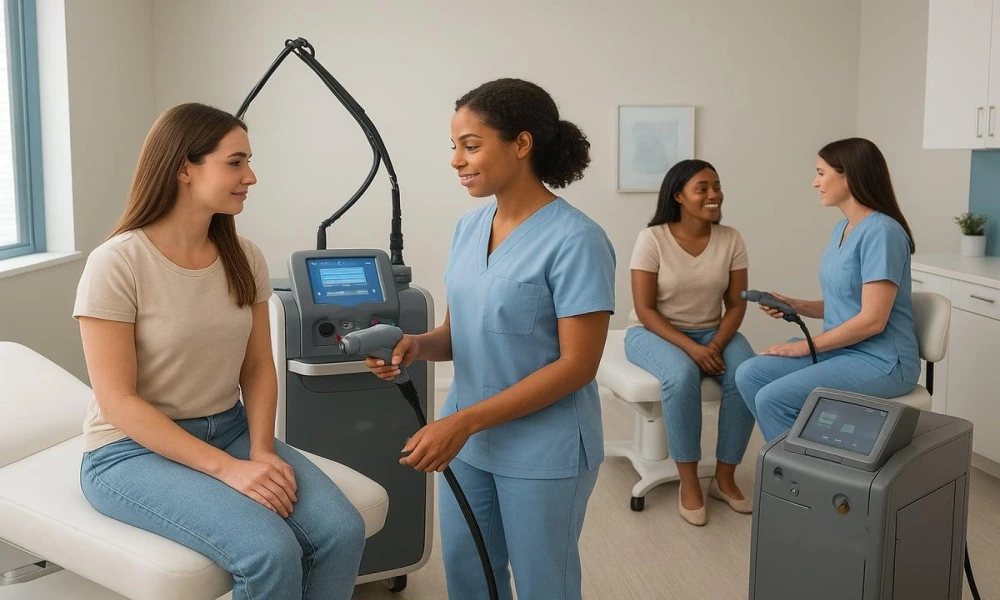
Different devices use different types of light and wavelengths. The right choice depends on your skin tone, hair color, hair thickness, treatment area, and the provider’s experience.
| Technology | General use | What to know |
| Alexandrite laser | Often used for lighter skin tones with dark hair | Can work well on suitable skin, but may carry more risk for darker or tanned skin. |
| Diode laser | Used across a range of skin tones | Results and safety depend on the device, settings, and the person operating it. |
| Nd laser | Often preferred for darker skin tones | Its longer wavelength can reduce the risk of damaging the skin’s surface pigment when used correctly. |
| IPL | Uses intense pulsed light rather than a laser | It is a different technology, and results depend on the device and the person’s skin and hair. |
No single device is best for everyone. People with darker skin can have laser hair removal, but the provider must choose suitable equipment and settings. Nd is often a preferred option for deeper skin tones. Experience treating darker skin is just as important as the machine itself.
Hair color matters, too. Laser treatment works by targeting pigment in the hair. Dark, coarse hair often responds better than white, gray, blonde, or red hair. Ask the clinic what results are realistic for your particular hair before paying.
Laser hair removal usually requires several sessions because hair grows in cycles, and the laser works best on hair in certain growth stages.
Many people need around six or more sessions, but there is no fixed number for everyone. The area being treated, hair thickness, hormones, skin and hair color, and the device used can all affect the plan. Sessions are often spaced several weeks apart, with the timing adjusted to the treatment area and hair regrowth.
After treatment, some hair may grow back more slowly, become finer, or stop growing in treated areas. You may still need occasional maintenance sessions.
Be careful if a clinic promises completely smooth skin after a set number of visits. Ask what level of hair reduction you can reasonably expect and what happens if you need more sessions than the package includes.
What Does Laser Hair Removal Really Cost?

The total cost depends on the body area, clinic, device, number of sessions, and whether maintenance treatments are needed. Small areas generally cost less per session than larger areas, but prices vary by location.
A low introductory price may cover only one session. Before agreeing to treatment, ask for a written breakdown.
| Question to ask | Why it matters |
| What is the price for one session? | Helps you compare clinics fairly. |
| What is the estimated cost for the full course? | Shows the likely total, not just the starting price. |
| How much are extra sessions? | You may need more visits than first expected. |
| Are maintenance sessions included? | Follow-up treatments may cost extra. |
| What is the cancellation or refund policy? | Helps you understand the terms before paying. |
Do not buy a large package just because the discount expires today. Compare the total cost, the clinic’s safety standards, and the written terms first.
Red Flags to Watch For

A clinic does not have to be expensive to be good, and an expensive clinic is not automatically safe. Pay attention to how it handles questions and explains risks.
Watch out for:
- Guaranteed results: No provider can promise the same outcome for every person.
- No medical or skin assessment: Your skin, hair, health, and medicines should be considered before treatment.
- Unclear equipment: Staff should be able to identify the device and explain why it suits you.
- Pressure to pay immediately: You should have time to review the plan and cost.
- No discussion of risks: The clinic should explain possible burns, irritation, and skin-color changes.
- Unrealistic claims about pain: Discomfort varies, and cooling does not make every treatment painless.
Also ask how the clinic protects your eyes. Laser devices can injure the eyes, so the correct protective eyewear must be used during treatment.
How to Prepare for a Session

Following the clinic’s instructions can lower the risk of problems and help treatment work as intended.
Before your appointment:
- Shave the area if instructed: Shaving is usually allowed, while waxing and plucking should generally be avoided before treatment because they remove the hair the laser targets.
- Avoid tanning: Tell the provider about recent sun exposure or self-tanner. A tan can increase the risk of side effects.
- Share your medication list: Include prescription medicines, over-the-counter products, and supplements.
- Arrive with clean skin: Follow instructions about lotions, deodorant, makeup, and other products on the treatment area.
- Ask about your specific risks: Certain skin conditions, medicines, and a history of scarring may affect your treatment plan.
Do not stop prescribed medicine on your own. Ask your healthcare professional whether any medicine or skin product affects your treatment.
Aftercare and Possible Side Effects

Mild redness, swelling, or discomfort can happen after a session. These effects often settle within a short time, but more serious problems are possible.
After treatment, follow the clinic’s aftercare instructions. Be gentle with the treated area, avoid tanning, and protect exposed skin with broad-spectrum sunscreen. Ask when it is safe to return to intense exercise, hot baths, or other activities that may irritate your skin.
Contact a healthcare professional if you develop severe or worsening pain, blisters, signs of infection, or unusual skin-color changes. Do not assume that a serious reaction is a normal part of the process.
Questions to Ask Before You Book

Use these questions during a consultation. The answers should help you compare clinics without relying only on reviews or discounts.
- Who will perform my treatment, and what training do they have?
- Which device will you use, and why is it suitable for my skin and hair?
- How much experience do you have treating my skin tone?
- What results can I realistically expect?
- How many sessions might I need, and how far apart will they be?
- What is the estimated total cost, including extra or maintenance sessions?
- What side effects should I watch for, and whom do I contact if I have a problem?
You do not need to choose a clinic during the first consultation. Comparing the answers from two or three providers may help you spot unclear advice or pressure to pay.
Frequently Asked Questions
Is laser hair removal permanent?
It can provide long-term hair reduction, but some hair may return. Maintenance sessions may be needed.
Is laser hair removal safe for dark skin?
It can be safe when the right device and settings are used by an experienced provider. Ask about their experience with your skin tone.
How many sessions do I need?
Many people need six or more sessions. The exact number depends on the treatment area, hair, and individual response.
Does laser hair removal hurt?
It can feel like a quick snap or sting. Discomfort varies by person, area, and device.
Can laser treatment remove blonde or gray hair?
It often works poorly on blonde, white, gray, and some red hair because these colors have less of the pigment the laser targets.
Should I shave before treatment?
Usually, yes, if the clinic instructs you to. Avoid waxing or plucking before treatment unless your provider gives different advice.
Final Thoughts
Choosing a laser hair removal clinic takes more than searching nearby and picking the lowest price. Check the provider’s qualifications, ask which device they plan to use, and make sure they understand your skin tone and hair type.
Before paying, get a clear treatment plan, realistic expectations, and the estimated full cost in writing. If the clinic avoids your questions or makes promises that sound too good to be true, take time to compare other options.
The goal is not to find the clinic with the biggest discount. It is to make an informed decision about a treatment whose results, costs, and risks you understand.
Disclaimer: This article is for general information only and is not a substitute for personal medical advice. Consult a qualified healthcare professional to find out whether laser hair removal is suitable for you.