

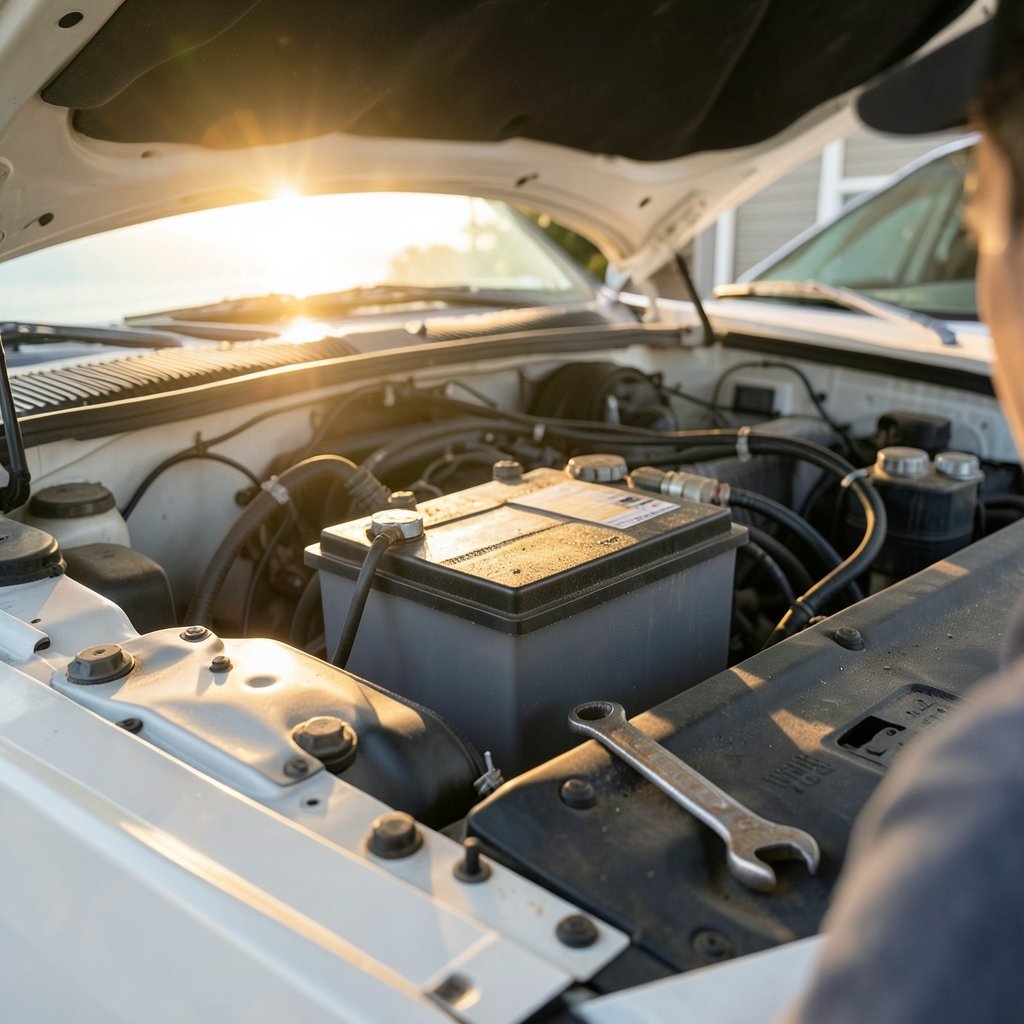
Quick Answer: How long does a car battery last?
A car battery usually lasts between three and five years, with many sources narrowing the typical range to three to four years for a standard 12-volt unit. Most drivers get a solid stretch of reliable starting before performance begins to slip, and regular testing from the three-year mark onward is the simplest way to avoid a surprise no-start morning.
The type of battery matters. A conventional flooded lead-acid battery sits at the shorter end, while absorbed glass mat and lithium designs can push well beyond the typical window. Electric vehicles add a second, much larger drive battery that follows a completely different lifespan curve than the small 12-volt unit under the hood.
Before assuming a replacement is due, check the battery’s age and date stamp, your driving habits, local climate, charging system health, and any electrical accessories left running, since each one shifts the real-world number up or down.
Why the Three-to-Five-Year Rule Exists

Car batteries die on a schedule that feels almost predictable once you have owned a few cars. The chemistry inside a lead-acid battery wears down with every charge and discharge cycle, and the plates slowly corrode. Industry guidance converges on a similar answer: a new battery should give you three to six years, and most drivers land somewhere near the middle of that range.
The variance is not random. A battery that lives in a mild climate, charges fully on every trip, and never gets drained by accessories can outlast one that sits in desert heat and does nothing but short school runs. A battery that has been deeply discharged a handful of times can fail years early, even if it looks fine on the outside.
It helps to think of the quoted range as an average, not a promise. Some units fail at two years, and a lucky few keep cranking past a decade. The number on the warranty card tells you what the maker expects, not what your specific car will deliver.
How Long Different Battery Types Last
Not all batteries age at the same rate, and the type under your hood is the first thing to check when someone asks how long a car battery lasts.
| Battery type | Typical lifespan | Notes |
|---|---|---|
| Flooded lead-acid | About 3 to 5 years | Built for short bursts of starting power; the most common type |
| Sealed lead-acid | Roughly 3 to 5 years | Maintenance-free but still sensitive to heat and deep discharge |
| Absorbed glass mat (AGM) | Often 4 to 6 years | Handles repeated cycling better; common in start-stop vehicles |
| Lithium | Can exceed a decade | Longer life but far higher cost and less common in mainstream cars |
| EV drive battery | Much longer than a 12-volt | Covered by separate, lengthy warranties; not the same part as the starter battery |
A conventional flooded battery is designed to deliver a big jolt of current for a few seconds and then get recharged by the alternator. That job is hard on the plates, which is why it tends to have the shortest life of the group. AGM batteries cope better with the constant cycling that modern start-stop systems demand, so they often stretch a little further.
Electric vehicles complicate the question because they carry two batteries. The high-voltage drive pack is a completely different animal from the 12-volt starter battery, and its lifespan is measured in many years and hundreds of thousands of kilometres. The small 12-volt unit in an EV still wears out on a familiar schedule, so EV owners should not assume they are exempt from battery replacement.
What Actually Shortens Battery Life
Several everyday habits quietly chip away at battery life, and most drivers do not notice until the engine turns over slowly on a cold morning.
Short trips and infrequent driving
The alternator needs time to recharge what the starter motor borrowed. A five-minute trip to the shops uses a chunk of charge and gives the alternator barely enough time to top it back up. Do that every day for a year and the battery never reaches a full state of charge, which accelerates sulfation and reduces capacity. Drivers who only make short trips should take the car on a longer highway run occasionally, or use a smart charger to top the battery up at home.
Cars that sit for weeks at a time have a related problem. A parked battery slowly self-discharges and can lose its ability to hold a full charge. Starting the car and letting it run briefly is not enough; it needs a proper drive to warm up and recharge.
Extreme temperatures
Heat is the quiet killer. High under-bonnet temperatures speed up the chemical reactions inside the battery and cause internal corrosion, which permanently reduces its ability to deliver power. Cold is less destructive in the long run but exposes a weak battery immediately, because cold oil and cold metal demand more cranking current just when the battery has less to give. A battery that has survived several hot summers is often the one that fails on the first freezing morning.
Charging system faults and electrical drains
A failing alternator can overcharge or undercharge the battery, and either problem shortens its life. Left-on interior lights, dash cams wired to a constant live feed, and aftermarket alarms can all drain a battery while the car is parked. If a battery keeps dying well before its time, the battery may not be the culprit at all. It is worth reading up on why car batteries don’t last as long as the label promises before spending money on a replacement that will suffer the same fate.
Loose terminals and corrosion
This one is easy to overlook. Corroded or loose terminals add resistance to the starting circuit, which forces the battery to work harder and can mimic a dying battery when the real problem is a five-minute clean-up. A visual check under the bonnet twice a year costs nothing and catches the issue early.
Warning Signs a Battery Is Nearing the End
Batteries rarely fail without warning, but the clues are subtle enough that drivers often dismiss them until the car refuses to start.
- Slow cranking. The engine turns over more sluggishly than it used to, especially on cold mornings.
- Dim lights at idle. Headlights that brighten when you rev the engine suggest the battery is struggling to hold charge.
- Frequent jump starts. Needing a jump once is bad luck; needing two in a month is a diagnosis.
- Dashboard warning light. A battery symbol on the dash can point to the battery, the alternator, or both.
- Swollen case or rotten egg smell. This is a sign of internal damage and means the battery should be replaced promptly.
- Electrical gremlins. Random warning lights, a sluggish infotainment screen, or a clock that resets itself can all trace back to a weak battery.
Once a battery passes the three-year mark, a load test at every service is cheap insurance. Many workshops will test it for free, and the test takes minutes. It measures how the battery performs under a simulated starting load rather than just checking its resting voltage, which is why it catches problems a simple multimeter reading misses. If you rely on backup power at home too, the same logic applies: knowing how long an uninterruptible power supply actually lasts helps you plan replacements before they fail at the worst moment.
How to Make a Car Battery Last Longer
There is no way to make a battery immortal, but a handful of habits reliably push it toward the top of its expected range.
- Drive long enough to recharge. Aim for at least 20 to 30 minutes of driving at highway speed every week or two, especially if most of your trips are short.
- Park in the shade where possible. A garage or carport keeps under-bonnet temperatures lower in summer and reduces heat-driven corrosion.
- Keep terminals clean and tight. A wire brush and a little terminal protectant prevent the resistance build-up that stresses the battery.
- Fix electrical drains early. If something is drawing power while the car is off, deal with it before it claims another battery.
- Use a maintainer for seasonal cars. A smart trickle charger keeps a stored battery topped up without overcharging it.
- Test annually after year three. A load test each service catches decline before it becomes a roadside call.
One common mistake deserves a mention: buying a bargain battery from an unknown brand to save a few dollars. A cheap unit may test fine on day one but degrade quickly, and the warranty is often more hassle than it is worth. Another mistake is replacing the battery without checking the alternator. If the charging system is faulty, the new battery will be cooked within months. The same principle applies to air conditioning repairs, where fixing the underlying fault matters more than topping up the refrigerant, as anyone who has had to fix car air conditioning that isn’t blowing cold will confirm.
When to Replace Rather Than Repair
Replacement is the right call when a battery is past its expected lifespan, fails a load test, shows physical damage, or has been deeply discharged more than once. Modern batteries are not designed to be reconditioned, and attempts to revive a sulfated unit rarely deliver reliable starting power for long.
There is also a practical argument for pre-emptive replacement. A battery that fails in a driveway is an inconvenience; one that fails in a remote car park at night with children in the car is something else entirely. Drivers who clock up long distances, commute at odd hours, or live in regions with harsh winters often replace at the four-year mark regardless of test results, treating it as cheap peace of mind.
Warranty periods vary widely, from six months to several years depending on the brand and type. A longer warranty does not guarantee a longer life, but it does tell you something about the manufacturer’s confidence in the product. Keep the receipt, note the installation date, and check the date stamp on the case so you know exactly how old the battery is when questions arise.
Conclusion
The honest answer to how long a car battery lasts is that most land between three and five years, with three to four years being the realistic expectation for a standard 12-volt unit in everyday use. Battery type, climate, driving habits, and charging system health all move that number, and a battery that is treated well can beat the average while a neglected one can fail years early. The practical takeaway is simple: know the age of your battery, test it annually once it passes three years, fix charging and drain problems before they kill a replacement, and replace on your own schedule rather than the battery’s. That approach turns a roadside emergency into a routine maintenance item, which is exactly what it should be.
FAQ
How can I tell how old my car battery is?
Most batteries carry a date stamp on the case or label showing when they were manufactured. It is often a letter and number code rather than a plain date, so check the brand’s website or ask a workshop to decode it. If you cannot find the stamp, check your service records or the receipt from the last replacement.
Does a car battery last longer if I drive every day?
Daily driving helps only if the trips are long enough to recharge what the starter used. A daily five-minute commute can actually be harder on a battery than a few longer weekly drives, because the alternator never gets time to bring the battery back to full charge. Distance and duration matter more than frequency.
Can a car battery last ten years?
It happens, but it is rare and usually involves a lithium battery or an unusually well-treated lead-acid unit in a mild climate. For conventional 12-volt batteries, planning for replacement around the four-to-five-year mark is far more realistic than hoping for a decade of service.
What happens if I keep driving with a weak battery?
A weak battery puts extra load on the alternator and can leave you stranded without warning, especially in cold weather. It can also cause modern cars to throw random electrical faults as voltage drops, which makes diagnosis harder and more expensive. Replacing it early is usually cheaper than the alternative.
Is a more expensive battery worth it?
Sometimes. Premium batteries often use better materials and carry longer warranties, and AGM types suit cars with start-stop systems far better than cheap flooded units. That said, price alone does not guarantee longevity, so match the battery type to your vehicle’s requirements and check the warranty terms.
Do electric cars have the same battery lifespan?
No. An EV’s high-voltage drive battery is a different technology with a much longer expected life, often backed by warranties of eight years or more. The 12-volt accessory battery in an EV, however, ages much like the one in a petrol car and still needs periodic testing and eventual replacement.






