A room feels personal when its furnishings tell a story rather than arriving as a perfectly matched set. Luxury home goods can help you shape that story through one distinctive object or a thoughtful mix of furniture, lighting, textiles, and art. The right choices suit your space, reflect your style, and make daily routines feel more comfortable.
Patina means the visible signs of age and use that give a material or object character. A worn wood table, a smooth ceramic lamp, or a well-made chair can each bring a different kind of warmth. Choose by fit, material, and use, not by price or appearance alone. Consider where a piece will go, how often you will use it, and how it will sit beside what you already own. Personal touches can make a room feel like yours without filling every corner. Start with one piece you love and build around the colors, textures, and proportions already in your space.
Key Takeaways
- Start with the room’s purpose and the spot you want to fill.
- Mix styles when a color, material, shape, or finish links the pieces.
- Look at construction and care needs alongside appearance.
- A single focal point can give a room direction.
- Check dimensions and delivery terms before ordering large items.
What makes a luxury home feel personal?
A lived-in room feels more convincing when a few different eras and finishes share a clear visual thread. Personal style comes through when the pieces feel chosen, not copied from a single showroom display. For 2026, interiors favor rooms that mix periods, materials, and finishes instead of matching every item.
Repeat a color, shape, or material to connect pieces that otherwise look different. Darker-toned woods, reclaimed pieces, burl styles, and well-worn vintage wood furniture can give a room depth. A newer lamp or bright pillow can make those older pieces feel at home rather than formal. The American Society of Interior Designers’ outlook points to a stronger focus on homes that express their owners’ personalities.
ASID’s 2026 trends outlook describes that shift toward personal rooms. You can use the idea with pieces at different price points, without trying to reproduce a full room at once.

- Furniture: Olive Ateliers’ chunky elm console, $995, can anchor a living area; Nickey Kehoe’s Tuxedo sofa, $6,400, adds a tailored seating choice.
- Lighting: Anthropologie’s Sinclair tassel-fringed pendant, $298, brings texture overhead.
- Textiles: Lulu and Georgia’s Brandis velvet pillow, $88, adds a soft color accent.
- Paint: Backdrop Home’s Weekend Upstate paint, $59, can set a room’s color mood.
- Dining furniture: CB2’s Kravitz Design Somis dining chair, $799, offers a sculptural seat.
These six examples show different ways to add character, not pieces meant to form a matching set. You might choose a console for storage, then add just one accent that picks up its color.
Choose one older or darker wood piece as an anchor, then add newer accents that echo its tone.
A focused collection can grow slowly as you notice what the room needs. Quality, craftsmanship, and personal meaning can matter more than a designer label when a piece becomes part of daily life.
Which Luxury Home Goods Brands Match Your Style?
For a broad furniture purchase, start by comparing Arhaus and Serena & Lily, then narrow the choice by the style and categories you need. Luxury home goods brands differ in whether they focus on furniture, lighting, outdoor pieces, or smaller decorative objects. Arhaus is the broad furniture and lighting choice, while Serena & Lily is a useful starting point for outdoor furniture.
That difference can save time when you already know what kind of item you need. A label known for decorative objects may be a better fit for a vase than for furnishing an entire dining room.

Furniture and lighting for a room-defining purchase
Arhaus sells high-end furniture, artisanal decor, and lighting, with more than 100 locations nationwide. Its wide assortment makes it a practical first stop when you want to compare large furniture pieces with room lighting. Serena & Lily has 15 U.S. locations and offers outdoor furniture, so it suits shoppers planning a patio or porch as well as indoor spaces.
Think about the main job of the item before settling on a style. A sofa needs to fit your seating needs and the room; outdoor furniture must suit the setting where you plan to use it.
Decor-focused labels for distinctive accents
Jonathan Adler sells vases, canisters, pillows, objets, credenzas, chairs, sofas, table lamps, and dining tables. That range can help if you want one label to cover both smaller accents and larger furnishings. Hetta offers heirloom-inspired designs with a modern twist, a fit for shoppers who want a fresh take on classic forms.
| Brand | Best-known assortment | Useful fit |
|---|---|---|
| Arhaus | Furniture, artisanal decor, lighting | Broad furniture and lighting |
| Serena & Lily | Home furnishings, outdoor furniture | Outdoor furniture shopping |
| Jonathan Adler | Decor, seating, lighting, tables | Varied decor and furniture |
| Hetta | Heirloom-inspired designs | Modern takes on classic style |
The table is a starting point, not a full measure of what each store carries at any moment. Before choosing a label, confirm that its actual assortment includes the item you want, not just the look you admire.
Where can you shop luxury home goods online?
A direct retailer is often the simplest place to browse a focused collection, while a multi-brand showroom helps compare labels in one cart. Luxury home goods online are easier to shop when the site sorts items in ways that match your plan. Choose the best home decor stores online by their categories, item-level stock details, and delivery information.
A site-wide delivery window does not mean every item is ready to ship within that time. In-stock details can help you distinguish a ready item from one with a longer lead time. Read the estimate for the specific item you want.

Direct retailers with focused collections
A direct retailer sells through its own site and can make its own categories easy to browse. A multi-brand showroom groups different labels, which helps you compare design choices across brands. Both routes can work; the better fit depends on whether you want one focused range or a wider set of options.
Williams Sonoma organizes its site around art and wall decor, curtains and wallpaper, decorative accents, and botanicals and trees. Those clear groups help if the job is decorating a wall or finding finishing touches rather than buying furniture.
In-stock options and delivery expectations
West Elm advertises delivery in 1-4 weeks for in-stock items. That window applies to items marked in stock, not every product on the site. Check each product page for its own availability and estimated delivery timing.
| Site | Browseable categories | Useful detail |
|---|---|---|
| West Elm | Home furnishings | In-stock items: delivery in 1-4 weeks |
| Williams Sonoma | Art and wall decor; curtains and wallpaper; decorative accents; botanicals and trees | Categories support focused decor browsing |
| Multi-brand showroom | Categories vary by showroom | Compare multiple brands in one place |
Check the item’s own availability and delivery estimate before treating a site-wide shipping window as applicable to your order.
What can online decor sites help you furnish?
A room-based collection is useful when you need several pieces to work together but still want control over each purchase. High-end home decor websites can help you compare furniture, lighting, rugs, and decor for one space. Room collections give you a shared starting point, while separate pieces let you choose only what you need.
You can furnish a room one item at a time; a complete set is not required. LuxeDecor sorts its assortment into furniture, lighting, decor, rugs, and outdoor categories. Its room collections cover living rooms, dining rooms, bedrooms, offices, and outdoor living.
| Shopping approach | Example categories | Best use |
|---|---|---|
| Room collection | Living room, dining room, bedroom, office, outdoor living | Plan several pieces for one space |
| Single furniture pieces | Dining tables, dressers | Replace one needed item |
| Cross-category browsing | Furniture, lighting, rugs, decor | Compare layers for a coordinated room |
A room page can help you see a dining table beside other kinds of furniture, but you can still select individual items. A shopper looking for a dresser need not buy the matching bed or nightstands. The site lists styles that include classic, traditional, modern, contemporary, Art Deco, and Midcentury Modern.
Use those style labels as broad filters, then judge each item by the room it must serve. A modern rug can work with a traditional dresser when their colors and scale suit the same space. The goal is a room that feels connected, not one that looks untouched.
Use a room collection to coordinate the essentials, then buy only the pieces that solve a real need.
How do you choose furniture for each room?
Start with the activity each room needs to support, then choose the furniture that makes that activity comfortable. Room function gives you a clear way to sort the essentials from the extras. A set is useful when its pieces solve the same need, but you do not need a coordinated set to furnish a room.
For example, a group of dining chairs may work well together because each supports the same task. A matching table lamp and dresser are optional if separate pieces serve you better.
Living and dining areas
A living room commonly combines seating, a table, and lighting. Seating should support conversation, while a table gives guests a place for drinks or books. Lighting helps you use the room after daylight fades, whether you are reading or visiting.
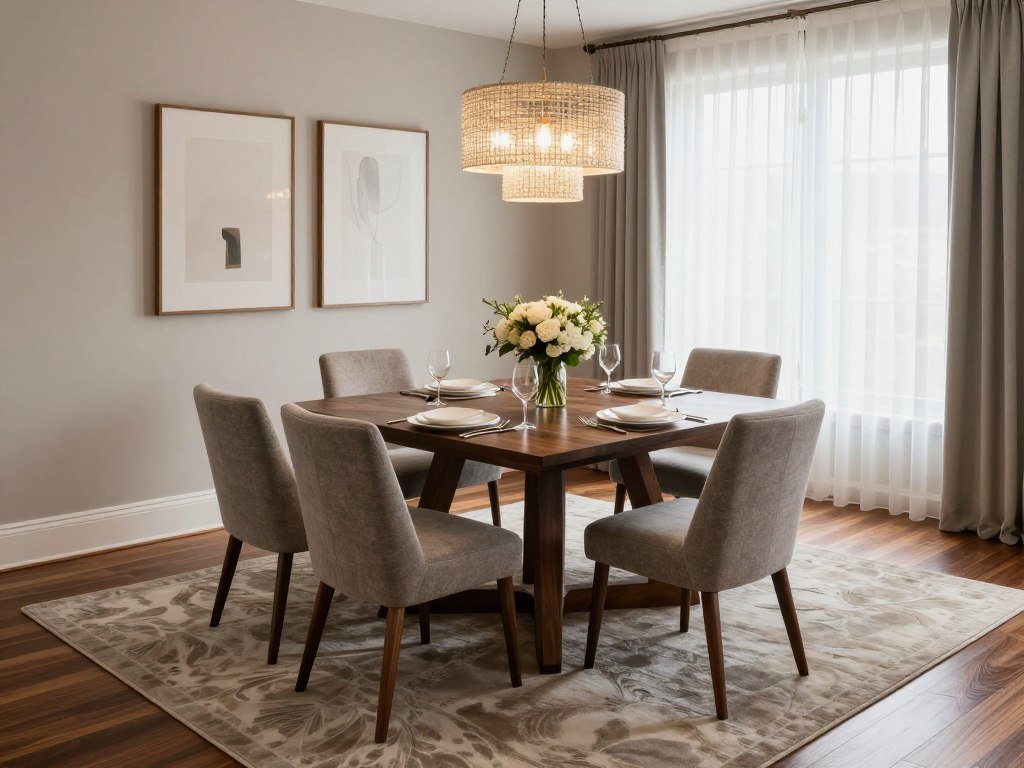
A dining area centers on a dining table and chairs. Match the number and shape of seats to how you use the room, from quick meals to longer gatherings. The table should leave enough room for people to move around it.
A single seating set can create a unified look, but varied chairs can suit a dining table too. Choose pieces for comfort and function first, then connect their shapes or finishes if you want a more collected feel.
Bedrooms and workspaces
A bedroom relies on a bed and bedside storage. A nightstand or small chest keeps daily items close without making the sleeping area feel crowded. Storage should match your habits, such as keeping a book, glasses, or a phone nearby.
A workspace pairs a desk with a task chair and task lighting. The desk needs a useful work surface, while the chair should support the way you work. Focused lighting helps you see papers or a screen without relying only on room lights.
Think through how drawers and doors open and how you pass through the room each day. Leave enough clear floor space for doors, drawers, and the everyday route through each room.
Which materials and finishes make a room feel considered?
A considered room can mix wood, woven fibers, upholstery, and metal when one or two finishes recur. Material choice changes how a room feels as well as how it looks. Darker or reclaimed wood can add visual weight, while woven rattan, bamboo, and seagrass rope bring a lighter, more open texture.
Repeat a finish to connect different pieces, but avoid adding texture to every surface. A reclaimed wood table beside smooth upholstery can feel balanced when another small wood detail appears nearby. A metal lamp or glass surface may add a clean contrast without competing for attention.
Dark wood can make a room feel grounded, especially beside pale walls or soft fabric. Reclaimed and vintage wood may show marks and color shifts that make each piece look less uniform. Woven rattan, bamboo, and seagrass rope have a more open pattern, so they can soften a heavy-looking furniture mix.
Not every room needs another material with a strong pattern. If the space already has textured rugs, woven seats, and nubby upholstery, a smoother finish can give the eye a quiet place to rest. A simple glass or painted surface can serve that role without pulling focus.
Consider how a surface will look beside flooring and furniture already in the room. A finish that appears warm alone may seem too orange beside cool-toned wood, while a pale weave can stand out against a dark floor.
Fit, material, and thoughtful construction can shape how refined an item feels, in a home just as in clothing. Order or view material samples beside the room’s existing wood and flooring before committing to a large piece.
How can wall art and textiles add character?
A textile hanging can add softness and history where a bare wall feels too flat. Wall pieces can shift color, add depth, or create a focal point without changing the furniture. Keep the most active art or textile in proportion to the furniture below it.
Framed work and textile hangings bring different effects, so choose according to the mood and surface you want. One strong piece can be enough when the rest of the wall stays quiet.
Framed art and mirrors
Framed prints introduce a clear image or color block. Photographic art can feel more realistic, while cut-paper work in solid wood shadow boxes adds layers and depth. A framed mirror reflects light and gives a wall a sense of dimension rather than adding another picture.
Williams Sonoma’s wall art includes framed prints, photographic art, cut-paper work in solid wood shadow boxes, and framed mirrors. That range offers different ways to change a wall without choosing a single art style for the whole home.
Textile hangings with texture and history
Antique tapestries and decorative rugs can add a tactile layer and a sense of history. A textile’s woven pattern can soften a room that has many hard surfaces. Its age and wear may also show patina, giving a wall a more personal note.
Before hanging a large piece, consider the space it will occupy and its relationship to nearby furniture. Use these checks to keep the placement intentional:
- Wall width: leave a visible margin at each side.
- Furniture beneath: relate the art’s width to the furniture’s width.
- Frame or textile texture: balance a bold weave with quieter nearby surfaces.
- Hanging point: choose a secure spot suited to the piece’s weight.
Keep the largest or most visually active wall piece in proportion to the furniture below it.
Which small decor accents make a space feel finished?
A few well-placed accents can make a surface feel finished without turning it into storage. Small objects bring color and shape to shelves, tables, and mantels, while useful accents can earn their space through daily use. Choose fewer pieces with a clear purpose instead of filling every open surface.
A tabletop needs room for everyday tasks, so leave clear space around objects. A small accent can still catch the eye when it has a distinct shape or color.
Objects that add color and shape
Vases, picture frames, decorative boxes, and faux botanicals can each add a different outline. A tall vase creates height, while a low box adds a simple horizontal shape. Faux florals can bring color to a spot where a live plant would be hard to care for.
Williams Sonoma offers picture frames, vases and jars, candle holders, trays, faux florals, and decorative objects. A gold glass star ornament listed at $30 is one example of a small accent, not a general guide to decor prices.
Useful accents with everyday function
Candles can add a warm glow, and baskets can hold blankets or other items. Pillows and throws bring color and comfort to seating while staying useful. World Market sells pillows and throws, baskets, candles, decorative accessories, curtains, and faux plants, which can help with a mix of practical and decorative needs.
The two stores support different kinds of browsing. World Market groups useful home accents with curtains and faux plants, while Williams Sonoma lists frames, trays, and decorative objects. You can shop by the job the item needs to do rather than by one broad style label.
Edit a tabletop until each object has breathing room and a clear reason to stay.
Where can you find distinctive vintage and artisan pieces?
For artisan-made furniture and decor, Artemest offers a different path from Chairish’s vintage marketplace. One-of-a-kind finds can come from small-batch makers, older objects, or shops with a strong point of view. Ask about condition, materials, and provenance before buying a vintage piece whose age is part of its appeal.
Artemest focuses on small-batch brands and distinctive furniture and decor made by artisans. Chairish is an online marketplace for vintage furniture, lighting, art, and decorative objects. One route centers on new work by makers; the other helps you browse pieces with a past.
Online vintage and artisan sources
Both kinds of shopping can give a room a less uniform look. An artisan-made item can offer a fresh design with a clear maker’s hand, while a vintage find may show wear and patina. Pairing one with contemporary furniture can make the contrast feel deliberate.
Independent shops with a point of view
Independent shops can mix local work, vintage pieces, and their own design choices. These examples show how a store’s location and focus shape what you may find.
| Shop | Location | Distinctive offering |
|---|---|---|
| Lemieux et Cie | New York City | Contemporary designs with vintage pieces |
| Aerin | East Hampton, New York | Decor, fragrances, entertaining essentials |
| Auden & Avery | Charleston, South Carolina | Beach-inspired finds without a luxury price tag |
| The Vault Creative | Highland Park, Illinois | Vintage finds, emerging artists, signature wallpaper |
| Good Neighbor | Baltimore, Maryland | Local-maker pop-ups, events, workshops, coffee shop |
Maison Mischief in Coral Gables, Florida, sells colorful, personality-driven decor. Shops like these can help you find a local maker’s work or a look that is less common in larger stores.
A distinctive room might pair a vintage chair with a current lamp, or use a shop’s signature color in a small accent. Ask about condition, materials, and provenance before buying a vintage piece whose age is part of its appeal.
What should you check before ordering furniture online?
Measure the room and the path into it before deciding whether an online furniture find will fit. Good measurements help you avoid a sofa that cannot pass through the hall or a desk that blocks a door. Check both the item’s dimensions and the route it must take into the room.
Construction, care, and assembly matter too, especially for a large item you will use every day. Read the product details before you commit, and compare the return terms for the exact piece.
Fit, construction, and care
Check the room’s available width and depth, then measure doorways, hallways, stairs, and any tight turns. Compare those figures with the product’s full dimensions, including its depth or height where that affects entry. A large frame may need to pass through at an angle.
Construction details can tell you how the item is made and whether assembly is part of the job. Care instructions matter for upholstery and finished surfaces, since cleaning needs may shape how well a piece suits your home. Use this checklist before ordering:
- Room and doorway measurements.
- Product dimensions.
- Construction details.
- Care instructions.
- Delivery access.
Trial periods and return details
A trial period applies to the exact product and may have its own terms. Thuma’s bed-frame trial period is 100 days, with returns eligible for a full refund. Other sellers may set different conditions, so do not assume another bed or furniture item has the same trial.
Save the product details and the applicable policy before checkout so you can compare them with the delivered item.
How do delivery and returns affect the total purchase?
For a larger purchase, compare the delivery fee and what the service actually includes before choosing a checkout option. Delivery choices can add a meaningful cost, and a return may bring extra charges. Compare the item price, delivery, assembly needs, and likely return costs as one total.
Standard services can bring an item to your door, while white-glove delivery can include room placement and setup. The exact fee and service depend on the retailer and delivery area.
Compare delivery services and fees
Article charges $49 for Front Door Delivery on larger items and $19 for small-item or under-$200 courier delivery. Its white-glove delivery starts at $199 and includes room-of-choice delivery, unpacking, assembly, and debris removal.
| Service | Fee | Included service |
|---|---|---|
| Article Front Door Delivery, larger items | $49 | Front door delivery |
| Article small-item or under-$200 courier | $19 | Courier delivery |
| Article white-glove delivery | Starts at $199 | Room of choice, unpacking, assembly, debris removal |
| Arhaus white-glove delivery | $299 local; $399 extended; $399-$599 national | Unpacking, inspection, assembly, placement, debris removal |
Arhaus’s national white-glove rates exclude Alaska and Hawaii. Its service includes unpacking, inspection, assembly, placement in the room of choice, and removal of packaging and debris.
Check the return window and refund terms
Article allows returns within 30 days of delivery and exchanges up to 30 days after delivery. It covers shipping for the first exchange of an item within its standard delivery area. Refunds go to the original payment method after inspection, less applicable outbound and return shipping fees.
Article’s manufacturer’s warranty covers defects in materials and workmanship for one year from delivery. Its made-to-order upholstery items can be returned or exchanged within 30 days of delivery. These terms differ from a general return rule, so match them to the product you choose.
Arhaus accepts furniture returns within 14 days of delivery for a full refund minus a 10% restocking fee. That fee changes the cost of trying an item at home, even when the refund is otherwise full.
Confirm your exact delivery area and item-specific return terms before you submit the order.
How can you find distinctive decor at a lower price?
A limited-time offer is useful only when the item already fits your room and budget. Unique home decor at a low price can turn up in short-run deals, but the deadline should not replace a fit and quality check. Know what you need before a sale begins, then judge the piece on its own merits.
Deal pages can move quickly, so it helps to set a clear limit before browsing. A low listed price may not suit your budget once shipping and the item’s use are considered.
Limited-time deals and sellout terms
Decor Steals launches three new deals each morning at 10AM ET. Each deal lasts 24 hours or until it sells out, whichever comes first. That window gives you time to decide, but it does not make a piece right for your home.
Keep this short checklist beside you when a new deal appears:
- Need: name the job the item should do.
- Dimensions: check the space where it will go.
- Deal deadline: note when the offer ends or may sell out.
- Delivery timing: consider when the item can leave the warehouse.
Shipping and return timing
Decor Steals charges a flat $5 shipping fee and ships only within the contiguous United States. Orders usually leave its warehouse within three business days. Some specialty pieces can take up to fifteen business days to ship.
Refunds for returns are processed one to three days after the returned item reaches the team. That is the refund processing window after receipt, not the full time an item may take to travel back.
A quick deal can be tempting when an item seems unusual, but consider its size, material, and place in your home. Treat the deal deadline as a buying condition, not a reason to skip the measurements or policy check.
What makes modern luxury home decor feel current?
Modern rooms feel more welcoming when clean silhouettes are balanced by surfaces that invite touch. Modern luxury home decor can pair simple lines with wood, velvet, ceramic, or metal. Keep the main shapes simple, then use texture or one contrasting piece for character.
A room can look polished without making every finish smooth or every item match. A tactile surface adds warmth while the clean lines keep the overall design calm.
Modern shapes with tactile finishes
A clean-lined sofa or table creates a quiet base. Wood can add warmth, velvet gives a soft surface, and ceramic or metal adds a different kind of texture. Choose one or two tactile finishes that suit how you use the space, rather than adding a new material at every turn.
Modern home decor websites are easiest to browse when they let you filter contemporary styles and compare furniture, lighting, and accents. Those filters can help you hold onto a clear design direction while still weighing different types of items.
Mixing periods without visual clutter
A vintage or midcentury accent can add contrast to a contemporary room. Link it to the rest of the space through color, scale, or material. A vintage chair with a wood tone already found in the room feels more connected than an unrelated piece chosen only for its age.
Give a focal point room to stand out. If a sculptural lamp or old side table catches the eye, keep nearby surfaces simpler so the space does not feel crowded.
Keep the largest pieces calm, then use one contrasting object to give the room its point of view.
Where can you find useful home decor ideas?
Room-specific inspiration is easier to use than a broad collection of images with no connection to your space. Websites for home decor ideas work best when they let you focus on the room you are planning. Houzz organizes design inspiration by kitchens, baths, bedrooms, living rooms, dining rooms, and outdoor spaces.
Use images to spot patterns and needs, not as a shopping list for every object shown. A reference room may have a different size, light, or layout from yours, so adapt the parts that make sense.
Browse inspiration by room
Choose the room before saving images. A kitchen reference can show storage and finish ideas, while a bedroom image may help you think about light and calm. Houzz’s room groups cover kitchens, baths, bedrooms, living rooms, dining rooms, and outdoor spaces, so you can focus your browsing.
Look for details that could work in your own space, such as a color pairing or a certain scale of furniture. Do not assume that every object in a reference image belongs in your room.
Turn a visual idea into a shopping plan
After you find a few useful images, turn them into a short plan:
- Save images that match the room’s purpose.
- Identify repeated colors or materials.
- Note the furniture scale.
- Make a short list of missing pieces.
A reference image can guide your choices without becoming a list of items to copy. One room may need better seating, while another only needs a lamp or storage. Keep a short list of the visual details you want to repeat and the practical needs the room still has.
How do you choose a gift that feels personal?
A personal home gift reflects the recipient’s taste instead of the giver’s wish for a particular style. Thoughtful gifts suit the colors, materials, and habits already present in someone’s home. Choose a gift that fits both the person’s taste and the space they have.
Look at what they use and keep close, not only at what looks striking in a store. A useful accent is more likely to feel welcome than an object that demands a new style direction.
Match the gift to the recipient’s taste
Use their existing colors and materials as clues. If their home has warm wood and soft neutrals, an item in a similar palette may fit more easily than a bold accent in a new color. Notice whether they prefer clean lines, classic shapes, or more decorative styles.
Think about available space too. A large object may be hard to place in a small apartment, while a compact frame or candleholder can fit on a shelf or side table. The best choice reflects their home rather than your own wish list.
Choose accents with practical use
A vase can hold flowers or stand alone, and a candleholder can add light to a table. A picture frame makes room for a favorite photo, while a decorative box can store small items. A throw can add warmth to a sofa and work on cool evenings.
Consider the recipient’s habits before picking a type of gift. Someone who rarely lights candles may prefer a frame or box, while a person who enjoys changing their room may welcome a throw in a familiar color.
When you are unsure about their preferences, choose an item with a return option. When you are unsure, choose a useful accent in a color or material the recipient already uses.
Conclusion
A distinctive room grows from choices that suit its people, routines, and existing surroundings. The best piece does not need to match every other item or make a room look like a display. It should earn its place through the way it looks, feels, or helps you use the space.
Start with the room you have, not an idealized version of it. Think about one practical need or one visual detail you want to change. Then consider the scale and finish that would work with what already surrounds it.
Measure the spot, decide what the piece needs to do, and begin with one item that meets both tests.
FAQ
What makes a home decor item feel luxurious?
How do I mix vintage and modern decor without making a room look cluttered?
What should I measure before buying furniture online?
What is the difference between white-glove delivery and standard delivery?
Are made-to-order upholstered furniture items returnable?
How can I find affordable unique home decor?
What are good luxury home gifts when I do not know someone’s exact style?