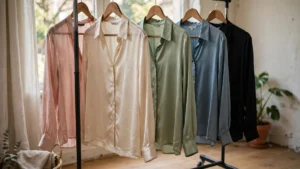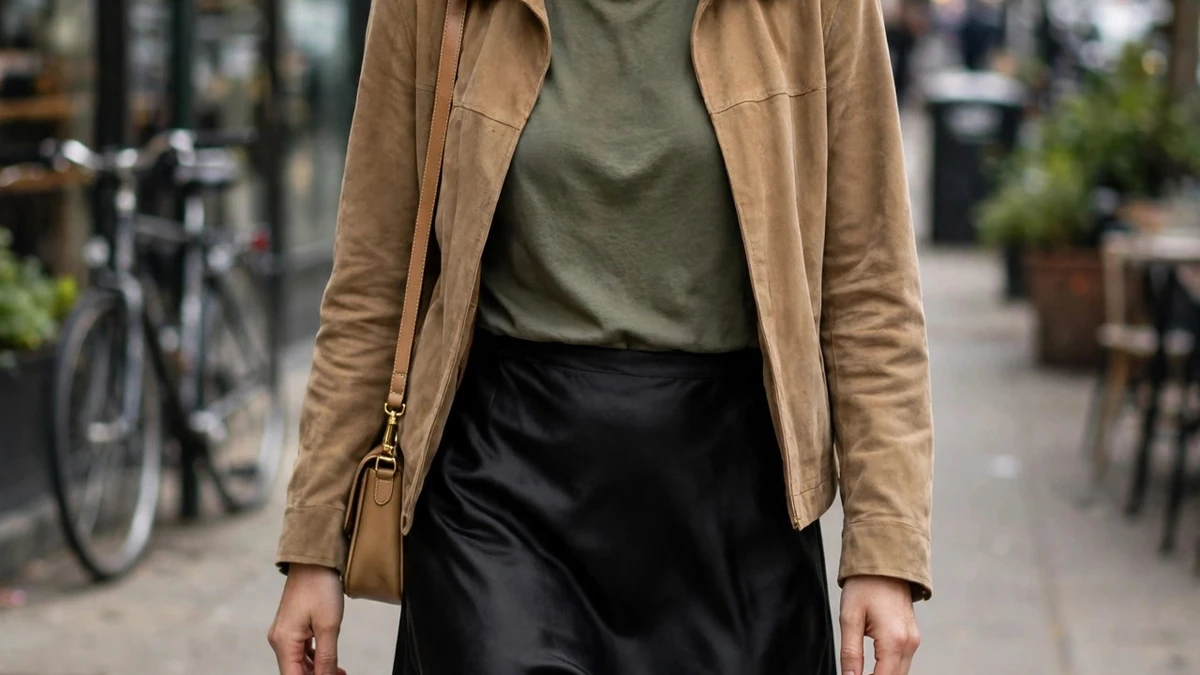
Satin and chiffon are the two fabrics that make a skirt feel like an occasion. Both are light, both move beautifully, and both turn up in evening wear, wedding guest outfits, and summer dresses. Yet a satin skirt and a chiffon skirt are almost opposites in how they look, feel, and behave, and choosing the wrong one for the day you have planned is an easy mistake to make.
Satin is a weave, not a fibre, with a smooth, glossy face that catches the light and a matte back. It is usually made from silk or polyester, and it has weight, structure, and a liquid shine. Chiffon is also a weave, made from silk or polyester, but it is sheer, feather-light, and matte, with a soft, airy drape that floats rather than flows.
Below are nine comparisons that matter in 2027, from shine and structure to wrinkling, lining, and care. Each one is judged honestly, because neither fabric wins on every point, and the right skirt depends on the occasion, the weather, and how much fuss you are willing to put up with.
Key takeaways
- Satin is glossy, weighted, and structured, while chiffon is sheer, feather-light, and floaty.
- Chiffon is cooler and more forgiving in hot weather, while satin shows water marks and creases more easily.
- Chiffon almost always needs a lining or an underskirt, while satin usually stands on its own.
- Satin suits polished, evening looks; chiffon suits soft, romantic, daytime looks.
- Neither fabric is hard-wearing or easy to iron, and a cheap version of either will look worse than a good version of the other.
What satin and chiffon skirts actually are
A satin skirt is made from a satin weave, where the warp threads float over the weft to create a smooth, reflective surface. It can be silk satin, which is soft and fluid, or polyester satin, which is stiffer and shinier. Most satin skirts are cut on the bias or in a simple A-line, so the fabric’s weight and shine can do the work, and they are usually lined to help the skirt hang cleanly.
A chiffon skirt is made from a plain weave of very fine, tightly twisted yarns, which gives it a slightly rough, matte texture and a sheer, gauzy look. It is almost always layered, either over a lining or in two or three tiers, because a single layer is see-through. Chiffon skirts are usually full, pleated, or tiered, so the fabric can move and catch the air.
Both fabrics are dressy by nature, and both need more care than cotton or denim. The honest difference is temperament. Satin is bold and polished. Chiffon is soft and romantic. Choose the temperament that matches the occasion, not just the colour you like.
How we chose these comparisons and what to look for
We compared the two fabrics on the points that actually change how a skirt looks and feels: shine, weight, structure, wrinkling, sheerness, comfort, styling, durability, and price. Price ranges below reflect good-quality high-street and mid-range skirts in 2027, not the cheapest or the most exclusive labels.

When you shop, check the fibre content and the lining before you check the price. A silk satin skirt will drape and breathe differently from a polyester one, and a chiffon skirt without a lining is a skirt you cannot wear alone. Our comparison of velvet vs satin skirts uses the same label-reading checks, and they apply just as well here.
The 9 comparisons that matter in 2027
1. Shine and finish
What we like: Satin has a liquid, light-catching shine that looks expensive in evening light. Chiffon has a soft, matte finish that looks gentle and romantic in daylight. What to consider: Satin’s shine can look too much in bright daylight, and cheap polyester satin can look plastic. Best for: Satin for evening, chiffon for daytime. Fabric: Silk or polyester satin; silk or polyester chiffon. Price range: Satin skirts $60 to $220; chiffon skirts $50 to $180. Standout feature: Satin’s gloss is its signature, and nothing else in a wardrobe shines quite like it.
Shine is the first thing anyone notices. A satin skirt announces itself, which is wonderful at a dinner or a party and too much at a daytime lunch. Chiffon whispers, which is why it suits weddings, garden parties, and soft summer days. Buy the finish that matches the light you will be standing in.
2. Weight and movement
What we like: Satin has a satisfying weight that swings as you walk, with a smooth, liquid movement. Chiffon is almost weightless, and it floats and flutters with the smallest breeze. What to consider: Satin can feel heavy in hot weather, and chiffon can fly up in the wind. Best for: Satin for a swishing midi, chiffon for a floating maxi. Fabric: Satin; chiffon. Price range: Satin skirts $60 to $220; chiffon skirts $50 to $180. Standout feature: Chiffon’s lightness is what makes it feel like wearing air.
Movement decides how a skirt feels on the body. Satin moves with gravity, in smooth, heavy folds. Chiffon moves with the air, in soft, unpredictable ripples. If you love the feeling of a skirt that swings, choose satin. If you love the feeling of a skirt you barely notice, choose chiffon.
3. Structure and shape
What we like: Satin holds a shape, so an A-line or bias-cut satin skirt keeps a clean, defined silhouette. Chiffon is soft and unstructured, so it suits full, tiered, and pleated shapes that do not need to hold a line. What to consider: Satin can cling and show every line underneath, while chiffon can look shapeless without a good cut. Best for: Satin for tailored shapes, chiffon for full shapes. Fabric: Satin; chiffon. Price range: Satin skirts $60 to $220; chiffon skirts $50 to $180. Standout feature: Satin’s body gives a skirt its architecture; chiffon’s softness gives it romance.
Shape follows the fabric, not the other way round. A satin pencil skirt looks sharp because the fabric holds its line. A chiffon tiered skirt looks dreamy because the fabric does not. If you want a skirt with a clear silhouette, buy satin. If you want one that moves and softens, buy chiffon.
4. Wrinkling and care
What we like: Chiffon resists creasing well, because its fine, twisted yarns spring back, and it can often be steamed rather than ironed. Satin creases easily, and a crease in satin is hard to remove without a steamer. What to consider: Both fabrics usually need dry cleaning or a gentle hand wash, and neither likes a hot iron. Best for: Chiffon for travel and long days. Fabric: Chiffon; satin. Price range: Satin skirts $60 to $220; chiffon skirts $50 to $180. Standout feature: Chiffon’s crease resistance is why it survives a suitcase better than satin.
5. Sheerness and lining
What we like: Satin is opaque, so it needs no lining for modesty, only for a clean hang. Chiffon’s sheerness is part of its beauty, and a good lining or underskirt makes it wearable without worry. What to consider: A chiffon skirt with a poor lining will ride up, cling, or show through in sunlight. Best for: Satin for simplicity, chiffon for layered looks. Fabric: Satin; chiffon with lining. Price range: Satin skirts $60 to $220; chiffon skirts $50 to $180. Standout feature: A well-lined chiffon skirt looks effortless, and a badly lined one does not.
6. Comfort in heat
What we like: Chiffon is cool and airy, because it is light and lets air through, which makes it one of the best hot-weather fabrics. Satin, especially polyester satin, can feel warm and clammy, because it does not breathe well. What to consider: Silk satin breathes better than polyester satin, and it is worth the extra cost in summer. Best for: Chiffon for hot days. Fabric: Silk or polyester chiffon; silk satin. Price range: Satin skirts $60 to $220; chiffon skirts $50 to $180. Standout feature: Chiffon is the cooler fabric by a clear margin.
7. Styling versatility
What we like: Satin dresses up easily with heels and jewellery, and it can be dressed down with a knit and trainers. Chiffon pairs beautifully with soft knits, sandals, and delicate jewellery, and it suits daytime and evening equally. What to consider: Satin can look too formal for a casual day, while chiffon can look too soft for a sharp, polished outfit. Best for: Satin for evening polish, chiffon for soft daytime romance. Fabric: Satin; chiffon. Price range: Satin skirts $60 to $220; chiffon skirts $50 to $180. Standout feature: A satin midi skirt is one of the easiest ways to make a simple top look evening-ready.
Think about the rest of your wardrobe. If you own tailored jackets, heeled boots, and statement jewellery, satin will fit straight in. If you own soft knits, flat sandals, and delicate gold, chiffon will feel more natural. The fabric should match the clothes you already love, not sit alone in the wardrobe.
8. Durability
What we like: Satin is the tougher of the two, with a tight weave that resists snagging better than chiffon’s open, fine weave. Chiffon is delicate, and it can snag on jewellery, rough surfaces, and even a hangnail. What to consider: Both fabrics can pull, and a snag in either is hard to repair invisibly. Best for: Satin for regular wear. Fabric: Satin; chiffon. Price range: Satin skirts $60 to $220; chiffon skirts $50 to $180. Standout feature: Satin’s tight weave is why it survives more wears than chiffon.
Durability is not the strong point of either fabric, but satin has the edge. A satin skirt can be worn often if you treat it gently. A chiffon skirt is best saved for occasions, and kept away from rough bags, chunky jewellery, and anything that might catch its fine threads.
9. Price and value
What we like: Both fabrics are affordable at high-street prices, and a well-made skirt in either can look far more expensive than it is. Silk versions cost more, but they drape and breathe better than polyester. What to consider: Cheap polyester satin can look shiny in the wrong way, and cheap chiffon can look thin and scratchy. Best for: Chiffon for budget-friendly romance, satin for affordable polish. Fabric: Silk satin; silk chiffon. Price range: Satin skirts $60 to $220; chiffon skirts $50 to $180. Standout feature: A silk skirt in either fabric is usually worth the step up in price.
Which skirt is right for you
If you want polish, shine, and a skirt that makes a simple top look evening-ready, satin is the right choice. It holds its shape, it catches the light, and it turns an ordinary outfit into an occasion. Choose a bias-cut or A-line midi, in a colour you love, and keep a steamer nearby.
If you want softness, coolness, and a skirt that floats through a hot day, chiffon is the right choice. It is light, romantic, and forgiving, and it suits weddings, holidays, and long summer afternoons. Our guide to the best satin dresses makes the same point for dresses: satin is polish, chiffon is romance, and the occasion decides.
If you are still unsure, think about the next event you are dressing for. Evening, dinner, or a party points to satin. Daytime, a wedding, or a hot holiday points to chiffon. And if you love both, own one of each, because they do different jobs, and neither replaces the other.
The caveats that matter
Both fabrics have limits, and the label is not a guarantee. A skirt that says satin may be a stiff polyester that looks plastic in daylight, and a skirt that says chiffon may be a thin, scratchy fabric with a lining that rides up. Read the fibre content, check the lining, and try the skirt on in daylight before you commit. A beautiful skirt that you cannot sit in comfortably is not a bargain.
| Detail | What is known |
|---|---|
| Most eye-catching finish | Satin, with its liquid, light-catching shine |
| Lightest and coolest | Chiffon, feather-light and airy in hot weather |
| Best at holding shape | Satin, with a tight weave and natural body |
| Most crease-resistant | Chiffon, which springs back and steams easily |
| Needs a lining | Chiffon, almost always; satin rarely for modesty |
| Most durable | Satin, with a tighter weave that resists snagging |
| Best for evening | Satin, for polish and shine in low light |
| What neither does well | Neither is hard-wearing, easy to iron, or suited to rough daily wear |
Water marks deserve a warning too. Satin, especially silk satin, shows water spots clearly, so keep it away from rain and be careful with drinks. Chiffon is more forgiving, but a splash can still leave a mark on a pale colour. If rain is likely, chiffon is the safer choice, or carry an umbrella and a light coat.
Checklist: choosing between satin and chiffon skirts
Use these checks before you buy, and again after the first wear.
- Read the fibre content: silk drapes and breathes better than polyester in both fabrics, and it is worth the step up.
- Check the lining on a chiffon skirt: it should be long enough, smooth, and stay in place when you walk and sit.
- Try it on in daylight: satin’s shine and chiffon’s sheerness both look different in bright light than in a shop.
- Sit down in it: a skirt that creases, clings, or rides up when you sit will not be comfortable all day.
- Check the seams and the hem: even stitching, a straight hem, and no loose threads are signs of good making.
- Think about the weather: chiffon for heat, satin for evening, and a steamer on hand for either.
Frequently asked questions
Is a satin skirt too formal for daytime?
Not always. A satin midi skirt in a muted colour, worn with a simple knit and flat shoes, can look relaxed and modern. But a very shiny satin, especially in a bright colour, will always read as evening wear, so save that one for after dark.
Can I wear a chiffon skirt without a lining?
Usually not. Chiffon is sheer, and a single layer is see-through in daylight. Most chiffon skirts come lined, or are layered in tiers. If yours is not, wear an underskirt or a slip, and check it in daylight before you go out.
How do I remove creases from a satin skirt?
Use a steamer, held a few inches away, and let the steam relax the fabric. Avoid a hot iron directly on satin, because it can leave a shine mark or scorch the surface. Hang the skirt as soon as you take it off, rather than folding it.
Is chiffon good for a wedding guest outfit?
Yes, it is one of the best choices. Chiffon is soft, romantic, and comfortable for a long day, and it photographs beautifully. Choose a lined, well-cut skirt in a colour that suits you, and pair it with simple jewellery so the fabric can do the work.
Does satin show sweat?
Polyester satin can, because it does not breathe well and it shows damp patches clearly. Silk satin is better, because it breathes and absorbs moisture more naturally. If you run hot, choose chiffon, or choose silk satin in a darker colour. Our comparison of chiffon vs organza dresses covers the same breathability question for dresses.
Can I machine wash a satin or chiffon skirt?
Sometimes, but check the label first. Many polyester versions can be machine washed on a gentle cycle in a laundry bag, while silk versions usually need hand washing or dry cleaning. When in doubt, hand wash in cool water and dry flat, or take it to a cleaner you trust.
The bottom line
Satin and chiffon skirts are not rivals. They are two answers to different occasions. Satin answers the question of polish and shine, and it is at its best in the evening, in a clean shape, with a steamer nearby. Chiffon answers the question of softness and coolness, and it is at its best in daylight, in a full or tiered shape, on a warm day.
Choose satin when you want to look polished and catch the light. Choose chiffon when you want to feel cool, light, and romantic. And if you can, own one of each, in the colour you wear most, because that is the combination that actually covers a year of occasions.