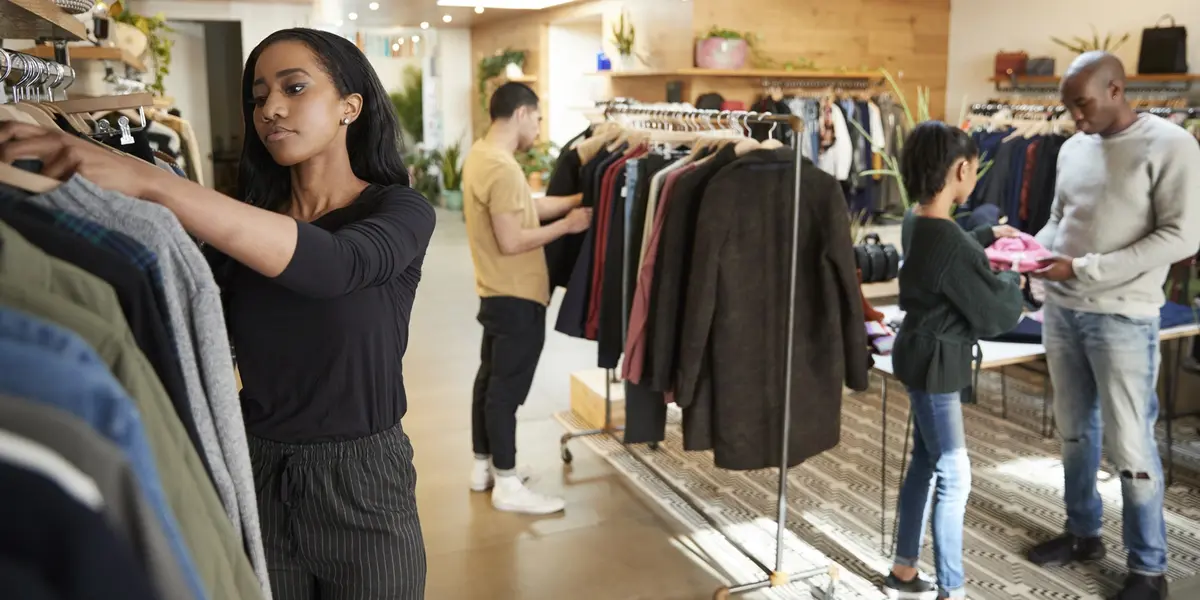
The biggest wholesale fashion trends for retailers in 2026 include relaxed silhouettes, elevated basics, utility-inspired clothing, statement denim, coordinated sets, tactile fabrics, expressive prints and accessories, and more versatile styles.
But retailers should not buy every trend at the same volume. Proven, adaptable products are better candidates for larger orders, while fast-moving or social-media-driven trends are safer to test in smaller quantities.
Key Takeaways
- Relaxed silhouettes and versatile basics offer stronger everyday selling potential than highly specific microtrends.
- Denim and coordinated sets remain useful because they can create complete outfits rather than single-product sales.
- Utility-inspired fashion combines fashion appeal with practical details, making it easier to merchandise across seasons.
- Bold, expressive fashion is gaining attention in 2026, but retailers should test highly trend-dependent products before committing heavily.
- Wholesale buying is becoming more flexible: current wholesale guidance highlights the value of newness, efficiency, and flexible buying approaches.
- MOQ, lead time, quality, margin, and reorder potential matter just as much as trend popularity.
- The safest strategy is to buy proven products, test emerging trends, and limit exposure to short-lived hype.
A trend can look unbeatable on Instagram and still become dead stock on your shelves.
That is the problem retailers face with fashion buying in 2026. By the time a style becomes obvious to everyone, the best buying window may already be closing. At BrassSmile, the more useful question is not simply, “What is trending?” It is, “Which trends are worth buying wholesale, testing in small quantities, and reordering when customers prove the demand?”
That distinction matters because current 2026 fashion signals are moving toward both expressive statement pieces and commercially useful styles, while wholesale buyers are also looking for greater flexibility and efficiency.
What Are the Top Wholesale Fashion Trends for Retailers in 2026?
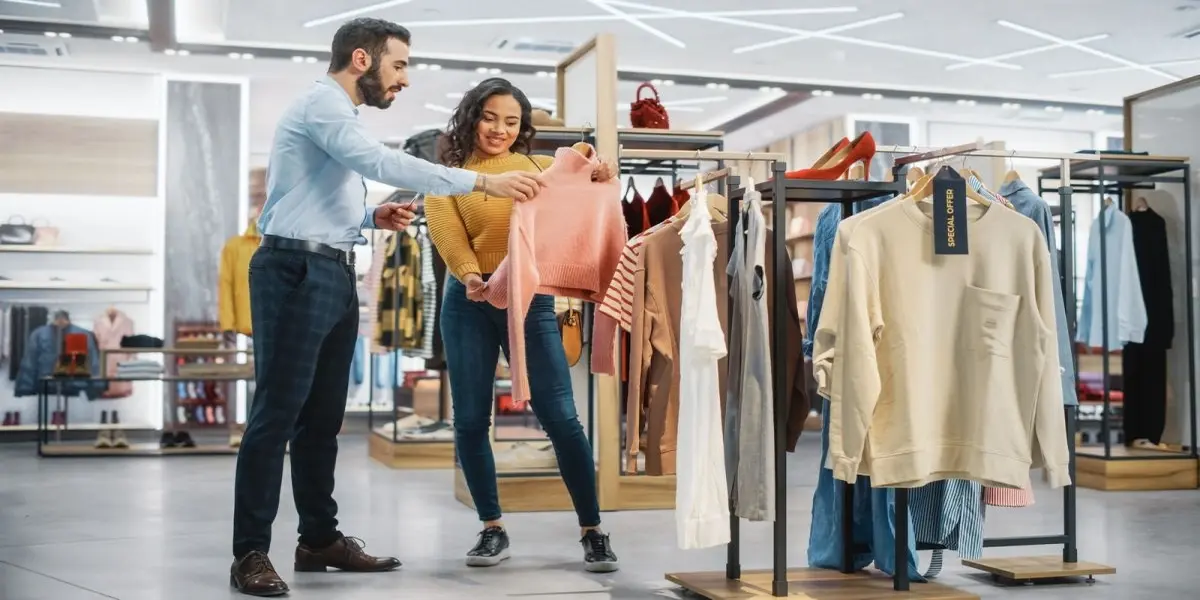
There is no single “winner” that every retailer should stock. Your customers, price point, location, and brand identity still matter.
However, several directions stand out across current 2026 fashion and wholesale research.
1. Relaxed and Oversized Silhouettes
Comfort-led dressing continues to influence wholesale apparel, particularly through relaxed tops, oversized fits, wide-leg trousers, and looser denim.
For retailers, the attraction is simple: these silhouettes can work across multiple styling preferences instead of depending on one highly specific aesthetic.
The opportunity is strongest when the fit still looks intentional rather than simply oversized. Look for pieces with good proportions, wearable fabrics, and enough versatility to work with products already in your store.
Retailer approach: Buy with confidence when the style fits your customer base, but check sizing carefully because oversized does not mean one-size-fits-all.
2. Elevated Everyday Basics
Basic clothing is becoming more interesting through better fabric, fit, texture, and subtle design details.
This includes premium-looking T-shirts, refined knitwear, clean trousers, simple tops, neutral layers, and understated pieces that can be worn repeatedly.
Current wholesale guidance also points toward retailers balancing newness with efficiency, which makes versatile basics particularly useful for building an assortment.
Retailer approach: This is one of the safer areas to invest in because the product does not need to disappear when a microtrend changes.
3. Utility and Workwear-Inspired Styles
Cargo details, practical pockets, structured jackets, utility trousers, and workwear-inspired pieces continue to bridge fashion and functionality.
The appeal is broader than a passing aesthetic. Utility clothing can move between casual, streetwear, outdoor, and everyday wardrobes.
Cargo styles are also receiving renewed consumer attention in 2026, with current coverage highlighting their versatility and seasonless appeal.
Retailer approach: Look for utility details that enhance a wearable garment rather than buying pieces that depend entirely on a specific “workwear” look.
4. Statement Denim
Denim remains a useful wholesale category because retailers can refresh the assortment through silhouette, wash, detailing, and styling without abandoning a familiar product type.
Current 2026 fashion coverage is highlighting wide-leg and barrel-leg shapes, darker washes, alternative colors, and more distinctive denim treatments. Denim co-ordinated outfits are also gaining attention for fall 2026.
Retailer approach: Pay close attention to fit. A fashionable silhouette does not compensate for inconsistent sizing or poor comfort.
5. Matching Sets and Coordinated Pieces
Matching sets solve a practical customer problem: they make an outfit easy.
Wholesale retailers can use coordinated tops and bottoms to merchandise a complete look, while still selling the pieces separately when customers want more flexibility.
The category also gives stores an opportunity to increase basket size through coordinated styling.
Retailer approach: Prioritize sets that can be broken apart and worn with existing inventory. That gives the customer more reasons to buy each piece.
6. Textured and Natural-Looking Fabrics
Texture is becoming an important way for relatively simple products to feel distinctive.
Think ribbed surfaces, tactile knits, natural-looking fabrics, washed finishes, cotton-rich pieces, linen blends, and other materials where the fabric itself contributes to the visual appeal.
Retailer approach: Do not judge this trend from photographs alone. Fabric hand-feel, weight, transparency, shrinkage, and construction can determine whether the wholesale product actually deserves shelf space.
7. Expressive Prints and Social-Media-Driven Microtrends
One of the clearest 2026 shifts is toward more expressive fashion. Shopify’s 2026 trend coverage highlights bold color combinations, statement-making pieces, novelty accessories, dramatic details, and vintage-inspired clothing.
This creates an opportunity for retailers, but also a warning.
A viral style can generate attention faster than a supplier can deliver it. By the time a large order arrives, consumer interest may have moved elsewhere.
Retailer approach: Test social-first trends. Do not let viral engagement automatically determine your order quantity.
8. Versatile and More Inclusive Styles
Retailers are increasingly looking for products that can serve different customers and styling preferences.
Unisex pieces, adaptable silhouettes, broader size ranges, and garments that can be styled in several ways can make an assortment more flexible.
Retailer approach: Judge this trend through your own customer data. Inclusivity is valuable, but the exact products, sizes, colors, and fits that work will differ from one retailer to another.
How the Top Wholesale Fashion Trends Compare for Retailers
| Trend | Demand Potential | Shelf Life | Buying Risk | Best Approach |
| Relaxed silhouettes | High | Medium-High | Low-Medium | Buy |
| Elevated basics | High | High | Low | Buy |
| Utility/workwear | Medium-High | Medium-High | Medium | Buy/Test |
| Statement denim | High | Medium | Medium | Buy selectively |
| Matching sets | Medium-High | Medium | Medium | Buy/Test |
| Textured fabrics | Medium | Medium | Medium | Test |
| Social microtrends | Variable | Low-Medium | High | Test small |
| Versatile/unisex styles | Medium-High | Medium-High | Medium | Test/Buy selectively |
The table is a buying framework, not a guarantee of sales. A trend that performs well for a western boutique may behave very differently in a minimalist urban store.
Which Wholesale Fashion Trends Should Retailers Buy, Test, or Limit?
The smartest wholesale strategy in 2026 is not to treat every trend equally.
Buy: Trends With Staying Power
Give more buying budget to products that are:
- easy to style
- useful across seasons
- compatible with your existing assortment
- supported by consistent customer demand
- available from suppliers you can reorder from
Elevated basics, versatile denim, relaxed silhouettes, and practical layers often fit this model.
Test: Fast-Growing Trends
Emerging colors, unusual silhouettes, social-media aesthetics, and statement details can create strong opportunities.
But test them first. A smaller opening order gives you real information about your customers before you commit more cash.
Limit: Short-Lived Microtrends
Be cautious when a product has:
- huge social attention but little sales history
- a highly specific aesthetic
- high MOQ
- long lead time
- limited styling options
- little chance of repeat demand
The goal is not to avoid every risky trend. It is to avoid putting a large percentage of your buying budget behind one.
How Can You Tell if a Wholesale Fashion Trend Will Actually Sell?

Fashion forecasting becomes much more useful when you combine several signals instead of relying on one viral post.
Check Search and Consumer Demand
Look for repeated interest rather than one sudden spike.
Search behavior can tell you whether customers are actively looking for the product, while your own website and sales data can show whether your audience is responding.
Compare Social and Marketplace Signals
TikTok, Instagram, Pinterest, and online marketplaces can reveal what is gaining attention.
But attention is an early signal, not proof of profitability.
Check Wholesale Availability and MOQ
A trend is less attractive if suppliers cannot provide it reliably or require an order that is too large for your business.
Current wholesale buying guidance shows why flexibility matters: some wholesale apparel marketplaces now offer very low minimums, making it easier for smaller retailers to test new styles before committing heavily.
Consider Trend Shelf Life and Lead Time
Ask a simple question:
Will this still look desirable when the shipment arrives?
The longer the supplier lead time, the more dangerous it is to chase a rapidly moving microtrend.
Compare It With Your Own Sales Data
Your customers are more relevant than a generic trend report.
If your existing customers repeatedly buy relaxed denim, adding another related silhouette may be more valuable than chasing a completely unrelated viral trend.
How Much Trending Wholesale Apparel Should Retailers Buy?

There is no universal order quantity that works for every retailer.
Instead, separate your inventory into three groups:
Core products: Items with proven demand and reliable sell-through.
Trend-forward products: Styles that have strong signals but need more validation.
Experimental products: High-risk pieces bought mainly to test customer reaction.
The important part is not the exact percentage assigned to each group. It is protecting enough budget for products that already pay the bills while leaving room to discover what comes next.
For an unproven trend, a small first order is often more valuable than a large speculative order. If it sells quickly, you have evidence for a reorder. If it does not, your loss is controlled.
How to Choose Fashion Wholesale Suppliers for 2026 Trends
A supplier should do more than offer fashionable products.
Before ordering, check:
- MOQ: Can you test the trend without overcommitting?
- Wholesale price: Does the product leave enough room for your target margin?
- Quality: Does the fabric and construction match the price?
- Lead time: Can the supplier deliver while the trend is still relevant?
- Inventory availability: Can you reorder a successful product?
- Sizing and color consistency: Will your next shipment match expectations?
- Shipping and returns: What happens when an order arrives late or has quality problems?
For small retailers, low-MOQ options can be particularly useful because they reduce the financial risk of testing unfamiliar products. Faire’s current 2026 wholesale apparel guide, for example, notes that some apparel brands allow very low minimums while many first-order minimums remain relatively modest.
A Practical Wholesale Trend-Buying Process
Here is a simple process retailers can use before placing their next order.
Step 1: Pick Two or Three Trends That Fit Your Customers
Do not start with every trend available.
Choose trends that naturally fit your store’s customer, price point, and existing product mix.
Step 2: Validate Demand Before Ordering
Check search interest, social activity, competitor assortment, marketplace signals, and your own customer behavior.
You are looking for multiple signals pointing in the same direction.
Step 3: Find a Supplier and Calculate the Real Cost
Look beyond the wholesale unit price.
Include shipping, duties where applicable, payment costs, packaging, expected returns, and the cost of unsold inventory.
Step 4: Place a Controlled Test Order
Use a smaller order for products that have attention but lack proven sales history.
This converts uncertainty into a manageable experiment.
Step 5: Track Sell-Through and Customer Response
Monitor:
- units sold
- days to sell
- return rate
- customer questions
- size/color performance
- gross margin
- repeat demand
Step 6: Reorder Winners and Stop Weak Products
A product that sells consistently is more valuable than one that gets lots of likes.
Use actual sales to decide what deserves more inventory.
Common Wholesale Fashion Buying Mistakes to Avoid
Buying Because a Trend Is Viral
Social attention can disappear quickly. Treat it as a signal to investigate, not an instruction to place a large order.
Ordering Too Much Before Testing
A successful trend does not mean every variation will sell. Test the specific product, fit, color, and price point.
Ignoring MOQ and Lead Time
A great trend with an unsuitable MOQ or six-month lead time may be a poor business decision.
Confusing Retail Popularity With Wholesale Profitability
A customer may love a product but still reject it at your selling price.
Retailers need to evaluate demand alongside cost, margin, shipping, returns, and sell-through.
Chasing Too Many Trends at Once
A store with too many unrelated trends can lose its identity and tie up capital across dozens of small bets.
A focused assortment is usually easier to merchandise, market, and replenish.
How We Evaluated These Wholesale Fashion Trends
These recommendations are based on a combination of current 2026 fashion reporting, wholesale-market guidance, retailer buying considerations, and practical inventory principles.
We evaluate a trend through six questions:
- Is there evidence of current consumer interest?
- Is the trend gaining or losing momentum?
- Can retailers realistically source it wholesale?
- How long might the style remain commercially useful?
- Can the product generate a reasonable margin?
- Can a retailer reorder it if customers respond well?
That distinction matters because fashion forecasting is inherently uncertain. A current trend report can identify strong signals, but it cannot guarantee that one particular product will sell in one particular store.
Current wholesale research also shows a broader shift toward buyers prioritizing newness, efficiency, and flexibility, rather than simply purchasing large volumes of whatever is fashionable.
Final Thoughts: The Best Trend Is the One That Still Sells
The biggest mistake retailers can make in 2026 is confusing fashion visibility with buying certainty. A trend can be everywhere and still be wrong for your customers. Another style may look less exciting online but quietly sell through every week.
That is why the best wholesale fashion strategy is simple: identify the trends that fit your audience, test uncertain products in controlled quantities, watch real sell-through, and put more buying budget behind products that prove themselves. Fashion will keep changing. Your buying process should be steady enough to handle it.
Frequently Asked Questions
What are the biggest wholesale fashion trends for 2026?
Relaxed silhouettes, elevated basics, utility-inspired styles, statement denim, coordinated sets, tactile fabrics, and more expressive fashion are among the key directions retailers should watch.
What wholesale clothing trends should retailers watch?
Watch trends that combine consumer interest with practical wholesale characteristics, including manageable MOQ, reliable quality, reasonable lead times, and potential for repeat sales.
What wholesale fashion trends are best for small retailers?
Versatile basics, adaptable denim, relaxed silhouettes, and low-MOQ trend tests are often easier for small retailers to manage than large speculative orders.
How do I know if a fashion trend will sell?
Combine search demand, social signals, marketplace activity, your customer data, supplier availability, expected margin, and trend shelf life before ordering.
Where can retailers find trending wholesale apparel?
Retailers can explore wholesale marketplaces, direct suppliers, trade shows, brand showrooms, and manufacturer catalogs. Always evaluate supplier quality and commercial terms before ordering.
Should retailers buy viral fashion trends?
Yes, but usually as a test rather than a large commitment. Viral attention can help identify emerging demand, but it does not guarantee long-term sales.
What should I check before choosing fashion wholesale suppliers?
Compare MOQ, wholesale pricing, product quality, lead times, shipping, sizing consistency, inventory availability, return terms, and the supplier’s ability to replenish successful products.