

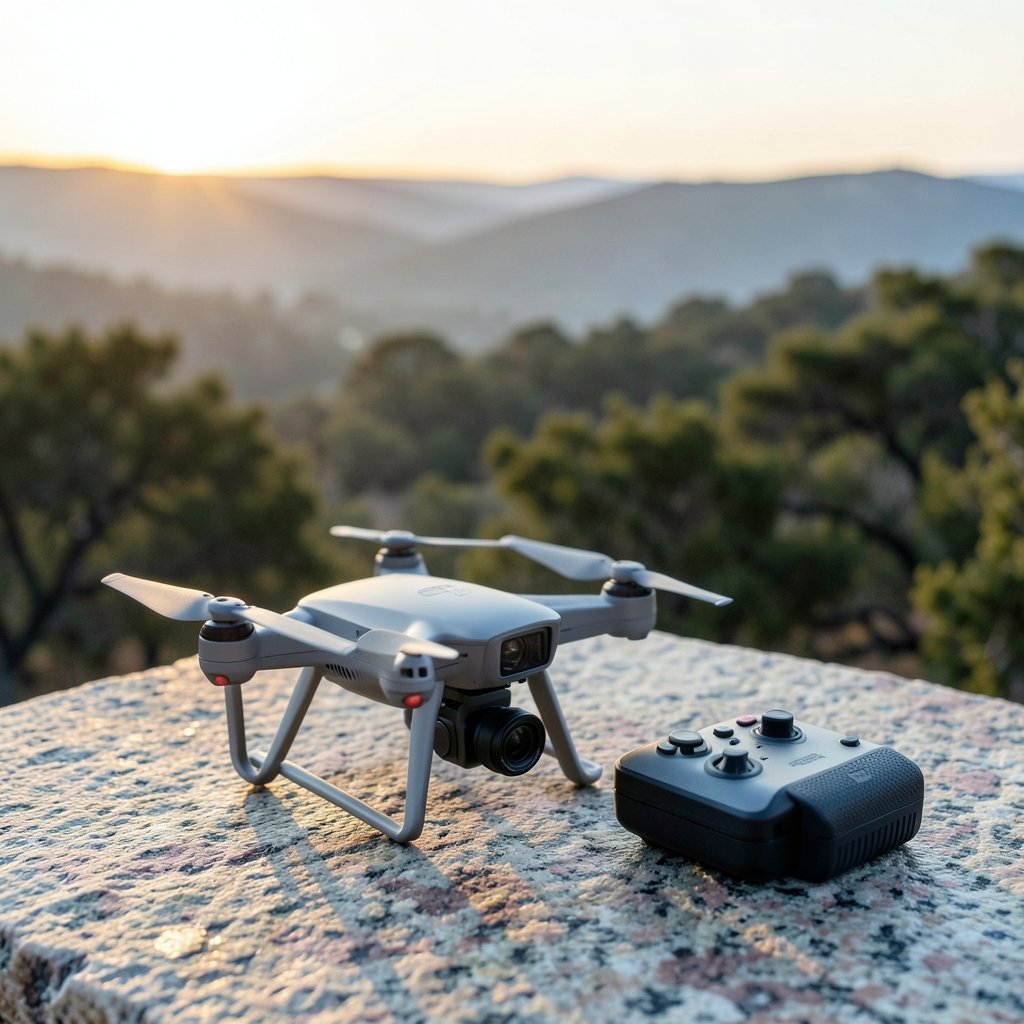
What if the difference between a flat snapshot and a jaw-dropping aerial image comes down to one decision you make before you ever leave the ground? That decision is the drone itself. Pick wrong and you will fight wind, wrestle with muddy files, or watch a promising shot die in post-production. Pick right and the camera almost disappears, leaving you free to compose.
This roundup cuts straight to the shortlist. Each pick below names a specific model, explains who it suits, and flags the one limitation that matters. Prices appear only where a published review states them, so treat every figure as a starting point to verify with the retailer.
The Shortlist at a Glance
| Drone | Best for | Camera highlights | Key limitation | Stated price |
|---|---|---|---|---|
| DJI Mini 4 Pro | Most photographers overall | 1/1.3-inch CMOS, 48MP stills, 4K/100fps, 10-bit D-Log M | Smartphone-level image quality next to larger Mavics | Not stated |
| DJI Mini 3 | First-time buyers | 12/48MP 1/1.3-inch CMOS, 24mm f/1.7, 4K/30p | No obstacle avoidance; drifts in a light breeze | $545 / £405 with RC-N1 |
| DJI Mini 5 Pro | Travel and low-light work | Sub-250g body, 360-degree obstacle detection | Premium price for a small sensor | Not stated |
| DJI Air 3S | Serious photo and video | 1-inch 50MP wide plus 1/1.3-inch 48MP tele, 4K/120fps | 724g, so no sub-250g convenience | Not stated |
| DJI Mavic 4 Pro | Commercial and premium work | Large sensor, bright lens, top-tier camera performance | Cost and size | Not stated |
| Autel EVO Lite+ | DJI alternative | Large sensor, adjustable aperture | Autel discontinued its Lite and Nano consumer lines | Not stated |
| HoverAir X1 Pro Max | Solo creators and action | 8K/30fps or 4K/120fps, launches from your hand | About 16 minutes of flight time | ~$699 |
DJI Mini 4 Pro: The Best All-Rounder for Most Photographers
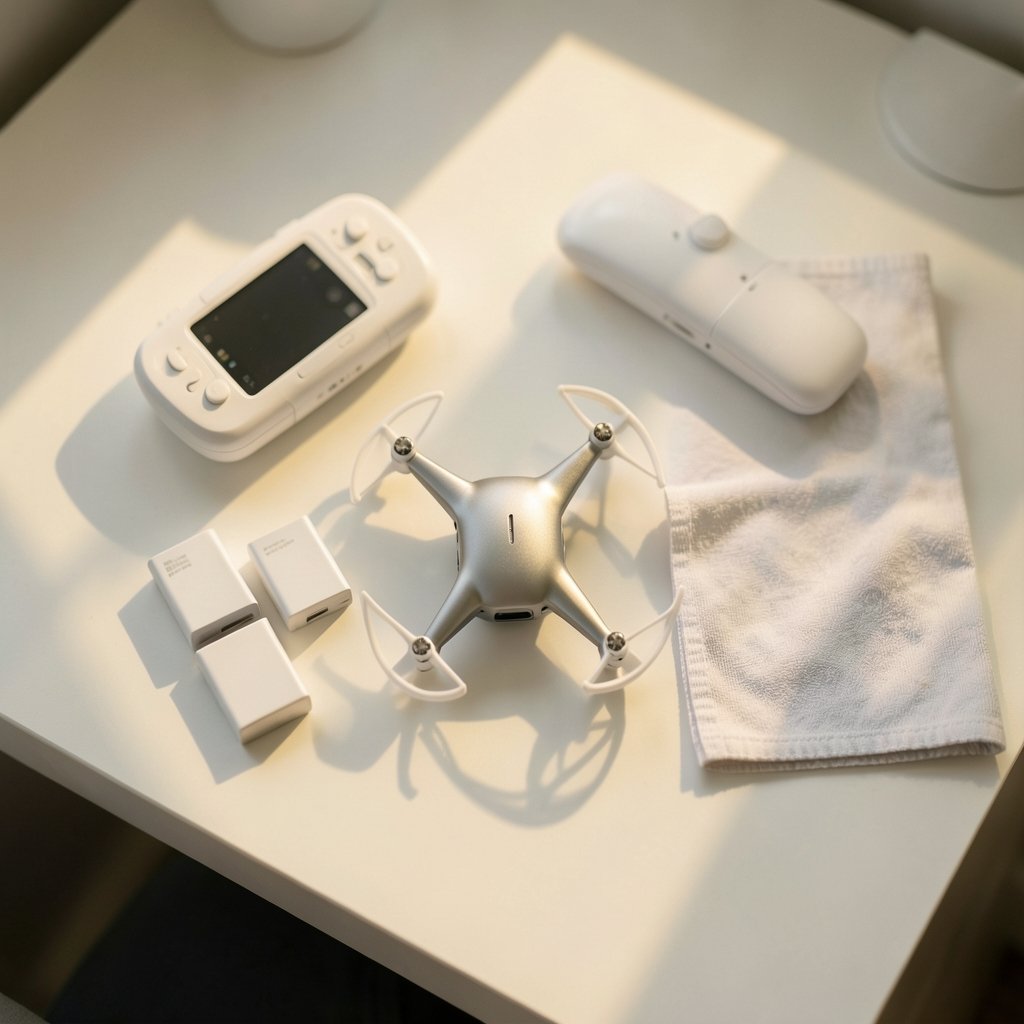
The Mini 4 Pro keeps showing up at the top of roundups for a reason. It weighs under 250g, which keeps it registration-free in the U.S. and easy to justify on a hike. Inside that tiny body sits a 1/1.3-inch CMOS sensor that produces 48MP stills and holds up surprisingly well in low light. A vertical photo mode means social-ready frames without cropping.
Video is where it punches above its weight: 4K slow motion at 100fps, or 1080p at 200fps, plus 10-bit D-Log M color profiles for anyone who grades footage. A night mode boosts after-dark performance, and omnidirectional vision sensors add a safety net when flying through trees or rugged terrain. The optional RC 2 controller with its 5-inch 1080p touchscreen reportedly works brilliantly in bright sunlight and transforms the flying experience compared with using a phone as a display.
The honest limitation: image quality stays at smartphone level rather than matching DJI’s larger Mavic 3 models. It is genuinely excellent given the size constraints, but a commercial client with a sharp eye will notice the difference. If you are weighing bodies and lenses more broadly, this guide to picking the best camera for photography without wasting money helps you think about sensor size the same way across gear.
DJI Mini 3: The Best First Drone for New Photographers
Not everyone needs to start at the top. The Mini 3 is a capable, affordable drone that makes a great first-time buy, producing excellent image quality in both RAW and JPEG with useful automated flying features. Its 1/1.3-inch CMOS sensor shoots 12MP or 48MP stills through a 24mm equivalent f/1.7 lens, and video tops out at 4K/30p. It weighs under 248g, so the sub-250g rules apply here too.
The trade-offs are real. There are no object-avoidance sensors, so you fly with your eyes, not a safety net. Reviewers note it drifts in a light breeze, which matters when you are trying to hold a composition over a landscape. Changing propellers requires a screwdriver. Flight time is claimed at 38 minutes but tested closer to 30.
Here is a practical tip that saves beginners a lot of grief: buy the drone body and a couple of spare batteries before you buy accessories. Thirty minutes of real flight time disappears fast when you are learning, and nothing kills momentum like standing on a ridge with a dead battery and a perfect sunset. If you are turning this hobby into income, the same logic applies to your business plan, and this guide on how to start a photography business that actually turns profit covers the numbers side.
DJI Mini 5 Pro: The Best Sub-250g Drone for Low Light
The Mini 5 Pro sits at the top of the sub-250g class. It weighs less than 249g and adds 360-degree obstacle detection with automated avoidance, meaning it can autonomously alter course to dodge trees, fences, and other obstructions. For beginners flying below the treetops, that feature alone can prevent an accident.
It is the pick for travelers who want a pocketable aircraft that handles twilight cityscapes and forest interiors without the bulk of a larger body. The limitation is straightforward: you are still working with a small sensor, and the price reflects the premium engineering packed into a tiny frame. If your work depends on dynamic range in difficult light, a bigger aircraft will serve you better.
DJI Air 3S: The Best Drone for Serious Photo and Video Work
At 724g the Air 3S is too large for the sub-250g convenience, but it offers a more capable camera system and stronger flight hardware than the budget models. DJI lists a 1-inch 50MP wide camera alongside a 1/1.3-inch 48MP medium-telephoto camera. That second lens is the quiet hero: it lets you compress a landscape or isolate a subject without flying closer, which is often the difference between a snapshot and a composed frame.
Video supports 4K at 120fps and 10-bit H.265 modes, giving editors flexibility with slow motion and color grading. Omnidirectional binocular vision and forward-facing LiDAR add useful assistance around complex scenery. DJI quotes up to 45 minutes of flight time and a 20km FCC transmission figure, though those are controlled-condition maximums, not distances to plan around. Keep the aircraft within legal visual and operational limits regardless of what the radio can theoretically achieve.
Choose the Air 3S over the Mini 5 Pro if you want a more substantial aircraft, a useful second camera, and headroom for commercial delivery.
DJI Mavic 4 Pro: The Best Premium Option for Commercial Work
When image quality is the whole job, the Mavic 4 Pro is the reference point. Reviewers describe its camera performance as trumping older Mavic models thanks to a big sensor and bright lens. It is the drone you rent or buy when a client is paying for detail, dynamic range, and the ability to crop without apology.
The limitation is the obvious one: cost and size. This is not a hike-in-your-pocket aircraft, and it is not the right first purchase. Buyers who want a conventional camera with obstacle sensing are pointed toward this model over immersive alternatives. For anyone shooting fashion or editorial work, the visual standard set by viral runway imagery is worth studying, and this breakdown of how the Anok Yai Mugler viral photo led to a Paris runway moment shows how a single frame can define a career.
Autel EVO Lite+: The Best DJI Alternative
Competition matters, and the EVO Lite+ has been a credible alternative with a large sensor and adjustable aperture that lets you control depth of field and exposure in-camera. It earns a place on shortlists for pilots who want to step outside the DJI ecosystem.
One important caveat: Autel recently discontinued its Lite and Nano series of consumer drones. That does not make existing units bad cameras, but it changes the calculus around support, parts, and firmware updates. Check availability and warranty terms carefully before committing, and do not assume a listing means ongoing production.
HoverAir X1 Pro Max: The Best for Solo Creators and Action Shots
Sometimes you are the subject. The HoverAir X1 Pro Max is the simplest drone on the market in practical terms: open your hand, it launches, it follows you, it records, and it lands when you are done. No controller required. The rotors sit behind a safety cage, so it will not hurt you if it bumps into something, which makes it unusually friendly for athletes and hikers.
The Pro Max version shoots 8K at 30fps or 4K at 120fps and has better AI tracking than the base model. You can add a controller beacon for more control. Flight time lands around 16 minutes per battery, so a couple of spares will keep you flying longer, and range is relatively short.
This is not the tool for architectural stills or commercial landscapes. It is the tool for movement, self-shot content, and the kind of footage that used to require a second person holding a camera.
How to Choose Without Overpaying
Start with the output, not the spec sheet. If you are shooting to share on social, stabilized Full HD footage may be all you need. If you are producing a short film or working commercially, look for a large sensor capable of recording 4K with support for color profiles, which gives you editing flexibility later.
Then match the aircraft to your habits. Folding quadcopters are the most popular type, with four propellers and a compact fold-away design, and they remain the best all-rounders for most photographers. FPV drones prioritize flight thrill over camera performance, so they suit a different job entirely.
Three practical checks before you buy:
- Confirm the weight against your local registration threshold. Sub-250g saves paperwork in some regions.
- Budget for spare batteries and a case. Real flight time runs below claimed maximums.
- Verify obstacle sensing if you plan to fly below the treetops. It is not on every drone, but it is increasingly common.
Storage planning matters too. The Mini 4 Pro ships with 2GB built-in plus a microSD slot, which fills quickly at 4K. Faster cards and a disciplined offload routine prevent the worst feeling in photography: a full card and a sky that just turned perfect. Once your files are safe, this guide to the best photo editing apps that actually work on phone and desktop covers the software side, and if you plan to sell prints, the best photo printers for turning digital files into gallery-ready prints explains what to look for. For pilots building a full kit on a budget, the best budget drones that choose a capable flyer without overspending narrows the entry-level field further.
Frequently Asked Questions
What is the best drone for aerial photography overall?
The DJI Mini 4 Pro is the strongest all-rounder for most people. It combines a 1/1.3-inch CMOS sensor, 48MP stills, 4K slow motion at 100fps, 10-bit D-Log M color profiles, and omnidirectional vision sensors in a body under 250g. Its main weakness is image quality that stays at smartphone level compared with larger Mavic models.
Do I need a drone over 250g for professional work?
Not automatically, but weight correlates with capability. Larger aircraft like the Air 3S at 724g and the Mavic 4 Pro carry bigger sensors, stronger flight hardware, and dual-camera systems. If clients demand dynamic range and crop flexibility, the extra weight is usually worth the registration hassle.
What is the best budget drone for a beginner?
The DJI Mini 3 is the most sensible first buy. It shoots excellent RAW and JPEG stills, records 4K/30p, and includes useful automated flying features. Be aware that it has no obstacle-avoidance sensors, drifts in a light breeze, and needs a screwdriver to change propellers.
How long can these drones actually fly?
Claimed maximums and real-world results differ. The Mini 3 is listed at 38 minutes but tested closer to 30. The Air 3S is quoted at up to 45 minutes. The HoverAir X1 Pro Max runs about 16 minutes per battery. Always buy spare batteries and plan flights around the tested figure, not the marketing one.
Is Autel still a safe alternative to DJI?
Autel remains a credible option on image quality, with a large sensor and adjustable aperture on the EVO Lite+. However, the company recently discontinued its Lite and Nano consumer drone series, so buyers should verify current availability, warranty coverage, and firmware support before purchasing.
Do I need obstacle avoidance for landscape photography?
Yes, if you fly below the treetops or near cliffs. Obstacle detection is not included on every drone, but it is becoming increasingly common. The Mini 5 Pro offers 360-degree detection with automated avoidance, and the Air 3S pairs omnidirectional vision with forward-facing LiDAR. For open-field work at altitude, it is less critical.
Conclusion
The best drone for aerial photography is the one that matches your actual output, not the one with the longest spec sheet. For most photographers, the DJI Mini 4 Pro delivers the best balance of portability, image quality, and safety. Beginners should start with the Mini 3 and learn to fly before upgrading. Working professionals who need a second lens and serious video flexibility should look at the Air 3S, while commercial shooters chasing maximum image quality will find the Mavic 4 Pro hard to beat.
Buy the aircraft that fits how you shoot, budget for batteries before accessories, and verify every price and specification with the retailer before you commit. Then get out there and fly, because the best aerial photograph is still the one you actually took.






