

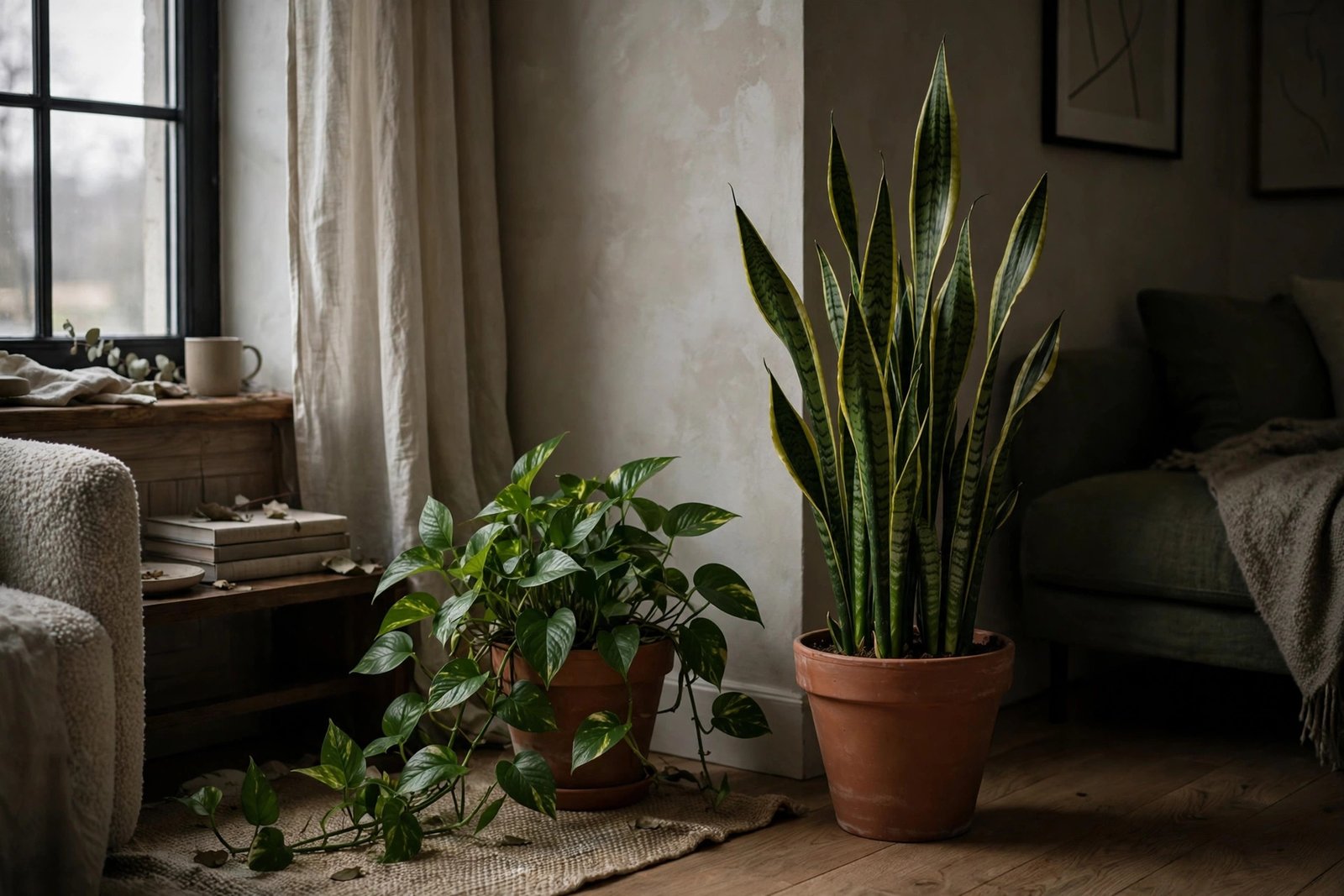
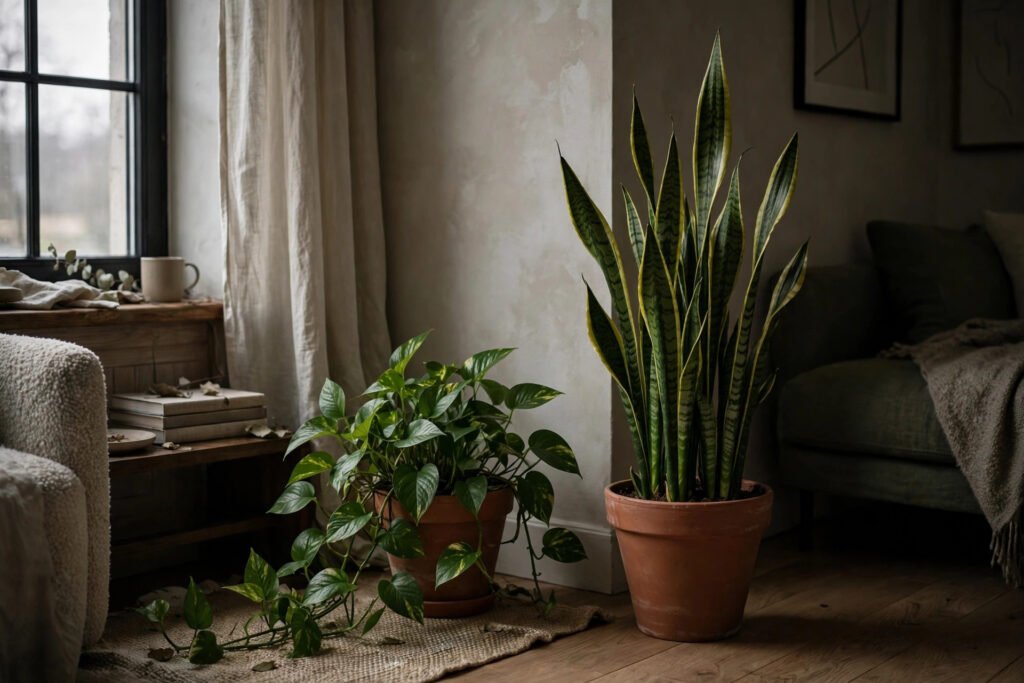
There is a corner in almost every home where plants go to die — a north-facing shelf, a sunless hallway, a desk far from a window. The best indoor plants for low light treat that corner as home. The snake plant is the toughest of them all — the most low-light-tolerant houseplant, per University of Maryland Extension — and the ZZ plant is its closest rival for anyone who forgets to water.
Between them and eight other proven survivors, there is a plant for every dim room — the trick is matching the plant to the room.
Key takeaways:
- Snake plant is the toughest; ZZ plant is its closest rival for neglect.
- Low light is 25–100 foot-candles, not no light.
- Only three picks are pet-safe; overwatering kills more plants than darkness.
What Does “Low Light” Mean?
University of Florida IFAS Extension and University of Maryland Extension define low light as roughly 25–100 foot-candles: a north-facing window, a spot several feet from a window, or a room lit mainly by overhead lights. A typical office is about 50 foot-candles; full sun is around 10,000.
Low light does not mean no light — a plant kept in true darkness will die. Try the hand shadow test: hold your hand about 30 cm above the plant — a sharp shadow means high light, a soft shadow means medium, and a barely visible shadow means low.
Which Plant Should You Choose?
| Plant | Light | Watering | Pets | Best for |
|---|---|---|---|---|
| Snake plant | Lowest | Every 4–8 weeks | Toxic | Neglect |
| ZZ plant | Very low | Every 3–6 weeks | Toxic | Offices |
| Cast iron plant | Near dark | Weekly (summer), monthly (winter) | Safe | Dark corners |
| Pothos | Low | Every 1–3 weeks | Toxic | Trailing |
| Heartleaf philodendron | Low–bright | Top 2 in dry | Toxic | Baskets |
| Chinese evergreen | Low | When it wilts | Toxic | Colour |
| Peace lily | Low | About weekly | Toxic | Flowers |
| Parlor palm | Low–med | Top slightly dry | Safe | Floor |
| Spider plant | Low | Top 1 in dry | Safe | Pets |
| Dracaena ‘Janet Craig’ | Very low | Keep dry | Toxic | Corners |
The 10 Best Plants
1. Snake Plant — Best Overall
The snake plant (Dracaena trifasciata, formerly Sansevieria) is the most low-light-tolerant houseplant, according to University of Maryland Extension. Its thick, sword-shaped leaves store water, so it survives weeks of neglect. It grows 1–4 ft tall, tolerates 13–29°C (55–85°F), and converts carbon dioxide into oxygen at night through CAM photosynthesis.
Water only every 4–8 weeks, when the soil is completely dry; overwatering is its main risk. Toxic to cats and dogs — the ASPCA lists saponins, causing nausea, vomiting and diarrhoea.
Best for: anyone who has killed every plant they have owned.
2. ZZ Plant — Best for Neglect
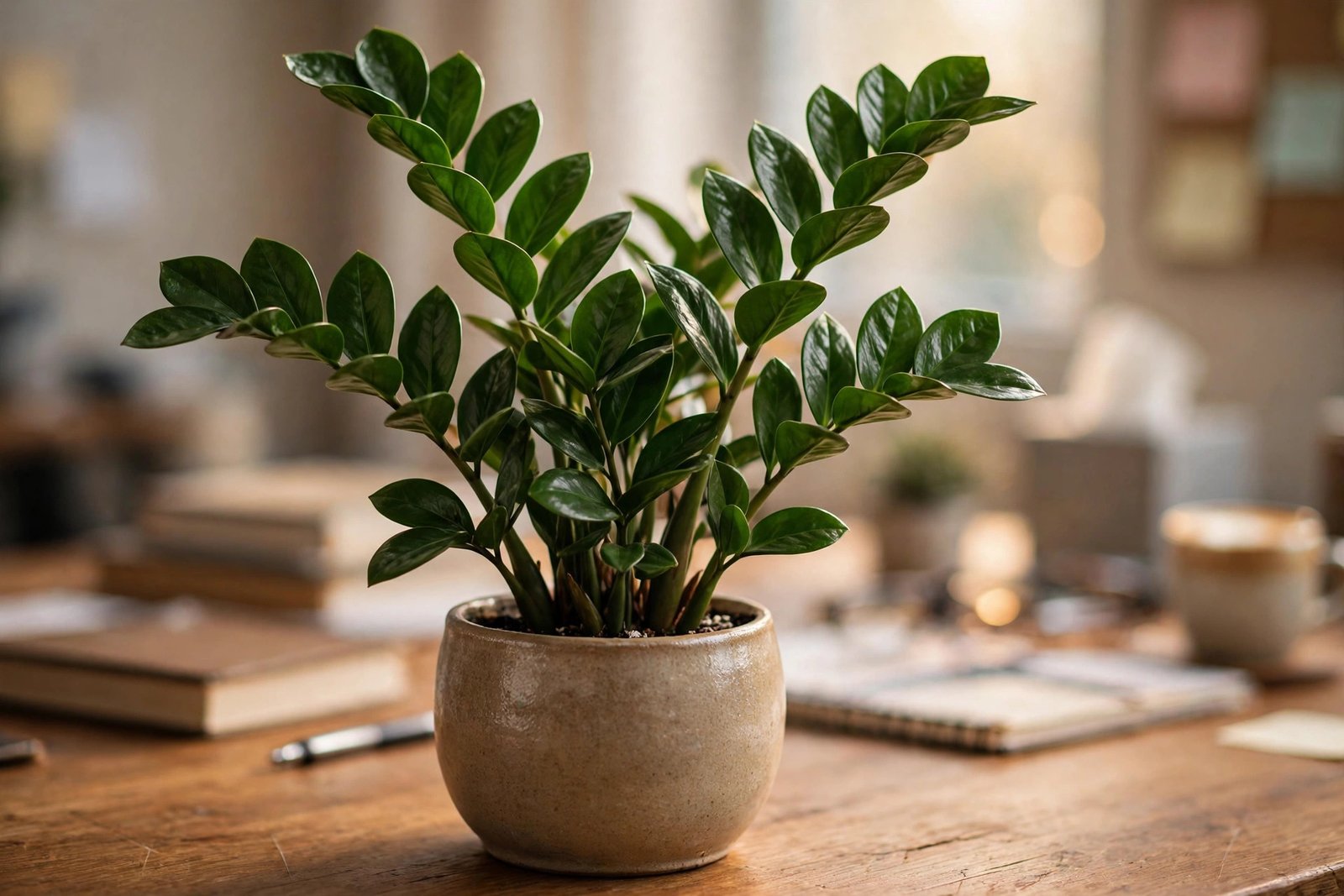
The ZZ plant (Zamioculcas zamiifolia) is the better choice for a room with almost no natural light. It stores water in underground rhizomes, so it can survive weeks without water or much light, even under fluorescent office lighting. It reaches 2–4 ft tall and tolerates 15–30°C (60–86°F).
Water only every 3–6 weeks, when the soil is bone dry to the bottom; yellow leaves are the classic sign of overwatering. Toxic to pets — the ASPCA groups it with plants containing insoluble calcium oxalates.
Best for: owners who forget to water.
3. Cast Iron Plant — Best for Near Darkness
The cast iron plant (Aspidistra elatior) earns its name: the answer for the spot where even a snake plant struggles. It tolerates near darkness, survives temperatures as low as 2°C (35°F), and is the most neglect-tolerant plant on this list. It grows slowly to 2–3 ft with dark, leathery leaves.
Water weekly in the growing season and monthly in winter, letting the top 2 inches of soil dry between waterings. It is listed as non-toxic by the ASPCA.
Best for: near darkness and pet-owning homes.
4. Pothos — Best Trailing Plant
Golden pothos (Epipremnum aureum) is for people who want visible results quickly. It is one of the fastest-growing, most forgiving houseplants, and its trailing vines can reach 3 m (10 ft) or more. It adapts to anything from a north-facing window to a bedroom.
Water every 1–3 weeks in low light, when the top 5 cm (2 in) of soil feels dry; it droops visibly when thirsty. In very low light its golden variegation fades back to green, but the plant stays healthy. Toxic to cats and dogs — the ASPCA lists insoluble calcium oxalates, which cause mouth irritation, drooling and vomiting.
Best for: fast, visible trailing growth.
5. Heartleaf Philodendron — Best for Hanging Baskets
Heartleaf philodendron (Philodendron hederaceum) is pothos’s quieter cousin — the better pick for elegance over speed. Its heart-shaped leaves hang on vines that can trail 6 ft or more, and it tolerates low to bright indirect light.
It needs water only when the top 2 inches of soil are dry, and it is nearly as tough as pothos and just as easy to propagate from cuttings. Toxic to cats and dogs (insoluble calcium oxalates, per the ASPCA).
Best for: elegant hanging baskets.
6. Chinese Evergreen — Best for Colour
The Chinese evergreen (Aglaonema) earns its place with wide leaves marked in green, silver, pink or red — and darker-leaved varieties tolerate the lowest light. It grows 1–3 ft tall, prefers high humidity but tolerates drier air, and wilts visibly when it needs water.
Keep it above 15°C (60°F) and away from cold draughts, and avoid cold water — NC State Extension warns that cold water can damage it. Toxic to cats and dogs (ASPCA).
Best for: colour in a dim room.
7. Peace Lily — Best Flowering Plant
The peace lily (Spathiphyllum) is one of the few low-light plants that flowers, producing elegant white blooms in medium light, and it grows 1–4 ft tall. It droops when thirsty and perks back up within a day of watering. Keep the soil moist but not soggy, watering about once a week or when the top 2 inches feel dry.
It likes humidity — a steamy bathroom suits it — and low humidity is one cause of brown leaf tips. Despite the name, it is not a true lily — it will not cause the kidney failure that true lilies cause in cats — but the ASPCA still lists it as toxic to dogs and cats because of calcium oxalate crystals.
Best for: flowers in low light.
8. Parlor Palm — Best Small Palm
The parlor palm (Chamaedorea elegans) is a small, graceful floor plant for anyone short on light and space. It suits low to medium light and stays under about 1.2 m (4 ft). It grows slowly and likes its soil to dry slightly at the top between waterings.
It is listed as non-toxic by the ASPCA, so it suits homes with pets.
Best for: dim corners in pet-owning homes.
9. Spider Plant — Best Pet-Safe Plant
If your cat eats leaves, buy this first. The spider plant (Chlorophytum comosum) is the safest choice on this list for homes with cats and dogs: the ASPCA lists it as non-toxic, though eating large amounts can still cause a mild upset stomach. It grows about 1 ft tall and produces trailing “spiderettes” — baby plants that are easy to propagate.
It prefers medium to bright indirect light but tolerates low light, and needs water when the top inch of soil dries. Brown leaf tips usually mean fluoride and salts in tap water — use filtered or rainwater if yours browns.
Best for: homes with cats and dogs.
10. Dracaena ‘Janet Craig’ — Best Tall Floor Plant
Dracaena ‘Janet Craig’ (Dracaena fragrans ‘Janet Craig’) is the tall answer to a dark hallway or office corner. Its glossy dark-green leaves tolerate very low light — in NC State Extension’s testing, dracaenas stayed attractive for about 30 months at just 15–20 foot-candles, longer than any other plant tested at that level.
Keep it on the dry side and out of direct sun, which scorches the leaves. Toxic to cats and dogs — the ASPCA lists saponins in Dracaena species.
Best for: dark hallways and office corners.
How to Choose the Right Plant?
- Measure your light. A barely visible hand shadow means low light — any plant on this list will cope.
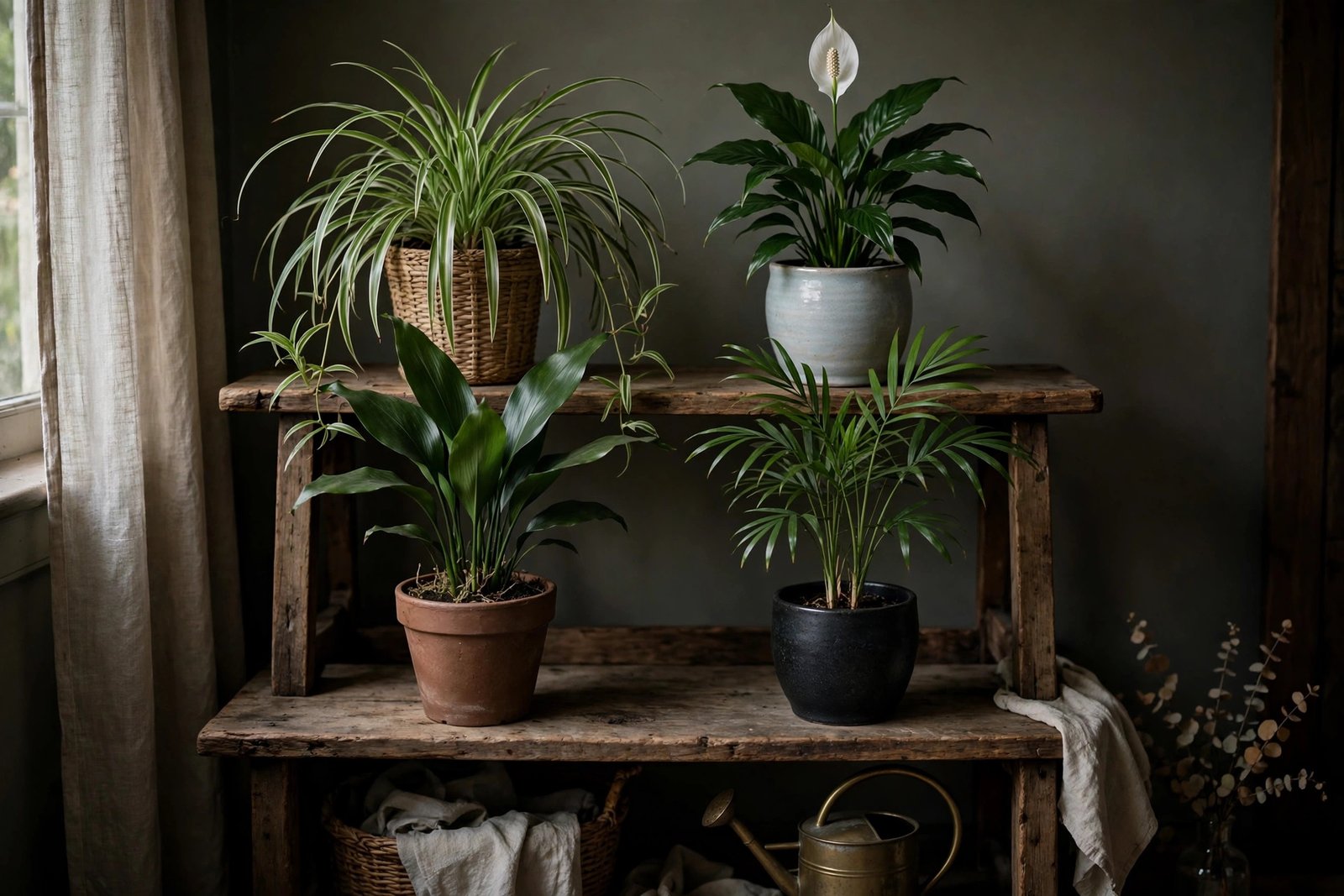
- Check for pets. If a cat or dog chews leaves, start with the three non-toxic choices — spider plant, cast iron plant and parlor palm — or keep toxic plants out of reach.
- Be honest about watering. If you travel or forget, pick a plant that stores its own water: snake plant or ZZ plant, watered every few weeks. A weekly routine suits the peace lily and pothos.
- Decide what the plant is for. A bare shelf wants a trailing plant (pothos or philodendron); a dark floor corner wants height (Janet Craig or parlor palm); a dull room wants colour (Chinese evergreen) or flowers (peace lily).
If you are also fixing the garden, see the best time to plant grass seed, and for a pet-safe companion, the best pet reptile for beginners low maintenance.
How to Keep Low-Light Plants Alive
Most low-light plants do not die from darkness — they die from kindness.
- Water less than you think. Wait until the top 2 inches are dry — the whole pot for snake plants and ZZ plants — and cut watering by 30–50% in winter.
- Always use pots with drainage holes. Root rot from soggy soil is the leading cause of low-light plant failure. Empty the saucer after watering.
- Remember low light is not no light. Even the toughest plants here need some daylight or bright artificial light, so add a grow light to a spot that is dark all day.
- Keep them out of direct sun. Low-light plants scorch — move them back from the glass or behind a sheer curtain.
- Feed lightly, if at all. A plant in low light makes less food, so feed sparingly in spring and summer and skip it in winter.
- Rotate the pots. Low-light plants lean towards the nearest light source, so a quarter-turn every week or two keeps growth even.
FAQs
What is the best indoor plant for low light?
The snake plant is the best indoor plant for low light — water it only when the soil is completely dry. The ZZ plant is a close second and even more forgiving of neglect, thanks to its water-storing rhizomes.
Can indoor plants survive in a room with no windows?
Not in true darkness — every plant needs some light to photosynthesise. But snake plants, ZZ plants and pothos can survive in windowless offices under fluorescent lights, and a grow light covers a room that is dark all day.
Which low-light plants are safe for cats and dogs?
Spider plant, cast iron plant and parlor palm are listed as non-toxic by the ASPCA. The rest — snake plant, ZZ plant, pothos, philodendron, peace lily and Chinese evergreen — are toxic to pets if eaten, so keep them on high shelves. If a pet eats a plant, contact your vet or poison control.
Why is my low-light plant dying?
Overwatering is the most common cause: plants in dim rooms use very little water, so soil stays wet and roots rot. Check the soil before watering, make sure the pot has drainage holes, and cut back sharply in winter.
The Corner That Finally Stays Green
That dim corner was never the problem. The problem was buying plants that needed a sunny windowsill and then blaming the room when they failed. A snake plant in a bedroom, a ZZ plant in a windowless office, a spider plant in a home with a leaf-chewing cat — each matched to where it will live.
Start with the hand shadow test, pick one plant from the table, and give it a month.
Sources
- NC State Extension, via LeafCheck — plants.tudiencau.com
- Aqualogi, “Houseplant Light Guide” — aqualogi.com
- Tazart, “Best Low-Light Houseplants for Beginners” — tazart.app
- Rareleaf, “Houseplants Toxic to Cats and Dogs” — rareleaf.app
- ToGardener — togardener.com
- MyDomaine, “How to Grow and Care for Peace Lilies” — mydomaine.com














