



There is a particular disappointment in a lawn that refuses to grow: you scatter seed on a hopeful Saturday, water it for a week, and the bare patches stare back unchanged. The seed was fine. The watering was fine.
The problem was the calendar. The best time to plant grass seed is early autumn for cool-season grasses — Kentucky bluegrass, tall fescue and perennial ryegrass — and late spring to early summer for warm-season grasses such as Bermuda and zoysia. Get the timing right and the rest follows; get it wrong and no amount of watering will save the sowing.
Most lawn failures are failures of timing, not effort. Seed germinates only within a narrow band of soil temperatures, set by the ground, not the packet. This guide explains when to sow, why it works, and how the advice changes by grass type, region, and whether you are starting fresh or patching.
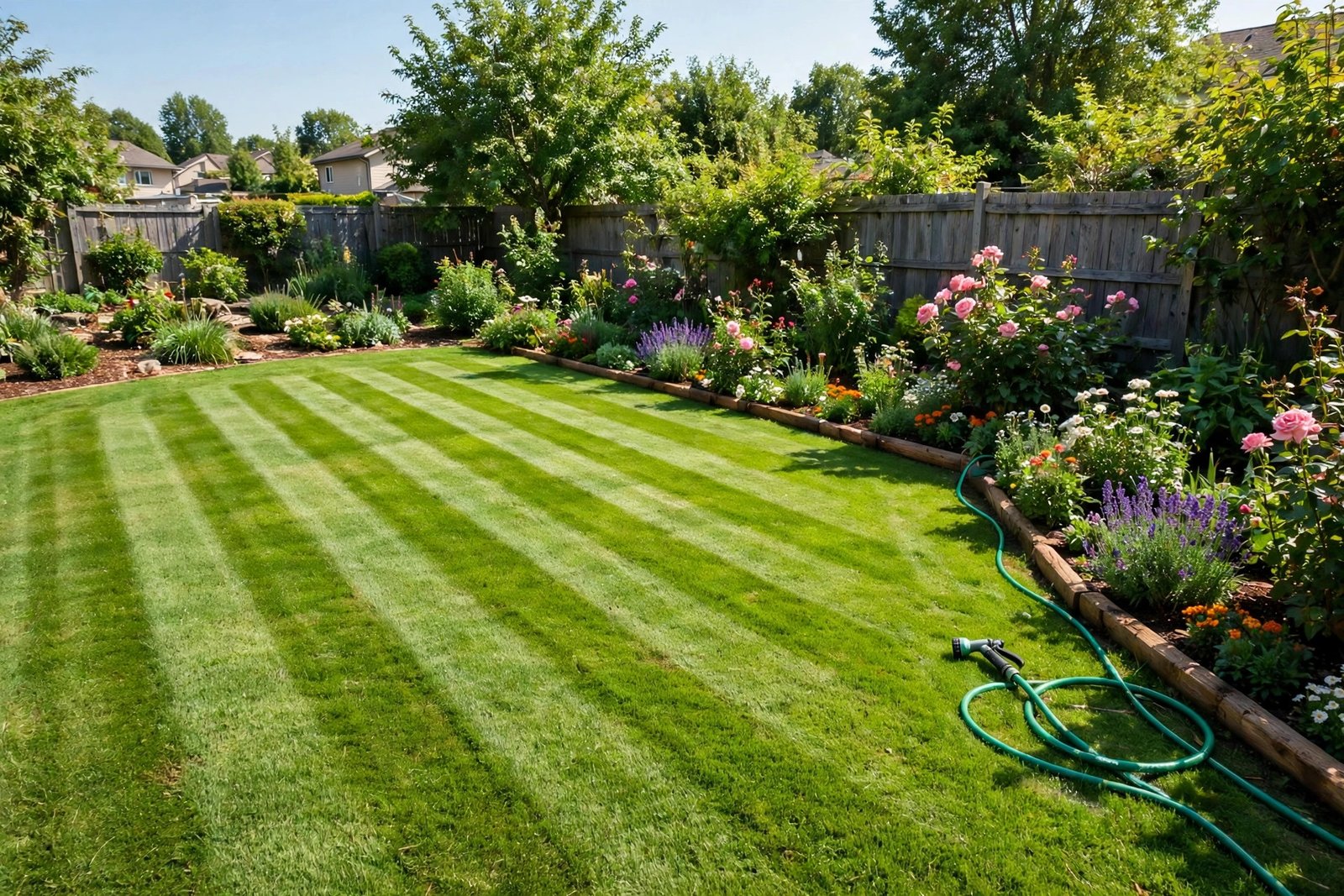
Key takeaways:
- Early autumn for cool-season grasses; late spring to early summer for warm-season.
- Sow by soil temperature, not the calendar: 50–65°F cool-season, 65–75°F warm-season.
- Give seed at least 45 days before the first frost.
- In the UK, September is the best month to sow.
Why does timing matter so much?
A seed has two jobs: germinate, then build roots strong enough to survive. In autumn, cool-season seed germinates in soil still warm from summer while the air cools, so it grows steadily and faces almost no weed competition.
In late spring, warm-season seed wakes in soil that has finally warmed, then has a whole summer of heat to grow into. Sow at the wrong moment and seed either rots dormant in cold, wet soil, or sprouts into heat it cannot survive.
When should you plant cool-season seed?
Cool-season grasses — Kentucky bluegrass, tall fescue, fine fescue and perennial ryegrass — grow most actively at 60–75°F (15–24°C). For them, early autumn is the single best time to sow: late August through October in most of the northern United States.
Soil is still warm from summer, rainfall becomes more reliable, and weed pressure drops sharply. Autumn-sown seed roots for weeks before winter, then grows all spring, so it faces its first summer as established turf. Aim to have seed in the ground at least 45 days before your average first frost.
When should you plant warm-season seed?
Warm-season grasses — Bermuda, zoysia, centipede and Bahia — dominate the southern United States, growing most actively at 80–95°F (27–35°C). They need soil of at least 65–70°F (18–21°C) to germinate, so plant in late spring to early summer, May to June (into July in the deep South), after the last frost.
Seed them too early and they simply sit and wait — or rot. Never sow warm-season grasses in autumn: they go dormant as temperatures drop and will not establish.
Is spring or autumn better for a cool-season lawn?
Autumn wins for cool-season grass, but spring is a workable second choice. In spring, sow once soil has held 50°F (10°C) for several days — typically March to April in the north.
The catch is competition: crabgrass germinates at the same time, and young grass heads into its first summer shallow-rooted and thirsty. Seed suppliers cite autumn germination rates about 25% higher than spring, thanks to steadier soil temperatures. If you must seed in spring, skip pre-emergent weed killer on seeded areas — it stops grass seed germinating too.
What soil temperature does grass seed need?
Grass seed cares about soil temperature, not the month. Measure it with a cheap soil thermometer pushed 2 inches (5 cm) into the ground, each morning, for three days.
Cool-season seed germinates best at 50–65°F (10–18°C); below 50°F it sits dormant and may rot in wet soil, above 85°F (29°C) germination crashes. Warm-season seed needs 65–75°F (18–24°C); below 60°F it may rot, above 95°F it dries out before germinating. As a rough guide, when daytime air holds 60–75°F, the soil is usually 50–65°F for cool-season seed.
Which grass should you plant, and when?
Find your grass below — the soil thermometer has the final say.
| Grass type | Type | Best planting window | Soil temperature | Germination time |
|---|---|---|---|---|
| Perennial ryegrass | Cool | Early autumn (spring also works) | 50–65°F (10–18°C) | 5–10 days |
| Tall fescue | Cool | Early autumn | 50–65°F (10–18°C) | 7–12 days |
| Fine fescues | Cool | Early autumn | 50–65°F (10–18°C) | 7–14 days |
| Kentucky bluegrass | Cool | Early autumn | 50–65°F (10–18°C) | 14–30 days |
| Bermuda grass | Warm | Late spring to early summer | 65–75°F (18–24°C) | 7–14 days |
| Zoysia grass | Warm | Late spring to early summer | 65–75°F (18–24°C) | 14–21 days |
| Centipede grass | Warm | Late spring to early summer | 65–75°F (18–24°C) | 14–28 days |
Perennial ryegrass appears fastest, reassuring for a first attempt, but is less hardy than tall fescue over the long term. Kentucky bluegrass makes the finest-looking lawn, yet is the slowest to germinate — up to a month. For overseeding, a mix with ryegrass gives quick cover while slower grasses establish.
When should you plant grass seed by region?
Timing slides with latitude:
- Northeast (New York, Pennsylvania, New England): late August to late September; seed by mid-September for 6–8 weeks before the first frost.
- Midwest (Illinois, Ohio, Michigan, Minnesota): mid-August to mid-September — the most reliable fall window.
- Transition zone (Virginia, Kentucky, Tennessee, Missouri): September to early October for tall fescue; warm-season lawns April to June.
- Southeast (Georgia, Florida, the Carolinas): warm-season grasses April to June, once soil stays above 65°F; cool-season grasses overseeded only, September to October.
- South and Gulf Coast (Texas, Louisiana): warm-season grasses May to July — avoid July in the deep South, where soil can exceed 90°F. Cool-season overseeding October to November.
- West and Pacific Northwest: September to October for cool-season grasses, with spring (March to April) as the second window.
When should you sow grass seed in the UK?
In the UK, the Royal Horticultural Society recommends sowing in autumn (September to November) or mid-spring (March to April), with early autumn best: the window runs late August to the end of September, and mid-April to May is the second choice.
Seed germinates from about 6°C but is slow and patchy; for quick, even germination aim for soil above 8°C at 5 cm deep, ideally 10–18°C. September is the best month — warm soil, reliable rain, fewer weeds. The south and west can often sow into October; the north and Scotland should finish by early October.
Germination takes 7–10 days in good conditions, up to 21 days by mix. Sow at 35–50 g per square metre, in two passes at right angles, keeping the seedbed moist.
How do you overseed an existing lawn?
Overseeding — spreading seed over an existing lawn to thicken thin turf — follows the same calendar as new seeding, and autumn is again best for cool-season lawns. Overseed at least 45 days before your average first frost, so seedlings develop roots that survive winter.
Mow low (1.5–2 inches), bag the clippings, rake to expose bare soil, and aerate if you can — seed-to-soil contact matters most. Spread at 1.5–4 lb per 1,000 sq ft depending on grass type and how thin the lawn is, then water lightly and often. Never overseed within 8–12 weeks of a pre-emergent weed killer application, and keep traffic off until the new grass has had two or three mowings.
How long does grass seed take to germinate?
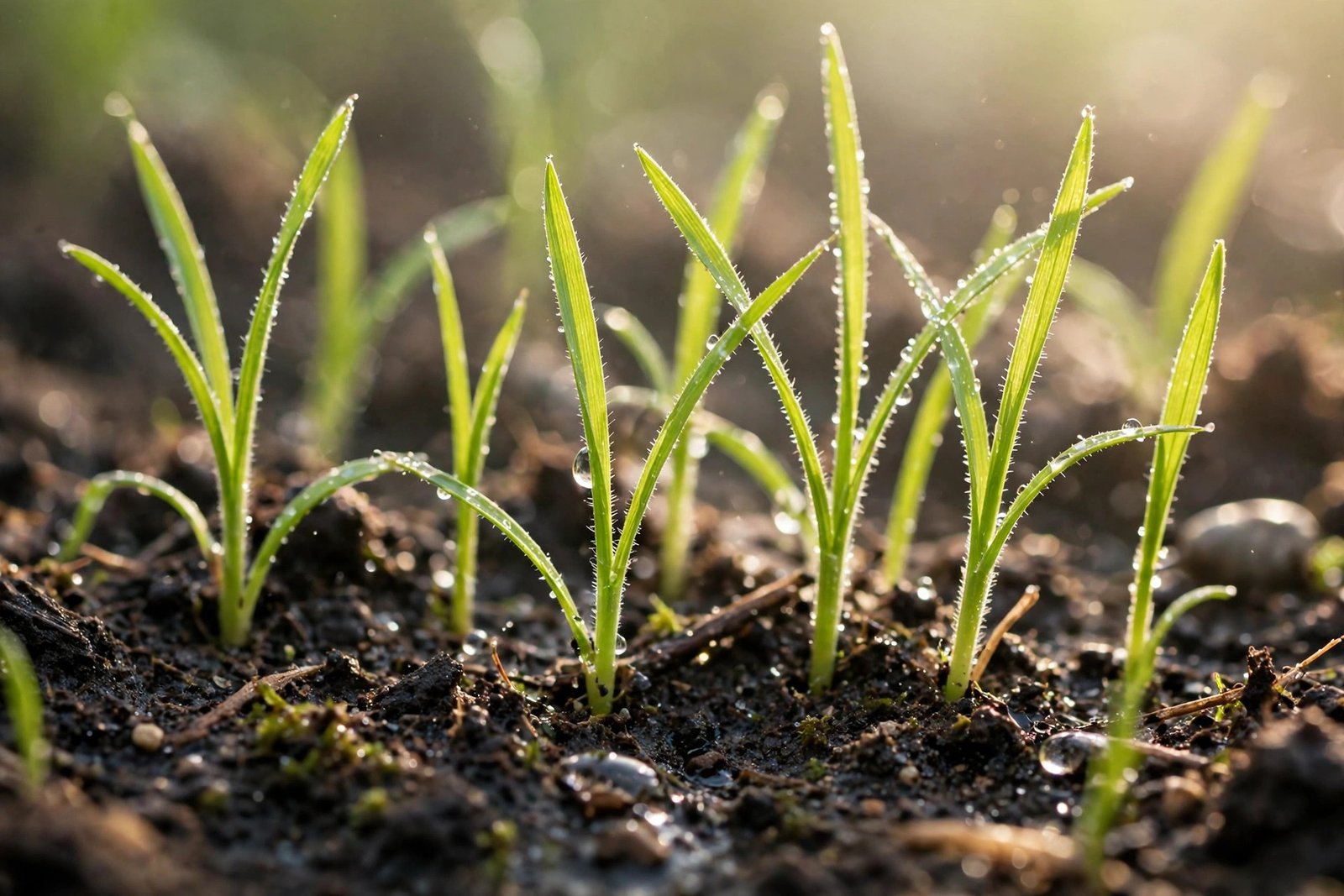
It depends on the species and soil temperature. Per the University of California’s Statewide IPM Program (see the table above), perennial ryegrass is fastest at 5–10 days, Kentucky bluegrass slowest at 14–30 days, and Bermuda quickest of the warm-season grasses at 7–14 days. Warmer soil within the ideal range speeds germination; seed buried too deep or left to dry out stalls.
How much seed do you need?
Seeding rates per 1,000 sq ft for a new lawn: perennial ryegrass 6–8 lb, tall fescue 6–8 lb, fine fescue 4–5 lb, Kentucky bluegrass 2–3 lb, Bermuda 1–2 lb, zoysia 2–3 lb, centipede 1–2 lb. For overseeding, use roughly half the new-lawn rate.
In the UK, sow at 35–50 g per square metre. Cheap seed is a false economy — coarse agricultural ryegrass looks rough from day one.
What mistakes kill new grass seed?
- Sowing by the calendar, not the soil — a cold spring or a hot autumn can shift the window by weeks.
- Sowing too late in autumn — seed needs about 45 days before the first frost.
- Sowing warm-season grass in autumn — it will go dormant and fail.
- Burying the seed or letting it dry out — seed needs light and constant moisture, so keep the top layer damp, watering lightly two to three times a day for two weeks.
- Pre-emergent weed killer on seeded areas — it stops grass seed germinating too.
- Mowing or walking on it too soon — wait until it has had two or three mowings.
- Skipping soil preparation — grass germinates best in soil with a pH between 6.0 and 7.0; test the soil and loosen compacted ground first.
Are you ready to sow?
Run through this before you open the bag: if any answer is no, wait — a week of patience beats a season of bare patches.
- Know your grass type — cool-season means autumn, warm-season means late spring to early summer.
- Soil temperature at 2 inches deep, each morning, for three days: 50–65°F (10–18°C) for cool-season, 65–75°F (18–24°C) for warm-season.
- 45 days before your average first frost — less, and seedlings will not establish in time.
- Prepare the seedbed — clear weeds, loosen the top 3–4 inches, rake level and firm.
- Water lightly two to three times a day for two weeks.
- No pre-emergent weed killer in the last 8–12 weeks — if there was, do not sow.
- Sow at the right rate (35–50 g per square metre in the UK) and rake in lightly — do not bury it.
FAQs
What is the best month to plant grass seed?
For cool-season grasses, September is best in most of the northern US and the UK: warm soil, reliable rain, low weed competition. For warm-season grasses, May to June is best, once soil has warmed past 65°F.
What soil temperature is best for grass seed?
Cool-season grasses germinate best at 50–65°F (10–18°C); warm-season grasses need 65–75°F (18–24°C). Measure at 2 inches deep in the morning for three days — air temperature is not a reliable substitute.
Can I plant grass seed in spring?
Yes — spring is the second-best window for cool-season grasses, once soil has held 50°F for several days. Expect more weed competition and more watering than an autumn sowing, and skip pre-emergent weed killer on seeded areas.
How long does grass seed take to grow?
Perennial ryegrass sprouts in 5–10 days, tall fescue in 7–12 days, Kentucky bluegrass in 14–30 days. Bermuda takes 7–14 days and zoysia 14–21 days in warm soil. A new lawn needs a full season to establish.
Is it too late to plant grass seed in October?
In the northern United States, mid-October is usually the cut-off — seed needs about 45 days before the first frost. In the southern states and milder parts of the UK, sowing into October (or even early November) can still work if soil stays above 8°C.
For other seasonal planning, see the best time to visit alaska, and if you are adding a pet to the household, our guide to the best pet reptile for beginners low maintenance.
Sources
- LawnGuru, “Grass Seed Germination: Time, Temperature, and Fixes” — blog.lawnguru.co
- LotSite, “When to Plant Grass Seed: Best Time by Region & Grass Type” — lotsite.ai
- HomerDIY, “When to Plant Grass Seed?” — homerdiy.com
- Royal Horticultural Society, “Starting a lawn from seed” — rhs.org.uk
- Garden Ninja, “How to Sow Grass Seed: When and How to Start a New Lawn (UK)” — gardenninja.co.uk
- MeasureLawn, “Fall Overseeding: When & How to Overseed Your Lawn in Fall” — measurelawn.com
The lawn you want starts with a thermometer
That patchy lawn was never a mystery — just seed sown at the wrong temperature, in soil that was not ready. The fix is simple: know your grass, measure the soil for three mornings, and sow only when the numbers agree with the season.
Do that, and next Saturday on the lawn will be the one where green shoots appear on schedule. Start tomorrow morning: push a soil thermometer two inches into the lawn and write the number down.














