

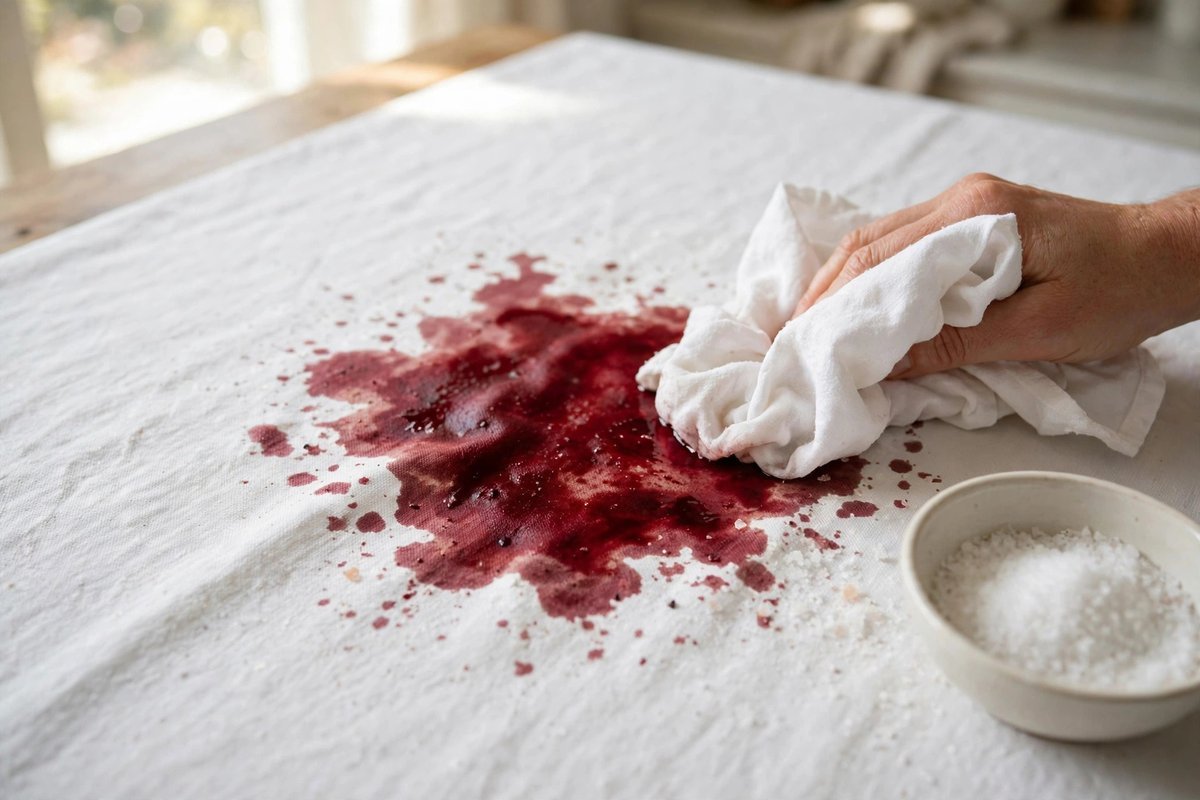

Knowing how to remove wine stains is one of those small skills that saves a favourite shirt, a good tablecloth or a living-room carpet on the night it matters most. A glass tips over, and whether the stain washes out usually depends on what happens in the first few minutes.
So how do you remove a wine stain? Act fast, blot rather than rub, and start with cold water before anything else. This guide covers red and white wine on clothing, table linen, carpet, upholstery and wood, step by step, so you can deal with the spill calmly instead of making it worse.
Key takeaways:
- Act fast: a fresh wine stain is far easier to lift than one that has dried and set.
- Blot, never rub: rubbing pushes the wine deeper into the fibres and spreads the stain.
- Start with cold water, and always test any remedy on a hidden corner first.
- Salt and bicarbonate of soda are widely published home remedies for fresh red wine, not guarantees.
- If a stain has set, or the item is delicate or valuable, a professional cleaner is the honest next step.
Act fast: the first five minutes
The first five minutes after a spill matter more than anything else you do. Wine is mostly water, alcohol and colour, and while it is still wet it sits on the surface of the fibres rather than locked inside them. Once it dries, the colour bonds with the fabric, and every step after that gets harder.
Start by lifting the glass and moving anything that can be saved out of the way. If wine has reached clothing, take the garment off as soon as you decently can, so the wine does not transfer to the layer beneath it. Then blot: press a clean white cloth firmly onto the stain, lift it, and press a fresh section down again.
The golden rules for every wine stain

Every surface in this guide follows the same four rules. First, blot, never rub: rubbing grinds the wine into the fibres and pushes the colour deeper, where water cannot reach it. Second, use cold water first: it dilutes the wine and carries it away, while hot water can set the colour.
Third, work from the outside in, and test before you treat. Scrubbing at the centre turns a small stain into a large one, so press from the edge towards the middle. Try any remedy first on a hidden corner or an inside seam, and stop if the colour or texture changes.
Red wine stains on clothing
Red wine on clothing is the most common wine stain, and it is also the most fixable, because a garment can be taken to a sink and rinsed properly. As soon as you can, hold the stained area under a cold tap, with the water running through the back of the fabric, so the pressure pushes the wine out rather than further in.
If the stain is fresh, salt is the home remedy most often recommended in published stain guides. Sprinkle a generous layer of table salt over the wet stain and leave it to sit; the salt draws the wine out of the fibres as it dries, and you will often see it turn pink as it works. Brush the salt away, rinse in cold water, and wash the garment as usual. This is a home remedy, not a guarantee.
White wine stains on clothing
White wine stains are easier to miss and easier to treat, but they still deserve attention. A splash of white wine on a dark shirt may leave no visible mark at first, yet the sugars in the wine can yellow with time and heat, leaving a pale stain that shows up weeks later. Blotting it straight away costs nothing and prevents that.
Blot the area with a clean cloth, then rinse it in cold water in the same way as a red wine stain. In most cases that is enough, and the garment can go into the wash as normal. Sweet wines can leave a sticky residue, so a cold rinse followed by a gentle wash is the safest finish. As with red wine, keep the garment out of the dryer until you are sure the mark is gone.
Wine stains on table linen
Table linen is where wine stains happen most often, and it is also where they are easiest to deal with, because a tablecloth or napkin can be soaked. Lift the linen from the table, blot the stain, and then soak the stained area in a basin of cold water. Leave it for half an hour, then treat the stain before washing.
For a fresh stain on a white cotton or linen cloth, salt is again the classic first step, applied generously and left while the cloth soaks. For a coloured cloth, check the care label and test any remedy on a corner first, because a strong treatment can lighten a dye. Bicarbonate of soda paste is a gentler option for coloured linen, Wash in the hottest water the care label allows, and check the stain before drying.
Wine stains on carpet
Wine on carpet feels like a disaster, because carpet cannot be lifted off and rinsed in a sink. The good news is that carpet fibres are tough, and a fresh stain will usually lift if you act quickly and patiently. Start by blotting with clean white cloths or kitchen paper, pressing down firmly and turning to a fresh section each time, until no more colour transfers. Then sponge cold water onto the area, a little at a time.
For a fresh red wine stain, salt is the remedy most often suggested for carpet too. Sprinkle it thickly over the damp stain and leave it for several hours, or overnight if you can. The salt should turn pink as it draws the wine up; vacuum it away and sponge the area with cold water.
Wine stains on upholstery
Upholstery needs the same approach as carpet, with one extra caution: the fabric on a sofa or chair is often thinner, more delicate, and harder to replace than a carpet. Check the care label on the cushion or the underside of the chair before you do anything. If the label says dry clean only, blot what you can and call a professional rather than risking water on the fabric.
For washable upholstery, blot the stain, then sponge with cold water, a little at a time, using a white cloth so no dye transfers from the cloth to the sofa. Keep the area as dry as you can, because padding soaks up liquid quickly. Velvet, silk and leather need a professional: velvet marks easily, silk can water-stain, and leather needs a specialist cleaner.
Wine stains on wood
Wine on wood is a different kind of stain, because wood is porous and wine can sink into the grain. A splash on a sealed tabletop or a varnished floor will usually wipe away if you catch it quickly, because the seal keeps the wine on the surface. Blot it immediately with a soft cloth, then wipe the area with a damp cloth and dry it straight away.
An unsealed or worn wooden surface is harder, because the wine can soak into the grain and leave a dark mark. Blot the spill, wipe gently with a damp cloth, and dry the area thoroughly. Do not leave water sitting on wood, and do not scrub.
What to do when a stain has set
Start by soaking the item in cold water for several hours,. For washable clothing and linen, a long soak followed by a hot wash at the hottest temperature the care label allows is the next step. For carpet and upholstery, a set stain is best left to a professional carpet cleaner, who has the equipment to extract liquid from deep in the pile.
Wine stain removal compared
| Surface | First step | Home remedy to try | When to call a professional |
|---|---|---|---|
| Clothing | Rinse under a cold tap | Salt or bicarbonate of soda paste | Dry clean only, silk or wool |
| Table linen | Soak in cold water | Salt on a fresh stain | Antique or hand-embroidered linen |
| Carpet | Blot, then sponge cold water | Salt left for several hours | A stain that has dried and set |
| Upholstery | Blot, then sponge lightly | Light bicarbonate of soda dusting | Velvet, silk or leather |
| Wood | Blot, wipe damp, dry at once | Bicarbonate of soda paste, tested first | Antique, waxed or valuable wood |
| White wine | Blot, then rinse cold | Rarely needed beyond water | Delicate fabric with a sugary residue |
Your wine stain checklist
- Act fast: blot the spill within minutes, before the wine has time to dry and set.
- Blot, never rub: press a clean white cloth down, lift, and press a fresh section.
- Use cold water first: rinse or sponge with cold water before any other treatment.
- Work from the outside in: keep the stain contained so it does not spread.
- Test any remedy first: try it on a hidden corner, seam or underside.
- Try salt or bicarbonate of soda: widely published home remedies for fresh red wine, not guarantees.
- Check before drying: never put a stained garment in a hot dryer until the stain is gone.
- Know when to stop: call a professional cleaner for delicate fabrics, valuable wood, or a stain that has set.
Frequently asked questions
Does salt really remove red wine stains?
Salt is the home remedy most often recommended in published stain guides, and it can help on a fresh stain by drawing the wine out of the fibres as it dries. It works best on sturdy cotton, linen and carpet, and it is not a guarantee, especially once a stain has dried.
Can I get red wine out of carpet?
Yes, if the stain is fresh. Blot it with clean white cloths, sponge with cold water, and try salt left for several hours before vacuuming. A stain that has dried and set is best left to a professional carpet cleaner.
What if the stain has already dried?
Soak washable items in cold water for several hours, then try a washing-up liquid solution and a hot wash at the hottest temperature the care label allows. For carpet and upholstery, a set stain is best handled by a professional cleaner, who can extract colour from deep in the fibres.
When should I call a professional cleaner?
Call a professional for anything labelled dry clean only, for silk, wool, velvet, leather and antique wood, and for any stain that has survived two or three home treatments. Taking an item in early gives the cleaner the best chance of removing the stain completely.
Sources
This guide reflects widely published stain-removal guidance on blotting, cold water and the salt and bicarbonate of soda home remedies, which are framed here as remedies rather than guarantees. Our guides to how to clean an oven and the best cabernet sauvignon cover the rest of the dinner party, along with the best champagne for mimosas for the morning after.
The bottom line
Removing a wine stain comes down to three habits: act fast, blot rather than rub, and start with cold water. Salt and bicarbonate of soda are worth trying on a fresh stain, and a professional cleaner is the honest answer when a stain has set.
Your next step is simple: keep a stack of clean white cloths and a box of salt within reach of the dining table, so the next spill is dealt with in minutes rather than regretted in the morning.














