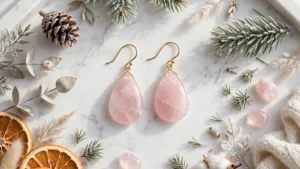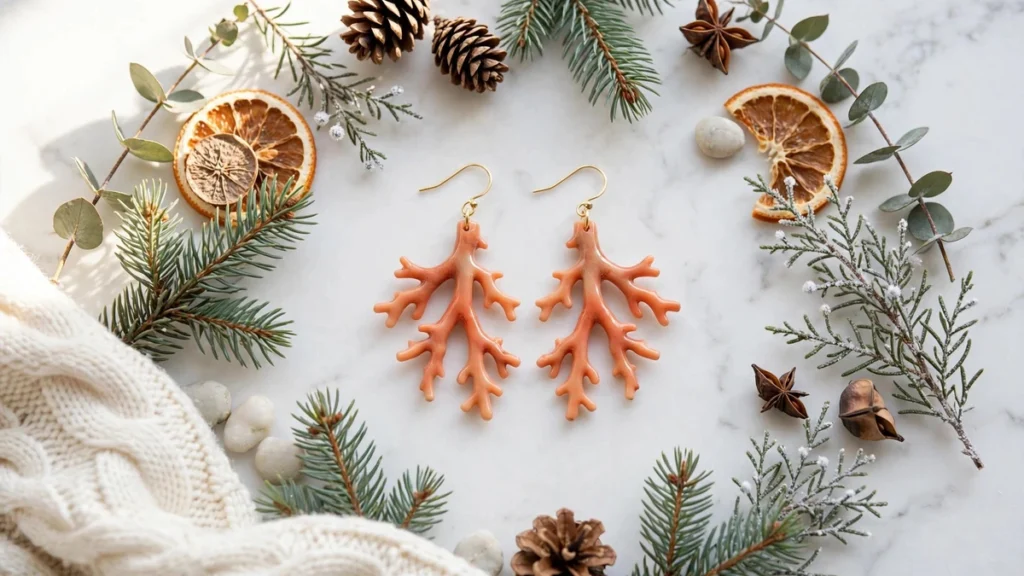
Coral is the warmest stone in a winter jewellery box. Its pink-orange glow softens dark wool, grey cashmere and black coats, and it flatters skin that has lost its summer colour. A small pair of coral studs can do what a whole outfit cannot: add warmth to a face on a cold, grey morning.
The trouble is that coral is also one of the easiest stones to get wrong. It is soft, it is often dyed or stabilised, and much of what is sold as coral is glass, plastic, or dyed howlite. Real Mediterranean coral is rare and expensive, and the coral trade raises real questions about sustainability, so a careful buyer needs to know what to ask before paying.
Below are nine coral earrings worth considering for winter 2027, from simple studs to evening drops. Each one is described by what it does well, what to watch for, and who it suits best, so you can choose with your eyes open, not just by colour, and so you know what to ask the seller before you pay.
Key takeaways
- Coral’s warm pink-orange tone suits winter palettes and flatters skin that has lost its summer colour.
- Most affordable coral is dyed or stabilised, and sellers should say so; undisclosed treatment is a reason to walk away.
- Coral is soft, around 3.5 to 4 on the Mohs scale, so it needs a protective setting, gentle cleaning, and no ultrasonic or steam cleaner.
- Studs are the safest everyday choice in winter, while drops and chandeliers suit evenings and special occasions.
- Coral is not an investment stone and has no proven healing properties, and coral harvesting raises sustainability questions, so buy from sellers who disclose origin and treatment.
What coral actually is and why it suits winter
Coral is not a mineral. It is the skeleton of a tiny marine animal, built up over decades on reefs, and polished into beads and cabochons. The best-known jewellery coral is Mediterranean red coral, a deep, warm red-orange, but jewellers also use pink coral, white coral, and the pale blush shades often called angel-skin coral.
That warmth is why coral works so well in winter. Cold-weather wardrobes run dark: black coats, charcoal knits, navy scarves. Coral cuts through that darkness without shouting, and it sits close to the face, where its colour does the most work. It pairs naturally with gold, which warms it further, and with cream, camel and burgundy, the colours winter wardrobes are built from. It also works with the textures of winter, wool, cashmere and velvet, which soften the stone’s glow instead of competing with it.
Coral also has a softness that suits the season. It is not a glittering stone. It has a matte, waxy glow that looks calm next to wool and cashmere, and it is light, so even a generous pair of drops does not pull at the ear. That lightness matters in winter, when earrings compete with scarves, collars and hats.
How we chose these earrings and what to look for
Look first at the stone, and at what the seller tells you about it. Natural, untreated coral in a good colour is rare and priced accordingly. Most coral at everyday prices has been dyed to even out its colour, or stabilised with resin to make it hard enough to wear. Both are standard practice, and neither is a reason to avoid a piece, but the treatment should be disclosed. A seller who will not say whether a stone is dyed is a seller to avoid.

Look next at the setting. Coral is soft, so a bezel setting that wraps the edge of the stone protects it far better than a prong setting that leaves the edges exposed. Studs are the safest shape for daily wear. Drops and chandeliers show off more stone, but they catch on scarves and need a little more care. Gold warms coral and suits most skin; silver cools it and suits paler stones.
Finally, look at the price and the paperwork. A pair of coral studs from a known jeweller should come with a clear description of the coral, its origin, and any treatment. Our guide to the best diamond earrings of 2027 explains how setting and metal change the way a stone reads, and the same thinking applies here: the metal and the mount matter as much as the stone.
The 9 best coral earrings for winter 2027
Tiffany & Co. Coral Studs
What we like: Classic round coral studs in 18k gold, a warm, even pink-orange colour, and the clean, simple design Tiffany does best. What to consider: Premium price for a small stone, and coral is soft, so these need gentle handling and no ultrasonic cleaning. Stone: Natural pink coral, round cabochon. Setting: 18k yellow gold, bezel. Best for: Everyday wear, gifts. Price range: Premium.
These are the studs to buy if you want one pair of coral earrings and nothing else. The colour is warm without being loud, the bezel protects the stone, and they sit neatly under a scarf or a hat.
Cartier Coral Studs
What we like: Understated studs in 18k gold with a deep, even red-orange coral, and Cartier’s usual precision in the setting. What to consider: Expensive for their size, and the coral will need re-polishing one day if it is worn daily. Stone: Red coral, round cabochon. Setting: 18k yellow gold, bezel. Best for: Collectors, special occasions. Price range: Premium.
A quiet luxury choice. The red is deeper than most coral on the market, which makes these stand out against black and navy winter clothes.
David Yurman Coral Studs
What we like: Coral cabochons set in David Yurman’s signature cable design, with a warm, consistent colour and a comfortable, secure back. What to consider: The cable detail adds weight, and the price reflects the design as much as the stone. Stone: Pink coral, oval cabochon. Setting: Sterling silver with 18k gold accents. Best for: Everyday luxury, signature pieces. Price range: High.
The cable setting is instantly recognisable, and it frames the coral well. These suit someone who wants coral with a clear designer identity.
Mejuri Coral Stud Earrings
What we like: Simple, affordable coral studs in 14k gold vermeil, with a soft pink colour that suits most skin tones. What to consider: Vermeil wears with time and needs care, and the coral is dyed, which Mejuri discloses. Stone: Dyed pink coral, round. Setting: 14k gold vermeil over sterling silver. Best for: First coral earrings, everyday wear. Price range: Affordable.
The sensible first pair. The colour is honest, the price is fair, and the studs are light enough to wear all day under a winter coat.
Monica Vinader Coral Studs
What we like: Neat coral studs with a warm blush tone, a clean bezel setting, and a price that makes coral an easy experiment. What to consider: Small stones, so the colour impact is subtle, and the coral is stabilised, which should be expected at this price. Stone: Stabilised blush coral, round. Setting: 18k gold vermeil. Best for: Everyday wear, layering with other earrings. Price range: Affordable.
A good choice if you like the idea of coral but are not sure the colour suits you. The blush tone is gentle, and the studs are easy to wear with everything.
Missoma Coral Stud Earrings
What we like: Modern, slightly irregular coral studs with a warm orange-pink colour and a relaxed, contemporary feel. What to consider: The colour varies from pair to pair, which is natural for coral, but worth knowing before you buy. Stone: Natural pink-orange coral, irregular cabochon. Setting: 18k gold vermeil. Best for: Casual winter outfits, everyday wear. Price range: Mid-range.
These feel less formal than a classic round stud, which is part of their charm. They suit knitwear and denim as well as they suit a winter coat.
Maria Black Coral Studs
What we like: Bold, sculptural coral studs with a deep colour and a modern setting that makes the stone the centre of attention. What to consider: A stronger design statement than a classic stud, so they suit confident styling rather than quiet outfits. Stone: Red-orange coral, round cabochon. Setting: Sterling silver with gold plating. Best for: Statement looks, evenings. Price range: Mid-range.
For anyone who finds classic coral studs too quiet, these are the answer. The colour is rich, the setting is modern, and they hold their own against a dark winter outfit.
Astrid & Miyu Coral Drops
What we like: Graceful coral drops with a soft pink tone, light on the ear, and long enough to catch the light without catching on a scarf. What to consider: Drops need more care than studs in winter, and the coral is dyed, which is standard at this price. Stone: Dyed pink coral, teardrop. Setting: 18k gold vermeil. Best for: Evenings, special occasions. Price range: Mid-range.
The prettiest evening option in this guide. The drop shape moves gently, the pink is soft rather than sweet, and they look lovely with an updo and a bare neck.
Thomas Sabo Coral Drops
What we like: Playful coral drops with a warm, even colour and a secure hook, at a price that makes them an easy winter treat. What to consider: A fashion piece rather than a fine-jewellery investment, and the coral is dyed and stabilised. Stone: Dyed coral, round bead. Setting: Sterling silver, gold-plated. Best for: Festive outfits, gifts. Price range: Affordable.
A cheerful, affordable way into coral. They are not heirloom pieces, but they are well made, warm in colour, and easy to wear through the winter party season.
Which coral earrings are right for you
Start with your skin tone. Warm, golden coral flatters warm undertones and olive skin, while softer pink coral suits cool undertones and fair skin. If you are unsure, hold the earrings against your face in daylight, not under shop lights, and see which colour makes your skin look healthier rather than tired.
Think next about how you will wear them. Studs are the winter workhorse: they stay put under scarves and hats, they do not snag on knitwear, and they suit every outfit from a work meeting to a family lunch. Drops are for evenings, when your hair is up and your neck is bare. One good pair of each covers the whole season.
Budget matters, but not in the way people expect. Coral is priced by colour, size and origin, not by sparkle, so a small pair of well-coloured studs is a better buy than a large pair of pale, uneven stones. Our guide to the best gold jewellery for everyday wear explains how to judge metal and finish at each price, and the same checks apply to the setting around a coral stone.
Finally, think about the metal. Gold warms coral and suits most skin tones, especially in winter, when warm metals look richer against dark clothes. Silver cools coral and suits paler pink stones, while rose gold sits between the two and flatters most people. The metal should feel like a choice, not an afterthought, because it changes how the coral reads at a glance.
The caveats that matter
Coral is beautiful, but it is also fragile, variable, and surrounded by more imitation than almost any other gemstone. The most common problems are not dramatic. They are slow: a stone that fades in sunlight, a surface that dulls from perfume, a pair that looked rich in the shop and flat at home. Knowing the risks in advance is what keeps a good purchase good.
| Detail | What is known |
|---|---|
| Softness | Coral is 3.5 to 4 on the Mohs scale; it scratches easily and must never go in an ultrasonic or steam cleaner |
| Dyeing and stabilising | Most affordable coral is dyed or resin-stabilised; both are standard, but both should be disclosed |
| Imitations | Glass, plastic, dyed howlite and reconstituted coral are common; buy from sellers who describe the stone clearly |
| Fading | Strong sun and heat can fade dyed coral; store earrings away from windows and radiators |
| Chemicals | Perfume, hairspray and household cleaners can dull coral; put earrings on last and take them off first |
| Sustainability | Coral harvesting affects reefs; look for sellers who disclose origin and use vintage or certified sources |
| Price | Fine natural coral is expensive; a very low price usually means dyed, stabilised or imitation stone |
| What coral does not do | It is not an investment stone, and it has no proven healing or protective properties |
None of this means coral should be avoided. It means coral should be bought with open eyes. A disclosed, well-set pair from a reputable jeweller will last for years with gentle care, while a bargain pair with no paperwork is likely to disappoint within a season.
Checklist: choosing coral earrings honestly
Use these checks before you buy, and again when the earrings arrive.
- Ask whether the coral is dyed or stabilised, and get the answer in writing.
- Check the setting: a bezel protects soft coral better than exposed prongs.
- Look at the colour in daylight; it should be warm and even, not flat or patchy.
- Check the backs and hooks: they should feel secure and comfortable, not loose or sharp.
- Plan the care: wipe with a soft, dry cloth after wearing, and store away from sun and heat.
- Keep perfume and hairspray away: put earrings on last, after everything else is done.
Frequently asked questions
Is coral real jewellery or just a fashion stone?
Both. Fine natural coral has been used in jewellery for centuries, and it is a genuine gemstone, but most coral sold today is dyed or stabilised, which makes it a fashion material at everyday prices. The distinction is not a problem, as long as the seller is honest about it.
How do I tell real coral from imitation?
Real coral is cool to the touch, light for its size, and shows a fine, wood-like grain under magnification. Glass feels colder and heavier, plastic feels warm and light, and dyed howlite often shows uneven colour in its cracks. If you are spending serious money, ask for a certificate or buy from a jeweller you trust.
Can I wear coral earrings every day?
Yes, if they are studs in a protective bezel setting. Put them on after perfume and hairspray, take them off before the gym or the shower, and wipe them with a soft cloth. Drops are better saved for evenings, because they catch on scarves and collars.
Will coral earrings fade?
Dyed coral can fade in strong sun and heat, so store earrings in a closed box away from windows and radiators. Natural coral holds its colour better, but it still benefits from the same care. Fading is slow, and good storage prevents most of it.
Is coral ethical to buy?
Coral harvesting has damaged reefs, which is why origin matters. Look for sellers who disclose where their coral comes from, consider vintage coral, and avoid pieces with no information at all. The same questions of origin and disclosure apply to other winter stones, as our guide to the best diamond jewellery for winter explains.
Do coral earrings suit everyone?
Coral suits most skin tones, because it comes in warm orange, soft pink and deep red, and one of those shades usually flatters. The exception is very cool, pale skin with strong pink undertones, where orange coral can look harsh; a soft pink or blush coral is usually the better choice there.
The bottom line
The best coral earrings for winter 2027 are the ones that suit your skin, your wardrobe and your habits. For most people, that means a pair of well-coloured studs in a protective bezel setting, bought from a seller who discloses the stone and its treatment. Drops are a lovely second pair for evenings, but studs are the ones you will reach for every morning.
Buy with your eyes open, care for the stone gently, and coral will reward you all winter. It is warm, light and flattering, and it does something no other stone does in the cold months: it puts colour back into a face that the weather has taken it from.