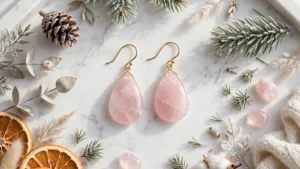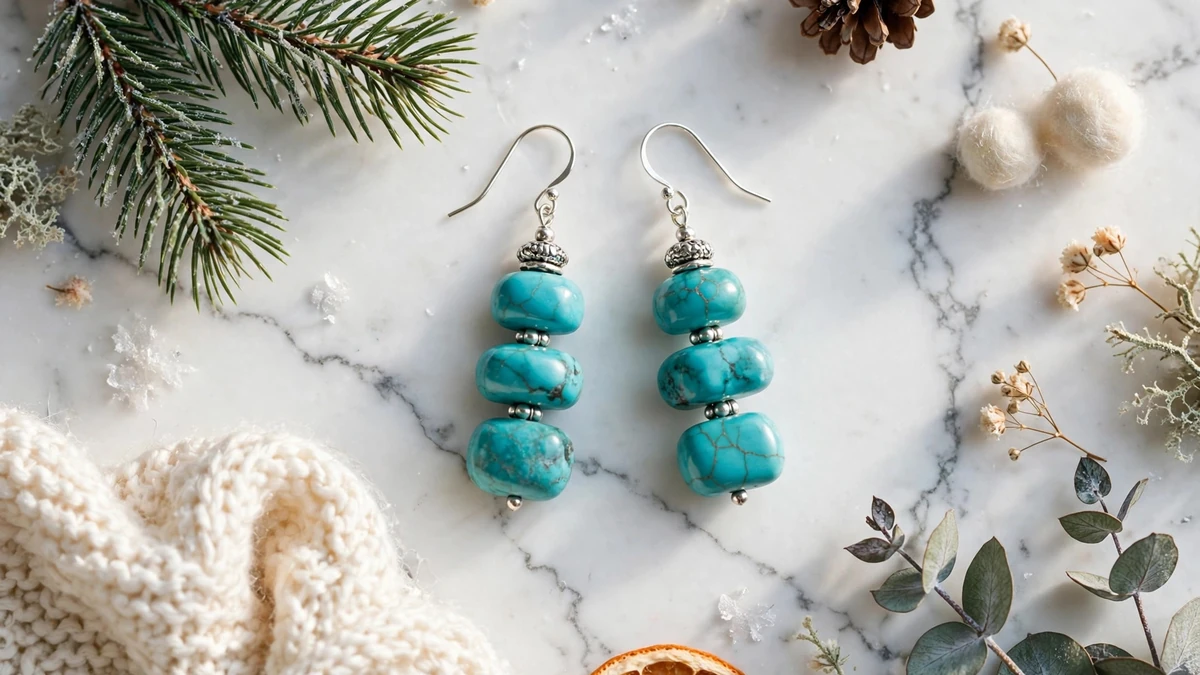
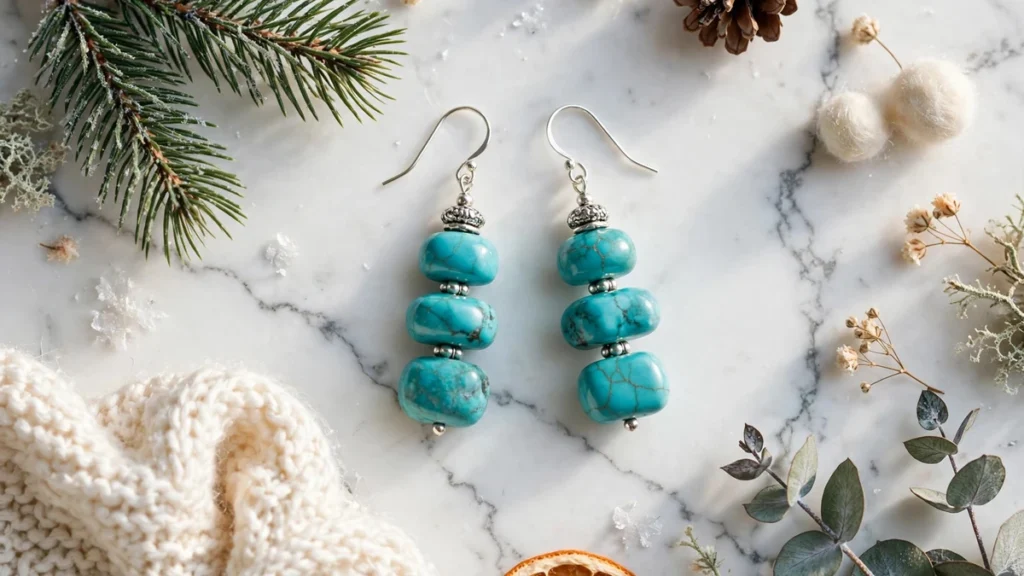
Turquoise is the stone that makes winter dressing feel less grey. Its blue-green colour cuts through dark coats, heavy knits and the flat light of short days, and it works just as well on a quiet afternoon as it does at a festive dinner. The problem is not finding turquoise earrings. It is finding a pair where the stone is genuine, the colour is stable, and the setting will survive being worn with scarves, hats and high collars all season.
That is why this guide is organised by stone quality and setting, not just by price or brand name. Much of the turquoise on the market is stabilised, dyed or entirely synthetic, and those treatments are not always disclosed. A well-made pair in a protective bezel setting can be worn every day through winter. A fragile pair with a soft stone and an open setting is better kept for special occasions.
Below are nine turquoise earrings worth considering in 2027, from classic studs to longer drops, each described by what it does well, what to watch for, and who it suits best, so you can choose with the stone in mind, not just the colour.
Key takeaways
- Turquoise is a soft, porous stone, so a protective setting and gentle care matter more than the brand name on the box.
- Natural turquoise is rare and expensive; most affordable turquoise is stabilised, and some is dyed howlite or plastic, so buy from a seller who discloses the treatment.
- Bezel settings and smaller studs are the safest daily winter choice, while long drops and open settings suit occasional wear.
- Keep turquoise away from perfume, hairspray, lotions and ultrasonic cleaners, and wipe it with a soft dry cloth after wearing.
- Turquoise has no proven healing properties and is not a financial investment at ordinary prices, and a stone that looks too perfect and too cheap is usually an imitation.
What turquoise actually is and why winter care matters
Turquoise is a hydrated copper aluminium phosphate, coloured by copper and iron. Its familiar blue-green range, from pale robin’s egg blue to deep green-blue, depends on how much copper and iron the stone contains. Good turquoise has an even colour and a fine, waxy surface. It is also soft, at Mohs 5 to 6, and porous, which means it can absorb oils, creams and chemicals, and it can scratch, chip and fade if it is treated roughly.
Winter is both kind and unkind to turquoise. Cold weather itself does no harm, and the stone looks its best against dark winter fabrics. But winter routines are hard on it. Scarves rub against drops, hat bands press on studs, and dry indoor heating encourages people to reach for heavy hand creams and lotions that transfer to jewellery. Perfume and hairspray are applied more heavily in winter, and both can stain or dull a porous stone.
The other thing to know is that natural, untreated turquoise is scarce. Most of the turquoise sold today is stabilised, which means it has been treated with a clear resin to make it harder and less porous. Stabilisation is a standard, accepted treatment when it is disclosed, and stabilised turquoise is usually the sensible choice for everyday earrings. What should worry you is turquoise that is dyed, reconstituted from powder, or simply howlite, magnesite or plastic coloured to look like turquoise, sold without any disclosure.
How we chose these earrings and what to look for
Look first at the stone and how it is set. A bezel setting, where the metal wraps around the edge of the stone, protects turquoise far better than a prong setting, and it is the setting to choose if you plan to wear the earrings daily. Studs are the safest shape for winter, because they sit close to the ear and do not catch on scarves or collars. Drops and dangles look beautiful, but they need a secure hook or post and a stone that is not too heavy.
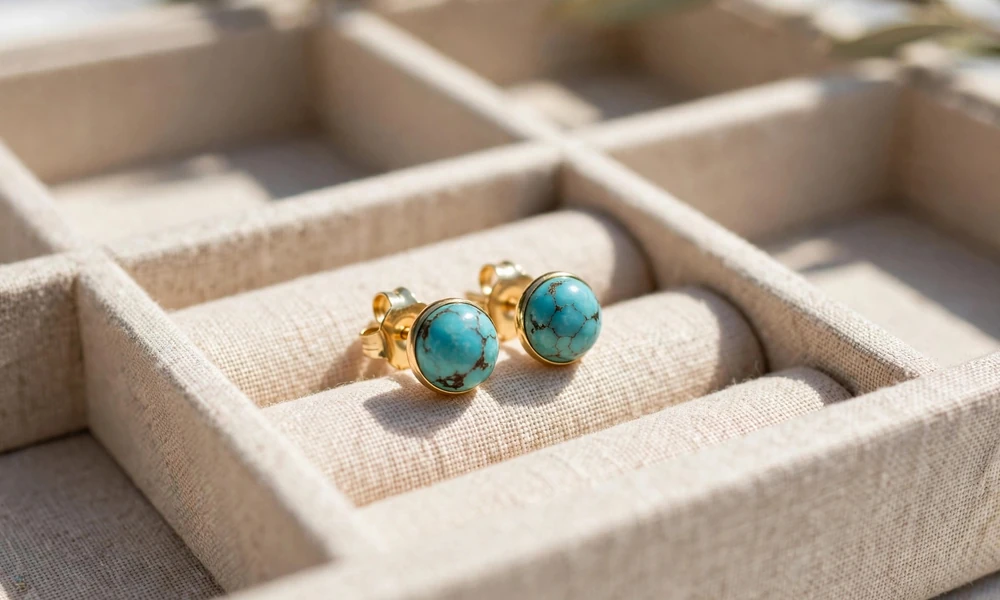
Look next at the colour and the matrix. The fine dark veins running through some turquoise, called the matrix, are natural and often prized, especially in American stones from Arizona and Nevada. An even, solid colour without matrix can be beautiful too, particularly in Persian-style turquoise. What should make you pause is a colour that looks unnaturally bright or uniform at a very low price, or a stone with no variation at all, which often points to dye or plastic. Our guide to the best diamond earrings of 2027 uses the same approach to judging a stone on its own merits, and the habit of checking the stone before the brand applies just as well to turquoise.
Finally, look at the metal and the price. Sterling silver suits turquoise well and keeps the price reasonable. Gold, vermeil and solid gold raise the price and the durability of the setting, but they do not make the stone itself any harder. If a pair is very cheap, the metal is usually thin and the stone is usually imitation. A fair price for genuine stabilised turquoise in sterling silver starts in the low hundreds; solid gold and natural, untreated turquoise cost considerably more.
The 9 best turquoise earrings for winter 2027
Tiffany & Co. Turquoise Studs
What we like: Classic round turquoise studs in sterling silver, with a clean bezel setting, an even sky-blue colour, and the reassurance of a major house’s sourcing and aftercare. What to consider: Premium price for the size of the stone, and the colour is more vivid than the muted tones some people prefer. Stone: Stabilised turquoise. Setting: Sterling silver bezel. Best for: Everyday winter wear and gifting. Price range: Premium.
A safe, polished choice if you want turquoise without any guesswork about quality, and the bezel setting is exactly what a soft stone needs.
Cartier Turquoise Studs
What we like: Small, precisely cut turquoise studs in 18k gold, with a smooth polish, a secure post, and a design that sits flat against the ear. What to consider: A high price for a small stone, and the gold setting will show scratches before the stone does. Stone: Stabilised turquoise. Setting: 18k yellow gold bezel. Best for: Dressier winter occasions and evening wear. Price range: Luxury.
Understated and well made, and the gold setting gives the blue-green stone a warmth that silver does not.
David Yurman Turquoise Studs
What we like: Turquoise cabochons in the house’s signature cable setting, with a comfortable weight, a secure backing, and a blue-green colour that reads well against dark winter clothes. What to consider: The cable detail adds bulk, so the studs sit slightly proud of the ear, and the price reflects the design as much as the stone. Stone: Stabilised turquoise cabochon. Setting: Sterling silver cable bezel. Best for: Everyday wear with a designer finish. Price range: Premium.
A good middle ground between a plain stud and a statement piece, with a setting that protects the stone properly.
Mejuri Turquoise Stud Earrings
What we like: Small turquoise studs in gold vermeil, with a soft blue colour, a light weight, and a price that makes genuine turquoise accessible. What to consider: Vermeil wears over time and needs gentle handling, and the stones are small. Stone: Stabilised turquoise. Setting: Gold vermeil bezel. Best for: Everyday wear and first turquoise earrings. Price range: Mid-range.
An easy entry point, and the small size makes these the most practical pair in this roundup for daily winter wear.
Monica Vinader Turquoise Studs
What we like: Neat turquoise studs in gold vermeil with a smooth, even colour, a comfortable post, and a design that layers well with other earrings. What to consider: The vermeil finish needs care to keep its colour, and the stone is modest in size. Stone: Stabilised turquoise. Setting: Gold vermeil bezel. Best for: Everyday wear and stacking with hoops or cuffs. Price range: Mid-range.
A tidy, versatile stud that works with almost any winter outfit, from a grey jumper to a black coat.
Missoma Turquoise Stud Earrings
What we like: Turquoise studs with a slightly deeper green-blue colour, set in gold vermeil, with a clean, modern shape and a fair price. What to consider: The deeper colour varies more from pair to pair, and vermeil needs gentle care. Stone: Stabilised turquoise. Setting: Gold vermeil bezel. Best for: Adding colour to dark winter outfits. Price range: Mid-range.
The green-blue tone is the most distinctive in this roundup, and it looks particularly good with navy and charcoal.
Maria Black Turquoise Studs
What we like: Minimal turquoise studs in sterling silver, with a cool, even blue colour and a slim profile that suits people who prefer quiet jewellery. What to consider: The design is deliberately plain, so it will not suit anyone looking for a statement, and the stones are small. Stone: Stabilised turquoise. Setting: Sterling silver bezel. Best for: Minimal everyday wear and work. Price range: Mid-range.
Quiet, well finished and easy to wear every day, with a setting that keeps the soft stone safe.
Astrid & Miyu Turquoise Drops
What we like: Turquoise drops on a slim gold-plated chain, with a longer line that catches the light, a secure hook, and a price that keeps them accessible. What to consider: Drops catch on scarves and high collars, so they are better for evenings than for daily winter wear, and the plating will wear with heavy use. Stone: Stabilised turquoise. Setting: Gold-plated drop. Best for: Evening and festive winter occasions. Price range: Affordable to mid-range.
The prettiest pair in this roundup for a night out, and best saved for occasions when a scarf is not in the way.
Thomas Sabo Turquoise Drops
What we like: Turquoise drops in sterling silver with a textured detail, a comfortable length, and a secure clasp that keeps them in place. What to consider: The textured silver needs occasional cleaning, and the drops are heavier than studs. Stone: Stabilised turquoise. Setting: Sterling silver drop. Best for: Weekend and evening wear. Price range: Mid-range.
A bolder drop that still feels wearable, and the silver setting gives the turquoise a cooler, more modern look.
Which turquoise earrings are right for you
Start with how you will actually wear them. If you want a pair for every day, choose studs in a bezel setting, in sterling silver or gold, with a stone that is stabilised and disclosed as such. Small to medium studs are the most practical in winter, because they do not catch on scarves, hats or coat collars, and they sit comfortably under earmuffs and headphones.
If you want colour for evenings and festive occasions, drops are the better choice, but wear them when a scarf is not in the way, and choose a secure hook or lever-back rather than a simple open hook. A longer drop in turquoise looks striking against a dark dress or a black coat, and the movement of the stone is part of its appeal. Our guide to gold jewellery for everyday wear is a useful companion here, because the same questions about setting, metal and daily practicality apply to any stone.
Colour is a matter of taste, but it is worth knowing the range. Pale sky blue is the classic look and suits fair skin and light hair. Deeper green-blue turquoise suits warmer skin tones and dark hair, and it reads more strongly against winter fabrics. A stone with a visible matrix has more character, while a solid colour is calmer and easier to match. None of these is better in absolute terms. The right one is the one you will reach for.
The caveats that matter
Turquoise is a beautiful stone, but it is not a hard one, and it is one of the most imitated stones in jewellery. Dyed howlite and magnesite are the commonest imitations, and they are often sold as turquoise without disclosure, especially online and at very low prices. Reconstituted turquoise, made from powdered stone mixed with resin, is another common product. Neither is necessarily a bad purchase at a fair price, but both should be sold for what they are.
| Detail | What is known |
|---|---|
| Hardness | Mohs 5 to 6, soft and porous, so it scratches and chips more easily than most gemstones |
| Most common treatment | Stabilisation with clear resin, standard and accepted when disclosed |
| Common imitations | Dyed howlite, dyed magnesite, plastic, glass, and reconstituted turquoise powder |
| Best setting for daily wear | Bezel setting in sterling silver or gold, with a secure post or backing |
| What to keep away | Perfume, hairspray, lotions, sunscreen, household cleaners, and ultrasonic cleaners |
| Cleaning | Soft dry cloth only, never soak, never steam clean, never use jewellery dip |
| When to avoid wearing | Swimming, showering, exercising, gardening, and any work with chemicals or hard surfaces |
| What it does not do | It has no proven healing properties and is not a financial investment at ordinary prices |
Care is simple but strict. Put your earrings on last, after perfume, hairspray and moisturiser, and take them off first. Wipe them with a soft, dry cloth after wearing, and store them separately in a soft pouch so they do not rub against harder jewellery. Never use an ultrasonic cleaner, a steam cleaner, or a jewellery dip on turquoise, and never soak it in water. If a stone looks dull, a gentle wipe is all it needs. Anything stronger risks the colour and the surface.
Checklist: choosing turquoise earrings honestly
Use these checks before you buy, and again after a month of wear.
- Check the disclosure: the seller should say whether the turquoise is natural, stabilised, dyed or reconstituted.
- Check the setting: a bezel setting protects the stone better than prongs, especially for daily wear.
- Check the colour: it should look natural, with some variation, not unnaturally bright or perfectly uniform at a low price.
- Check the backing: a secure post, screw-back or lever-back matters more in winter, when scarves and hats tug at earrings.
- Check the metal: sterling silver and gold are the safest choices; thin plating wears quickly with daily wear.
- Check the care routine: put earrings on last, wipe them after wearing, and store them separately in a soft pouch.
Frequently asked questions
Is turquoise safe to wear every day in winter?
Yes, if the stone is stabilised and set in a protective bezel, and if you put the earrings on after perfume and hairspray. Studs are the safest daily choice, because they do not catch on scarves or collars.
How can I tell if turquoise is real?
Real turquoise has a waxy surface, natural colour variation, and often a fine matrix. Dyed howlite usually has a very white base with dark grey veins, and plastic feels warmer and lighter than stone. The surest check is buying from a seller who discloses the treatment in writing.
Can turquoise get wet?
Brief contact with water is not a disaster, but turquoise should not be soaked, worn swimming or showering, or cleaned with water and soap. It is porous, so it absorbs moisture and chemicals, which can dull the colour over time.
Does turquoise fade?
It can, slowly, with long exposure to strong light, heat and chemicals. Keeping it away from perfume, hairspray and direct sun, and storing it in a pouch, helps the colour stay true.
What is stabilised turquoise?
Stabilised turquoise has been treated with a clear resin to make it harder and less porous. It is a standard, accepted treatment, and most affordable turquoise earrings use it. The important thing is that the seller discloses it.
Are turquoise earrings a good investment?
Not at ordinary prices. Turquoise is a fashion and personal stone, not a financial asset, except for rare, untreated, high-grade natural stones with provenance. Buy turquoise because you love the colour, not because you expect it to gain value. Our guide to diamond jewellery for winter covers stones that hold value better, if investment is part of your thinking.
The bottom line
The best turquoise earrings for winter 2027 are not the biggest or the most expensive. They are the pair with a genuine, disclosed stone, a protective bezel setting, and a size and shape that suits how you actually live in winter. For most people, that means a small to medium stud in sterling silver or gold, worn daily and cared for gently.
Choose the colour you love, check the disclosure, put the earrings on last and take them off first, and wipe them after wearing. Turquoise rewards that small amount of care with a colour no other winter stone quite matches.