Shopping for earrings for a teenager is harder than it looks. The pair has to survive school, sport, sleepovers and a phone that never leaves their hand, while still feeling like something they actually want to wear. Too heavy and it pulls. Too cheap and the posts turn skin green or itchy within a week. Too fussy and it sits in a drawer while the same old pair stays in.
The good news is that the best earrings for teens in 2027 are not the most expensive ones. They are the small, light, well-made pairs with secure backs, sensible materials and a design that works with a school uniform on Monday and a party outfit on Saturday. A simple gold or silver stud, a small hoop and a huggie cover almost every situation a teenager will meet.
Below are nine earrings worth considering in 2027, from affordable sterling silver studs to a first piece of solid gold. Each one is described by what it is good at, what to watch for, and who it suits best, so you can choose with a teenager’s real life in mind, not just a pretty product photo.
Key takeaways
- Light and small wins for teens: studs and small hoops under a few grams are the most comfortable for all-day wear.
- Solid gold, sterling silver and implant-grade titanium are the safest everyday materials; plated and nickel-heavy metals are the most common cause of irritation.
- Secure backs matter more than sparkle: screw backs or flat backs stay in during sport and sleep, while push backs loosen and get lost.
- Start with one versatile pair, not a full collection, and add a second style once you know what actually gets worn.
- No earring is completely risk-free for a new piercing, and a pair that itches, swells or turns skin green should come out straight away.
What earrings for teens actually need to do
A teenager’s earrings have a harder job than an adult’s. They go through school days, training sessions, swimming, sleep and the occasional forgotten removal before bed. An earring that is comfortable at 8 in the morning and still comfortable at 10 at night is worth far more than one that looks impressive in a box and hurts by lunchtime.
Weight is the first thing to check. A stud or small hoop that weighs a gram or two will be forgotten within minutes. A heavy drop or chandelier, however pretty, pulls on a young earlobe and can stretch a piercing over time. For everyday wear, keep it light and keep it close to the ear.
Material is the second thing, and it matters more than most people expect. Teenage skin is often more reactive than adult skin, especially around a piercing that is still settling. Solid 14k gold, sterling silver and implant-grade titanium are the materials that cause the fewest problems. Gold-plated and gold-filled pieces can be fine for occasional wear, but the plating wears thin with daily use and the base metal underneath is often what causes a reaction.
The third thing is the clasp. A teenager will not stand in front of a mirror fiddling with a fiddly butterfly back every morning, and a clasp that is hard to close is a clasp that gets left half-open, which is how earrings fall out. A hinged huggie, a secure latch hoop or a simple screw-back stud takes seconds to put on and stays put all day. If a pair is hard to fasten, it will not get worn, however pretty it is, so test the clasp before you buy rather than discovering the problem on a school morning.
How we chose these earrings and what to look for
Look first at the metal and the post. A post made from the same solid metal as the front of the earring is a good sign. A post that looks like a different, cheaper metal is a warning, because the post is the part that sits inside the piercing all day. For a new or sensitive piercing, a flat-back or screw-back post in solid gold or titanium is the safest starting point.
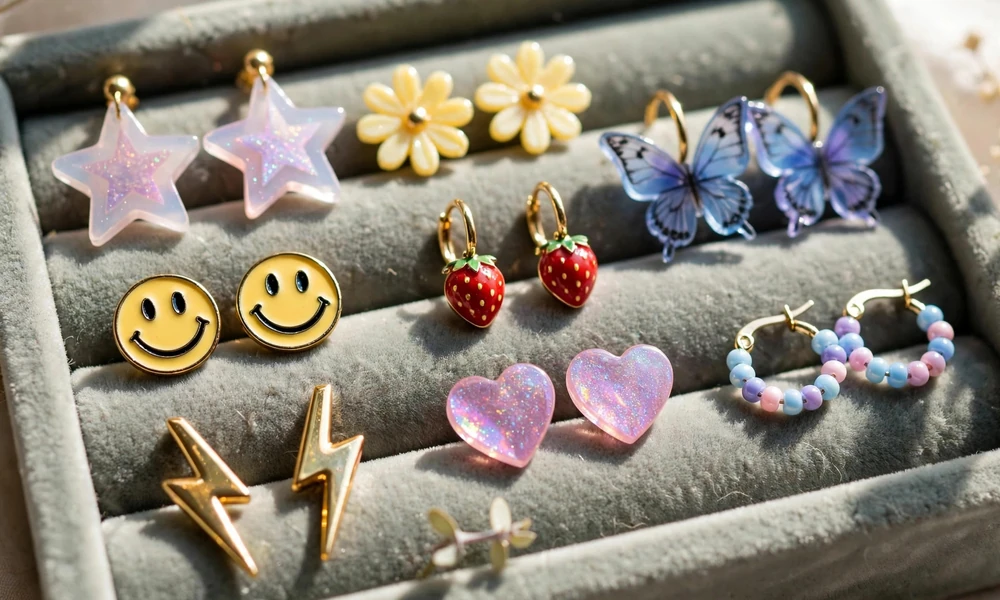
Look next at the back. Push backs are the most common, but they loosen over time and are easy to lose in a school bag or a swimming pool. Screw backs and flat backs cost a little more and are fiddlier to put on, but they stay put, which matters for a teenager who will not notice a missing earring until it is gone. Our guide to the best stud earrings explains the different back types in more detail, because the back is what decides whether a pair survives a term of daily wear.
Finally, look at the size and the occasion. A 4 to 6 millimetre stud suits school and sport. A 10 to 15 millimetre hoop suits weekends and evenings. A huggie, which hugs the lobe closely, suits both. Buying one pair that works everywhere is smarter than buying three pairs that each work only sometimes.
The 9 best earrings for teens of 2027
Mejuri 14k Gold Mini Hoops
What we like: Solid 14k gold in a slim, lightweight hoop that is small enough for school and smart enough for a party, with a secure latch back. What to consider: Small, so they are easy to misplace, and solid gold costs more than plated alternatives. Stone: None. Setting: Solid 14k gold hoop with latch back. Best for: Everyday wear and first gold. Price range: Mid-range.
A first piece of solid gold that a teenager can wear daily without thinking about it. The hoops are light enough to forget and sturdy enough to last for years.
Monica Vinader 18k Gold Vermeil Studs
What we like: A classic stud in 18k gold vermeil over sterling silver, with a clean shape that suits every outfit and a comfortable, light feel. What to consider: Vermeil wears through with daily use over one to three years, so it is not a forever piece. Stone: Cubic zirconia. Setting: 18k gold vermeil over sterling silver, push back. Best for: A first grown-up stud. Price range: Mid-range.
A good middle ground between costume jewellery and solid gold. The studs look polished and expensive, and the price makes them a realistic birthday or graduation gift.
Astrid & Miyu Pearl Studs
What we like: Freshwater pearl studs with a soft, classic look that works for school, family occasions and formal events alike. What to consider: Pearls are soft and scratch easily, so they need gentle handling and should go on last, after perfume and hairspray. Stone: Freshwater pearl. Setting: Gold-plated sterling silver, push back. Best for: Formal occasions and gifts. Price range: Affordable to mid-range.
Every teenager needs one pair that makes a plain outfit look finished. These pearls do that without being fussy, and they suit every skin tone.
Missoma Gold Huggie Hoops
What we like: Small huggie hoops that sit close to the lobe, in 18k gold vermeil, with a hinged clasp that is easy to open and close. What to consider: Vermeil wears through with daily wear, and the hinge is the part most likely to loosen first. Stone: None. Setting: 18k gold vermeil over sterling silver, hinged clasp. Best for: Everyday hoops without the weight. Price range: Mid-range.
Huggies are the teen-friendly hoop. They give the look of a hoop without the swing, the snagging or the weight, and they rarely catch on a jumper or a mask strap.
Maria Black Gold Studs
What we like: Sculptural, modern studs in solid 14k gold with a distinctive shape that feels grown-up without being flashy. What to consider: The sculptural shape is a matter of taste, and solid gold carries a higher price. Stone: None. Setting: Solid 14k gold, push back. Best for: Teens who want something different. Price range: Mid-range to premium.
For the teenager who finds classic studs boring, these are a quiet way to stand out. The shape is the design, so there is nothing to snag and nothing to lose.
Thomas Sabo Sterling Silver Studs
What we like: Solid 925 sterling silver studs with a clean, simple design and a fair price for the metal. What to consider: Silver tarnishes and needs an occasional polish, and it is softer than gold so it can scratch. Stone: Cubic zirconia. Setting: 925 sterling silver, push back. Best for: An affordable everyday pair. Price range: Affordable.
A sensible first pair. Sterling silver is a real metal at a realistic price, and if a stud is lost, replacing it does not hurt the way losing a gold pair would.
Pandora Sterling Silver Studs
What we like: Widely available sterling silver studs in cheerful, simple designs that teenagers recognise and like, with a secure push back. What to consider: The designs are fashionable rather than timeless, so tastes may change quickly. Stone: Cubic zirconia. Setting: 925 sterling silver, push back. Best for: A first pair or a gift. Price range: Affordable.
An easy, safe gift choice. The designs are familiar, the metal is solid silver, and the price makes them a low-risk first step into real jewellery.
Kendra Scott Elisa Studs
What we like: Colourful stone studs in a small, neat setting, with plenty of colour options so a teenager can pick their favourite. What to consider: The setting is gold-plated brass, so the plating will wear with daily use and the base metal can irritate sensitive ears. Stone: Semi-precious stone or glass. Setting: Gold-plated brass, push back. Best for: Colour and fun. Price range: Affordable.
The fun pair in the box. Best kept for occasional wear rather than daily use, especially if the wearer’s ears are at all reactive.
Tiffany & Co. Sterling Silver Studs
What we like: A classic, beautifully finished sterling silver stud from a heritage house, in the famous blue box that makes it a memorable gift. What to consider: You pay a premium for the name, and the design is deliberately simple. Stone: None. Setting: 925 sterling silver, push back. Best for: A milestone gift. Price range: Mid-range to premium.
The special-occasion pair. It is not the cheapest silver stud, but it is the one a teenager is most likely to keep for years and remember who gave it to them.
Which earrings for teens are right for you
For school and sport, choose small studs or huggies in solid gold, sterling silver or titanium, with a secure back. Nothing should dangle, swing or catch, and nothing should be heavy enough to pull. A 4 to 6 millimetre stud is the safest everyday choice, and it suits every uniform and dress code.
For parties and formal occasions, a small hoop or a pearl stud adds polish without the risk of a heavy drop earring. A hoop under 15 millimetres keeps the look smart rather than statement, and a pearl stud works with almost any outfit. Our guide to the best hoop earrings is a useful next step if hoops are the style a teenager keeps reaching for, because hoop size and clasp type change comfort more than most people expect.
For a first piercing, or a piercing that is still settling, keep it simple. A flat-back or screw-back stud in solid 14k gold or implant-grade titanium, worn without changing it for at least six to eight weeks, gives the piercing the best chance to heal cleanly. Changing earrings too early is the most common reason a new piercing gets irritated.
The caveats that matter
Earrings for teens are mostly safe, but the problems are predictable and easy to avoid. The most common is irritation from cheap metals. Nickel is the usual culprit, and it hides in plated jewellery, in posts made from a different metal than the front, and in very cheap pairs where the metal is not named at all. If the metal is not named, do not put it in a piercing.
| Detail | What is known |
|---|---|
| Safest everyday metals | Solid 14k gold, 925 sterling silver, implant-grade titanium |
| Metals to be careful with | Nickel-heavy alloys, unnamed base metals, worn-through plating |
| Best size for daily wear | Studs 4 to 6 millimetres; hoops 10 to 15 millimetres |
| Most secure backs | Screw backs and flat backs; push backs loosen over time |
| New piercings | Keep the first pair in for 6 to 8 weeks; do not change early |
| Sport and swimming | Remove dangling earrings; keep small studs in, and rinse after chlorine or salt water |
| When to take them out | If there is itching, swelling, redness that spreads, or discharge that does not settle in a day or two |
| What no earring can do | No earring suits every ear, and no plated pair lasts forever with daily wear |
If an earring causes itching, swelling or discharge, take it out, clean the piercing gently with saline, and do not put the same pair back in. If the symptoms do not settle in a day or two, or if there is spreading redness or pain, see a clinician. That is not overreacting. An infected piercing is much harder to fix than a simple irritation caught early.
Checklist: choosing earrings for teens honestly
Use these checks before you buy, and again after a week of wear.
- Check the metal: it should be named, solid gold, sterling silver or titanium, not just “gold tone” or “alloy”.
- Check the post: it should be the same metal as the front, not a cheaper-looking pin.
- Check the weight: hold the pair in your palm; if it feels heavy, it will pull on a young earlobe.
- Check the back: screw backs and flat backs stay in; push backs need regular checking.
- Check the size: 4 to 6 millimetre studs and 10 to 15 millimetre hoops suit most teenagers.
- Check after a week: no itching, no redness, no green marks on the skin, and both backs still secure.
Frequently asked questions
What is the best first pair of earrings for a teenager?
A small stud in solid 14k gold or sterling silver, 4 to 6 millimetres, with a secure back. It suits school, sport and formal occasions, it rarely irritates, and it is easy to wear every day without thinking about it.
Are hoops safe for teenagers?
Yes, if they are small and light. Hoops of 10 to 15 millimetres with a secure latch are safe for daily wear. Large, heavy hoops can pull on the lobe and catch on clothing, so save those for occasional wear.
How long should a new piercing keep its first earrings in?
At least six to eight weeks for a lobe piercing, and longer for cartilage. Changing the earrings early is the most common cause of irritation, so wait until the piercing feels completely calm before swapping.
Can teenagers wear earrings for sport?
Small studs and huggies are usually fine, but check the school or club rules first, as some require earrings to be removed or taped. Dangling earrings should always come out before contact sport or swimming.
Why do cheap earrings turn skin green?
The green mark comes from copper in the base metal reacting with sweat and skin oils. It is a sign the metal is not solid gold or silver, and it usually means the plating has worn through. Our guide to gold jewellery for everyday wear explains the difference between solid gold, vermeil and plating, which is worth knowing before buying any pair.
What should I do if an earring irritates my teenager’s ear?
Take it out, clean the piercing gently with saline, and switch to a solid gold or titanium stud. If the irritation does not settle in a day or two, or if there is spreading redness, swelling or pain, see a clinician.
The bottom line
The best earrings for teens in 2027 are small, light and made from a named, solid metal. A sterling silver or solid gold stud, a small hoop and a huggie cover almost every situation, and a secure back matters more than a famous name. Start with one versatile pair, check it after a week of wear, and only then add a second style.
Choose the metal before the design, the back before the sparkle, and comfort before fashion. A pair that is worn every day is worth far more than a pair that sits in a drawer, however beautiful it looked in the box.