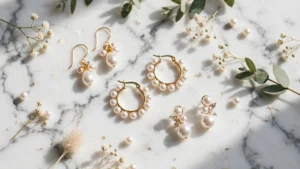
If your ears itch, swell or turn red within a day of wearing earrings, you are not imagining it, and you are not alone. Sensitive ears are one of the most common jewellery complaints, and the cause is almost always the metal. Nickel, cheap alloys and worn-through plating are the usual culprits, and they hide in pairs that look perfectly fine in the box.
The good news is that sensitive ears do not mean giving up earrings. They mean choosing the metal first and the design second. Solid 14k gold, platinum, implant-grade titanium and niobium are the materials that cause the fewest reactions, and once you know what your ears tolerate, the choice becomes simple rather than stressful.
Below are nine earrings worth considering in 2027, from solid gold studs to implant-grade titanium, each described by what it is good at, what to watch for, and who it suits best, so you can buy with confidence instead of guessing and hoping.
Key takeaways
- Nickel is the most common cause of earring reactions, and it hides in cheap alloys, plated jewellery and posts made from a different metal than the front.
- Solid 14k gold, platinum, implant-grade titanium and niobium are the safest materials for sensitive ears.
- The post matters as much as the front: a post made from cheap metal will irritate even if the earring itself is solid gold.
- Gold-plated and vermeil earrings can be fine for occasional wear, but the plating wears through with daily use and exposes the base metal underneath.
- No earring is completely risk-free for very reactive ears, and a pair that itches, swells or weeps should come out straight away.
What sensitive ears actually react to
Most earring reactions are a form of contact dermatitis, and nickel is the trigger in the large majority of cases. Nickel is cheap, strong and easy to work with, which is why it appears in so many alloys, clasps and posts. The problem is that sweat and skin oils slowly release nickel ions from the metal, and for sensitive skin that is enough to start an itch, a rash or swelling within hours.
The reaction is not always immediate. A pair can feel fine for a day or two and then start to itch, especially in warm weather or after exercise, when sweat increases the release of metal ions. That delay is why many people blame the wrong pair, or assume their ears have suddenly become sensitive, when the real cause is a pair they have worn for weeks.
Other triggers exist, though they are less common. Some people react to copper in sterling silver, to cobalt in some alloys, or to the chemicals in plating. The practical rule is the same in every case: choose a named, solid metal, check the post, and take out any pair that causes symptoms rather than hoping your ears will get used to it. They will not.
How we chose these earrings and what to look for
Look first at the metal, and insist on it being named. Solid 14k gold, platinum, implant-grade titanium and niobium are the safest choices, in that order of familiarity. Sterling silver is usually fine, but it contains copper, and a small number of people react to that too. If a listing says only “gold tone”, “alloy” or “hypoallergenic” without naming the metal, treat it as a warning, because “hypoallergenic” is not a regulated term and means very little on its own.

Look next at the post, because it is the part that sits inside the piercing all day. A post made from the same solid metal as the front is a good sign. A post that looks like a different, cheaper metal is a warning, and it is the most common reason a supposedly gold earring still causes a reaction. Our guide to face wash for sensitive skin makes the same point for skincare, because sensitive skin reacts to what touches it, whether that is a cleanser or a metal post, and the gentlest option is usually the simplest one.
Finally, look at the back and the finish. A smooth, well-polished post with no rough edges is less likely to irritate a piercing, and a flat-back or screw-back post in solid metal is the safest choice for ears that react easily. Avoid earrings with rough prongs, sharp edges or a coating that is already flaking, because a damaged surface releases more metal ions than a smooth one.
The 9 best earrings for sensitive ears of 2027
Mejuri 14k Gold Studs
What we like: Solid 14k gold studs with a smooth, well-polished post in the same metal as the front, in a small, classic size that suits daily wear. What to consider: Solid gold costs more than plated alternatives, and 14k gold still contains a small amount of alloy metals. Stone: Diamond or none. Setting: Solid 14k gold, push back. Best for: Everyday wear for mildly sensitive ears. Price range: Mid-range.
The first pair to try if your ears react to cheap jewellery but tolerate most metals. Solid 14k gold is the most widely tolerated precious metal, and these studs are light enough to forget.
Monica Vinader 18k Gold Vermeil Studs
What we like: A classic stud in 18k gold vermeil over sterling silver, with a clean shape and a comfortable, light feel. What to consider: Vermeil is a thick gold coating over silver, and it wears through with daily use in one to three years, exposing the silver underneath. Stone: Cubic zirconia. Setting: 18k gold vermeil over sterling silver, push back. Best for: Occasional wear for mildly sensitive ears. Price range: Mid-range.
A good option if your ears are only mildly reactive and you do not wear the pair every day. For daily wear, solid gold is the safer long-term choice.
Maria Black 14k Gold Studs
What we like: Sculptural studs in solid 14k gold with a smooth finish and a post in the same metal, in a distinctive modern shape. What to consider: The sculptural shape is a matter of taste, and solid gold carries a higher price. Stone: None. Setting: Solid 14k gold, push back. Best for: Sensitive ears that want something different. Price range: Mid-range to premium.
Proof that safe does not have to mean boring. The smooth, solid-gold surface is gentle on a piercing, and the shape is the design, so there is nothing rough to catch or irritate.
Neometal Implant-Grade Titanium Studs
What we like: Implant-grade titanium, the same metal used in medical implants, with a mirror-polished post that is the gentlest option for very reactive ears. What to consider: The designs are simple, and titanium is harder to find on the high street than gold or silver. Stone: Cubic zirconia or none. Setting: Implant-grade titanium, threadless flat back. Best for: Very sensitive ears and new piercings. Price range: Affordable to mid-range.
If gold still irritates your ears, titanium is the next step, and for many people it is the last step they ever need. Piercers recommend it for healing piercings for a reason.
Thomas Sabo Sterling Silver Studs
What we like: Solid 925 sterling silver studs with a smooth post and a clean, simple design at a fair price for the metal. What to consider: Silver contains copper, and a small number of people react to that, so it is not the safest choice for very reactive ears. Stone: Cubic zirconia. Setting: 925 sterling silver, push back. Best for: Mildly sensitive ears on a budget. Price range: Affordable.
A reasonable first test for mildly sensitive ears. If silver works for you, it opens up a wide range of affordable pairs, but if it itches, move up to solid gold or titanium rather than trying more silver.
Missoma Gold Vermeil Huggie Hoops
What we like: Small huggie hoops that sit close to the lobe, in 18k gold vermeil, with a hinged clasp that is easy to open and close. What to consider: Vermeil wears through with daily wear, and the hinge is the part most likely to loosen first. Stone: None. Setting: 18k gold vermeil over sterling silver, hinged clasp. Best for: Occasional hoops for mildly sensitive ears. Price range: Mid-range.
The hoop option for sensitive ears, with a caveat. Keep these for occasional wear rather than daily use, and switch to solid gold hoops if you want to wear hoops every day.
Astrid & Miyu Niobium Studs
What we like: Niobium posts, a metal so rarely reactive that it is used for people who cannot tolerate gold, silver or titanium, in a small, neat stud. What to consider: Niobium designs are limited, and the metal is dark grey, so it suits the post rather than the visible front. Stone: Cubic zirconia. Setting: Niobium post with gold front, push back. Best for: Extremely reactive ears. Price range: Affordable to mid-range.
The option most people have never heard of, and the one that solves the problem when everything else has failed. If even titanium irritates your ears, niobium is worth asking a piercer about.
Tiffany & Co. Platinum Studs
What we like: Solid platinum studs, a metal that is almost never reactive, beautifully finished, with a smooth post and a secure back. What to consider: Platinum is expensive, and the designs are deliberately simple. Stone: Diamond. Setting: Solid platinum, push back. Best for: Very sensitive ears and milestone gifts. Price range: Premium.
The most hypoallergenic precious metal there is, in a pair you will keep for decades. Expensive, but for ears that react to everything else, it is the definitive answer.
Catbird 14k Gold Threader Earrings
What we like: Fine solid 14k gold threaders with a smooth, lightweight chain that passes through the piercing, with no back to lose and no clasp to irritate. What to consider: Threaders are delicate and need gentle handling, and they are not ideal for a piercing that is still healing. Stone: None. Setting: Solid 14k gold threader, no back. Best for: Sensitive ears that want a delicate look. Price range: Mid-range.
A clever design for sensitive ears, because there is no back pressing against the skin and no clasp to trap moisture. The smooth gold chain slides through the piercing and stays comfortable all day.
Which earrings for sensitive ears are right for you
For mildly sensitive ears, start with solid 14k gold or sterling silver studs. Most people who react to cheap jewellery find that solid gold solves the problem completely, and silver works for many too. Wear the pair for a week before deciding, because a reaction can take a day or two to appear.
For very sensitive ears, go straight to implant-grade titanium or niobium. These are the metals piercers use for healing piercings, and they cause reactions so rarely that they are the standard recommendation for people who cannot wear anything else. Our guide to moisturisers for sensitive skin follows the same logic, because sensitive skin, wherever it is, responds best to the simplest, least reactive option available.
For a special occasion, platinum is the safest precious metal of all, and a solid platinum stud is the pair to choose if you want to wear earrings all day at a wedding or a party without worrying about your ears by the evening. It is expensive, but it is the one metal that almost nobody reacts to.
The caveats that matter
Sensitive ears are manageable, but the mistakes are predictable. The most common is trusting the word “hypoallergenic” on its own. It is not a regulated term, and a pair labelled hypoallergenic can still contain nickel, cobalt or a plated base metal. The metal must be named, and the post must be the same metal as the front.
| Detail | What is known |
|---|---|
| Safest metals | Solid 14k gold, platinum, implant-grade titanium, niobium |
| Usually safe | 925 sterling silver, for mildly sensitive ears |
| Most common trigger | Nickel in cheap alloys, clasps and posts |
| What to avoid | Unnamed metals, “gold tone”, worn-through plating, rough or flaking finishes |
| Check the post | It should be the same solid metal as the front, not a cheaper pin |
| Test a new pair | Wear it for a week; a reaction can take a day or two to appear |
| When to take them out | Itching, swelling, redness that spreads, or discharge that does not settle in a day or two |
| What no earring can do | No earring suits every ear, and no plated pair lasts forever with daily wear |
If an earring causes itching, swelling or discharge, take it out, clean the piercing gently with saline, and do not put the same pair back in. Switch to a solid gold or titanium stud and give your ears a few days to calm down. If the symptoms do not settle, or if there is spreading redness or pain, see a clinician. An infected piercing is much harder to fix than a simple irritation caught early.
Checklist: choosing earrings for sensitive ears honestly
Use these checks before you buy, and again after a week of wear.
- Check the metal: it should be named, solid gold, platinum, titanium or niobium, not just “hypoallergenic” or “gold tone”.
- Check the post: it should be the same solid metal as the front, smooth and well polished, with no rough edges.
- Check the back: flat backs and screw backs are the safest; avoid backs made from a different, unnamed metal.
- Check the finish: smooth and unflawed, with no flaking, rough prongs or sharp edges.
- Check after a week: no itching, no redness, no swelling, and no discharge from the piercing.
- Check the label: if the metal is not named anywhere, do not put it in a piercing.
Frequently asked questions
What metal is best for sensitive ears?
Implant-grade titanium and niobium cause the fewest reactions, followed by platinum and solid 14k gold. Sterling silver is usually fine for mildly sensitive ears, but it contains copper, which a small number of people react to.
Are gold-plated earrings safe for sensitive ears?
Sometimes, for occasional wear. The plating wears through with daily use in one to three years, and the base metal underneath is often what causes a reaction. For daily wear, solid gold is the safer choice.
Why do my ears react to earrings I have worn for years?
Plating wears thin over time, exposing the base metal underneath, and sensitivity can also develop gradually with repeated exposure. A pair that was fine for a year can start to irritate once the coating is gone.
Can I wear sterling silver if my ears are sensitive?
Many people can, because sterling silver is a solid, named metal. Try a small pair for a week and watch for itching or redness. If it irritates, move up to solid gold or titanium rather than trying more silver.
What should I do if an earring irritates my ear?
Take it out, clean the piercing gently with saline, and switch to a solid gold or titanium stud. If the irritation does not settle in a day or two, or if there is spreading redness, swelling or pain, see a clinician. Our guide to the best diamond earrings is a useful next step once your ears are calm, because it covers solid gold and platinum settings that suit sensitive ears well.
Is “hypoallergenic” a reliable label for earrings?
No. It is not a regulated term, and a pair labelled hypoallergenic can still contain nickel or a plated base metal. Always check that the metal is named and that the post is the same solid metal as the front.
The bottom line
The best earrings for sensitive ears in 2027 are made from a named, solid metal, with a post in the same metal as the front. Solid 14k gold suits most mildly sensitive ears, implant-grade titanium and niobium suit very reactive ears, and platinum suits almost everyone. The word “hypoallergenic” on its own is not a guarantee, and the post matters as much as the design.
Choose the metal before the design, test a new pair for a week, and take out anything that itches rather than hoping your ears will get used to it. Once you know what your ears tolerate, buying earrings becomes simple, and the right pair is one you can forget you are wearing.