Hypoallergenic earrings are the one piece of jewellery that can make or break whether you wear earrings at all. If your ears itch, swell, or turn red within hours of putting a pair on, the problem is almost never your ears. It is the metal. Nickel is the most common culprit, and it hides in cheap plated earrings, in the posts of fashion jewellery, and even in some pieces labelled hypoallergenic, because that word is not regulated and any brand can use it.
That is why this guide is organised by metal, not just by style. A solid 14k gold stud, a titanium post, and a platinum earring behave very differently on sensitive skin, even when they look identical in a photograph. The safest metals are the ones with no nickel at all: titanium, niobium, platinum, and solid gold of 14k and above. Sterling silver can work for many people, but it is an alloy, and the other metals in it vary by maker, so it is worth choosing carefully.
Below are nine hypoallergenic earrings worth considering in 2027, from affordable titanium studs to solid gold and platinum pieces for everyday wear. Each one is described by what it is good at, what to watch for, and who it suits best, so you can choose with your skin in mind, not just a bestseller list.
Key takeaways
- Nickel is the most common cause of earring reactions, and it hides in plated and fashion jewellery even when a piece is labelled hypoallergenic.
- The safest metals for sensitive ears are implant-grade titanium, niobium, platinum, and solid gold of 14k and above.
- Gold vermeil and gold plating wear through with daily use, and the metal underneath is what your skin eventually meets.
- A flat-back, threadless, or screw-back post stays put, reduces movement, and gives sensitive ears less to react to.
- No earring is guaranteed reaction-free for everyone, and a new piercing should heal fully before you switch to fashion earrings.
What hypoallergenic actually means for earrings
Hypoallergenic sounds like a promise, but it is not a standard. No regulator defines what a brand must prove before it can print the word on a box, and different brands mean different things by it. For one maker it means the piece contains no nickel. For another it means the piece is unlikely to cause a reaction in most people, which is a much weaker claim. That is why two earrings can both be sold as hypoallergenic and behave completely differently on your skin.
The metal that causes most reactions is nickel. It is cheap, hard, and useful for plating, which is why it turns up in so much fashion jewellery. A nickel allergy is also common and permanent: once you develop it, you keep it. The reaction is usually a contact allergy, which means it appears where the metal touches the skin, often twelve to forty-eight hours after you put the earring in. Itching, redness, swelling, and a weepy or crusty lobe are the usual signs, and they can appear even with earrings you wore happily for years, because a nickel allergy can develop over time.
The practical test is simple. If a pair of earrings makes your ears react, take them out, let the skin calm, and do not wear them again to see if it was a one-off. A true metal reaction repeats every time the same metal touches the skin. The safest path is to choose a metal with no nickel in its composition at all, and to buy from a maker that states the exact alloy, rather than one that hides behind the word hypoallergenic alone.
How we chose these earrings and what to look for
Look first at the metal and the alloy, and ask for the exact composition. Implant-grade titanium, usually ASTM F136, contains no nickel and is the metal used in medical implants, which is why it is the default recommendation for sensitive ears and new piercings. Niobium is another nickel-free metal, lighter and softer than titanium, and a good choice if you want colour without plating. Platinum is dense, durable, and nickel-free, though it is the most expensive option here. Solid gold of 14k and above is generally safe, because the nickel content in a good 14k alloy is low or absent, but white gold is the exception: it is often alloyed with nickel and then plated with rhodium, and when that plating wears off, the nickel underneath can cause a reaction.
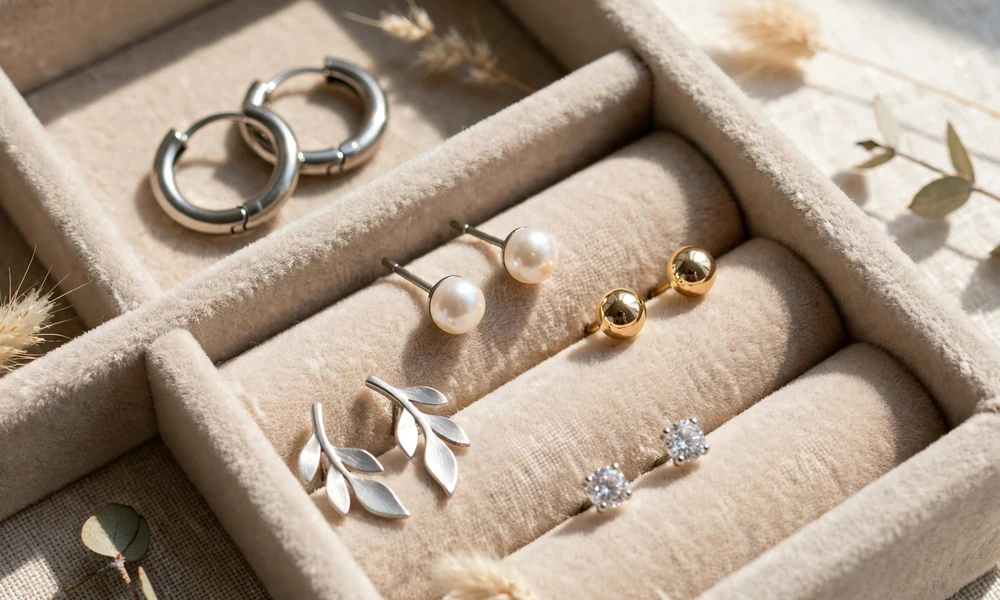
Look next at the post and the backing, because the post is the part that sits inside the piercing and touches the most skin. A smooth, polished post with no rough edges is kinder than a rough or pitted one, and a flat-back or threadless labret post moves less than a butterfly-back stud, which means less friction and less irritation. Screw-back posts are another good choice for sensitive ears, because they stay put and do not loosen during the day. Our guide to the best diamond earrings of 2027 is a useful companion here, because many of the same settings and closures appear in both guides, and the differences come down to metal and weight.
Finally, look at the finish and the weight. A heavy earring pulls on the lobe, and a lobe that is already irritated heals more slowly when it is under strain. Light studs and small hoops are the safest starting point, and you can move to heavier pieces once you know which metals your skin accepts. Avoid earrings with rough stones, sharp prongs, or a coating that can flake, because a flaking coating exposes the metal underneath and traps moisture against the skin.
The 9 best hypoallergenic earrings of 2027
Mejuri 14k Solid Gold Studs
What we like: Solid 14k gold with no plating to wear through, a smooth polished post, and a light, comfortable weight for daily wear. What to consider: Solid gold costs more than plated earrings, and the smallest studs can be easy to lose if the backing loosens. Stone: None, polished gold. Setting: Ball stud on a straight post with a butterfly backing. Best for: Everyday wear and sensitive ears that tolerate solid gold. Price range: Mid-range.
Monica Vinader Titanium Huggie Hoops
What we like: Implant-grade titanium with no nickel, a hinged huggie closure that stays put, and a polished finish that feels smooth against the ear. What to consider: Titanium cannot be resized, and the hinge needs a gentle touch when you open and close it. Stone: None, polished titanium. Setting: Hinged huggie hoop. Best for: Sensitive ears that react to gold and silver. Price range: Mid-range.
Maria Black Titanium Hoops
What we like: A sculptural titanium hoop with a smooth, darkened finish, no nickel, and a secure hinged closure. What to consider: The sculptural shape is bolder than a plain stud, and the finish can show scratches if the earring is stored loose. Stone: None, sculptural titanium. Setting: Hinged hoop. Best for: Sensitive ears that want a statement piece. Price range: Mid-range.
Astrid & Miyu Titanium Studs
What we like: Small, lightweight titanium studs with a smooth post, an affordable price, and a flat-back option that sits comfortably against the ear. What to consider: The smallest sizes are delicate, and the flat-back post needs the right length for your lobe thickness. Stone: Cubic zirconia. Setting: Bezel-set stud on a flat-back post. Best for: New piercings that have healed and first-time hypoallergenic buyers. Price range: Affordable.
Thomas Sabo Sterling Silver Studs
What we like: Solid 925 sterling silver with a smooth polished post, a classic design, and a price that makes it easy to try silver before committing to gold or platinum. What to consider: Sterling silver is an alloy, so a small number of people still react to it, and it tarnishes if it is not stored properly. Stone: Cubic zirconia. Setting: Prong-set stud on a straight post. Best for: Sensitive ears that tolerate sterling silver. Price range: Affordable.
Tiffany & Co. Platinum Studs
What we like: Solid platinum with no nickel, a dense and durable metal that holds its polish, and a secure screw-back option. What to consider: Platinum is the most expensive metal in this guide, and it is heavier than titanium, so it suits smaller studs best. Stone: Diamond. Setting: Six-prong stud with a screw-back post. Best for: Sensitive ears that want a lasting, high-end stud. Price range: Luxury.
Missoma 14k Solid Gold Hoops
What we like: Solid 14k gold hoops with a smooth, polished finish, a hinged closure, and a weight that is light enough for all-day wear. What to consider: Solid gold hoops cost more than vermeil, and the hinge should be checked regularly for a clean close. Stone: None, polished gold. Setting: Hinged hoop. Best for: Everyday hoops on sensitive ears. Price range: Mid-range to premium.
David Yurman 18k Gold Hoops
What we like: 18k gold with a higher gold content than 14k, a smooth cable design, and a sturdy hinged closure. What to consider: 18k gold is softer than 14k, so it can scratch more easily, and the price reflects the higher gold content. Stone: None, cable gold. Setting: Hinged hoop. Best for: Sensitive ears that prefer a higher gold content. Price range: Luxury.
Cartier 18k Gold Studs
What we like: 18k gold with a polished finish, a secure screw-back post, and a small, light stud that sits comfortably all day. What to consider: Luxury pricing, and the screw-back needs a moment to fasten, which is less convenient than a push-back. Stone: Diamond. Setting: Bezel-set stud with a screw-back post. Best for: Sensitive ears that want a classic, lasting stud. Price range: Luxury.
Which hypoallergenic earring is right for you
If your ears react to almost everything, start with implant-grade titanium. It is the metal with the fewest reactions, it is light, and it is affordable enough to test without a large commitment. A small titanium stud with a flat-back post is the safest first step, and if your ears stay calm for two weeks, you can try a titanium hoop or a niobium piece next.
If your ears tolerate gold but not plated jewellery, solid 14k gold is the practical choice, and 18k gold is the next step if 14k still irritates you. The key is that the gold is solid, not plated or vermeil, because the coating is what fails first. A solid gold stud or a hinged gold hoop will last for years, and the cost per wear is often lower than replacing plated earrings every few months. Our guide to gold jewellery for everyday wear explains how to tell solid gold from vermeil and plated gold, which is the single most useful skill when you are shopping for sensitive ears.
If you want the most reassuring metal of all and the budget allows, platinum is the answer, because it contains no nickel and needs no plating. It is heavier and more expensive than titanium, so it suits small studs best, but for a pair of earrings you plan to wear every day for years, it is hard to beat.
The caveats that matter
Even the safest metal can cause a reaction if the earring is dirty, if the piercing is not healed, or if the post is rough or damaged. Clean your earrings before you wear them, and clean the piercing gently with saline, not alcohol, which dries and irritates the skin. A new piercing needs six to eight weeks to heal for a lobe, longer for cartilage, and it should not be changed to a fashion earring before it is fully healed, however tempting that is.
| Detail | What is known |
|---|---|
| Safest metals | Implant-grade titanium, niobium, platinum, and solid gold of 14k and above |
| Most common cause of reactions | Nickel, usually in plated and fashion jewellery |
| Metal to treat with care | White gold, often alloyed with nickel and plated with rhodium |
| Best post for sensitive ears | Flat-back, threadless, or screw-back, smooth and polished |
| What to avoid | Plated and vermeil earrings for daily wear, rough posts, and flaking coatings |
| How long to test a new pair | Two weeks of regular wear, with the skin checked daily |
| When to remove them | At the first sign of itching, redness, swelling, or discharge |
| What no earring can promise | No metal is guaranteed reaction-free for everyone |
If your ears react badly, with spreading redness, swelling that closes the piercing, or a discharge that does not clear in a few days, remove the earring and speak to a clinician or dermatologist. A contact allergy can be confirmed with patch testing, which identifies exactly which metals you react to, and that result is worth having before you spend more on jewellery. A gentle routine for sensitive skin follows the same principle: fewer ingredients, known metals, and no fragrance or harsh cleansers near irritated skin.
Checklist: choosing hypoallergenic earrings honestly
Use these checks before you buy, and again after two weeks of wear.
- Check the exact metal and alloy: look for implant-grade titanium, niobium, platinum, or solid 14k or 18k gold, stated by name.
- Check the post: smooth, polished, with no rough edges, and a backing that sits flat and stays put.
- Check the coating: avoid plated and vermeil earrings for daily wear, because the coating wears through and exposes the base metal.
- Test one pair at a time: wear the new pair for two weeks before trying another, so you know what caused any reaction.
- Clean before wearing: wash new earrings with mild soap and water, and clean the piercing gently with saline.
- Remove at the first sign of trouble: itching, redness, or swelling means the earring comes out, not that you should push through it.
Frequently asked questions
What metal is best for very sensitive ears?
Implant-grade titanium is the safest starting point for most people, because it contains no nickel and is used in medical implants. Niobium and platinum are also nickel-free. Solid gold of 14k and above works for many people, but if 14k still irritates you, try 18k gold or titanium.
Are sterling silver earrings hypoallergenic?
Often, but not always. Sterling silver is 92.5 percent silver and 7.5 percent other metals, and the other metals vary by maker. Many people wear sterling silver happily, but a small number still react to it. If you have a known nickel allergy, titanium or solid gold is a safer choice.
Is gold vermeil safe for sensitive ears?
For occasional wear, often yes, but not for daily wear. Vermeil is a layer of gold over sterling silver, and that layer wears through in one to three years of regular use, exposing the silver underneath. If you wear earrings every day, solid gold is the safer long-term choice.
Can I wear earrings if I have a nickel allergy?
Yes, if you choose a nickel-free metal. Titanium, niobium, platinum, and solid gold of 14k and above are the usual recommendations. Avoid plated and fashion jewellery, and check the alloy before you buy, because the word hypoallergenic alone is not a guarantee.
How long should I test a new pair of earrings?
Two weeks of regular wear is a sensible test. Check your ears daily for itching, redness, or swelling. If there is no reaction after two weeks, the metal is probably safe for you. If there is a reaction, remove the earrings, let the skin calm, and try a different metal.
Should I wear earrings while a piercing is healing?
Wear only the earring your piercer fitted, and do not change it until the piercing is fully healed, usually six to eight weeks for a lobe and longer for cartilage. Changing too early can introduce bacteria and irritate the piercing, and a fashion earring is more likely to cause a reaction on unhealed skin.
The bottom line
The best hypoallergenic earrings in 2027 are not the ones with the most reassuring label. They are the ones made from a metal you know, with a smooth post and a secure backing, from a maker that states the exact alloy. For most sensitive ears, implant-grade titanium is the safest place to start, solid 14k or 18k gold is the practical everyday choice, and platinum is the most reassuring metal if the budget allows.
Choose one pair, wear it for two weeks, and let your ears decide. If they stay calm, you have found your metal, and you can build from there. If they react, remove the earrings, let the skin heal, and try a different metal, because the right earring is the one you can wear all day and forget you are wearing.