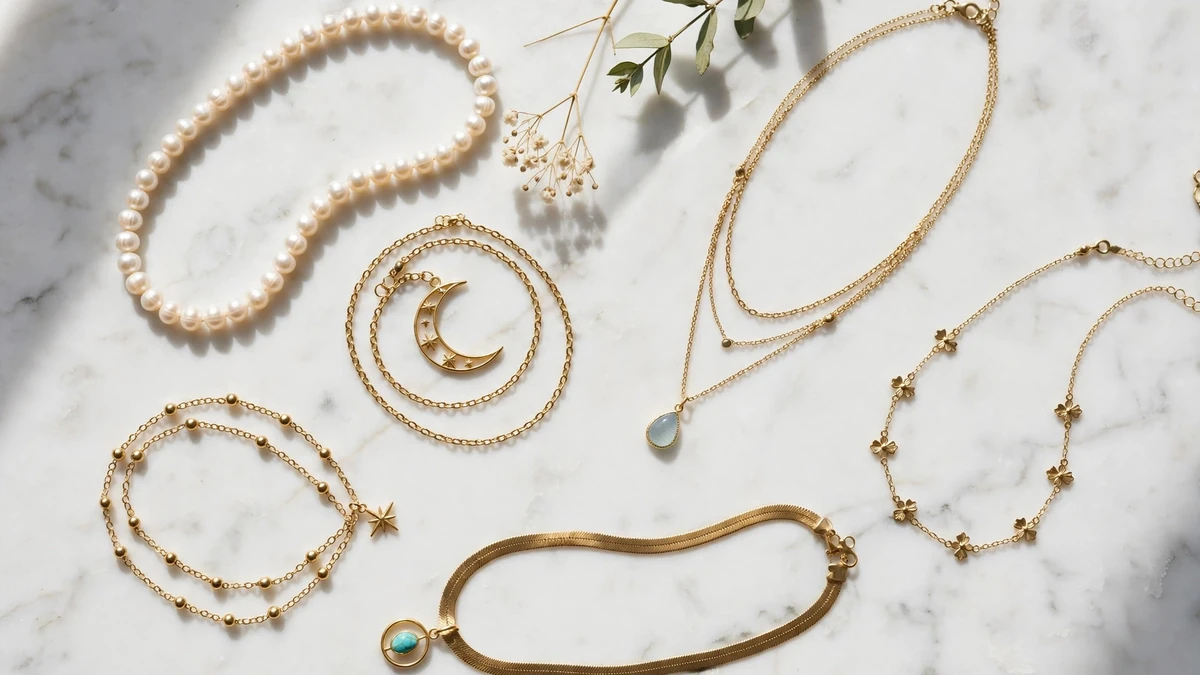

A necklace is the piece of jewellery you wear closest to your face, which makes it the hardest to choose well and the easiest to get wrong. It is also the piece you reach for most often. A good one works with almost everything you own, sits comfortably all day, and still looks right when you catch yourself in a mirror at six in the evening. A bad one tangles, flips its pendant to the back, turns your neck green, or sits at a length that fights every neckline you own.
The problem is that necklaces are sold by sparkle first and by fit second. Chain length, clasp strength, metal quality and pendant weight matter far more than how a piece photographs in a flat lay, but they are the details most listings bury. A 16-inch chain sits differently on every neck, a heavy pendant needs a chain that can carry it, and a plated chain will not age the way a solid or filled one does. Knowing those basics before you buy saves you from the drawer of almost-right necklaces most of us already own.
Below are nine necklaces worth considering in 2027, from a classic pearl strand to a modern gold pendant, each described by what it is good at, what to watch for, and who it suits best.
Key takeaways
- Chain length decides how a necklace looks more than the pendant does: 16 inches sits at the collarbone, 18 inches is the most versatile everyday length, and 20 inches and above suits higher necklines and layering.
- Solid gold, gold-filled and sterling silver age far better than gold-plated brass, which can wear through to the base metal within a year or two of regular wear.
- A pendant should be matched to its chain: a heavy pendant needs a sturdy chain and a secure clasp, or it will flip, pull and eventually break the chain.
- Try a necklace on with the necklines you actually wear, and check the clasp, the weight and the way it sits before you decide.
- No necklace suits every outfit, every neckline or every skin tone, and a necklace that irritates your skin, tangles constantly or needs adjusting all day is the wrong necklace.
What a good necklace actually does
A good necklace does three quiet jobs at once. It frames your face, it finishes a neckline, and it carries a focal point, whether that is a pearl, a diamond or a simple gold shape, at the exact height where the eye naturally rests. When the length is right, the necklace looks like it belongs with the outfit. When it is wrong, it looks like an afterthought, however expensive the pendant is.
Length is the first decision, and it is worth measuring rather than guessing. A 14-inch choker sits high on the neck and suits open necklines and bare shoulders. A 16-inch chain rests on the collarbone and is the classic length for a pendant. An 18-inch chain falls just below the collarbone and is the most forgiving everyday length, working with crew necks, V-necks and shirt collars alike. A 20-inch chain and longer suits layering and higher necklines, but can look lost under a busy print.
The second decision is metal, and it is really a decision about how long you want the piece to last. Solid gold is the most durable and the most expensive. Gold-filled wire and chain, which bonds a thick layer of gold to a core metal, is a strong middle ground that holds its colour for years. Sterling silver is durable and affordable, though it tarnishes and needs occasional polishing. Gold-plated brass is the cheapest option, and its thin plating can wear through at the clasp and the pendant bail within a year or two of daily wear.
How we chose these necklaces and what to look for
Look first at the chain, not the pendant. A chain should feel smooth, close securely, and hold the pendant without stretching or kinking. A fine cable chain suits a light pendant. A heavier pendant needs a curb, rope or box chain with some substance to it. If the chain feels flimsy next to the pendant, it will be the part that fails first, usually at the clasp or at the jump ring.
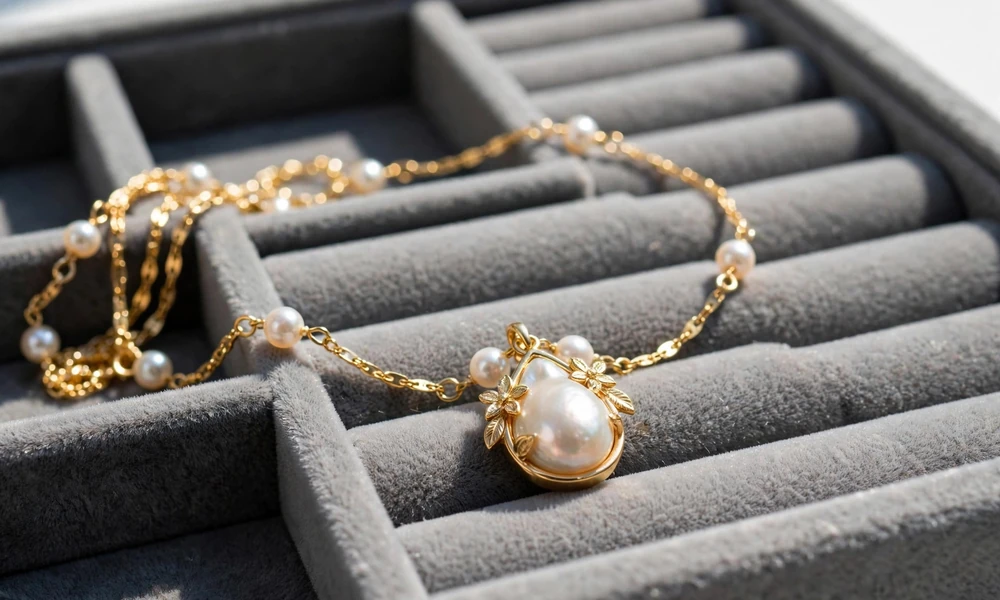
Look next at the pendant and how it is set. A bezel setting, where the stone is held in a rim of metal, is the most secure and the most comfortable against skin. A prong setting shows more of the stone but needs checking over time, because prongs can loosen. A pearl strand should be knotted between each bead, so that if the thread breaks, you lose one pearl, not the whole strand. These are small details, but they are what separate a necklace you wear for a decade from one you replace in a year.
Finally, think about how the necklace fits your life. A delicate pendant is lovely for the office and for everyday wear, but it will not survive a gym bag or a toddler’s grip. A bold piece makes an evening outfit, but it can overwhelm a work shirt. Our guide to statement necklaces explains how to let one bold piece lead without letting it take over.
The 9 best necklaces for women of 2027
Tiffany & Co. Return to Tiffany Heart Tag Pendant in Sterling Silver
What we like: A classic heart tag on a fine link chain, instantly recognisable, lightweight, and easy to wear every day. The engraved tag is a design that has stayed in style for decades.
This is the necklace to buy when you want one piece that goes with everything and never looks out of place. It is simple, well made, and comfortable enough to forget you are wearing it, which is the real test of an everyday necklace.
Cartier Juste un Clou Necklace in 18k Yellow Gold
What we like: A bent nail reimagined in solid 18k gold, sculptural and modern, with a weight and finish that feel unmistakably Cartier. It reads as both jewellery and design.
If you want one necklace that is a statement in itself, this is it. It needs little else with it, and it looks best worn alone against a plain neckline, where the shape can do the talking.
Van Cleef & Arpels Vintage Alhambra Pendant in 18k Gold
What we like: The four-leaf clover motif in 18k gold with mother-of-pearl, beaded gold edging, and a design that has been in continuous production for decades. It is elegant without being formal.
This is a necklace that works as hard at a lunch as it does at a wedding. The motif is recognisable, the gold is solid, and the size is small enough to layer, which is why it has stayed in production for so long.
Mikimoto Akoya Pearl Strand Necklace
What we like: Akoya pearls with a sharp, mirror-like lustre, matched for size and colour, individually knotted, and finished with a secure clasp. The lustre is what sets a good pearl strand apart.
A pearl strand is the most classic necklace there is, and a well-matched Akoya strand is the standard against which others are judged. Buy the length that suits your neckline, and look after it, and it will outlast most of your wardrobe.
Mejuri Diamond Tennis Necklace in 14k Gold
What we like: A continuous line of diamonds in solid 14k gold, with a secure clasp and a clean, even sparkle that works from day to evening. The gold is solid, not plated, so it keeps its colour.
A tennis necklace is the most versatile way to wear diamonds. It sits close to the neck, it catches the light with every movement, and it needs nothing else with it, which makes it a strong choice for a milestone gift.
Monica Vinader Diamond Pavé Pendant in 18k Gold Vermeil
What we like: A small pavé diamond pendant in 18k gold vermeil, delicate and affordable for fine jewellery, with a fine chain that layers well with other necklaces.
This is a good first diamond necklace: small enough for every day, pretty enough for evening, and priced so that you can actually wear it rather than save it. Treat the vermeil gently and it will last well.
David Yurman Cable Pendant with Diamonds in Sterling Silver
What we like: The signature twisted cable in sterling silver, set with diamonds, with a weight and finish that feel substantial. The cable design is distinctive without being loud.
David Yurman’s cable is one of the most recognisable designs in modern jewellery, and this pendant is the easiest way to wear it. It is solid, well finished, and it layers beautifully with a simple gold chain.
Missoma Gold Vermeil Pearl Pendant
What we like: A single freshwater pearl on a fine gold vermeil chain, simple, flattering and easy to wear, with a price that makes it an easy gift as well as an easy everyday piece.
A single pearl on a fine chain is the quietest kind of luxury, and this is a well-priced version of it. It suits almost every neckline, it layers with gold chains, and it is the piece to reach for when you want to look finished without trying.
Kendra Scott Elisa Gold Pendant Necklace
What we like: A faceted stone in a gold frame, available in a wide range of stones and finishes, lightweight, and priced for everyday wear. The adjustable chain makes the length easy to get right.
This is the necklace to buy when you want to try a colour or a shape without a fine-jewellery price. It is light, comfortable and easy to wear, and the adjustable chain means you can set the length exactly where you want it.
Which necklace is right for you
Start with your neckline. A pendant at 16 inches suits V-necks, scoop necks and open collars. An 18-inch chain is the safest choice if you wear crew necks and shirts most of the time. Longer chains suit high necklines, turtlenecks and layering, but they can disappear under a busy print, so keep the pendant simple if the outfit is already doing a lot of work.
Then think about metal and skin. Yellow gold warms up most skin tones and suits warm undertones. White gold and platinum suit cool undertones. Rose gold sits in between and flatters a wide range of skin tones. Silver is the most neutral of all, and it is the easiest metal to wear with both warm and cool outfits. Our guide to gold jewellery for everyday wear explains how to choose a metal you will actually reach for, which matters more than any rule about undertones.
Finally, be honest about how you will wear it. If you want one necklace for every day, choose a solid or gold-filled chain, a secure clasp, and a pendant that is light enough to forget. If you want a piece for evenings, you can afford something bolder and heavier, because you will not be wearing it for twelve hours. And if you plan to layer, choose chains of different lengths and weights, so they sit apart rather than tangling.
The caveats that matter
Necklaces are worn against skin all day, so metal quality is not a luxury detail, it is the difference between a piece you wear for years and one that irritates you within a week. Nickel is the most common irritant, and it is often present in cheap plated jewellery. If your skin reacts to costume jewellery, choose solid gold, gold-filled, sterling silver or platinum, and avoid plated brass. A necklace that marks, itches or turns your skin green is not worth keeping, however pretty it is.
Clasp and chain strength matter just as much. A pendant that is too heavy for its chain will stretch the links, flip to the back, and eventually snap, usually at the least convenient moment. Check the clasp every few months, especially on a necklace you wear daily, and have a jeweller tighten prongs and replace a worn clasp before it fails rather than after.
| Detail | What is known |
|---|---|
| Most versatile length | 18 inches, which suits crew necks, V-necks and shirt collars |
| Best metal for daily wear | Solid gold or gold-filled; sterling silver is durable but tarnishes |
| Metal to avoid for sensitive skin | Plated brass, which often contains nickel and wears through quickly |
| Most secure pendant setting | Bezel setting, which holds the stone in a rim of metal |
| Pearl care | Keep away from perfume and water; wipe with a soft cloth after wear |
| When to check the clasp | Every few months on a daily necklace, and before any important occasion |
| Layering rule | Use different lengths and weights so chains sit apart, not tangled |
| What a necklace does not do | It does not suit every neckline, and no single necklace works for every outfit |
If you are buying a necklace as a gift, measure rather than guess. Borrow a necklace the recipient wears, measure its length, and note the metal they reach for most. A gift that matches what they already wear is far more likely to be worn than a piece chosen purely on looks.
Checklist: buying a necklace honestly
Use these checks before you buy.
- Check the length: measure against your neckline, and try 16 and 18 inches.
- Check the metal: solid gold, gold-filled or sterling silver for daily wear; avoid plated brass if your skin is sensitive.
- Check the clasp: it should close firmly, open easily, and feel secure, not flimsy.
- Check the weight: a pendant that pulls or flips is too heavy for its chain.
- Check the setting: bezel settings are the most secure, and prongs should be checked once a year.
- Check the care: pearls need a soft cloth and no perfume; silver needs occasional polishing; vermeil needs gentle handling.
Frequently asked questions
What length necklace should I buy?
For most people, 18 inches is the safest first choice, because it sits just below the collarbone and works with most necklines. Choose 16 inches to sit higher, and 20 inches or longer for layering or high necklines.
Is gold-filled better than gold-plated?
Yes, by a wide margin. Gold-filled jewellery bonds a thick layer of gold to a core metal, so it keeps its colour for years. Gold-plated jewellery has a very thin layer that can wear through in a year or two of regular wear, especially at the clasp and the pendant bail.
Are pearl necklaces still in style?
Yes. Pearls have been worn for centuries and they are not going anywhere, though the way they are worn changes. A single pearl pendant or a modern, shorter strand feels current, while a long, formal strand reads more classic. Our guide to whether pearl necklaces are in style looks at how pearls are being worn now, from quiet everyday pendants to bold layered strands.
Can I wear a necklace every day?
Yes, if it is made for it. Choose a solid or gold-filled chain, a secure clasp and a light pendant, and take it off for the gym, shower and pool. Pearls and vermeil need more care than solid gold, so rotate them with other pieces rather than wearing them every day.
How do I stop necklaces from tangling when layering?
Use different lengths, at least two inches apart, and different chain weights. A necklace detangler or a small clasp spacer also helps, and it is worth untangling a chain gently rather than pulling it, which stretches the links.
How should I store necklaces?
Store each necklace separately, ideally hanging or in its own pouch, so chains do not tangle and pendants do not scratch each other. Keep silver in a tarnish-resistant pouch, keep pearls away from perfume and other jewellery, and fasten the clasp before you put a necklace away, so the chain stays straight.
The bottom line
The best necklace for women in 2027 is not the most expensive or the most sparkling. It is the one that sits at the right length for your neckline, that is made from a metal your skin tolerates, and that you will actually wear, day after day. A solid gold or gold-filled chain, a secure clasp and a pendant that suits your life will serve you far better than a bolder piece that spends its life in a drawer.
Choose the length first, the metal second and the pendant third, and try the necklace on with the clothes you actually wear. That order, and that one fitting, will tell you more than any bestseller list, and it is how you end up with a necklace you reach for every morning, not one you admire and never wear.