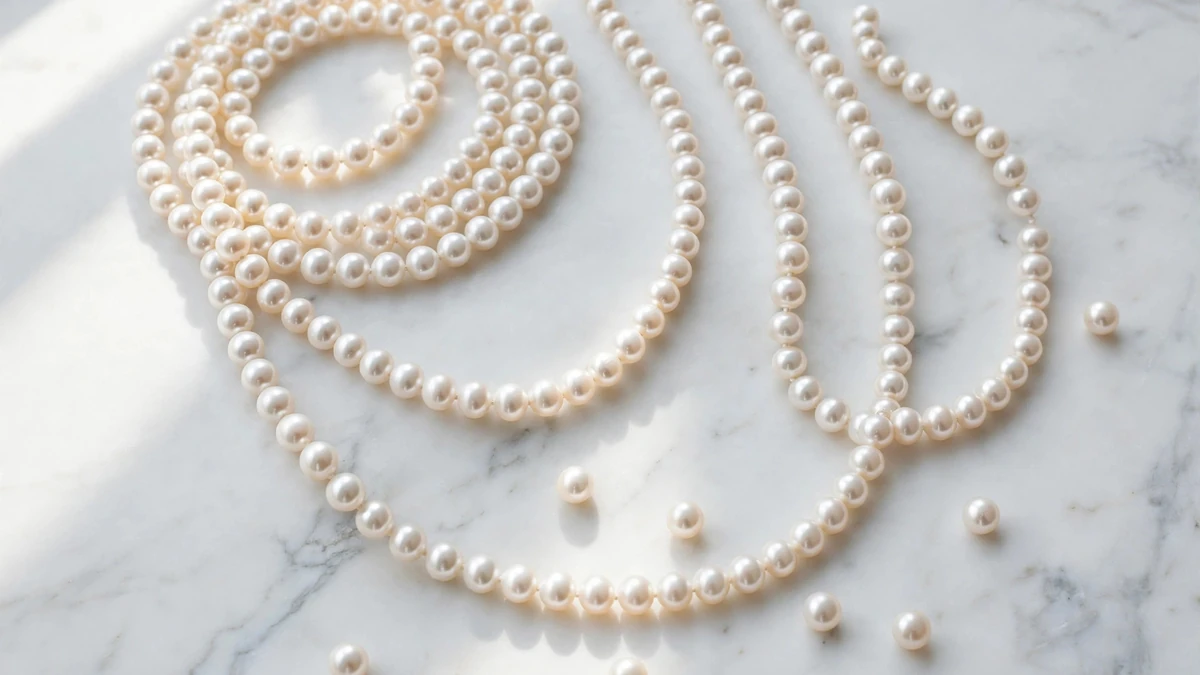

Pearl necklaces are back, and not in the way you might expect. The single strand your grandmother wore to church is still there, but it is sharing the rail with baroque pearls, layered strands, pearl pendants, pearl chokers and pearls worn with denim, leather and tailoring. In 2027, pearl necklaces are not a formal occasion piece. They are an everyday piece, worn the way you would wear a gold chain or a favourite watch.
The question is which kind suits you, how to wear it without looking like you are in costume, and how to tell a good pearl from a bad one before you spend your money.
Below are nine ways to wear pearl necklaces in 2027, from the classic strand to the baroque and the layered,
Key takeaways
- Pearl necklaces are firmly in style in 2027, worn casually with denim and tailoring as well as formally with evening dress.
- Freshwater pearls are the best value for most buyers, while Akoya, South Sea and Tahitian pearls cost more for their lustre, size and rarity.
- Check lustre, surface, shape and matching before you buy, because those four things determine whether a pearl necklace looks expensive or cheap.
- Layering, mixing metals and wearing pearls with casual clothes are the looks that keep a pearl necklace feeling current rather than dated.
- No pearl necklace is an investment in the financial sense, and a designer name alone does not guarantee quality, so buy for wear, not for resale.
Are pearl necklaces in style in 2027
Yes, and the evidence is everywhere, from the runways to the street. Pearl necklaces appeared across the spring and autumn shows in 2027, worn with tailoring, with denim, with knitwear and with evening dress, and the high street has followed with versions at every price.
Part of the reason pearls have come back is that they suit the way people dress now. A pearl necklace softens a sharp blazer, warms up a plain black dress, and adds a finish to a simple white T-shirt that no other necklace quite manages.
The other reason is choice. There are more kinds of pearl necklace available now than there were a decade ago, from classic white strands to grey Tahitian pearls, golden South Sea pearls and the irregular, characterful baroque pearls that have become the most fashionable of all.
How we chose these nine styles and what to look for
We chose nine styles that cover the full range of pearl necklaces available in 2027, from the classic strand to the most current layered and baroque looks, and that suit different budgets, different necklines and different occasions.
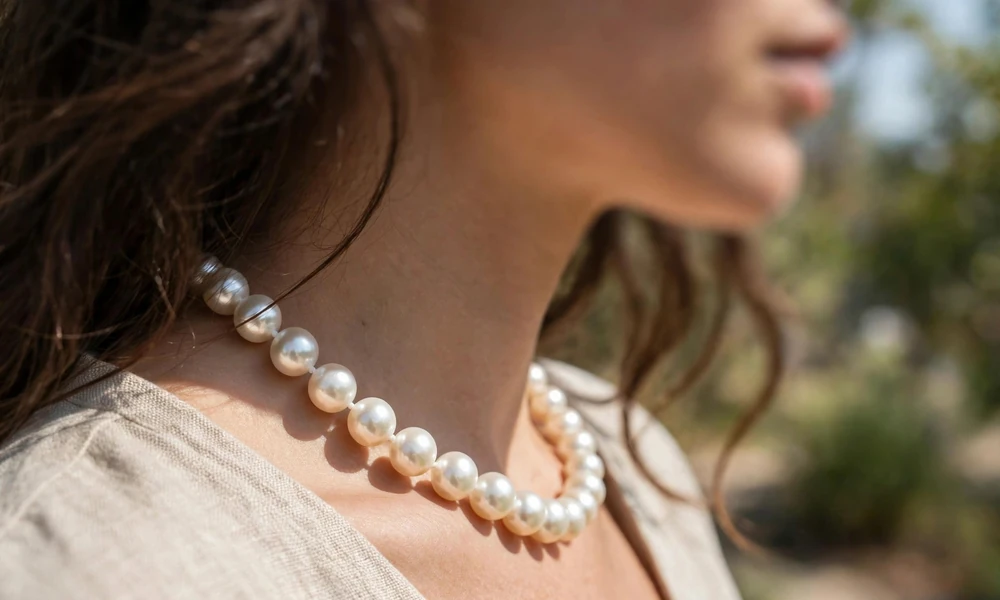
Look first at lustre, which is the way light reflects from the surface of the pearl. A good pearl has a deep, bright lustre, with a sharp reflection, while a poor pearl looks dull or chalky.
Look next at the surface, the shape and the matching. A good pearl necklace has pearls that are clean, with few blemishes, that are well matched in size, shape and colour, and that sit evenly on the strand. Our guide to the best diamond necklaces uses the same approach, because the principles of judging a necklace, quality first, name second, are the same whatever the stone.
Finally, look at the clasp and the stringing. A good pearl necklace is knotted between each pearl, so that if the thread breaks, only one pearl falls, and it has a secure clasp in gold or silver that matches the quality of the pearls.
9 ways to wear pearl necklaces in 2027
The classic strand
What we like: The single strand of round white pearls is the most versatile pearl necklace there is, and the one that suits the most people. It works with a white shirt, a black dress, a blazer or a cashmere jumper, and it never looks out of place.
What to consider: A classic strand can look formal if it is worn too neatly, so keep the styling relaxed, and choose a length that sits at the collarbone rather than high on the neck. Stone: Freshwater or Akoya pearls, round, white or cream. Setting: Knotted silk thread, gold or silver clasp. Best for: Everyday elegance, work, weddings and formal occasions. Price range: €50 to €500 for freshwater, €300 to €2,000 for Akoya.
Baroque pearls
What we like: Baroque pearls are irregular, organic and full of character, and they are the most fashionable pearl of 2027. No two are alike, which means your necklace is genuinely unique, and their uneven surface catches the light in a way that round pearls do not.
What to consider: Baroque pearls are harder to match, so check that the strand is well balanced, and remember that their irregular shape makes them a statement rather than a background piece. Stone: Freshwater baroque pearls, white, cream or blush. Setting: Knotted silk thread or gold chain, often with a gold clasp. Best for: Making a statement, creative styling, and anyone who finds the classic strand too neat. Price range: €80 to €600 for freshwater baroque.
Layered pearls
What we like: Layering two or three pearl strands of different lengths is the look of the moment, and it is easy to build from pieces you already own. A short choker, a mid-length strand and a long rope worn together look considered rather than accidental, and they fill a neckline beautifully.
What to consider: The lengths need to be clearly different, or the strands will tangle and bunch, and the pearls should be in the same colour family, or the look will feel messy. Stone: Freshwater pearls in mixed sizes, white, cream or blush. Setting: Knotted silk thread, gold or silver clasps, worn together. Best for: Evenings, weddings, and anyone who likes a fuller, more decorative look. Price range: €100 to €800 for a set of two or three strands.
A statement necklace can be layered in the same way, and the same rule applies: different lengths, same colour family, and no more than three pieces at once.
The pearl pendant
What we like: A single pearl on a fine gold or silver chain is the most understated way to wear pearls, and the easiest to wear every day. It suits a low neckline, a plain T-shirt or a silk blouse, and it works with other necklaces without competing with them.
What to consider: The pearl should be large enough to be seen, at least 9 millimetres, or it will disappear against the chain, and the chain should be fine enough not to overpower it. Stone: A single freshwater, Akoya or South Sea pearl, white or golden. Setting: Gold or silver chain, pearl drilled and set on a bail. Best for: Everyday wear, minimal styling, and layering with other chains. Price range: €60 to €400 for freshwater, €400 to €2,500 for South Sea.
The pearl choker
What we like: A short pearl choker, sitting high on the neck, is the most striking way to wear pearls in 2027, and it suits a bare neckline, an off-the-shoulder top or a deep V. It frames the face and makes a simple outfit look finished.
What to consider: A choker needs to fit well, so measure your neck before you buy, and be aware that it can feel restrictive if you are not used to wearing anything close to the neck. Stone: Small freshwater or Akoya pearls, round, white or cream. Setting: Knotted silk thread, close-fitting, with a secure clasp. Best for: Evenings, bare necklines, and anyone who wants a bold, modern pearl look. Price range: €60 to €500 for freshwater, €300 to €1,500 for Akoya.
Grey Tahitian pearls
What we like: Tahitian pearls are naturally grey, green, blue or peacock in colour, and they are the most distinctive pearl you can wear. They suit cool skin tones beautifully, they look modern rather than traditional, and they are instantly recognisable as something special.
What to consider: Tahitian pearls are expensive, and their colour varies a lot, so choose a strand in person if you can, and make sure the pearls are well matched in colour as well as size. Stone: Tahitian black pearls, grey, green or peacock overtones. Setting: Knotted silk thread, white gold or silver clasp. Best for: Evenings, cool skin tones, and anyone who wants a pearl necklace that is unmistakably different. Price range: €800 to €5,000 and above.
Golden South Sea pearls
What we like: Golden South Sea pearls are large, warm and luminous, and they are the most luxurious pearl you can buy. Their golden colour suits warm skin tones, and their size, often 10 to 13 millimetres, makes a single strand a statement on its own.
What to consider: They are among the most expensive pearls, and their warm colour does not suit everyone, so try them against your skin before you commit. Stone: Golden South Sea pearls, 10 to 13 millimetres, warm gold. Setting: Knotted silk thread, yellow gold clasp. Best for: Warm skin tones, special occasions, and anyone who wants the most luxurious pearl necklace available. Price range: €1,500 to €10,000 and above.
Pearls with a gold chain
What we like: A pearl strand combined with a gold chain, either layered together or mixed in a single necklace, is the most current way to wear pearls, because it mixes the softness of pearls with the structure of metal. It works with denim, leather and tailoring, and it feels modern rather than formal.
What to consider: The gold and the pearls should be in proportion, or one will overpower the other, and the chain should be a similar weight to the strand, or the necklace will sit unevenly. Stone: Freshwater pearls with a gold chain, white or cream pearls. Setting: Gold chain and knotted pearls, worn together or combined. Best for: Everyday wear, denim and tailoring, and anyone who wants pearls without the formality. Price range: €100 to €700 for freshwater with gold-filled or gold-plated chain.
Pearls with denim and casual clothes
What we like: The most useful pearl look of 2027 is the simplest: a pearl necklace worn with denim, a white T-shirt, a linen shirt or a leather jacket. The contrast between the softness of the pearls and the roughness of the denim is what makes it work, and it is the look that has brought pearls back into everyday wear.
What to consider: Keep the rest of the outfit simple, because too many accessories will make the pearls look fussy, and choose a shorter strand or a pendant, rather than a long rope, so that the necklace sits neatly against a casual neckline. Stone: Freshwater pearls, white or cream, round or baroque. Setting: Knotted silk thread or gold chain, 16 to 18 inches. Best for: Everyday wear, weekends, and anyone who wants to wear pearls without dressing up. Price range: €50 to €400 for freshwater.
Which pearl necklace is right for you
If you want one necklace that does everything, buy a classic freshwater strand, 16 to 18 inches, with pearls of 7 to 8 millimetres. If you want a statement, buy baroque pearls or a pearl choker. If you want luxury, buy Akoya, Tahitian or South Sea, and buy them in person, so that you can see the lustre and the matching for yourself. If you want to wear pearls every day, buy a pearl pendant or a short strand, and wear it with the clothes you already wear.
A diamond buying guide uses the same principle, because the right stone is the one that flatters the person wearing it, not the one that costs the most.
And think about care before you buy. Pearls are soft, they are damaged by perfume, hairspray and cosmetics, and they need to be wiped after wear and stored separately from other jewellery.
The caveats that matter
Pearl necklaces are beautiful, but they are not indestructible, and they are not an investment in the financial sense. A pearl necklace bought for €500 will not be worth €500 when you sell it, whatever the brand, because the second-hand market for pearls is small and the value is in the wearing, not the resale. Buy a pearl necklace because you love it and you will wear it, not because you think it will appreciate.
| Detail | What is known |
|---|---|
| Are pearls in style in 2027 | Yes, worn casually with denim and tailoring as well as formally with evening dress |
| Best value for most buyers | Freshwater pearls, €50 to €500, with good lustre and matching |
| What to check first | Lustre, surface, shape and matching, then the clasp and the knotting |
| Best length for everyday wear | 16 to 18 inches, sitting at the collarbone |
| Best pearl size | 7 to 8 millimetres for a classic strand, 9 millimetres and above for a pendant |
| How to care for pearls | Wipe after wear, put on after perfume and makeup, store separately, restring every few years |
| What to avoid | Dull or chalky pearls, unknotted strands, flimsy clasps, and buying for resale value |
| What pearls do not do | They do not appreciate in value, and they do not suit being worn with perfume or hairspray |
Checklist: choosing a pearl necklace honestly
- Check the lustre: hold the strand up to the light and look for a deep, bright shine, not a dull or chalky surface.
- Check the matching: the pearls should be even in size, shape and colour, with few blemishes.
- Check the stringing: the pearls should be knotted between each one, with a secure clasp that matches the quality of the pearls.
- Check the length: 16 to 18 inches for everyday wear, and try it on with the neckline you will wear it with.
- Check the price against the type: freshwater is the best value, Akoya and South Sea cost more for their lustre and size.
- Check the care: buy a soft pouch, put the necklace on last, and plan to have it restrung every few years.
Frequently asked questions
Are pearl necklaces in style in 2027?
Yes. Pearl necklaces are firmly in style in 2027, worn casually with denim, tailoring and knitwear as well as formally with evening dress. The current looks are layered strands, baroque pearls, pearl pendants and pearls mixed with gold chains, rather than the matched set of the past.
What is the best type of pearl for a necklace?
Freshwater pearls are the best value for most buyers, with good lustre and a wide range of shapes and colours at a fair price. Akoya pearls are rounder and brighter, South Sea pearls are larger and more luxurious, and Tahitian pearls are naturally grey and distinctive.
How long should a pearl necklace be?
For everyday wear, 16 to 18 inches is the most useful length, sitting at the collarbone and working with most necklines. A choker is 14 to 16 inches, a princess length is 17 to 19 inches, and a matinee length is 20 to 24 inches. Try the length on with the neckline you will wear it with, because the same length can sit very differently on different people.
Can I wear a pearl necklace every day?
Yes, and a freshwater strand or a pearl pendant is well suited to everyday wear.
How do I tell a real pearl from a fake one?
Real pearls feel slightly gritty when rubbed gently against your teeth, while imitation pearls feel smooth. Real pearls also have a deep, even lustre and small natural blemishes, while imitations are often perfectly round and perfectly smooth.
Are pearl necklaces a good investment?
No, not in the financial sense. A pearl necklace is worth buying because you love it and you will wear it, not because it will appreciate. The second-hand market for pearls is small, and most pearl necklaces sell for far less than their original price, whatever the brand.
The bottom line
Pearl necklaces are in style in 2027 because they have stopped being a formal occasion piece and become an everyday one. A classic strand, a baroque pearl, a pendant or a layered set will work with the wardrobe you already have, and the best pearl necklace is the one you will actually wear, not the one that stays in its box.
Choose freshwater pearls for value, Akoya for roundness and brightness, Tahitian for colour and character, and South Sea for size and luxury.