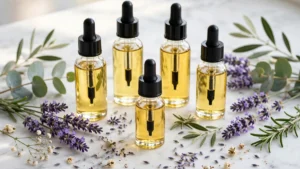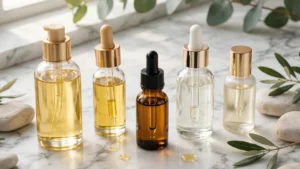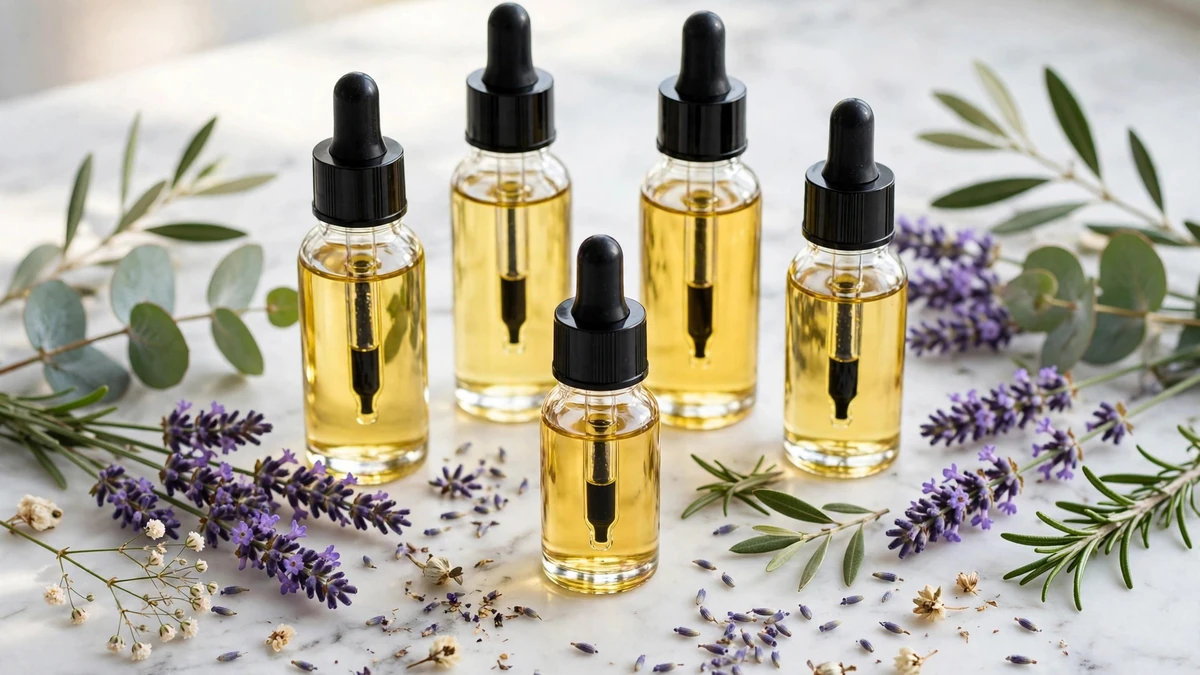

Essential oils are some of the oldest ingredients in skincare, and some of the most misunderstood. A drop of lavender can calm the look of a red, reactive patch. A drop of tea tree can help a blemish look less angry by morning. But essential oils are concentrated plant extracts, and that concentration is the whole story: diluted properly, they can be genuinely useful; used neat, too often, or on the wrong skin, they can irritate, sensitise, and undo weeks of careful routine.
Not everything sold as an “oil” in this category is an essential oil. Lavender, tea tree, frankincense, geranium and rosemary are true essential oils, distilled from plant material and powerful in tiny amounts. Rosehip and jojoba are carrier oils, the gentle, fatty base oils that essential oils are diluted into. They are included here because they are the two carriers most people actually use, and a routine built on essential oils alone, without a carrier, will irritate your skin.
Below are nine oils worth considering in 2027, from classics that suit almost everyone to specialists that earn their price for specific concerns. Each one is described by what it is good at, what to watch for, and who it suits best, so you can use essential oils as a supporting player, not a gamble.
Key takeaways
- Essential oils are concentrated plant extracts and must always be diluted in a carrier oil before they touch skin, usually at 1 to 2 percent.
- Lavender and chamomile suit reactive and sensitive skin, tea tree and rosemary suit oily and blemish-prone skin, and frankincense and helichrysum suit mature skin.
- Rosehip and jojoba are carrier oils, not essential oils, and they are the safest base for diluting any essential oil.
- Patch-test every new oil on your jawline or inner arm for two to three days, and stop if you get redness, itching, or flaking.
- No essential oil replaces sunscreen, prescription treatment, or a consistent routine, and undiluted essential oils can sensitise skin even after months of trouble-free use.
What essential oils actually do for skin
An essential oil is the volatile, aromatic fraction of a plant, captured by steam distillation or cold pressing. Lavender oil contains linalool and linalyl acetate, compounds associated with a calming scent and a soothing effect on the look of skin. Tea tree oil contains terpinen-4-ol, which is why it is used on blemishes. Frankincense contains boswellic acids, which is why it is often described as toning. These are real, named compounds with studied properties, not just a pleasant smell.
What an essential oil does not do is work like a serum or a prescription treatment. It will not shrink a pore, remove a deep scar, or clear persistent acne on its own. What it can do, at the right dilution, is support the rest of your routine: calm the look of redness, help a blemish look less inflamed, and make a plain carrier oil feel like a treatment rather than a chore. That is a modest claim, and it is the honest one.
The safety question is the one that matters most. Essential oils are among the most common causes of cosmetic contact allergy, and the risk rises with concentration and frequency. Citrus oils can make skin more sensitive to sun. Oxidised oils, especially old bottles of tea tree or lavender left open in a warm bathroom, are more likely to irritate than fresh ones. That is why dilution, patch-testing, and fresh bottles are the method, not optional extras.
How we chose these oils and what to look for
Look first at purity and labelling. A real essential oil lists one botanical name on the label, such as Lavandula angustifolia for lavender or Melaleuca alternifolia for tea tree, and it lists the country of origin and the extraction method. A bottle that says only “fragrance oil” or “lavender scent” is not an essential oil and has no place on skin. A dark glass bottle, a proper dropper or reducer cap, and a batch number are practical signs of a serious supplier.
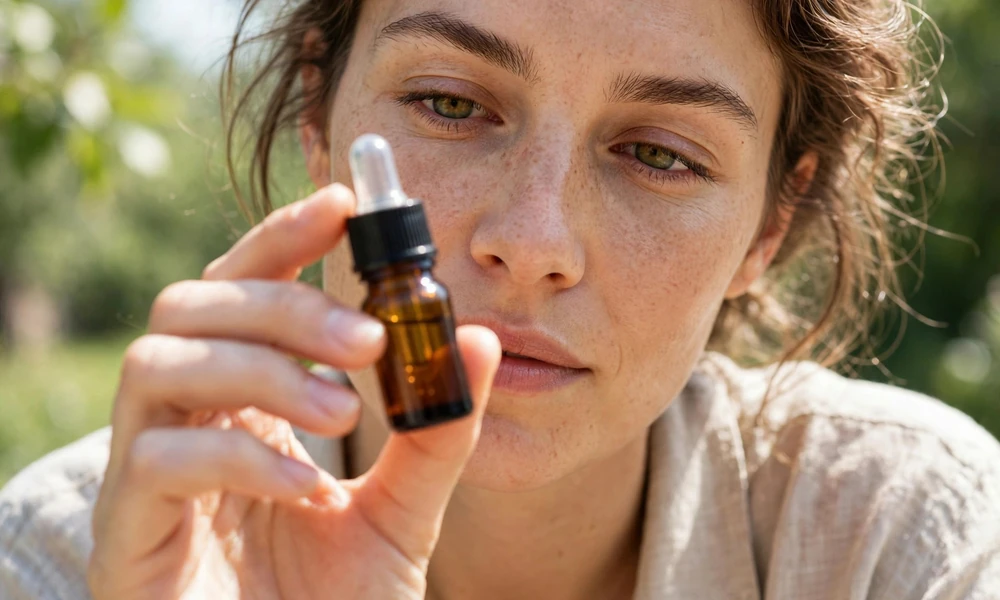
Dilution is where most mistakes happen. For the face, 1 to 2 percent is the standard: roughly one to two drops of essential oil per teaspoon of carrier oil, or six to twelve drops per 30 ml bottle. For the body, up to 3 percent is common. More is not better: a stronger blend does not work faster, it just irritates sooner, and the irritation can take weeks to settle. Our guide to the best face oils of 2027 is a useful companion here, because the carrier oil you choose matters as much as the essential oil you add to it.
Finally, look at freshness and storage. Essential oils oxidise, and an oxidised oil is a more irritating oil. Keep bottles tightly closed, in a cool, dark place, away from the bathroom. Tea tree and citrus oils should be used within six to twelve months of opening, lavender and frankincense within two years, and any bottle that smells sharp or off should be replaced, not finished.
The 9 best essential oils for skin care in 2027
doTERRA Lavender Essential Oil
What we like: The classic calming oil, with a soft floral scent and a long record of use on reactive, red-looking skin. Smooth, easy to blend, and forgiving at low dilution.
What to consider: Premium price, and it is not the best choice for very oily skin, where it can feel too rich. Key ingredients: Linalool, linalyl acetate. Skin type: Sensitive, normal, dry. Size: 15 ml. Cruelty-free: No (not certified).
One drop in a teaspoon of jojoba, applied to a red patch or used as an evening facial oil, is a calm, low-risk introduction to essential oils.
Plant Therapy Tea Tree Essential Oil
What we like: A clean, medicinal scent and a well-studied profile for blemish-prone skin, at a fair price, from a supplier that publishes its testing.
What to consider: Strong and drying if overused, and it oxidises fast, so use it within a year of opening. Key ingredients: Terpinen-4-ol. Skin type: Oily, combination, blemish-prone. Size: 10 ml. Cruelty-free: Yes.
For a single blemish, one drop diluted in jojoba and dabbed on the spot is the sensible approach. Never apply tea tree neat: it will not clear it faster, and it can leave the surrounding skin red and flaking.
doTERRA Frankincense Essential Oil
What we like: A warm, resinous oil often chosen for mature skin, with a reputation for toning and a scent that makes a plain carrier oil feel like a ritual.
What to consider: One of the most expensive oils here, and the benefits for mature skin are subtle. Key ingredients: Alpha-pinene, boswellic acids. Skin type: Mature, normal, dry. Size: 15 ml. Cruelty-free: No (not certified).
Two drops in a teaspoon of rosehip seed oil, massaged in before bed, is a simple evening routine for skin that wants comfort rather than a strong active.
The Ordinary 100% Organic Cold-Pressed Rose Hip Seed Oil
What we like: A rich, amber carrier oil with a natural dose of fatty acids and a hint of vitamin A, affordable, and excellent as a base for diluting essential oils.
What to consider: It is a carrier oil, not an essential oil, and its natural scent is earthy rather than floral. Key ingredients: Linoleic acid, linolenic acid, provitamin A. Skin type: Dry, mature, normal. Size: 30 ml. Cruelty-free: Yes.
This is the carrier to reach for when your skin is dry or mature and you want the dilution base itself to do some work. Use it at night or in a small amount under moisturiser.
Cliganic Organic Jojoba Oil
What we like: The closest carrier oil to the skin’s own sebum, light, fast-absorbing, and suitable for almost every skin type, including oily skin.
What to consider: It is a carrier oil, not an essential oil, and on its own it does very little beyond moisturising. Key ingredients: Jojoba esters, vitamin E. Skin type: All, including oily and sensitive. Size: 118 ml. Cruelty-free: Yes.
If you buy one carrier oil, make it jojoba: the safest, most versatile base for any essential oil blend, and a large bottle means you will actually use it rather than rationing it.
Plant Therapy Roman Chamomile Essential Oil
What we like: The gentlest essential oil in this list, with a soft, apple-like scent and a reputation for calming red, reactive skin.
What to consider: Expensive for a small bottle, and the effect is subtle, so it suits people who want calm rather than a visible change. Key ingredients: Isobutyl angelate, isoamyl angelate. Skin type: Sensitive, reactive, dry. Size: 5 ml. Cruelty-free: Yes.
For skin that reacts to almost everything, Roman chamomile at 1 percent in jojoba is one of the lowest-risk blends you can make. Patch-test first, but this is the oil to try when others have stung.
NOW Foods Geranium Essential Oil
What we like: A rosy, balancing oil that suits combination skin, affordable, and easy to find, with a scent that works well in a morning blend.
What to consider: It can be stimulating for very sensitive skin, so keep the dilution at 1 percent. Key ingredients: Citronellol, geraniol. Skin type: Combination, normal, oily. Size: 30 ml. Cruelty-free: Yes.
Geranium is the oil for skin that cannot decide what it is: oily in the T-zone, dry on the cheeks, reactive in between. One drop in a teaspoon of jojoba, used in the morning, is a balanced, uncomplicated blend.
doTERRA Rosemary Essential Oil
What we like: A fresh, herbal oil, often used on oily, congested skin and on the scalp.
What to consider: Strong and stimulating, so it is not for very sensitive skin, and it should never be used neat. Key ingredients: 1,8-cineole, camphor. Skin type: Oily, combination. Size: 15 ml. Cruelty-free: No (not certified).
Rosemary earns its place on congested skin and on the scalp, where a few drops diluted in jojoba and massaged in before washing can leave both feeling fresher. Keep it away from the eye area and keep the dilution low.
Plant Therapy Helichrysum Essential Oil
What we like: A rare, honey-scented oil prized for mature skin and for the look of old blemish marks, from a supplier that publishes its testing.
What to consider: The most expensive oil in this list by the millilitre, and the benefits are gradual rather than immediate. Key ingredients: Neryl acetate, gamma-curcumene. Skin type: Mature, normal, dry. Size: 5 ml. Cruelty-free: Yes.
A specialist oil, not a starter oil: one drop in a teaspoon of rosehip seed oil, used at night where old marks linger, is a slow, patient routine for skin that has time to wait.
Which essential oil is right for your skin type
Dry skin usually does best with lavender or frankincense diluted in rosehip seed oil, used at night. The carrier moisturises, the essential oil adds the calming or toning note. Avoid rosemary and tea tree on dry skin, where they can feel stripping.
Oily and blemish-prone skin suits tea tree, rosemary, and geranium diluted in jojoba, which is light enough not to add shine. Use the blend once a day at first, in the evening, and only move to twice daily if your skin stays calm. A guide to the skin barrier is worth reading alongside this, because oily skin that is over-treated often gets oilier, and a healthy barrier is what keeps breakouts from spiralling.
Sensitive skin should start with Roman chamomile or lavender at 1 percent in jojoba, patch-tested for three days before full use. Mature skin often benefits most from frankincense and helichrysum in rosehip seed oil, used at night. Introduce one oil at a time, so you know what is helping and what is irritating.
The caveats that matter
Essential oils are natural, and natural does not mean safe. They are among the most common causes of cosmetic contact allergy, and sensitivity can develop slowly, after months of trouble-free use. Citrus oils, including lemon, bergamot, and grapefruit, can make skin more sensitive to sunlight, so they are best avoided in a daytime facial blend.
| Detail | What is known |
|---|---|
| Safe dilution for the face | 1 to 2 percent: 1 to 2 drops per teaspoon of carrier oil, or 6 to 12 drops per 30 ml bottle |
| Best carrier oils | Jojoba for all skin types, rosehip for dry and mature skin |
| Who should start gently | Sensitive, reactive, or barrier-damaged skin; start at 1 percent and patch-test for three days |
| What to avoid | Undiluted essential oils on skin, citrus oils in daytime facial blends, and old oxidised bottles |
| Storage | Dark glass bottle, tightly closed, cool and dark, away from the bathroom; tea tree within 12 months of opening |
| When to replace a bottle | If the scent turns sharp, resinous, or off, or the oil feels thicker or stickier than when new |
| Who should check first | Anyone pregnant, breastfeeding, or using prescription skincare should check with a clinician first |
| What they do not do | They do not replace sunscreen, prescription treatment, or a consistent routine, and they do not remove deep scars alone |
If you are pregnant, breastfeeding, or using prescription skincare, check with your clinician or dermatologist before adding a new essential oil, especially at higher dilution. Some oils, including rosemary and clary sage, are traditionally avoided in pregnancy.
Checklist: using essential oils honestly
Use these checks before you buy, and again after two weeks of use.
- Check the label: one botanical name, country of origin, and extraction method, in a dark glass bottle.
- Check the dilution: 1 to 2 percent for the face, never neat, and never more than 3 percent on the body.
- Check the carrier: jojoba for most skin, rosehip for dry and mature skin, and never water, which does not dilute oil.
- Patch-test first: apply the diluted blend to your jawline or inner arm for two to three days before full-face use.
- Start slowly: one oil at a time, once a day, for two weeks, before adding a second oil or increasing the frequency.
- Protect the result: store bottles cool and dark, replace oxidised oils, and use sunscreen every morning, because sun undoes the calm you are building.
Frequently asked questions
Can I put essential oils directly on my skin?
No. Essential oils should always be diluted in a carrier oil before they touch skin, usually at 1 to 2 percent for the face. Undiluted oils are far more likely to irritate or sensitise skin, even if they have been fine before.
Which essential oil is best for sensitive skin?
Roman chamomile and lavender are the gentlest choices, at 1 percent in jojoba oil. Patch-test for three days first. If redness or itching appears, stop and try a plain carrier oil on its own.
Can essential oils help with acne?
Tea tree oil, diluted properly, can help a blemish look less inflamed, but it is a supporting step, not a treatment for persistent acne. If breakouts are frequent, painful, or leaving marks, a consistent routine and a dermatologist will do more than any single oil.
How long does a bottle of essential oil last?
Tea tree and citrus oils should be used within six to twelve months of opening. Lavender and frankincense can last up to two years if stored cool and dark. Replace any bottle that smells sharp or off.
Are essential oils safe during pregnancy?
Some are, and some are traditionally avoided, including rosemary and clary sage. Check with your clinician before using any essential oil while pregnant or breastfeeding, and keep dilutions low, at 1 percent or below.
Do I still need moisturiser if I use face oils?
Yes, for most people. A face oil seals in moisture, but it does not replace it. Use it after a water-based serum and before or instead of a cream, depending on your skin. A moisturiser for dry skin layered over a diluted oil blend is a comfortable routine for dry complexions, while oily skin may find the oil alone is enough at night.
The bottom line
The best essential oil for your skin in 2027 is not the rarest or the most expensive. It is the one that suits your skin type, diluted properly in a carrier oil you enjoy, used consistently at a low concentration: Roman chamomile or lavender in jojoba for sensitive skin, tea tree or geranium in jojoba for oily, blemish-prone skin, frankincense or helichrysum in rosehip for mature skin.
Choose one oil, dilute it at 1 to 2 percent, patch-test it, and use it daily for a month before judging it. That is the honest way to get the benefit essential oils are known for, without the irritation that makes people give up on them.