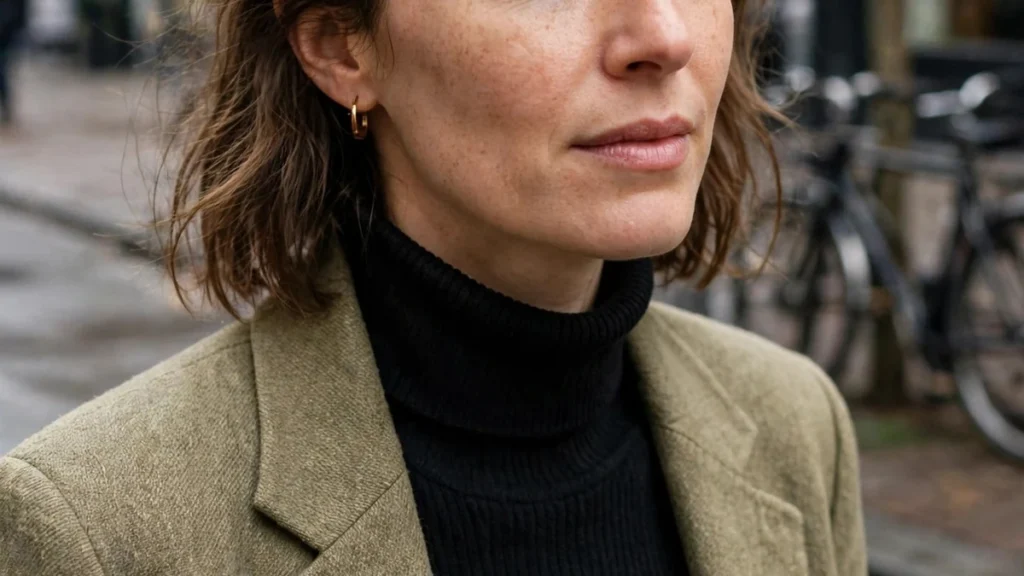
A turtleneck is one of the most useful pieces in a winter wardrobe, and one of the easiest to get wrong. Worn well, it looks polished, keeps you warm, and works with almost everything you already own, from tailored trousers to a slip dress. Worn badly, it can feel tight around the neck, bunch under a jacket, or make an outfit look heavier than it is. The difference is rarely the turtleneck itself. It is the fit, the fabric, and how it is layered.
That is why this guide is organised by outfit, not by trend. A fine, smooth knit behaves very differently from a chunky cable knit, and a look that works for a cold office morning is not the same as one that works for a weekend walk. Price is a poor guide on its own: some of the most wearable turtlenecks are simple, mid-priced knits, while some of the most expensive are too delicate, too tight, or too warm for everyday wear.
Below are nine ways to style a turtleneck in 2027, from a clean work look to a relaxed weekend outfit. Each one covers what works about it, what to watch for, and who it suits best, so you can wear the turtlenecks you already own with more confidence.
Key takeaways
- A turtleneck works best when the fit is close but not tight, sitting smoothly at the neck without pulling or sagging.
- Fine knits layer under blazers, coats and dresses, while chunky knits work best worn on their own.
- The neckline is the focal point, so keep hair, jewellery and collars simple around it.
- Match the weight of the turtleneck to the rest of the outfit, so a heavy knit does not sit under a light jacket.
- No turtleneck suits every body, every neckline or every dress code, and a neck that feels restricted or itchy is a sign to try a different cut or fabric.
What styling a turtleneck actually involves
Styling a turtleneck starts with the neck itself. A good one sits close to the neck, folds neatly once or twice, and stays in place when you move. It should not dig in when you turn your head, or flop forward into a cowl. If the neck is too tall, it crowds the chin; if it is too loose, it looks untidy. Trying it on with your hair up and down, sitting as well as standing, tells you more than a quick look in a mirror.
Fabric matters just as much. Wool blends are warm and hold their shape, but some feel scratchy against bare skin. Cashmere is softer and lighter for the same warmth, but it needs gentler care and can pill where a bag strap rubs. Cotton blends are easier to wash and less warm, which suits mild days. A little stretch helps the neck keep its shape, but too much can make a fine knit bag out at the elbows.
Colour is the third quiet decision. Black, navy, charcoal and cream are the hardest-working colours, because they sit under almost anything and do not fight with a coat or a scarf. A camel, burgundy or forest green turtleneck can lift a plain outfit, but the rest of the look should stay simple. A striped or patterned one is fun but harder to layer, and it draws the eye to the neck, so it suits a simple, well-fitting outfit.
How we chose these tips and what to look for
Look first at the fit around the neck and shoulders. The shoulder seam should sit on your shoulder, not droop down the arm, and the body should skim rather than cling. A turtleneck that pulls across the chest will bunch under a jacket, and one that is too long will bunch at the waist when tucked. A slightly longer body helps if you plan to tuck it in; a shorter, straighter hem looks tidier worn loose.
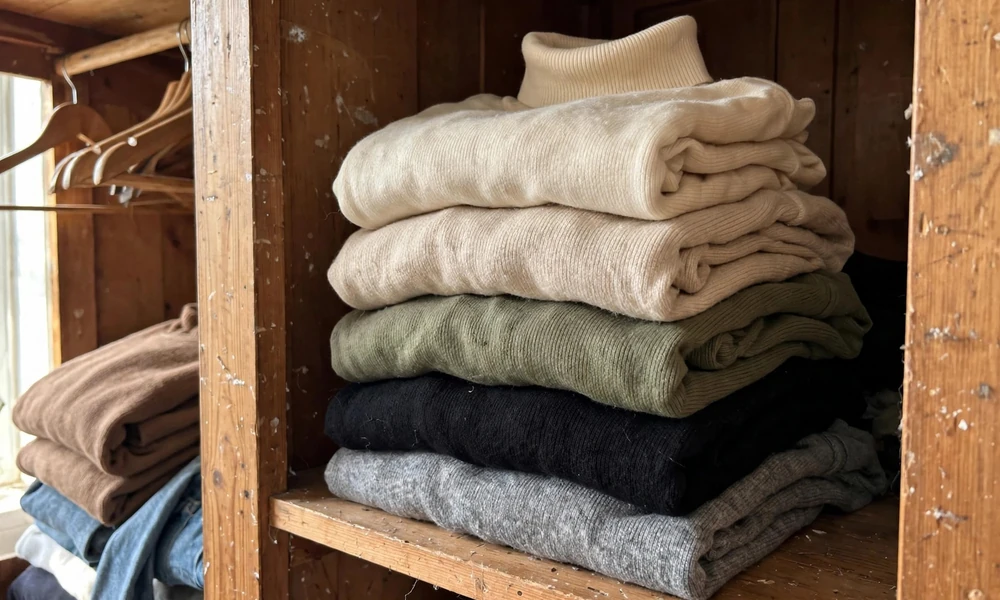
Look next at the knit weight. A fine knit layers under a blazer, a dress or a coat without adding bulk. A medium knit works on its own with trousers or a skirt. A chunky knit is a statement on its own and rarely needs layering over it, because a coat over a chunky knit can feel restrictive. Our guide to cashmere sweaters explains why a fine cashmere knit is often the easiest turtleneck to layer, because it is warm without being thick.
Finally, look at the details. A ribbed cuff and hem hold their shape better than a plain one, and a double-layered or slightly taller neck folds more neatly. A seam down the front or a subtle texture adds interest without making the piece hard to wear. Avoid a neck so tight it leaves a mark, a zip or button at the back that catches hair, or a fabric that pills after one wear, because those faults make a turtleneck sit unworn in a drawer.
The 9 ways to style a turtleneck in 2027
Start with the right fit, not the right trend
What we like: A close, comfortable fit that sits smoothly at the neck and skims the body. What to consider: Sizing varies widely between brands, so try the neck on properly and move in it before you buy. Best for: Anyone building a winter wardrobe around one or two good knits. Cost: From around £30 for a good high-street knit to £150 and above for cashmere. Time needed: A few minutes to try on and check the neck, shoulders and hem.
Fit is the foundation of every look that follows. A turtleneck that fits well needs almost no styling at all, while one that does not will fight you whatever you pair it with.
Tuck a fine knit into tailored trousers
What we like: A clean, long line that works for work and for smart evenings, with the waist defined. What to consider: A chunky knit will bunch when tucked, so save this look for fine or medium knits. Best for: Office days, smart lunches, and anyone who likes a defined waist. Cost: No extra cost if you already own tailored trousers. Time needed: Two minutes to tuck and smooth.
Use a French tuck, with just the front tucked in, if a full tuck feels too neat. Straight or wide-leg trousers balance the slim top, while a tapered trouser keeps the whole outfit narrow.
Layer it under a blazer for work
What we like: The turtleneck replaces a shirt and tie, giving a blazer a modern, uncluttered line. What to consider: The blazer needs room at the shoulders, or the knit will pull and crease. Best for: Work, meetings, and smart occasions where a shirt feels too formal. Cost: No extra cost with a blazer you own. Time needed: A minute to layer and smooth the sleeves.
Choose a fine knit in black, navy or charcoal under a grey, navy or camel blazer. Avoid a scarf with this look, because the neckline is already the detail, and keep the bottom half slim to hold the sharp silhouette.
Wear it under a slip dress
What we like: A summer dress becomes a winter outfit, with the turtleneck adding warmth and interest. What to consider: The dress needs to be loose enough to sit over the knit without pulling at the straps. Best for: Transitional weather, evening events, and getting more wear from dresses you already own. Cost: No extra cost with a slip dress you own. Time needed: Two minutes to layer and adjust the straps.
A fine black or cream turtleneck under a satin or silk slip dress is the classic version. Add tights and ankle boots for cold days, or heels for an evening, and keep jewellery minimal.
Pair a chunky knit with wide-leg trousers
What we like: The volume on top balances the volume below, so the outfit looks relaxed and deliberate. What to consider: A chunky knit with a slim bottom can look top-heavy, so the wide leg matters. Best for: Weekends, cold days, and anyone who likes a relaxed silhouette. Cost: No extra cost with wide-leg trousers you own. Time needed: A minute to put together.
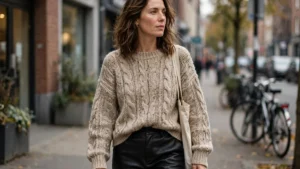
Let the knit sit loose over the waistband, or do a small front tuck to show where the trousers start. A long coat over the top keeps the proportions calm.
Let it peek from under a coat
What we like: A flash of colour or texture at the neck lifts a plain coat and keeps you warm without a scarf. What to consider: The neck should sit above the coat collar, not fight with it. Best for: Cold commutes, outdoor days, and anyone who finds scarves fussy. Cost: No extra cost with a coat you own. Time needed: Seconds to fold the neck neatly.
A cream or camel turtleneck under a dark coat is the easiest version, and a burgundy or green one adds colour without effort. Fold the neck once so it sits just above the collar.
Try a half-tuck with jeans
What we like: The most relaxed way to wear a turtleneck, with a bit of waist showing. What to consider: A very long or very thick knit will not tuck neatly, so choose a medium weight. Best for: Weekends, casual lunches, and everyday winter outfits. Cost: No extra cost with jeans you own. Time needed: A minute to tuck and adjust.
Straight or relaxed jeans work best, because a skinny jean with a chunky knit can look unbalanced. Add ankle boots or trainers, and a long coat or a denim jacket on top.
Style it with a skirt and boots
What we like: A turtleneck tucks neatly into a skirt waist, giving a polished look that is warmer than a blouse. What to consider: A pleated or A-line skirt balances the slim top, while a very tight skirt can look too narrow overall. Best for: Work, smart days out, and autumn and winter occasions. Cost: No extra cost with a skirt and boots you own. Time needed: Two minutes to tuck and choose boots.
A midi skirt in wool, leather or satin works well, with knee-high or ankle boots depending on the length. A fine knit in a neutral colour keeps the focus on the skirt.
Keep the neckline clean: hair up, simple jewellery
What we like: The turtleneck becomes the feature, with nothing competing at the neck. What to consider: Long hair worn down can catch in the knit and hide the neckline you are trying to show. Best for: Anyone who finds turtlenecks fussy or who wants a cleaner look. Cost: No extra cost. Time needed: A minute to put hair up or choose simple jewellery.
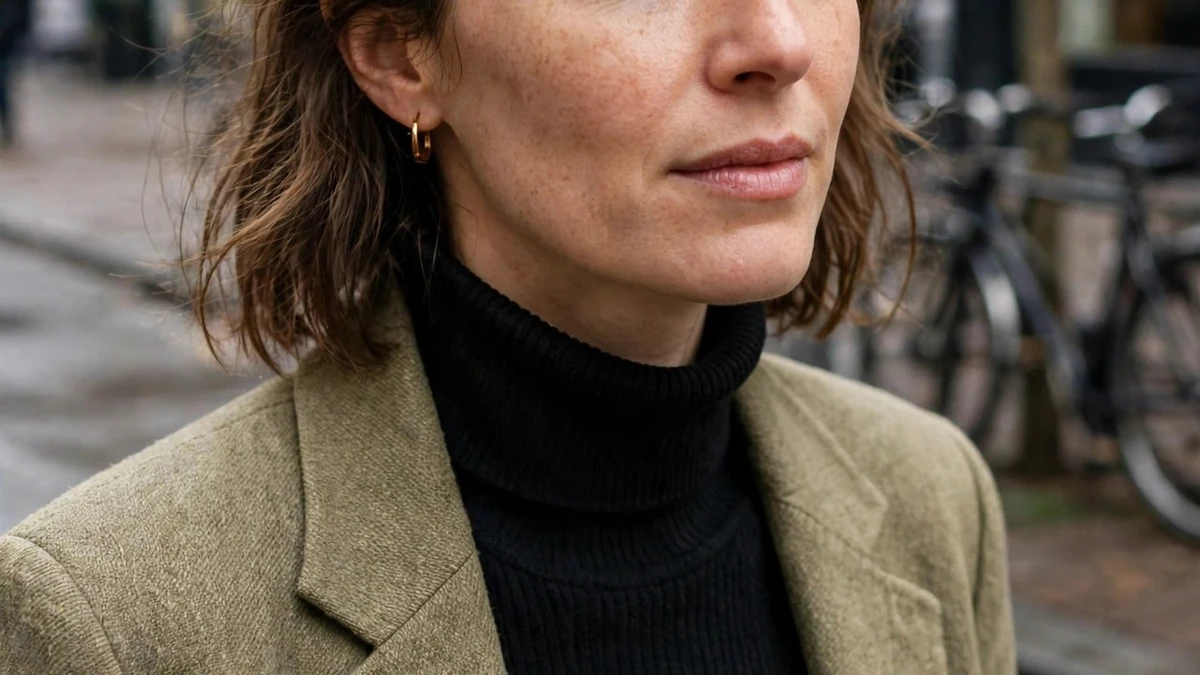
A low bun, a ponytail or a clip keeps hair off the neck. Small studs or a thin chain sit well, while a large necklace or a busy scarf will fight the neckline.
Which turtleneck look is right for you
For work, the blazer and tailored-trouser looks are the safest starting point, because they are tidy, warm, and easy to adjust through the day. A fine knit in black or navy under a blazer reads as smart without feeling stiff. If your office is very formal, a shirt may still be safer, but for most modern workplaces a well-fitted turtleneck is entirely appropriate.
For weekends, the jeans and wide-leg trouser looks are the most forgiving. A chunky knit with wide-leg trousers looks deliberate, while a half-tuck with jeans is the easiest outfit in this guide. Our guide to layering in winter is useful here: match the weight of each layer, and let the turtleneck be the warm base.
For evenings, the slip-dress and skirt looks make the most of a turtleneck. A fine knit under a satin dress turns a summer piece into a winter outfit, and a turtleneck with a midi skirt and boots is polished without being overdressed. Keep the rest simple, so the layered neckline is the detail people notice.
The caveats that matter
A turtleneck is not comfortable for everyone, and that is worth saying plainly. Some people find a close neck restrictive or irritating, especially if the fabric is scratchy or the neck is very tall. If that is you, a looser mock neck or a cowl neck may be a better choice. There is no point in wearing a piece that makes you want to pull at it all day.
| Detail | What is known |
|---|---|
| Best fit | Close at the neck without pulling, shoulder seam on the shoulder, body skimming |
| Best knit for layering | Fine or lightweight knit, ideally wool, cashmere or a soft blend |
| Best knit for wearing alone | Medium or chunky knit, worn loose with wide-leg trousers or a skirt |
| Hardest combination | Chunky knit under a fitted blazer or light jacket, which bunches and restricts movement |
| Colours that layer best | Black, navy, charcoal and cream sit under almost anything without clashing |
| Who should try a different cut | Anyone who finds a close neck restrictive or itchy after an hour |
| Care to remember | Fold rather than hang knits, wash gently, and remove pilling with a fabric comb |
| What it does not do | It does not suit every dress code, and it does not fix a knit that fits badly |
Care matters too. Knits last longer folded than hung, because hanging stretches the shoulders and the neck. Wash wool and cashmere gently and dry them flat. Pilling is normal where a bag strap rubs, and a fabric comb removes it in a minute.
Checklist: styling a turtleneck honestly
Use these checks before you leave the house, and when you buy a new knit.
- Check the neck: it should sit smoothly without pulling, digging in, or flopping forward.
- Check the weight: fine knits layer, chunky knits stand alone, and the two should not be forced together.
- Check the shoulders: the seam should sit on your shoulder, and a coat or blazer should fit over the knit without pulling.
- Check the hem: tucked, half-tucked or loose, it should look deliberate, not accidental.
- Check the neckline area: hair up or back, jewellery simple, and no scarf fighting the fold.
- Check comfort after an hour: if you are pulling at the neck or the knit itches, try a different fabric or a looser cut.
Frequently asked questions
Can I wear a turtleneck to work?
Yes, in most modern workplaces. A fine knit in a neutral colour under a blazer or tucked into tailored trousers looks smart and polished. If your workplace is very formal, check the dress code.
What do I wear over a turtleneck?
A blazer, a coat, a slip dress or a waistcoat all work, as long as the outer layer has room for the knit underneath. A fine knit fits under most jackets, while a chunky knit needs a looser coat. Our guide to styling a blazer for work shows how the two work together.
How do I stop a turtleneck from looking bulky?
Choose a fine knit for layering, tuck it in or half-tuck it, and keep the rest simple. A slim bottom balances a fuller knit, and a long coat smooths the silhouette.
Can I wear a turtleneck with a necklace?
A thin chain or small pendant can work over a fine knit, but a large or heavy necklace will fight the neckline. Small studs are the safest choice, because they sit clear of the knit and do not catch when you move.
What is the difference between a turtleneck and a mock neck?
A turtleneck has a tall neck that folds over, while a mock neck is shorter and stands up without folding. A mock neck is a good alternative if a full turtleneck feels restrictive, and it layers just as well under a blazer.
How do I stop my turtleneck from pilling?
Pilling happens where fabric rubs, under bag straps and under the arms, and it is normal for wool and cashmere. A fabric comb removes it quickly, and washing gently will slow it down.
The bottom line
The best way to style a turtleneck in 2027 is to start with fit and fabric, and let the outfit follow. A fine knit in a neutral colour, worn under a blazer or tucked into tailored trousers, is the most versatile version. A chunky knit with wide-leg trousers or a skirt is the relaxed version, and it needs almost no styling beyond a clean neckline and simple accessories.
Choose one or two turtlenecks that fit well and feel comfortable for a full day, look after them by folding and washing gently, and wear them with the outfits you already own. That is the honest way to get the most from a warm, practical piece that is far more versatile than it first looks.