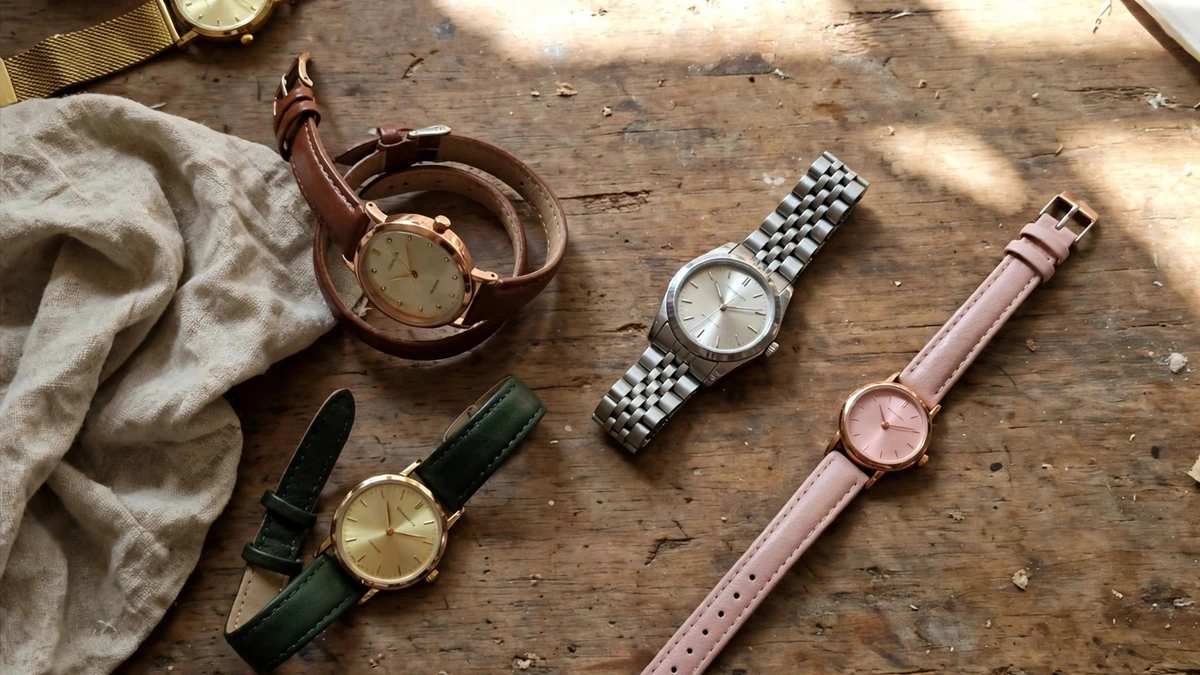
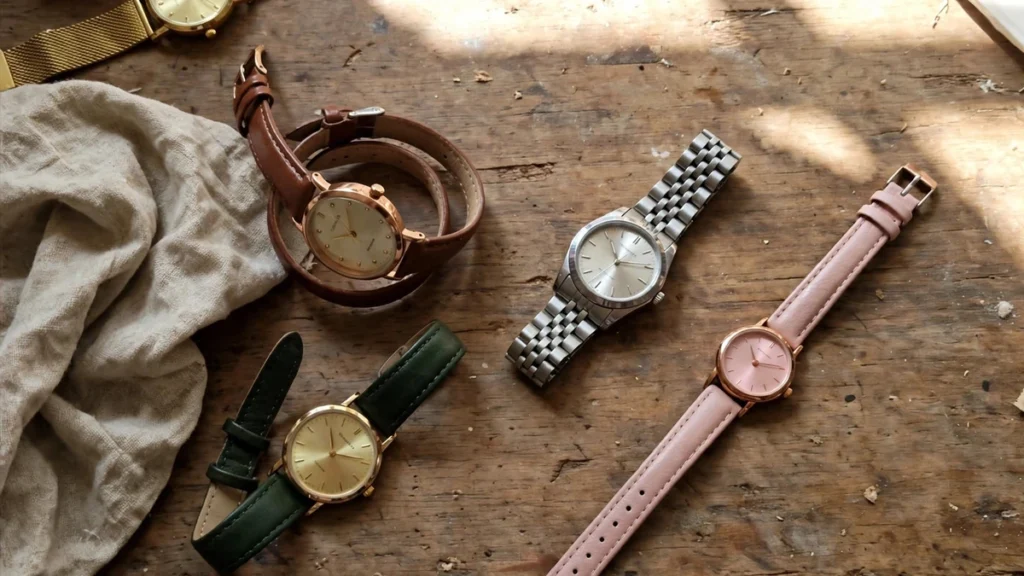
Under $1,000 is the most honest price range in watches. It is high enough to buy a well-made automatic movement, a sapphire crystal, and a steel case that will last for decades, and low enough that every dollar has to earn its place. The problem is not finding a watch under $1,000. It is finding one that does not look like a compromise: a watch that is slim, well finished, and easy to wear every day, rather than a fashion watch with a famous name and a cheap movement inside.
That is why this guide is organised by what you actually get for the money, not just by brand. A sapphire crystal resists scratches in a way mineral glass never will. An automatic movement with a 40-hour power reserve will still be running after a weekend in a drawer. A bracelet with solid end links feels completely different from a folded-link bracelet that rattles.
Below are nine watches for women under $1,000 worth considering in 2027, from a slim steel sports watch to a classic cocktail-style automatic. Each one is described by what it does well, what to watch for, and who it suits best, so you can choose with your wrist and your budget in mind, not just a price tag.
Key takeaways
- Under $1,000 buys a real watch: sapphire crystal, a reliable automatic or solar movement, and a steel case are all realistic at this price.
- Case size matters more than brand: 28 to 36 mm suits most wrists, and a watch that is too large will look and feel wrong whatever it cost.
- Automatic movements need wearing or winding, while quartz and solar movements are more accurate and easier to live with day to day.
- A steel bracelet lasts longer than leather and costs less to maintain, while leather looks smarter and is easier to swap.
- No watch under $1,000 is a luxury investment piece, and resale value at this price is modest, so buy a watch you love wearing.
What under $1,000 actually buys in a women’s watch
At this price, the most important upgrade over a fashion watch is the movement. An automatic movement, wound by the motion of your wrist, will run for decades with regular servicing and never needs a battery. A solar movement, charged by any light, is accurate to seconds a year and needs no attention at all. A standard quartz movement is the cheapest option, and there is nothing wrong with it, but at this budget you can do better, and the difference shows in how the watch feels and how long it lasts.
The crystal is the second upgrade worth paying for. Sapphire crystal is almost impossible to scratch in normal wear, while mineral glass will pick up marks from keys, door frames, and desk edges within months. Most watches in this price range from established Swiss and Japanese makers now use sapphire, and it is worth checking before you buy.
Finally, the strap and bracelet decide how the watch wears every day. A steel bracelet with solid links and a good clasp is comfortable, durable, and easy to clean. A leather strap looks smarter and is lighter on the wrist, but it will need replacing every year or two.
How we chose these watches and what to look for
Look first at the movement and the crystal. An automatic movement with at least a 38-hour power reserve is a good baseline, and a solar or quartz movement should be accurate and trouble-free. Sapphire crystal is close to essential at this price, and a display case back is a nice bonus that shows the movement, though it adds a little thickness. Our guide to the best watches under $500 covers the cheapest end of this market, and it is worth reading if your budget is tighter, because several of the watches there overlap with this list.

Look next at the size and the dial. Most women suit a case between 28 and 36 mm, and a watch that is too large will dominate the wrist and catch on sleeves. A clean dial with baton markers is the most versatile choice, working with a work wardrobe and a wedding alike, while a busier dial with a date window and luminous markers suits a more casual, everyday watch. Check the lug-to-lug length as well as the diameter, because a long case will overhang a slim wrist.
Finally, look at the brand and the warranty. Established Swiss and Japanese makers offer two to five year warranties and a service network that will still exist in a decade, which matters more than a fashionable name.
The 9 best watches for women under $1,000 of 2027
Tissot PRX 35mm
What we like: A slim integrated steel bracelet, a clean waffle-pattern dial, a quartz movement that keeps the watch thin, and a 1970s-inspired design that looks far more expensive than it is. What to consider: The quartz version is the affordable one, and the automatic version costs more and is thicker. Best for: Everyday wear with a modern look. Material: Steel case and bracelet. Price range: $375–$650. Standout feature: The integrated steel bracelet.
The PRX is the watch that made integrated bracelets fashionable again. It is slim, comfortable, and smart enough for work, and the 35 mm size suits most wrists without looking oversized.
Seiko Presage Cocktail Time
What we like: A beautiful sunburst or cocktail-inspired dial, an in-house automatic movement with a 41-hour power reserve, and a display case back, all at a price that embarrasses watches costing three times as much. What to consider: The dial colours are bold, so choose carefully, and the bracelet is not as refined as the dial. Best for: A beautiful automatic on a budget. Material: Steel case, leather strap or steel bracelet. Price range: $425–$650. Standout feature: The sunburst cocktail dial.
The Cocktail Time is the best-value automatic on this list. The dial alone is worth the price, and the movement inside is a genuine in-house calibre, not a bought-in part.
Citizen Eco-Drive Stiletto
What we like: An ultra-thin case, solar charging that never needs a battery, a clean minimalist dial, and a lightness on the wrist that makes it easy to forget you are wearing it. What to consider: Very slim, so it can feel delicate, and the minimalist dial will not suit anyone who wants a busier, more detailed watch. Best for: A watch you never have to think about. Material: Steel case, leather strap or steel bracelet. Price range: $250–$450. Standout feature: Solar charging with no battery changes.
Hamilton Khaki Field 38mm
What we like: A tough, honest field-watch design, an automatic movement with an 80-hour power reserve, a sapphire crystal, and a canvas or leather strap that suits everyday wear. What to consider: It is a field watch, not a dress watch, so it looks casual, and the 38 mm size is on the larger side for slim wrists. Best for: A durable everyday automatic. Material: Steel case, canvas or leather strap. Price range: $550–$850. Standout feature: The 80-hour power reserve.
The Khaki Field is a watch you can wear anywhere and not worry about. It is the most practical watch here, and the long power reserve means it is still running after a weekend off the wrist.
Frederique Constant Classics Index Automatic
What we like: A classic round case with a clean white dial, an in-house automatic movement, a slim profile, and genuine Swiss watchmaking at a price that undercuts most Swiss rivals. What to consider: The styling is deliberately traditional, and the brand has less name recognition than the bigger Swiss houses. Best for: A Swiss automatic with classic looks. Material: Steel case, leather strap. Price range: $750–$995. Standout feature: The in-house automatic movement.
Frederique Constant is the quiet achiever of Swiss watchmaking, building its own movements at prices other Swiss brands cannot match. This is the most classically elegant watch on the list.
Bulova Classic Sutton
What we like: A slim rectangular case, a clean white dial with Roman numerals, a quartz movement that keeps it thin, and a vintage-inspired look at a very fair price. What to consider: Quartz rather than automatic, and the water resistance is minimal, so keep it dry. Best for: A rectangular dress watch on a budget. Material: Steel case, leather strap. Price range: $250–$450. Standout feature: The slim rectangular case.
Orient Bambino 38mm
What we like: A domed crystal, a classic white dial with Roman numerals, an in-house automatic movement, and a price that makes it one of the cheapest genuine automatics worth owning. What to consider: The domed crystal can catch reflections, and the water resistance is only 30 metres. Best for: A first automatic watch. Material: Steel case, leather strap. Price range: $200–$350. Standout feature: The domed crystal and classic dial.
The Bambino is the watch that starts many collections. It is the cheapest automatic here, and it looks and feels like a watch that should cost twice as much.
Longines La Grande Classique
What we like: An ultra-slim case, a clean white dial with Roman numerals, a quartz movement that keeps the watch barely 5 mm thick, and the Longines name on the dial. What to consider: Quartz only at this price, and the ultra-thin case needs gentle handling. Best for: The slimmest watch under $1,000. Material: Steel case, leather strap. Price range: $850–$995. Standout feature: The ultra-thin 5 mm case.
At barely 5 mm thick, the La Grande Classique is one of the thinnest watches money can buy at any price. It slides under any cuff and disappears on the wrist until you need it.
Timex Marlin Automatic
What we like: A vintage-inspired domed crystal, a clean cream dial, an automatic movement with a 40-hour power reserve, and a price that leaves room for a better strap. What to consider: The water resistance is minimal, and the finishing is simpler than the Swiss and Japanese watches here. Best for: A vintage-style automatic for very little money. Material: Steel case, leather strap. Price range: $200–$300. Standout feature: The domed acrylic crystal and vintage styling.
Which watch suits your wrist and your budget
A slim wrist suits a smaller case, usually 28 to 34 mm, and a watch with short lugs that does not overhang the wrist. A broader wrist can carry 36 to 38 mm comfortably, and a round case often looks more balanced at that size. Check the lug-to-lug length before you buy, because a long case will look oversized however narrow it is. Our roundup of the best luxury watches for women under $5,000 is a useful next step if your budget stretches further, because it shows what an extra few thousand dollars buys in finishing and movement.
Budget shapes the choice more than brand does. Under $300, the best buys are simple automatics and solar watches from Japanese makers, where the money goes into the movement and the crystal. From $300 to $700, you can have a sapphire crystal, a steel bracelet, and an automatic movement with a proper power reserve. From $700 to $1,000, you are buying Swiss finishing, in-house movements, and ultra-thin cases, and the differences are about refinement rather than reliability.
Think about how the watch will be worn. A watch worn every day should be on a steel bracelet or a tough leather strap, with a sapphire crystal and at least 50 metres of water resistance. A watch saved for smarter occasions can be slimmer and more delicate, with a leather strap and a clean dial.
The caveats that matter
The most common disappointment with a watch under $1,000 is expecting it to behave like a luxury watch. It will not hold its value the way a famous Swiss brand does, and it will not have the hand-finishing of a watch costing ten times as much. What it will do, if you choose well, is keep good time, survive daily wear, and look right for years. That is a fair trade, as long as you know what you are buying.
| Detail | What is known |
|---|---|
| Best crystal at this price | Sapphire resists scratches; mineral glass will mark within months |
| Automatic power reserve | 38 to 80 hours is typical; less than 38 hours needs daily winding |
| Case size for most wrists | 28 to 36 mm; check lug-to-lug length as well as diameter |
| Water resistance | 30 m means splash-resistant only; 50 m is the minimum for daily wear |
| Strap or bracelet | Steel lasts longer and costs less to maintain; leather looks smarter |
| Servicing | Quartz needs a battery every 2 to 3 years; automatic needs a service every 4 to 5 years |
| Resale value | Modest at this price; buy a watch you love wearing, not an investment |
| What it does not do | It does not hold value like a luxury brand or match hand-finished quality |
Servicing is the cost people forget. A quartz watch needs a battery every two to three years, which is inexpensive. An automatic watch needs a full service every four to five years, and that can cost $150 to $300 depending on the maker.
Checklist: buying a watch under $1,000 honestly
Use these checks before you buy, and again before you wear a new watch for the first time.
- Check the crystal: sapphire is worth paying for, because a scratched crystal makes any watch look cheap.
- Check the movement: automatic with at least 38 hours of reserve, or solar or quartz for zero maintenance.
- Check the fit: the lug-to-lug length should not overhang the flat of your wrist.
- Check the water rating: 50 metres is the minimum for a daily watch; 30 metres means splash-resistant only.
- Check the warranty: two to five years from an established maker with a real service network.
- Check the strap: steel for daily wear, leather for smarter occasions, and budget for a replacement.
Frequently asked questions
What is the best women’s watch under $1,000?
There is no single best watch, because it depends on your wrist and your taste. For everyday wear, the Tissot PRX and the Hamilton Khaki Field are strong choices. For elegance, the Longines La Grande Classique and the Frederique Constant Classics are hard to beat.
Are automatic watches under $1,000 reliable?
Yes, if they come from an established maker. Seiko, Citizen, Hamilton, Tissot, and Orient all make automatic movements that run for decades with regular servicing. Avoid no-name automatics, because the movement quality and the service network matter more than the brand on the dial.
Should I buy quartz or automatic under $1,000?
Quartz and solar are the practical choice: more accurate, thinner, and cheaper to maintain. Automatic suits people who enjoy the craft and do not mind winding and servicing. At this price, a good solar watch is often the smartest buy of all.
Do watches under $1,000 hold their value?
Mostly no. A few sought-after models hold their price, but most watches in this range lose value, so buy a watch you love wearing rather than an investment. Our roundup of the best watches for women covers a wider range of prices, including pieces that hold their value better.
What size watch should a woman wear?
Most women suit a case between 28 and 36 mm, with smaller cases for slim wrists and larger cases for broader wrists. Try the watch on and check that the lugs do not overhang the flat of your wrist.
How often does a watch under $1,000 need servicing?
A quartz or solar watch needs a battery or a capacitor check every few years, and very little else. An automatic watch needs a full service every four to five years, which typically costs $150 to $300. Always have the seals checked when the battery is changed.
The bottom line
The best watch for a woman under $1,000 in 2027 is not the one with the most famous name. It is the one with a sapphire crystal, a reliable movement from an established maker, and a case size that suits your wrist. For most people, that means spending $400 to $800 on a Seiko, Tissot, Hamilton, or Citizen, and choosing the strap for the life the watch will actually lead.
Try the watch on before you buy, check the crystal and the water rating, and buy the maker as much as the model. A well-chosen watch under $1,000 will keep good time and look right for a decade, and that is a better result than a famous name that sits unworn in a drawer.