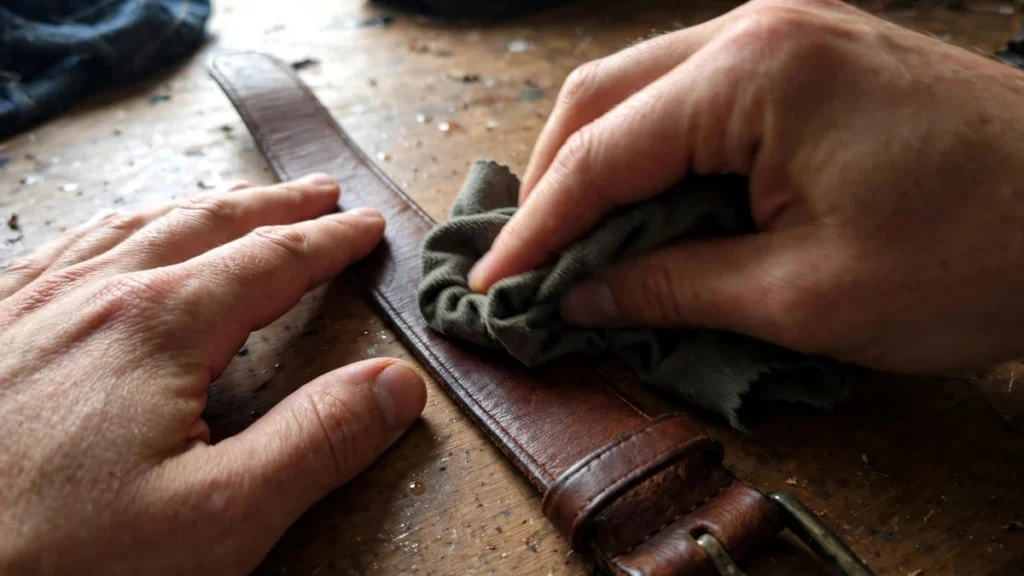
A leather belt is one of the hardest-working pieces in a wardrobe. It holds trousers in place, finishes an outfit, and gets pulled, buckled, and bent every time it is worn. Yet most belts are never cleaned or conditioned at all, and the first sign of trouble, a crack at the holes, a white bloom on the surface, or edges that start to peel, is usually the sign that the damage has already been done.
The good news is that caring for a leather belt takes very little time. A quick brush and wipe after wearing, a light condition twice a year, and sensible storage are enough to keep a good strap looking smart for years. The mistakes that ruin belts are also simple ones: soaking them in water, drying them with heat, or reaching for a harsh household cleaner when a damp cloth would have done.
Below is a nine-step routine for keeping a leather belt in good condition in 2027, from the first wipe to knowing when a cobbler is the right call. Each step explains what to do, what to avoid, and how long it takes, so you can fit the routine into real life rather than treating it as a project. If you are still choosing a belt, our guide to buying a belt covers leather types and sizing first.
Key takeaways
- Most belt care is prevention: brush off dust, wipe after wear, and store the belt hanging or loosely coiled.
- Water and heat are the two biggest dangers, so never soak a belt and never dry it with a hairdryer or radiator.
- Condition lightly and rarely, twice a year is enough for most belts, and always test on the back of the strap first.
- Clean from the buckle end toward the tip, and work in the direction of the grain, not against it.
- No home routine can save bonded leather once it starts peeling, and a cracked strap at the holes is a sign to replace the belt.
What caring for a leather belt actually involves
Caring for a leather belt means keeping the surface clean, the fibres supple, and the shape intact. Leather is skin, and like skin it dries out, cracks when it is too dry, and stains when it is soaked. A belt that is wiped after wear and conditioned twice a year will outlast a belt that is ignored for two years and then soaked in cleaner in a panic.
The routine is the same for most full-grain and top-grain belts, and it is worth learning once, because the same habits protect handbags, shoes, and watch straps too. Leather care for handbags follows the same principles, and our guide to caring for leather handbags is a useful companion if you own both. The one exception is bonded leather, which is made from glued leather fibres and cannot be conditioned back to health once it starts to peel.
Time is the honest constraint. A daily wipe takes thirty seconds. A full clean and condition takes about fifteen minutes, twice a year. The steps below are written in the order you would actually do them, from the quickest habit to the rarest repair, so you can start with the first two steps today and add the rest as they become relevant.
How we chose these steps and what to look for
Look first at your belt. Check the label or listing for the leather type, and look at the surface: full-grain leather has a visible, slightly uneven grain, while bonded leather looks uniform and plasticky. Look at the edges, which should be burnished or painted, and at the holes, where wear shows first. That tells you whether the belt is worth caring for, and how gentle you need to be.
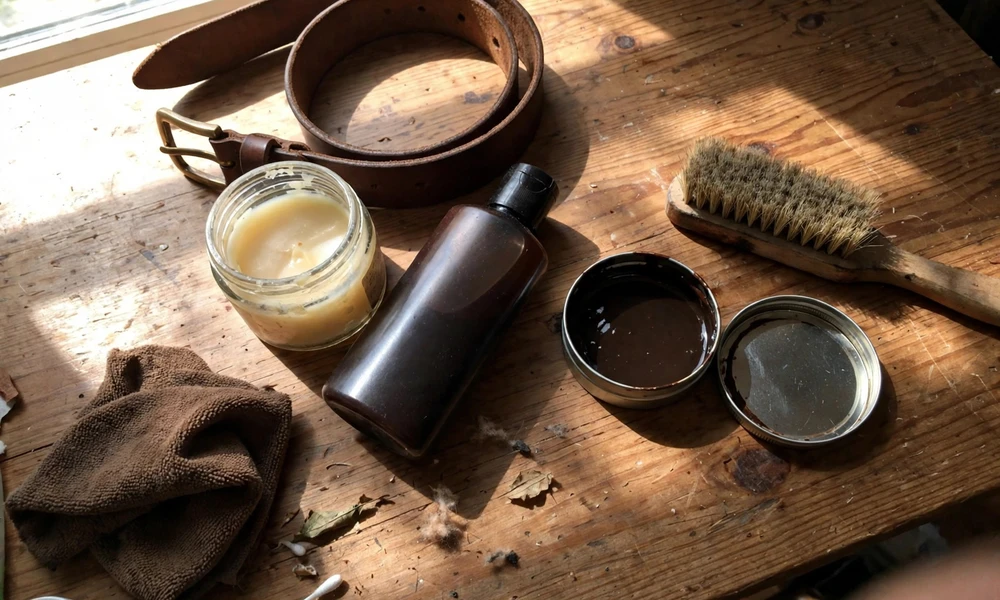
Look next at your products. A soft brush, a clean cotton cloth, a gentle leather cleaner, and a light leather conditioner are all you need. Avoid anything with bleach, alcohol, or strong solvents, and avoid shoe polish on a belt unless you know the colour matches exactly, because polish can darken and stain clothing. Finally, look at your storage. A belt that hangs straight or lies loosely coiled keeps its shape, while one folded tight or left in a damp cupboard will crease and mildew.
How to care for a leather belt in 9 steps
Step 1: Read the care tag and identify the leather type
What to do: Check the label, the listing, or the brand’s care notes for the leather type and any specific instructions, and note whether the belt is full-grain, top-grain, or bonded. What to avoid: Skipping this step and treating every belt the same, because bonded leather and suede need different care. Best for: Every belt, before the first clean. Time needed: 2 minutes. Standout tip: If the label says nothing at all, assume bonded leather and be extra gentle.
Step 2: Brush off dust and surface dirt first
What to do: Run a soft horsehair brush or a dry cotton cloth along the strap, from the buckle toward the tip, to lift dust and grit before any damp cleaning. What to avoid: Wiping a dusty belt with a wet cloth first, which grinds grit into the grain and scratches the surface. Best for: Every belt, after each wear. Time needed: 30 seconds. Standout tip: Keep a small brush by the door or in the wardrobe so the habit sticks.
Step 3: Wipe with a barely damp cloth
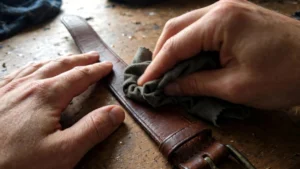
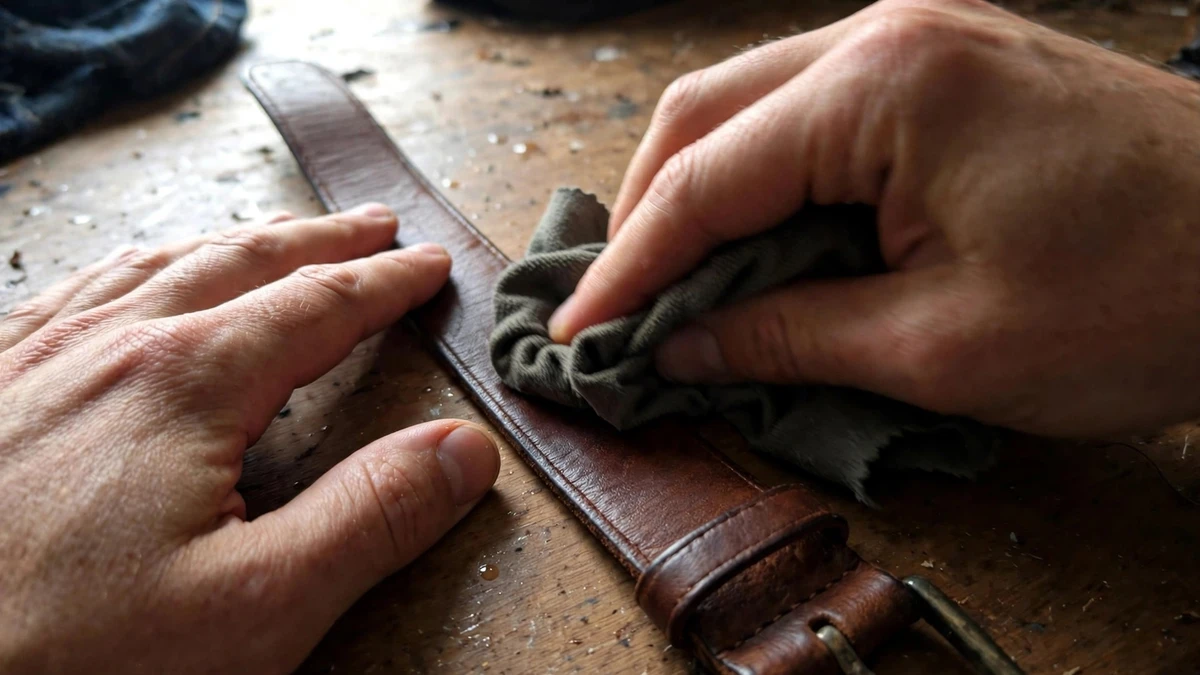
What to do: Dampen a clean cotton cloth, wring it out until it is barely moist, and wipe the strap in long strokes along the grain, then wipe again with a dry cloth. What to avoid: Using a soaking wet cloth, or leaving the belt damp, because water spots and stiffness follow. Best for: Removing light marks, sweat, and everyday grime. Time needed: 2 minutes. Standout tip: Work from the buckle toward the tip so you do not push dirt into the holes.
Step 4: Clean with a gentle leather cleaner
What to do: Apply a small amount of a gentle, pH-balanced leather cleaner to a cloth, not directly to the belt, and work it in small circles, then wipe away the residue with a clean damp cloth. What to avoid: Household cleaners, baby wipes with alcohol, and saddle soap on a belt that is not heavily soiled, all of which can strip the finish. Best for: Belts with visible marks, stains, or a dull, grubby surface. Time needed: 5 minutes. Standout tip: Test the cleaner on the back of the strap first and wait ten minutes before cleaning the front.
Less product is more. A pea-sized amount of cleaner is usually enough for the whole strap, and any residue left behind will attract more dirt than it removes.
Step 5: Condition lightly, twice a year
What to do: Rub a thin layer of leather conditioner into the strap with a soft cloth, leave it for ten minutes, then buff off the excess with a clean cloth. What to avoid: Over-conditioning, which leaves the belt greasy, darkens the colour, and can stain clothing, or conditioning a bonded leather belt, which will not absorb it. Best for: Full-grain and top-grain belts, in spring and autumn. Time needed: 10 minutes, plus drying time. Standout tip: If the belt still feels tacky after buffing, you used too much; wipe it again and use half as much next time.
Conditioning replaces the natural oils leather loses over time, which is what keeps it supple instead of stiff. Twice a year is enough for a belt worn most days, and once a year is enough for one worn occasionally.
Step 6: Dry slowly at room temperature
What to do: Lay the belt flat or hang it straight in a cool, ventilated room and let it dry naturally for several hours. What to avoid: Radiators, hairdryers, direct sunlight, and tumble dryers, all of which dry leather too fast and cause cracking. Best for: Any belt that has got wet, from rain or cleaning. Time needed: 4 to 12 hours of air drying. Standout tip: Stuff a damp belt loosely with plain paper to help it hold its shape while it dries.
Step 7: Store it hanging or loosely coiled
What to do: Hang the belt by its buckle on a hook, or coil it loosely in a drawer with the buckle on the outside, and keep it in a dry place. What to avoid: Folding a belt tightly, hanging it over a sharp edge, or storing it in a damp cupboard, which causes creases and mildew. Best for: Every belt, every day. Time needed: 10 seconds. Standout tip: If you travel, roll the belt loosely and pack it inside a shoe to stop it creasing.
Storage is where most belts are quietly damaged. A belt left folded in a drawer for a month will keep the crease, and a belt left in a damp bathroom will grow mildew on the back of the strap.
Step 8: Treat scuffs and water spots promptly
What to do: For a light scuff, rub the area gently with a clean finger or a soft cloth, which warms the leather and often blends the mark away, then condition the spot lightly. What to avoid: Scrubbing hard, using coloured polish to hide a scuff, or ignoring a water spot, which sets into a ring if left. Best for: Fresh scuffs and rain spots. Time needed: 2 to 5 minutes. Standout tip: For a water spot, dampen the whole strap lightly and let it dry evenly, which stops the ring from forming.
Step 9: Know when to see a cobbler
What to do: Take the belt to a cobbler if the holes are tearing, the buckle is loose, the stitching has come away, or the edge needs re-burnishing. What to avoid: Trying to punch new holes at home with a kitchen tool, which tears the leather, or gluing a cracked strap, which will not hold. Best for: Good belts that are worth repairing. Time needed: A day or two at the cobbler. Standout tip: Ask the cobbler to check the buckle prong as well, because a worn prong enlarges the holes every time the belt is worn.
A cobbler can add a hole cleanly, replace a buckle, and re-finish an edge for a small fee, and that repair often adds years to a good belt. It is worth doing for a full-grain belt, and not worth doing for a bonded one.
Which care routine fits your belt
A daily-worn full-grain belt needs the full routine: a brush after wear, a damp wipe weekly, and a condition twice a year. A belt worn once a week needs less, a monthly wipe and a condition once a year is usually enough. The routine scales with wear, and the habit matters more than the products.
Suede and nubuck belts are the exception. They should never be wiped with a damp cloth or conditioned like smooth leather. Brush them with a suede brush, use a suede protector spray, and keep them away from water entirely. If your belt is suede, skip steps three to five and use a suede-specific routine instead.
Colour matters too. Dark belts hide scuffs and can take a little more conditioner without showing it, while pale tan belts show every mark and darken noticeably with conditioner, so test on the back first and use less than you think. That is also why leather ages beautifully when it is cared for: the patina that develops is even and rich, rather than patchy and stained.
The caveats that matter
Leather care is simple, but it is easy to overdo. Too much conditioner is worse than too little, because it leaves the belt greasy and stains the waistband of your trousers. Too much water is worse than too little cleaning, because it stiffens the fibres and leaves rings. And the wrong product, anything with bleach, alcohol, or a strong solvent, can strip the dye and the finish in a single application.
| Detail | What is known |
|---|---|
| Daily habit | Brush off dust and wipe after wear; 30 seconds is enough |
| How often to clean | A damp wipe weekly for daily-worn belts, monthly for occasional wear |
| How often to condition | Twice a year for full-grain belts worn often, once a year otherwise |
| Biggest dangers | Water, heat, and harsh cleaners; never soak a belt or dry it with heat |
| What not to use | Bleach, alcohol, household cleaners, and shoe polish in the wrong colour |
| Storage | Hang by the buckle or coil loosely, in a dry place, away from radiators |
| When to replace it | If the strap cracks at the holes, the edge peels, or bonded leather flakes |
| What care does not do | It does not restore bonded leather, fix torn holes, or reverse deep cracking |
If you are unsure about a product, test it on the back of the strap and wait a day. A product that darkens, stiffens, or leaves a residue on the back will do the same on the front, and the back is the place to find that out.
Checklist: caring for a leather belt honestly
Use these checks when you buy a belt, and again each season.
- Check the leather type: full-grain and top-grain are worth caring for; bonded leather is not.
- Check your tools: a soft brush, a clean cotton cloth, a gentle cleaner, and a light conditioner are all you need.
- Check the water: use a barely damp cloth, never a soaking one, and always dry the belt at room temperature.
- Check the conditioner: apply a thin layer, test on the back first, and buff off the excess.
- Check the storage: hang the belt or coil it loosely, and keep it dry and away from heat.
- Check the wear: inspect the holes and edges each month, and see a cobbler before a small tear becomes a split.
Frequently asked questions
Can I wash a leather belt with soap and water?
Not with regular soap and water. A barely damp cloth is fine for light cleaning, and a gentle leather cleaner is better for marks. Soaking a belt in soapy water will stiffen it and can leave water spots and cracks as it dries.
How often should I condition a leather belt?
Twice a year is enough for a belt worn most days, and once a year for one worn occasionally. Over-conditioning leaves the belt greasy and can stain clothing, so a thin layer, well buffed, is the right amount.
What should I do if my belt gets caught in the rain?
Wipe it with a dry cloth, lay it flat or hang it straight, and let it dry slowly at room temperature. Do not use a hairdryer or a radiator. Once it is dry, a light condition will help restore suppleness.
Can I fix a cracked leather belt?
Small surface cracks can sometimes be softened with conditioner, but a crack through the strap, especially at the holes, cannot be fixed at home. A cobbler can sometimes reinforce it, but for a cheap belt, replacement is usually the better choice.
Why has my belt gone white on the surface?
That is usually fat bloom, where oils in the leather rise to the surface in cold or damp conditions. It is not mould. Wipe it with a dry cloth and condition lightly, and it should disappear. If it returns often, the belt may be stored somewhere too cold or damp.
Is it worth taking a belt to a cobbler?
Yes, for a good full-grain belt. A cobbler can add a hole cleanly, replace a buckle, re-burnish an edge, and repair stitching for a small fee. For a bonded leather belt that is peeling, it is not worth it, because the material itself is failing.
The bottom line
Caring for a leather belt is mostly a matter of small habits: brush off the dust, wipe it after wearing, keep it dry, condition it twice a year, and store it properly. None of these steps takes long, and together they are the difference between a belt that lasts three years and one that looks tired after six months.
Start with the daily wipe and the right storage, because those two habits do most of the work. Add the twice-yearly condition, and see a cobbler for the repairs that are worth doing. That is the honest way to keep a good belt looking good, without turning leather care into a chore.