Packing a handbag for travel is a small skill with a large payoff. A well-packed bag means you can find your passport in seconds, your phone is always charged, and your shoulders do not ache by lunchtime.
The problem is not usually the bag. It is the habit of throwing things in as you leave the house, without thinking about what you will need, in what order, and how heavy it all is.
Below are nine steps that will help you pack a handbag for travel in 2027, from choosing the right bag to zipping it up and walking out the door.
Key takeaways
- Pack for the day you are actually having, not for every possible emergency, because extra items add weight and clutter.
- Put the things you need most often at the top, and the things you need rarely at the bottom.
- Use small pouches to group similar items, so you can find what you need without emptying the bag.
- Keep your passport, cards, and phone in a secure, zipped pocket, not loose at the top of the bag.
- No packing method works for every bag, and a method that suits a large tote may not suit a small crossbody.
What packing a handbag for travel actually means
Packing a handbag for travel is not the same as packing a suitcase. A suitcase holds everything you might need for a week. A handbag holds what you need for a day, The goal is not to fit as much as possible into the bag. It is to fit the right things, in the right order, so that the bag works for you all day.
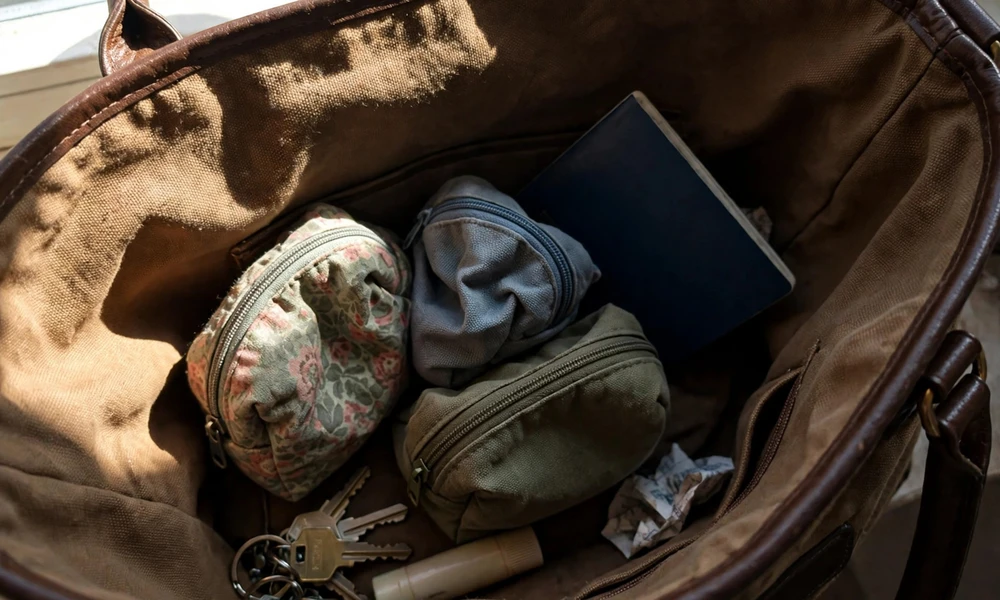
The first thing to understand is that a handbag has a natural order. The bottom is for things you need rarely, such as a spare pair of sunglasses or a small umbrella. The middle is for things you need sometimes, such as a book, a snack, or a scarf. The top is for things you need often, such as your phone, your wallet, and your travel documents.
The second thing to understand is that weight matters more than volume. A bag that is full of light things can feel heavier than a bag that is half full of heavy things, if the heavy things are at the bottom and the bag is pulling on one shoulder.
How to pack well and what to look for
Look first at the bag itself. A bag with a zip pocket, a slip pocket, and a main compartment is easier to pack than a bag with one big empty space.
Look next at what you actually carry. Lay everything out on a bed or a table before you pack, and ask yourself whether you will use each item today. Our guide to packing a carry-on for a week in Paris makes the same point for a suitcase, and it applies just as well to a handbag: pack for the trip you are taking, not for every trip you might ever take.
Finally, think about security and comfort. A bag that is packed so full it cannot close is not secure, and a bag that is packed unevenly will pull on one shoulder.
The 9 steps to pack a handbag for travel
Choose the right bag for the day
What to do: Pick a bag that fits everything you need for the day, with a secure closure and a comfortable strap. What to avoid: Choosing a bag because it looks good, then discovering it is too small or too heavy halfway through the day. Best for: The night before a trip, when you can try the bag on with everything inside. Time needed: Five minutes. Standout tip: If the bag feels heavy empty, it will feel heavier full, so choose a lighter bag for a long day.
The bag you choose sets the limit for everything else.
Empty the bag completely
What to do: Take everything out, shake the bag upside down, and check every pocket for old receipts, coins, and forgotten items. What to avoid: Packing on top of what is already in the bag, because old clutter will hide the things you actually need. Best for: Every trip, no matter how short. Time needed: Two minutes. Standout tip: Keep a small pouch for the things you always carry, and move the pouch between bags instead of repacking from scratch.
Starting from empty is the fastest way to pack well. It takes two minutes, and it means you know exactly what is in the bag, because you put it there.
Lay out everything you plan to carry
What to do: Put everything on a bed or a table in groups: documents, money, phone and tech, beauty, food and water, and extras. What to avoid: Packing straight from a drawer or a shelf, because you will forget something and pack something you do not need. Best for: The evening before a flight or a long day out. Time needed: Five minutes. Standout tip: If you cannot see it laid out, you cannot judge whether you are carrying too much.
Laying everything out is the step most people skip, and it is the step that saves the most time later. When you can see all of it at once, it is easy to spot the duplicate, the item you will not use, and the item you have forgotten.
Group small items into pouches
What to do: Put documents in one pouch, cosmetics in another, and cables and chargers in a third, then label the pouches if they look alike. What to avoid: Putting small items loose in the bag, because they will sink to the bottom and be hard to find. Best for: Bags with one big compartment and no pockets. Time needed: Five minutes. Standout tip: Use pouches in different colours or textures, so you can find the right one by touch without looking.
Pouches are the simplest way to organise a handbag, because they turn a single large space into several small ones.
Pack the heavy items first, in the middle
What to do: Put the heaviest items, such as a water bottle or a book, in the centre of the bag, close to your body when you carry it. What to avoid: Putting heavy items at the bottom or at the outside edge, because they will pull the bag to one side and strain your shoulder. Best for: Shoulder bags and totes, where balance matters most. Time needed: Two minutes. Standout tip: If the bag hangs straight when you hold it by the strap, the weight is balanced.
Where the weight sits matters as much as how much weight there is. A bag with a heavy item at the bottom will swing and pull, while a bag with the same item in the middle will hang straight and feel lighter.
Put the essentials at the top
What to do: Place your phone, wallet, travel documents, and a lip balm at the top of the bag, where you can reach them without digging. What to avoid: Burying your passport under a book and a scarf, because you will need it at the worst possible moment. Best for: Airport days, when you need documents often and quickly. Time needed: Two minutes. Standout tip: If you need it more than three times a day, it belongs at the top.
The top of the bag is the most accessible part, so it should hold the things you reach for most often. Your phone, your wallet, and your travel documents are the obvious candidates, and a lip balm or a packet of tissues can sit there too.
Secure your passport, cards, and cash
What to do: Put your passport and cards in an interior zip pocket, or in a zip pouch that sits at the top of the bag. What to avoid: Leaving your passport loose at the top of an open tote, or in an outside pocket that is easy to reach. Best for: Crowded places, public transport, and busy markets. Time needed: One minute. Standout tip: Keep a copy of your passport on your phone, and keep the original in the most secure pocket you have.
Your passport and cards are the most important things in your bag, and they deserve the most secure place in it. An interior zip pocket is ideal, because it is not the first thing a hand finds when the bag is opened.
Add comfort items last, in the gaps
What to do: Tuck a scarf, a snack, a packet of tissues, and a pair of sunglasses into the gaps around the main items. What to avoid: Packing comfort items first, because they will take up the space that the essentials need. Best for: Long flights and long days out, when small comforts matter. Time needed: Three minutes. Standout tip: A scarf is the most useful comfort item, because it is a blanket, a pillow, and a cover in one.
Comfort items are the things that make a long day bearable, but they are also the things that take up space if they are packed first. A scarf, a snack, and a pair of sunglasses are all worth carrying, but they should fill the gaps around the essentials, not take the place of them.
Close the bag, check it, and adjust
What to do: Close the bag properly, pick it up by the strap, and walk around the room with it for a minute. What to avoid: Leaving the bag open or overfull, because it will be insecure and uncomfortable all day. Best for: The final check before you leave the hotel or the house. Time needed: Two minutes. Standout tip: If the bag feels heavy after a minute at home, it will feel heavier after eight hours out, so take something out now.
The final check is the most important step, because it is the only one that tests the bag as you will actually carry it. Pick it up, walk around, and see how it feels. If it is heavy, take something out. If it swings, move the heavy items to the middle. If it does not close, take something out.
Packing for different kinds of trips
A city break calls for a bag that is secure and light, with your phone, wallet, documents, and a water bottle at the top. A crossbody bag with a zip top is the safest choice, and a small pouch for your passport and cards will give you peace of mind. A luxury weekender bag is a useful companion for the journey, but your handbag is the bag you will live out of during the day.
A beach holiday calls for a light, roomy tote with a towel, a book, sunscreen, and a bottle of water. Security matters less, because you are not in a crowd, but weight matters more, because you will be carrying the bag to and from the beach.
A business trip calls for a structured bag with a laptop or a tablet, a notebook, a pen, and a charger. The bag should look professional, close securely, and hold everything you need for a meeting without looking stuffed. A guide to choosing the perfect leather tote can help here, because a good tote is often the most practical business travel bag.
The caveats that matter
Packing well is a skill, but it is not a guarantee. A bag can be packed perfectly and still be too heavy, if you are carrying too much. A bag can be organised perfectly and still be insecure, if it does not close properly. And a packing method that works for a large tote may not work for a small crossbody, because the space and the shape are different.
| Detail | What is known |
|---|---|
| Most important rule | Pack for the day you are having, not for every possible emergency |
| Where the essentials go | At the top, where you can reach them without digging |
| Where the heavy items go | In the middle, close to your body, so the bag hangs straight |
| Best way to organise small items | Small pouches in different colours, grouped by type |
| Where the passport goes | In an interior zip pocket, or in a zip pouch at the top |
| What to leave behind | Anything you will not use today, and any duplicate of something you already have |
| What wears out first | Overstuffed seams, strained straps, and zips that are forced shut |
| What it does not do | No packing method makes a bag that is too small, too heavy, or insecure into a good travel bag |
If you are travelling to a place where theft is a known problem, wear your bag crossbody, keep it in front of you in a crowd, and keep your passport and cards in the most secure pocket you have.
Checklist: before you zip the bag
Use these checks before you leave the hotel or the house.
- Check the essentials: phone, wallet, passport, and travel documents are all in the bag and at the top.
- Check the closure: the bag zips or fastens properly, with a little space left at the top.
- Check the weight: pick the bag up by the strap and walk around for a minute, and take something out if it feels heavy.
- Check the balance: the bag hangs straight when you hold it by the strap, not pulling to one side.
- Check the pouches: documents, cosmetics, and cables are each in their own pouch, and you know which is which.
- Check the extras: a scarf, a snack, and a pair of sunglasses are in the gaps, not taking the place of the essentials.
Frequently asked questions
What should I pack in my handbag for a flight?
Your passport and travel documents, your phone and charger, your wallet, a lip balm, a packet of tissues, a snack, and a book or headphones. Everything else can go in your carry-on, because you will not need it during the flight.
How do I keep my handbag organised while travelling?
Use small pouches to group similar items, and keep the pouches in the same place every day. A pouch for documents, a pouch for cosmetics, and a pouch for cables will do most of the work.
Should I use a handbag organiser insert?
An insert can help if your bag has one big empty compartment, because it creates pockets and keeps the bag’s shape. It can also add weight and take up space, so it is best for a large tote.
How do I pack a handbag for a long day of sightseeing?
Pack light, with a water bottle, a snack, sunscreen, your phone and charger, your wallet, and your documents. Wear the bag crossbody, keep the essentials at the top, and leave anything you will not use at the hotel.
What is the best way to carry valuables in a handbag?
In an interior zip pocket, or in a zip pouch that sits at the top of the bag. In a crowd, wear the bag crossbody and keep it in front of you.
Can I pack a handbag inside a suitcase?
Yes, and it is a good idea for a trip where you want a spare bag. Stuff the handbag with a scarf or tissue to hold its shape, put it in a dust bag or a soft pouch, and pack it in the middle of the suitcase where it is protected.
The bottom line
Packing a handbag for travel is not about fitting as much as possible into the bag. It is about fitting the right things, in the right order, so that the bag is comfortable to carry, easy to use, and secure in a crowd. Choose the right bag for the day, empty it completely, lay everything out, group the small items into pouches, and put the essentials at the top.
If the bag feels heavy after a minute at home, it will feel heavier after eight hours out, so take something out now. A well-packed handbag is a small thing, but on a long travel day, it is the difference between a day that flows and a day that drags.