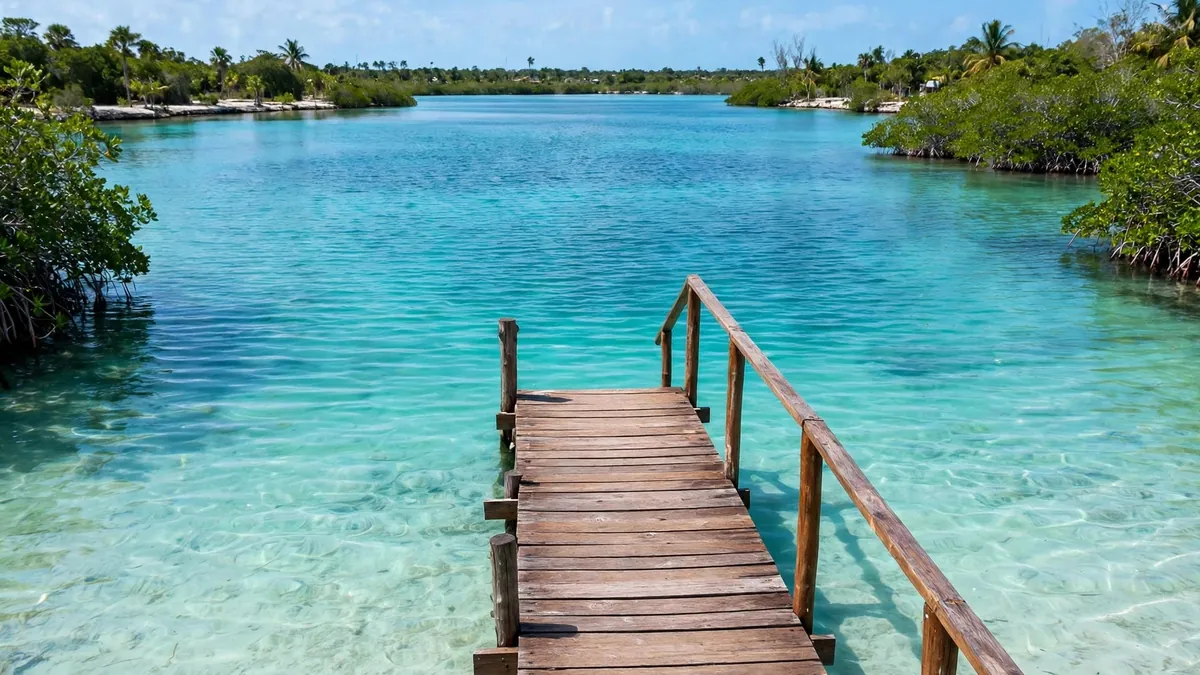

Bacalar is the lagoon town in southern Quintana Roo that travellers describe as the Caribbean coast without the crowds. Its centrepiece is Laguna Bacalar, a long freshwater lagoon nicknamed the Lake of Seven Colours, where the water shifts from pale turquoise to deep indigo as the depth changes.
The appeal is the pace as much as the colour. There are no big resorts on the lagoon shore, no cruise ships, and no beach clubs blasting music until dawn. Days here are built around the water: an early boat tour before the wind picks up, a swim in a cenote, a slow lunch in the square, and a sunset from the fort.
Below are nine Bacalar highlights worth building a trip around in 2027, from the lagoon itself and its cenotes to the fort, the stromatolite sanctuaries, and the quieter southern end of the lake.
Key takeaways
- Bacalar is a freshwater lagoon town in southern Quintana Roo, centred on the Lake of Seven Colours, and it is best enjoyed slowly over two or three days.
- The lagoon’s colour changes with depth, sunlight and season, so early mornings and calm, clear days give the most vivid blues.
- Boat tours, cenotes and the rapids are the core experiences, and most cost far less than comparable activities on the Riviera Maya.
- Stromatolites are living rock formations in the lagoon, and they are protected, so never stand on them or touch them.
- Bacalar is not a beach destination, the water is shallow in places, and facilities outside the town centre are limited, so plan transport and cash in advance.
What Bacalar actually is
Bacalar sits on the western shore of Laguna Bacalar, a lagoon roughly 42 kilometres long that runs from the town south towards the Belize border. The water is fresh, not salty, fed by underground rivers and cenotes, and the bottom is a mix of white sand and limestone that reflects sunlight in layers of blue.
The town itself has a population of around 12,000 people, and its history is older than its tourism. Bacalar was a Maya settlement long before the Spanish arrived, and the Fuerte de San Felipe, built in the 18th century, was raised to defend the town against pirate raids coming up the lagoon.
Tourism has grown steadily since the town was named a Pueblo Mágico, but it has stayed small-scale. Most stays are boutique hotels, guesthouses and lakeside cabins rather than large resorts, and many visitors arrive by bus from Chetumal, about 40 minutes away, or drive down from Tulum, about three hours north.
How we chose these highlights and what to look for
Look first at the water. Bacalar is a lagoon destination, so the best experiences are the ones that get you onto or into the water at the right time of day. Early morning is the calmest and clearest, before the afternoon wind stirs the surface.
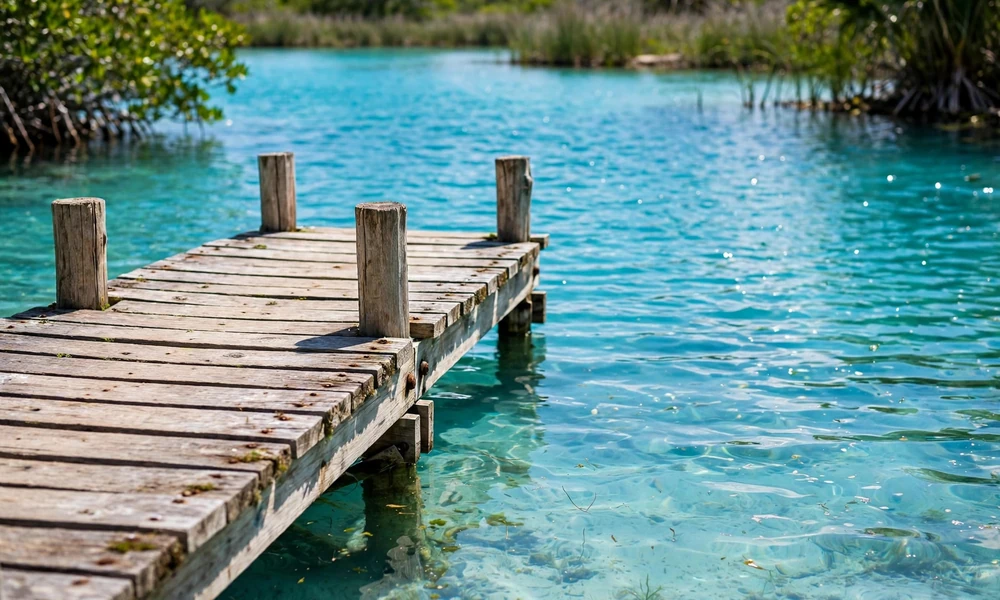
Look next at the ground beneath the water. Stromatolites, the layered rock formations built by ancient micro-organisms, are one of the lagoon’s most unusual features, and they are fragile and protected. A good tour will explain them, point them out from the boat, and keep you from standing on them.
Finally, look at the balance of the trip. Bacalar works best when the lagoon is the focus and the town fills the gaps, not the other way around. Plan one boat day, one cenote and fort day, and one slow day for the southern lagoon or a day trip, and leave room for the weather.
The 9 best Bacalar highlights of 2027
Laguna Bacalar, the Lake of Seven Colours
What we like: The lagoon itself is the reason to come, and a boat tour is the best way to see it, with stops for swimming in the shallow sandbars and a view of the colour changes from the water. What to consider: The colour depends on sun and wind, so a cloudy or windy afternoon will look flatter than the photographs suggest. Location: The full length of the lagoon, departing from the town’s public pier and lakeside hotels. Best for: First-time visitors and anyone who wants the classic Bacalar experience. Price range: Around $25 to $50 per person for a shared two-hour boat tour. Standout feature: The shifting blues of the sandbars, best seen from the water in the morning.
A shared boat tour is the simplest way to understand the lagoon. Most tours run for two hours, stop at the Pirate Channel, the Island of the Birds, and a swimming sandbar, and include a guide who explains the cenotes and stromatolites.
Cenote Azul
What we like: A large, open cenote on the edge of town with deep blue water, a restaurant on site, and easy access for a half-day swim. What to consider: It is deep, over 90 metres in places, so it suits confident swimmers, and the water is cooler than the lagoon. Location: On the southern edge of Bacalar town, a short drive or taxi ride from the main square. Best for: Swimmers who want a proper cenote without a long journey. Price range: Around $3 to $6 per person for entry. Standout feature: The sheer depth and the dark blue colour of the open water.
Cenote Azul is the most accessible cenote in Bacalar, and it is a good first stop. There is a simple restaurant with lake views, life jackets are available, and the setting is shaded by trees.
Los Rápidos de Bacalar
What we like: A narrow, fast-flowing channel at the southern end of the lagoon where you can float gently downstream past stromatolites and mangroves. What to consider: The current is real, so it is a float, not a swim, and you need to stay in the marked channel. Location: About 20 minutes south of Bacalar town, near the village of Xul-Ha. Best for: Travellers who want a calm, unusual water experience. Price range: Around $5 to $10 per person for entry, with life jackets included. Standout feature: The gentle current carrying you through a stromatolite-lined channel.
Los Rápidos is one of the most distinctive experiences in the area. You enter upstream, float down the channel with a life jacket, and walk back along a short path to do it again.
Cocalitos, the stromatolite sanctuary
What we like: A protected area of the lagoon where some of the oldest stromatolites are visible in shallow, clear water, with a small beach club and a relaxed, low-key setting. What to consider: Standing on the stromatolites is banned and can damage them, so follow the marked areas and the staff’s guidance. Location: On the western shore of the lagoon, a short drive north of the town centre. Best for: Anyone interested in the lagoon’s natural history. Price range: Around $3 to $6 per person for entry. Standout feature: Living stromatolites, some thousands of years old, visible in the shallows.
Cocalitos is the place to see stromatolites properly. The water is shallow and clear, the formations are close to the surface, and the beach club is a good spot for a long, lazy afternoon.
Cenote Negro, the Black Cenote
What we like: A dark, deep cenote in the middle of the lagoon, visible from boat tours, where the water turns almost black against the pale sandbars around it. What to consider: It is a viewing stop rather than a swimming spot, and it is best seen from a boat. Location: In the lagoon south of the town, reached by boat tour. Best for: Boat tour passengers and photographers. Price range: Included in most shared boat tours, around $25 to $50 per person. Standout feature: The dramatic contrast between the black water and the turquoise shallows.
Cenote Negro is one of the lagoon’s most photographed sights, and it is best appreciated from the boat, where the colour change is obvious.
Cenote Esmeralda
What we like: A smaller, greener cenote near the town, quieter than Cenote Azul, with clear water and a peaceful, local feel. What to consider: Facilities are minimal, so bring water and sun protection, and check access before you go. Location: Just outside Bacalar town, a short drive from the main square. Best for: Travellers who want a quieter cenote swim. Price range: Around $3 to $5 per person for entry. Standout feature: The emerald-green water, coloured by algae and the limestone bottom.
Cenote Esmeralda is the quieter alternative to Cenote Azul. It is smaller and less developed, which is part of its charm, and it is a good choice for a relaxed morning swim.
Fuerte de San Felipe
What we like: An 18th-century fort on the lagoon shore with thick walls, cannons, and a small museum about Bacalar’s pirate history, plus the best sunset view in town. What to consider: The museum is small and the signage is mostly in Spanish, so it is a short visit rather than a full afternoon. Location: On the lagoon shore at the eastern end of the main square. Best for: History lovers and anyone who wants a sunset spot. Price range: Around $5 to $8 per person for entry. Standout feature: The sunset over the lagoon from the fort walls.
The fort is the town’s most important historic building, and it is worth an hour, especially late in the day. The museum explains the pirate raids that shaped Bacalar, and the walls give a clear view of the lagoon and the town.
Plaza Principal and the town centre
What we like: A small, walkable town centre with a leafy main square, the church of San Joaquín, colourful murals, cafés, and a handful of good restaurants and artisan shops. What to consider: It is small, so do not expect a big shopping scene, and many places close early in the afternoon. Location: The centre of Bacalar town, around the main square. Best for: Slow mornings, evening walks, and eating well. Price range: Free to wander; meals around $8 to $20 per person. Standout feature: The relaxed, small-town atmosphere and the lakeside sunset from the malecón.
The town centre is where Bacalar’s charm is most obvious. The square is shaded and unhurried, the murals tell the town’s story, and the malecón, the lakeside promenade, is the place to walk at sunset.
Xul-Ha and the southern lagoon
What we like: A quieter village at the southern end of the lagoon, with calm water, a relaxed lakeside atmosphere, and a good base for kayaking and paddleboarding away from the crowds. What to consider: Facilities are limited, so plan food, transport and cash in advance, and check road conditions in the wet season. Location: About 25 minutes south of Bacalar town, at the southern end of the lagoon. Best for: Travellers who want the lagoon without the town. Price range: Kayak rental around $10 to $20 per hour; meals around $8 to $15 per person. Standout feature: The calm, uncrowded water and the slower pace of the southern lagoon.
Xul-Ha is the place to go if Bacalar town feels too busy, or if you want a full day on the water. The lagoon here is calm and shallow, the village is small and friendly, and a kayak is the best way to explore the shoreline.
Which Bacalar highlight is right for you
First-time visitors should start with the lagoon itself. A morning boat tour gives you the full picture, the colour changes, the cenotes, the stromatolites, and the scale of the lake. Our best honeymoon destinations guide includes Bacalar-style slow travel for exactly this reason, because the lagoon suits travellers who want water, quiet and space rather than a packed itinerary.
Swimmers and water lovers will get the most from the cenotes and Los Rápidos. Cenote Azul is the easiest and most dramatic, Cenote Esmeralda is the quietest, and Los Rápidos is the most unusual. Bring a life jacket if you are not a confident swimmer, and remember that cenote water is cooler than the lagoon.
Slow travellers and couples will enjoy the southern lagoon and Xul-Ha, where the pace is gentler and the water is calmer. A St Barts travel guide makes the same point about small destinations, that the best days are the ones with space in them, and Bacalar is no different.
The caveats that matter
Bacalar is a wonderful destination, but it is not a beach town, and it is not a resort town, so it helps to arrive with the right expectations. The lagoon is shallow in many places, the bottom is soft and sometimes muddy, and there are no waves.
| Detail | What is known |
|---|---|
| Best time to visit | November to April, for dry weather and clear water; May to October is hotter and wetter |
| How long to stay | Two to three days is enough for the lagoon, cenotes and fort; longer if you want the southern lagoon |
| Getting there | Bus from Chetumal, about 40 minutes, or drive from Tulum, about three hours; no airport in Bacalar |
| Water safety | Lagoon water is shallow and calm, but cenotes are deep and cool; use a life jacket if you are not confident |
| Stromatolites | Protected and fragile; never stand on them or touch them, and follow your guide’s instructions |
| Money and facilities | ATMs exist in town but can run out; carry cash, especially for cenotes and the southern lagoon |
| What to pack | Reef-safe sunscreen, a hat, water shoes, a dry bag, and a light layer for the evening |
| What it is not | Not a beach destination and not a resort town; no surf, no big hotels, and limited nightlife |
The wet season, roughly May to October, brings afternoon rain and occasional storms, and the lagoon can look greyer after heavy rain. The dry season, November to April, is the most reliable time for clear water and calm mornings.
Checklist: planning a Bacalar trip honestly
Use these checks before you book, and again the day before you travel.
- Book your boat tour for the early morning, when the water is calmest and the colours are clearest.
- Choose a tour operator who explains the stromatolites and keeps swimmers off them.
- Carry cash in pesos, because cenotes, small restaurants and the southern lagoon may not take cards.
- Pack reef-safe sunscreen, a hat and water shoes, and a dry bag for your phone and camera.
- Plan two to three days, not one, so you have time for the lagoon, the cenotes and the fort.
- Check transport in advance, especially if you are going to Xul-Ha or Los Rápidos without a car.
Frequently asked questions
Where is Bacalar and how do I get there?
Bacalar is in southern Quintana Roo, about 40 minutes by bus from Chetumal and about three hours by car from Tulum. There is no airport in Bacalar, so most visitors arrive by bus or by car.
Is the lagoon safe to swim in?
Yes, the lagoon is shallow, calm and fresh, and it is safe for most swimmers. Cenotes are deeper and cooler, so use a life jacket if you are not a confident swimmer, and always swim in marked areas.
When is the best time to visit Bacalar?
November to April is the driest and most reliable time, with clear water and calm mornings. May to October is hotter and wetter, with afternoon rain, but it is also quieter and cheaper.
How many days do I need in Bacalar?
Two to three days is a good length. One day for a boat tour and the lagoon, one day for the cenotes and the fort, and a third day for the southern lagoon, Xul-Ha, or a slow day in town.
Can I visit Bacalar as a day trip from Tulum?
Yes, but it is a long day, about three hours each way by car, and you will only see the lagoon briefly. It is better as an overnight stay.
What should I pack for Bacalar?
Reef-safe sunscreen, a hat, water shoes, a dry bag, a light layer for the evening, and cash in pesos. The lagoon bottom is soft and sometimes muddy, so water shoes help, and a dry bag keeps your phone safe on a boat or kayak.
The bottom line
Bacalar is one of Mexico’s most beautiful and most unhurried destinations, and its appeal is the lagoon itself. The Lake of Seven Colours, the cenotes, the stromatolites and the slow pace of the town add up to a trip that feels very different from the Riviera Maya. Like our Canouan island travel guide, it rewards travellers who prefer quiet water and small places over big resorts.
The best Bacalar trip is not the one with the most stops. It is the one that gives the lagoon time to show its colours, the cenotes time to be enjoyed properly, and the town time to be walked slowly.